
2025 BoardGameGeek Hall of Fame Inductees

Watch “2025 BoardGameGeek Hall of Fame Inductees,” a board game video for 25 games from BoardGameGeek on BoardGameVideo.
1993· 254 videos·Richard GarfieldMainly unboxings
- Videos
- 254
- Creators
- 54
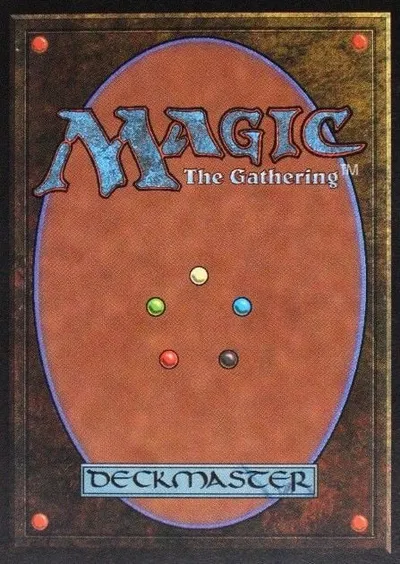
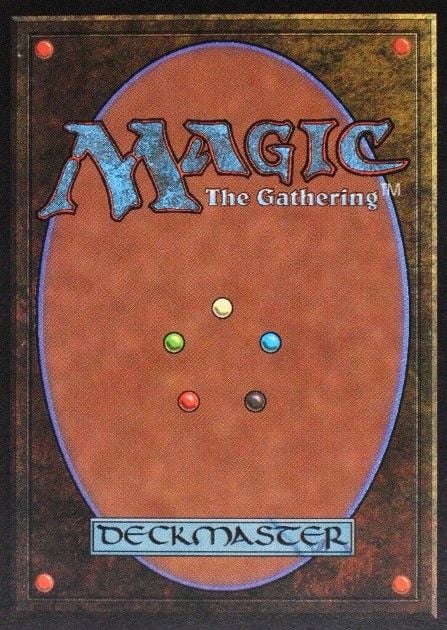
Magic: The Gathering is covered on BoardGameVideo.com by 18 reviews, 9 how-to-play guides, 42 recorded sessions, 146 unboxings, and 39 other videos.
2 - 6 players20 minHeavy weight: Expect a long teachView on BoardGameGeek ›About Magic: The Gathering, from BoardGameGeek:
GAME SYSTEM This entry is to allow for discussion/rating of the game system as a whole. It is not for a specific product or release. Versions will appear on the individual item pages. From the official website: In the Magic game, you play the role of a planeswalker-a powerful wizard who fights other planeswalkers for glory, knowledge, and conquest. Your deck of cards represents all the weapons in your arsenal. It contains the spells you know and the creatures you can summon to fight for you. This is the grandfather of the collectible card game (or CCG) genre. Cards are categorized as common, uncommon, rare, and mythic rare. Players collect cards and build decks out of their collection. Players build a deck of cards and duel against an opponent's deck. Players are wizards attempting to reduce their opponent's life total to zero. The first player to reduce his opponent's life to zero (or meet another set win condition) wins the game. An important part of the game is deck construction, which is done prior to the actual game by selecting what cards are included in a particular deck. There are over 25,000 different cards from which to build your deck! Cards can be lands, which usually generate mana of various colors, or spells, which require a certain amount of mana to be used. Some cards (creatures, artifacts, and enchantments) stay on the board and continue to affect the game, while others have a one-time effect. Players randomly draw spells to see what they get and can play each turn. Although this limits your choices, there is a lot of strategy in how you play those spells. A robust list of game mechanics, including intricate rules for reactive card play called "the stack," provide for rich tactics and tough choices each turn. Though traditionally a two-player duel, there are several casual and tournament formats to Magic that allow more players to play.
1995· 152 videos·Klaus TeuberMainly reviews and how-to-play
- Videos
- 152
- Creators
- 113
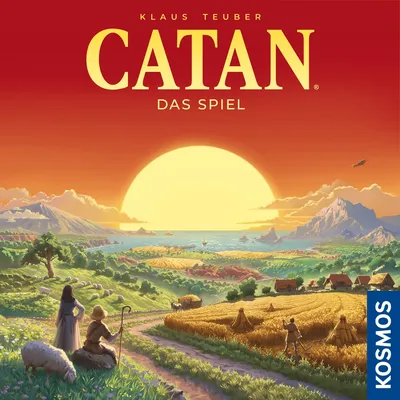
Catan is covered on BoardGameVideo.com by 38 reviews, 29 how-to-play guides, 17 recorded sessions, 7 unboxings, and 61 other videos.
3 - 4 players60 - 120 minMedium weight: Teach it in one sittingView on BoardGameGeek ›About Catan, from BoardGameGeek:
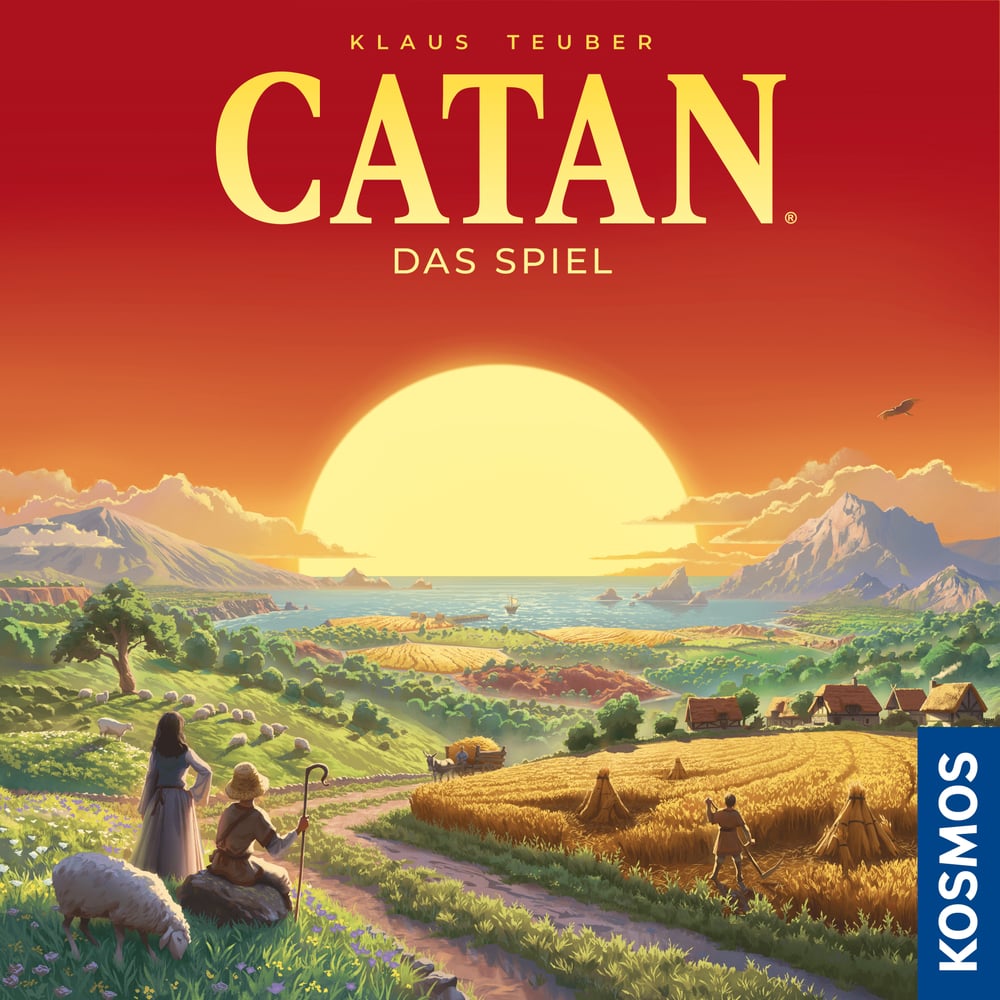
In CATAN (formerly The Settlers of Catan), players try to be the dominant force on the island of Catan by building settlements, cities and roads. On each turn dice are rolled to determine which resources the island produces. Players build structures by 'spending' resources (sheep, wheat, wood, brick and ore) which are represented by the relevant resource cards; each land type, with the exception of the unproductive desert, produces a specific resource: hills produce brick, forests produce wood, mountains produce ore, fields produce wheat, and pastures produce sheep. Set-up includes randomly placing large hexagonal tiles (each depicting one of the five resource-producing terrain types--or the desert) in a honeycomb shape and surrounding them with water tiles, some of which contain ports of exchange. A number disk, the value of which will correspond to the roll of two 6-sided dice, are placed on each terrain tile. Each player is given two settlements (think: houses) and roads (sticks) which are placed on intersections and borders of the terrain tiles. Players collect a hand of resource cards based on which terrain tiles their last-placed settlement is adjacent to. A robber pawn is placed on the desert tile. A turn consists of rolling the dice, collecting resource cards based on this dice roll and the position of settlements (or upgraded cities-think: hotels), turning in resource cards (if possible and desired) for improvements, trading cards at a port, possibly playing a development card, or trading resource cards with other players. If the dice roll is a 7, the active player moves the robber to a new terrain tile and steals a resource card from another player who has a settlement adjacent to that tile. Points are accumulated by building settlements and cities, having the longest road or the largest army (from some of the development cards), and gathering certain development cards that simply award victory points. When a player has gathered 10 points (some of which may be held in secret), s/he announces this and claims the win.
1999· 126 videos·Reiner KniziaMainly reviews
- Videos
- 126
- Creators
- 84
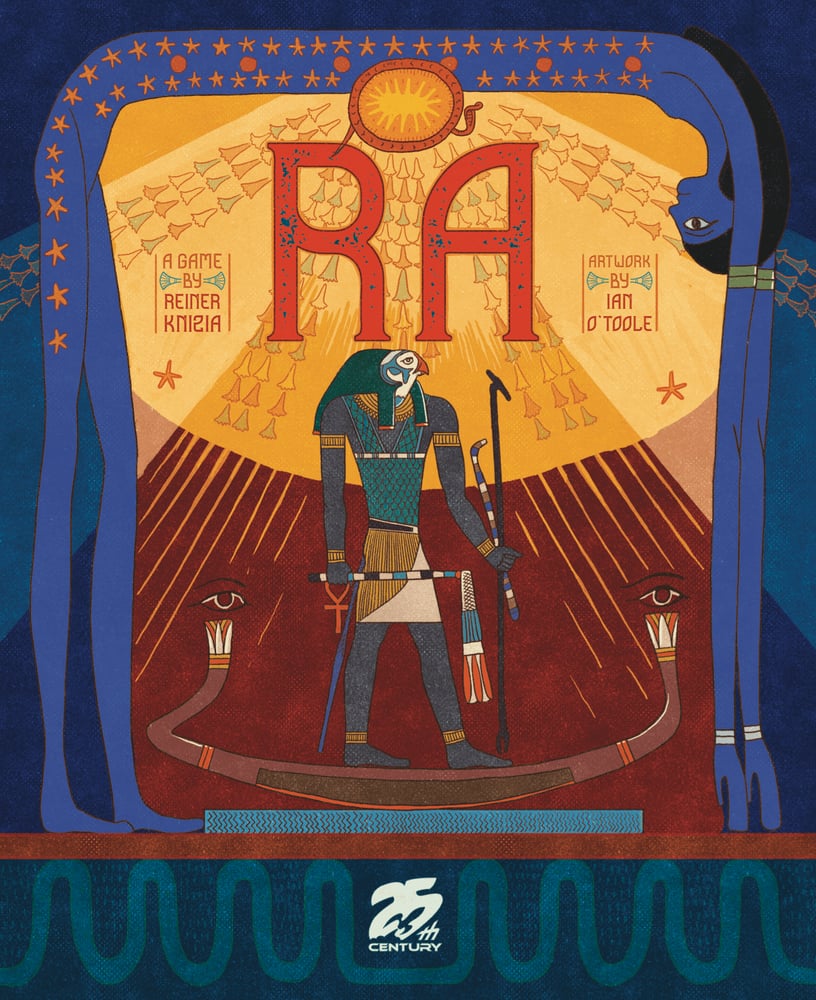
Ra is covered on BoardGameVideo.com by 61 reviews, 16 how-to-play guides, 12 recorded sessions, 27 unboxings, and 10 other videos.
2 - 5 players45 - 60 minMedium weight: Teach it in one sittingView on BoardGameGeek ›About Ra, from BoardGameGeek:
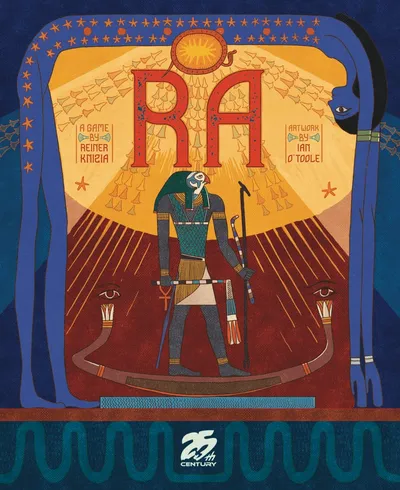
Ra is an auction and set-collection game with an Ancient Egyptian theme. Each turn players are able to purchase lots of tiles with their bidding tiles (suns). Once a player has used up his or her suns, the other players continue until they do likewise, which may set up a situation with a single uncontested player bidding on tiles before the end of the round occurs. Tension builds because the round may end before all players have had a chance to win their three lots for the epoch. The various tiles either give immediate points, prevent negative points for not having certain types at the end of the round (epoch), or give points after the final round. The game lasts for three "epochs" (rounds). The game is easy to learn. From the Box: The game spans 1500 years of Egyptian history in less than an hour! The players seek to expand their power and fame and there are many ways to accomplish this: Influencing Pharaohs, Building monuments, Farming on the Nile, Paying homage to the Gods, Advancing the technology and culture of the people. Ra is an auction and set collecting game where players may choose to take risks for great rewards or... And all this is for the glory of the Sun God Ra!
2004· 115 videos·Alan R. MoonMainly reviews and how-to-play
- Videos
- 115
- Creators
- 95
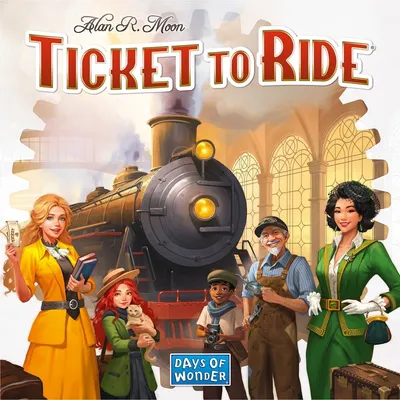
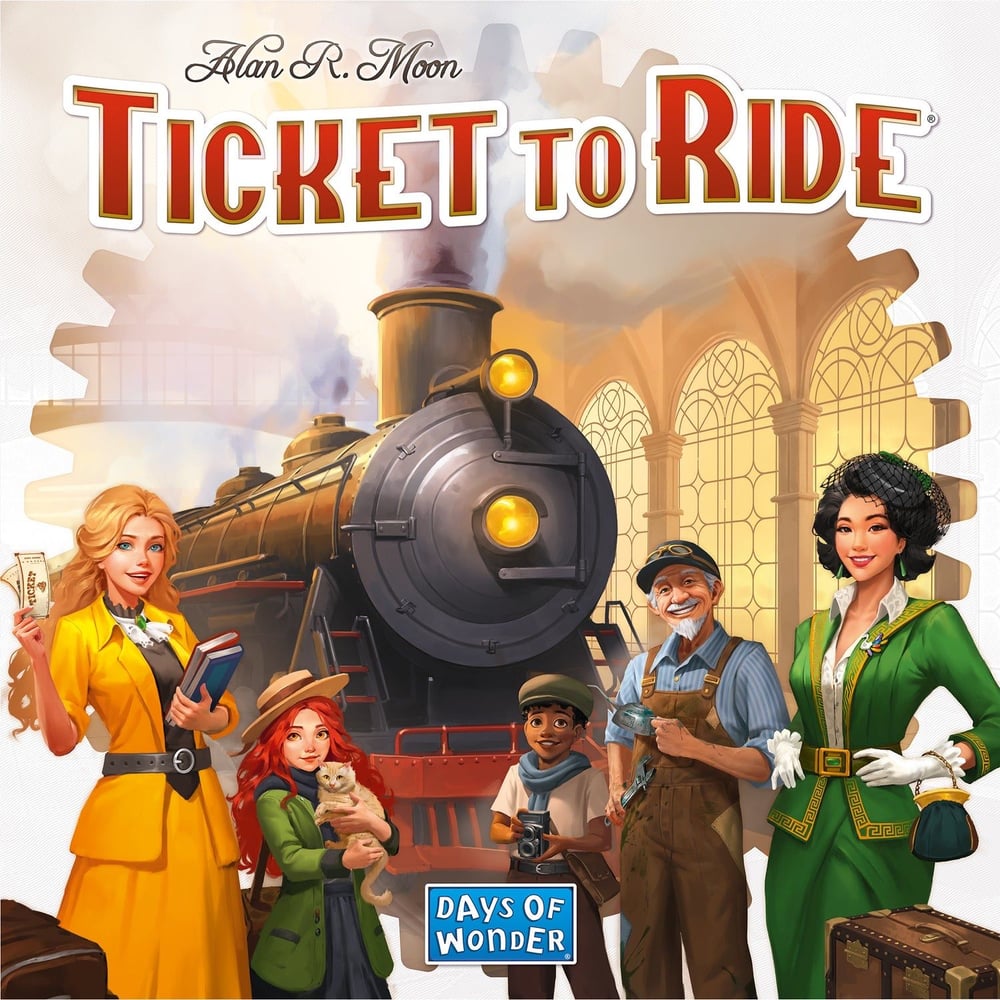
Ticket to Ride is covered on BoardGameVideo.com by 38 reviews, 30 how-to-play guides, 20 recorded sessions, 4 unboxings, and 23 other videos.
2 - 5 players30 - 60 minLight weight: Learn it in minutesView on BoardGameGeek ›About Ticket to Ride, from BoardGameGeek:
With elegantly simple gameplay, Ticket to Ride can be learned in under 15 minutes. Players collect cards of various types of train cars they then use to claim railway routes in North America. The longer the routes, the more points they earn. Additional points come to those who fulfill Destination Tickets - goal cards that connect distant cities; and to the player who builds the longest continuous route. "The rules are simple enough to write on a train ticket - each turn you either draw more cards, claim a route, or get additional Destination Tickets," says Ticket to Ride author, Alan R. Moon. "The tension comes from being forced to balance greed - adding more cards to your hand, and fear - losing a critical route to a competitor." Ticket to Ride continues in the tradition of Days of Wonder's big format board games featuring high-quality illustrations and components including: an oversize board map of North America, 225 custom-molded train cars, 144 illustrated cards, and wooden scoring markers. Since its introduction and numerous subsequent awards, Ticket to Ride has become the BoardGameGeek epitome of a "gateway game" -- simple enough to be taught in a few minutes, and with enough action and tension to keep new players involved and in the game for the duration. Part of the Ticket to Ride series.


2005· 105 videos·Ananda Gupta, Jason MatthewsMostly how-to-play and reviews
- Videos
- 105
- Creators
- 62
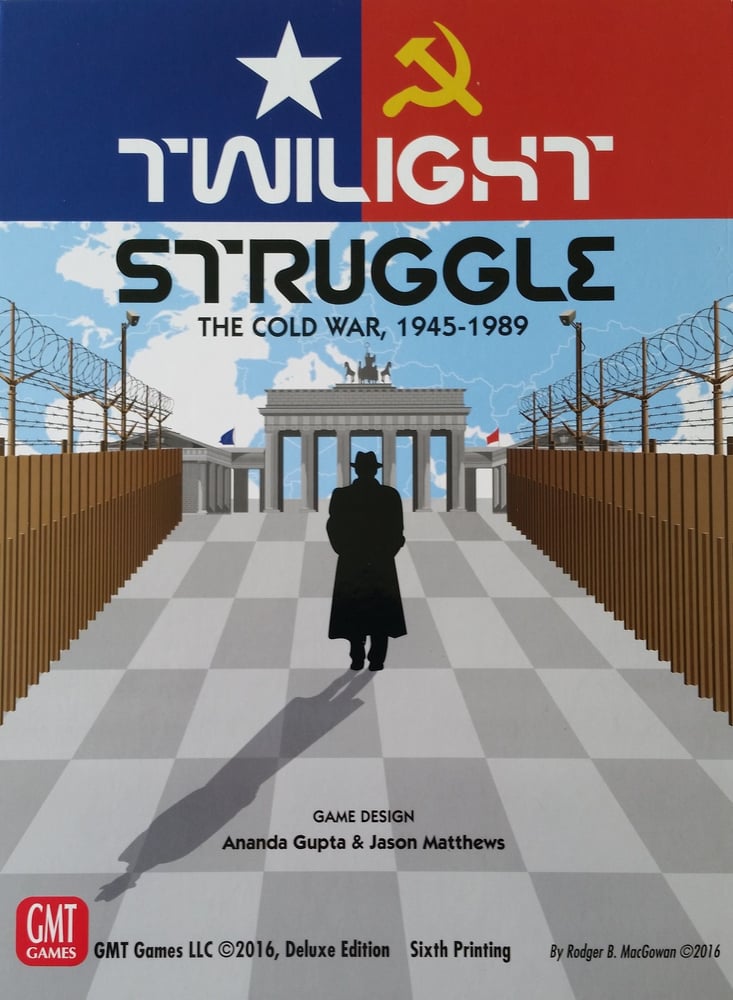
Twilight Struggle is covered on BoardGameVideo.com by 36 reviews, 39 how-to-play guides, 8 recorded sessions, 2 unboxings, and 20 other videos.
2 players120 - 180 minHeavy weight: Expect a long teachView on BoardGameGeek ›About Twilight Struggle, from BoardGameGeek:
Now the trumpet summons us again, not as a call to bear arms, though arms we need; not as a call to battle, though embattled we are – but a call to bear the burden of a long twilight struggle. – John F. Kennedy In 1945, unlikely allies toppled Hitler's war machine, while humanity's most devastating weapons forced the Japanese Empire to its knees in a storm of fire. Where once there stood many great powers, there then stood only two. Unlike the titanic struggles of the preceding decades, this conflict would be waged not primarily by soldiers and tanks, but by spies and politicians, scientists and intellectuals, artists and traitors. Twilight Struggle is a two-player game simulating the forty-five year dance of intrigue, prestige, and occasional flares of warfare between the Soviet Union and the United States. The game begins amidst the ruins of Europe as the two new "superpowers" scramble over the wreckage of the Second World War, and ends in 1989. Twilight Struggle inherits its fundamental systems from We the People and Hannibal: Rome vs. Carthage. It is a quick-playing, low-complexity game in that tradition. The game map is a world map of the period, where players move units and exert influence in attempts to gain allies and control for their superpower. Decision-making is a challenge; how to best use one's cards and units given consistently limited resources? Event cards add detail and flavor to the game. There are several ways to achieve an automatic victory in Twilight Struggle. But, If neither side has achieved victory of any kind by the end of turn 10, the points are totaled and the player with the most points wins.

2013· 96 videos·Mac GerdtsMainly reviews
- Videos
- 96
- Creators
- 72
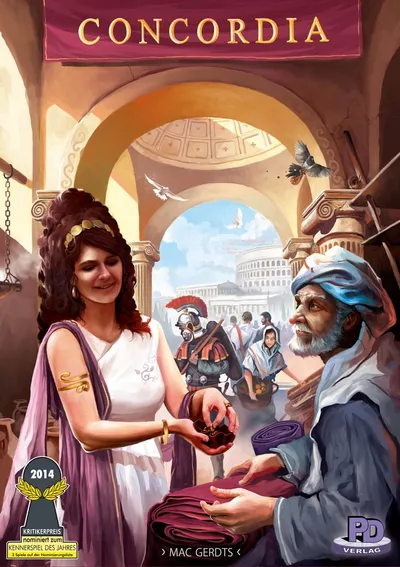
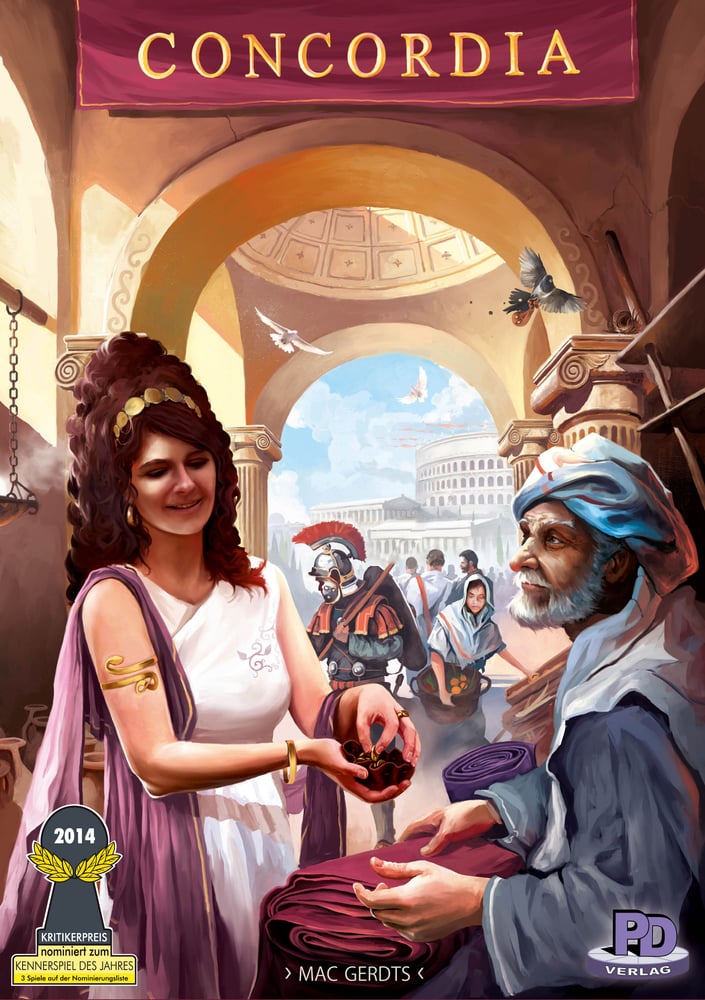
Concordia is covered on BoardGameVideo.com by 48 reviews, 19 how-to-play guides, 16 recorded sessions, 2 unboxings, and 11 other videos.
2 - 5 players100 minMedium weight: Teach it in one sittingView on BoardGameGeek ›About Concordia, from BoardGameGeek:
Two thousand years ago, the Roman Empire ruled the lands around the Mediterranean Sea. With peace at the borders, harmony inside the provinces, uniform law, and a common currency, the economy thrived and gave rise to mighty Roman dynasties as they expanded throughout the numerous cities. Guide one of these dynasties and send colonists to the remote realms of the Empire; develop your trade network; and appease the ancient gods for their favor - all to gain the chance to emerge victorious! Concordia is a peaceful, strategy game of economic development in Roman times for 2-5 players aged 13 and up. Instead of looking to the luck of dice or cards, players must rely on their strategic abilities. Be sure to watch your rivals to determine which goals they are pursuing and where you can outpace them! In the game, colonists are sent out from Rome to settle down in cities that produce bricks, food, tools, wine, and cloth. Each player starts with an identical set of playing cards and acquires more cards during the game. These cards serve two purposes: They allow a player to choose actions during the game. They are worth victory points (VPs) at the end of the game. Concordia is a strategy game that requires advanced planning and consideration of your opponent's moves. Every game is different, not only because of the sequence of new cards on sale but also due to the modular layout of cities. (One side of the game board shows the entire Roman Empire with 30 cities for 3-5 players, while the other shows Roman Italy with 25 cities for 2-4 players.) When all cards have been sold or after the first player builds their 15th house, the game ends. The player with the most VPs from the gods (Jupiter, Saturnus, Mercurius, Minerva, Vesta, etc.) wins the game.
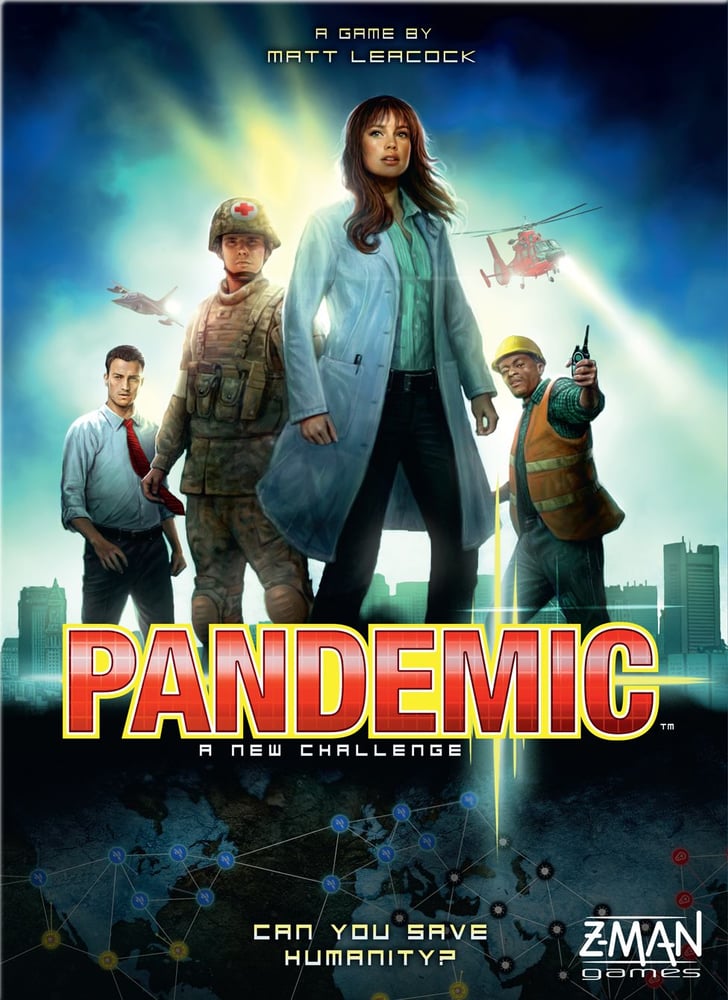
2008· 94 videos·Matt LeacockSome reviews
- Videos
- 94
- Creators
- 61
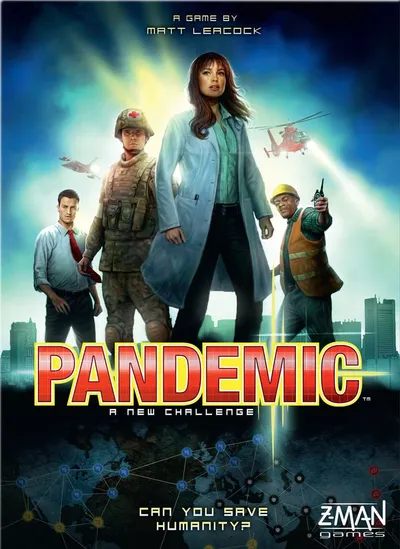
Pandemic is covered on BoardGameVideo.com by 35 reviews, 17 how-to-play guides, 19 recorded sessions, 3 unboxings, and 20 other videos.
2 - 4 players45 minMedium weight: Teach it in one sittingView on BoardGameGeek ›About Pandemic, from BoardGameGeek:
In Pandemic, several virulent diseases have broken out simultaneously all over the world! The players are disease-fighting specialists whose mission is to treat disease hotspots while researching cures for each of four plagues before they get out of hand. The game board depicts several major population centers on Earth. On each turn, a player can use up to four actions to travel between cities, treat infected populaces, discover a cure, or build a research station. A deck of cards provides the players with these abilities, but sprinkled throughout this deck are Epidemic! cards that accelerate and intensify the diseases' activity. A second, separate deck of cards controls the "normal" spread of the infections. Taking a unique role within the team, players must plan their strategy to mesh with their specialists' strengths in order to conquer the diseases. For example, the Operations Expert can build research stations which are needed to find cures for the diseases and which allow for greater mobility between cities; the Scientist needs only four cards of a particular disease to cure it instead of the normal five-but the diseases are spreading quickly and time is running out. If one or more diseases spreads beyond recovery or if too much time elapses, the players all lose. If they cure the four diseases, they all win! The 2013 edition of Pandemic includes two new characters-the Contingency Planner and the Quarantine Specialist-not available in earlier editions of the game. Pandemic is the first game in the Pandemic series.


1963· 83 videos·Sid SacksonMostly reviews and how-to-play
- Videos
- 83
- Creators
- 59
Acquire is covered on BoardGameVideo.com by 33 reviews, 27 how-to-play guides, 14 recorded sessions, 2 unboxings, and 7 other videos.
2 - 6 players90 minMedium weight: Teach it in one sittingView on BoardGameGeek ›About Acquire, from BoardGameGeek:
In Acquire, each player strategically invests in businesses, trying to retain a majority of stock. As the businesses grow with tile placements, they also start merging, giving the majority stockholders of the acquired business sizable bonuses, which can then be used to reinvest into other chains. All of the investors in the acquired company can then cash in their stocks for current value or trade them 2-for-1 for shares of the newer, larger business. The game is a race to acquire the greatest wealth. History of Acquire: This Sid Sackson classic has taken many different forms over the years depending on the publisher, yet the rules and game play have stayed the same. The 1966 version of the 3M bookshelf edition included rules for a 2-player variant. The original version is part of the 3M Bookshelf Series. Many books and websites incorrectly list this as a 1962 publication as the 3M Company used previously copyrighted artwork when they released the game in 1964. 3M actually received the idea for the game of "Vacations" from Sid Sackson in May of 1963 and decided to take his idea and put it into artwork they had developed the year before for a game called "ACQUIRE." 3M's original game idea for a game called ACQUIRE must not have been very good so they decided to take Sid's idea of Vacations and put it into their concept of ACQUIRE. They released some limited test market games in 8 Midwestern U.S. cities in December of 1963 with a box that had a 1963 copyright. These games had Sid's original rules. When 3M released the mass market games in 1964, they had developed some of Sid's original ideas and changed some rules and game play to match their production desires. They released them with outer boxes that were copyrighted 1962 and inner boxes with rules that were dated 1963. December 1963 - Test Market World Map Wood Tile Edition 1964 - Dated 1962/63 wood tiles, chipboard with plastic overlay & stocks with printed backs 1965 - Dated 1962/63 plastic tiles, chipboard with plastic overlay & stocks with printed backs (last edition made with printed backs until 1999) 1966 - Dated 1962/66 plastic tiles, chipboard with plastic overlay & non-wax coated stocks (Only edition with these stocks) 1968 - Dated 1968/66 plastic tiles, clear plastic board with paper underlay (Both 1966 inner box games have a lot of mixed parts) 1971 - Dated 1968/71 plastic tiles, yellow hard plastic board 1975 - 3M sells rights for game of ACQUIRE to the Avalon Hill Company 1976 - Dated 1976 plastic tiles, yellow hard plastic board, redesigned money, no inner box (This edition was also produced in 1977, 79, 81, 82, & 86) 1989 - Dated 1976 Gray box edition with new box artwork same contents as regular 1976 editions (This edition was also produced in 1992) 1995 - Dated 1995 Large box cardboard edition with chipboard board and tiles, Special Powers Variant Tiles inspired by German editions 1997 - Avalon Hill sells the rights to the game of ACQUIRE to Hasbro 1999 - Dated 1999 Large box with large plastic board and tiles, 3D company buildings, redesigned stocks & money, large info cards 2006 - Hasbro assigns rights for the game of ACQUIRE to their subsidiary, Wizards of the Coast 2006 - Lloyd's (private) Rules of ACQUIRE are made public, two major rule changes that help to bring the balance of the game of ACQUIRE back to the intentions of Sid Sackson's original ideas. Lloyd Solon's Rules help players to correct poor strategy during the beginning of the game that can been seen with new and unexperienced players (running out of money soon is the main mistake that must be omitted!). 2008 - Dated 2008 cardboard edition with chipboard board & tiles, redesigned stocks & money 2016 - Dated 2016 The current affordable mass-market edition. It looks at first sight to be similar to previous modern editions, but has been criticised for the use of inferior design choices such as hard-to-read grey-on-grey embossed slots and the unusual tile fonts. It contains modified rules and a slightly smaller playing grid. Although these changes have been criticised for not ultimately improving upon Sackson's original design, they are generally regarded as not being too damaging to it. 2023 - Renegade Game Studio partners with Hasbro, and releases their new version, with Classic Mode or Tycoon Mode - play with or without tertiary stockholder merger bonus. 2024 - The Renegade 60th Anniversary edition includes a set of plastic weighted poker chips, and Special Powers Variant cards.


2011· 82 videos·Stefan FeldMainly reviews
- Videos
- 82
- Creators
- 60
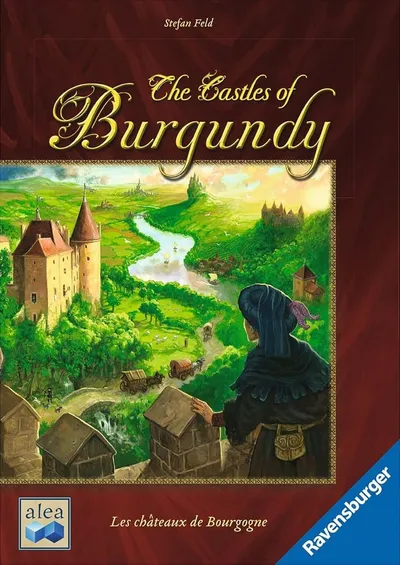
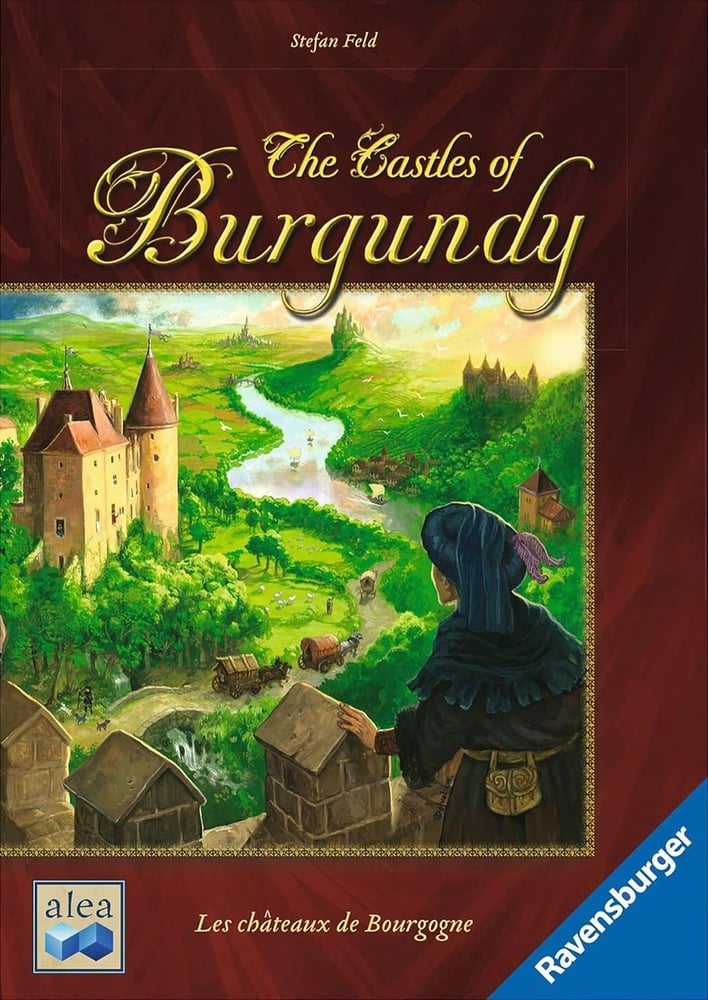
The Castles of Burgundy is covered on BoardGameVideo.com by 41 reviews, 18 how-to-play guides, 11 recorded sessions, 3 unboxings, and 9 other videos.
2 - 4 players30 - 90 minHeavy weight: Expect a long teachView on BoardGameGeek ›About The Castles of Burgundy, from BoardGameGeek:
The game is set in the Burgundy region of High Medieval France. Each player takes on the role of an aristocrat, originally controlling a small princedom. While playing they aim to build settlements and powerful castles, practice trade along the river, exploit silver mines, and use the knowledge of travelers. The game is about players taking settlement tiles from the game board and placing them into their princedom which is represented by the player board. Every tile has a function that starts when the tile is placed in the princedom. The princedom itself consists of several regions, each of which demands its own type of settlement tile. The game is played in five phases, each consisting of five rounds. Each phase begins with the game board stocked with settlement tiles and goods tiles. At the beginning of each round all players roll their two dice, and the player who is currently first in turn order rolls a goods placement die. A goods tile is made available on the game board according to the roll of the goods die. During each round, a player may perform any two of the four possible types of actions: take a settlement tile and place it in the staging area on their player board take a settlement tile from the staging area and place in the corresponding region for the type of tile and adjacent to a previously placed settlement tile, deliver goods with a number matching one of their dice take worker tokens which allow the player to adjust the roll of their dice. In addition to these actions a player may buy a settlement tile and place it in the staging area on their player board. The game ends after the fifth phase is played to completion. Victory points are awarded for unused money and workers, and undelivered goods. Bonus victory points from certain settlement tiles are awarded at the end of the game. The player with the most victory points wins. The rules include basic and advanced versions.
2008· 80 videos·Donald X. VaccarinoMainly reviews
- Videos
- 80
- Creators
- 59
Dominion is covered on BoardGameVideo.com by 34 reviews, 18 how-to-play guides, 10 recorded sessions, 2 unboxings, and 16 other videos.
2 - 4 players30 minMedium weight: Teach it in one sittingView on BoardGameGeek ›About Dominion, from BoardGameGeek:
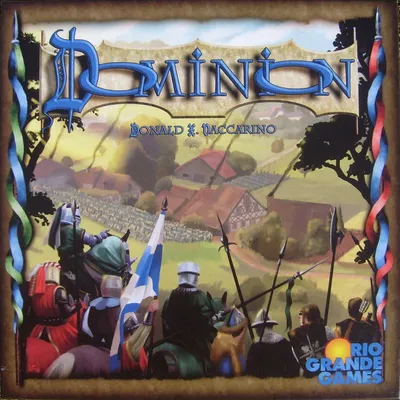
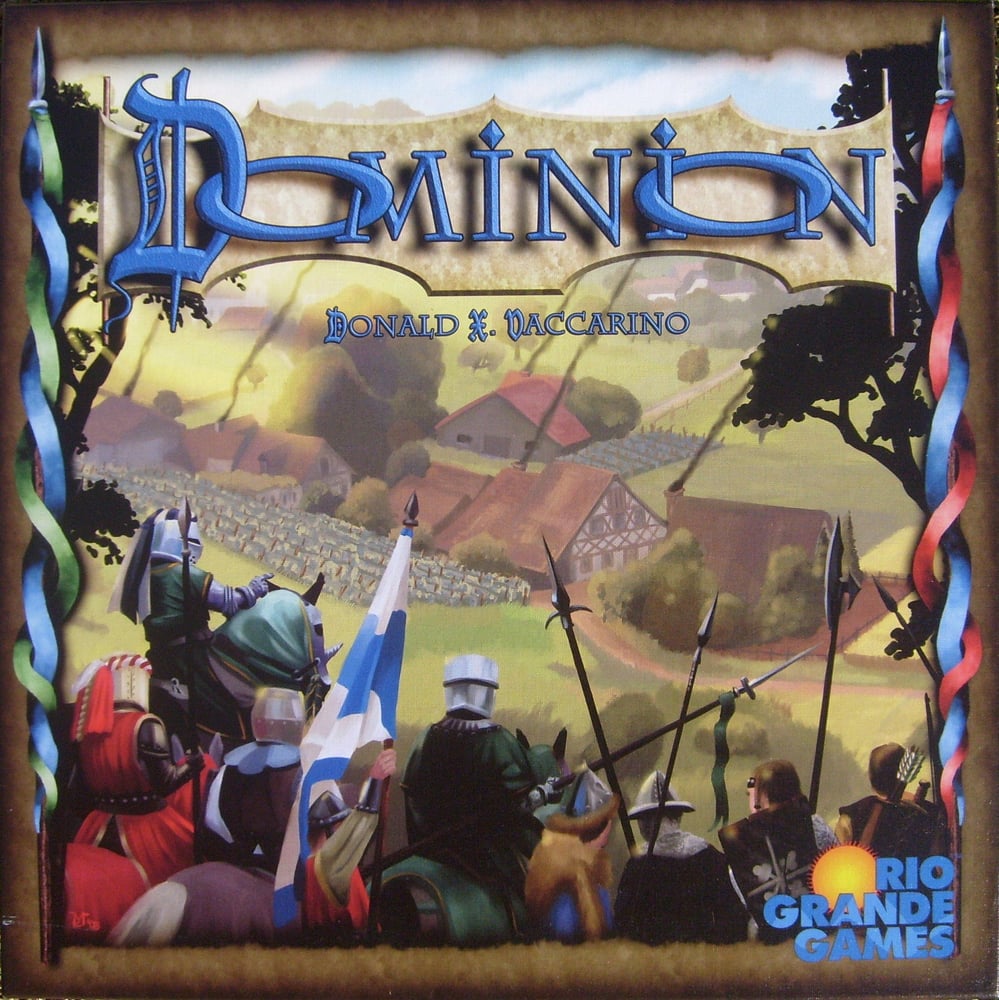
"You are a monarch, like your parents before you, a ruler of a small pleasant kingdom of rivers and evergreens. Unlike your parents, however, you have hopes and dreams! You want a bigger and more pleasant kingdom, with more rivers and a wider variety of trees. You want a Dominion! In all directions lie fiefs, freeholds, and feodums. All are small bits of land, controlled by petty lords and verging on anarchy. You will bring civilization to these people, uniting them under your banner. But wait! It must be something in the air; several other monarchs have had the exact same idea. You must race to get as much of the unclaimed land as possible, fending them off along the way. To do this you will hire minions, construct buildings, spruce up your castle, and fill the coffers of your treasury. Your parents wouldn't be proud, but your grandparents, on your mother's side, would be delighted." -description from the back of the box In Dominion, each player starts with an identical, very small deck of cards. In the center of the table is a selection of other cards the players can "buy" as they can afford them. Through their selection of cards to buy, and how they play their hands as they draw them, the players construct their deck on the fly, striving for the most efficient path to the precious victory points by game end. Dominion is not a Collectible Card Game (CCG), but the play of the game is similar to the construction and play of a CCG deck. The game comes with 500 cards. You select 10 of the 25 Kingdom card types to include in any given play-leading to immense variety. -user summary Part of the Dominion series.
1995· 80 videos·Wolfgang Kramer, Richard UlrichMainly reviews
- Videos
- 80
- Creators
- 61
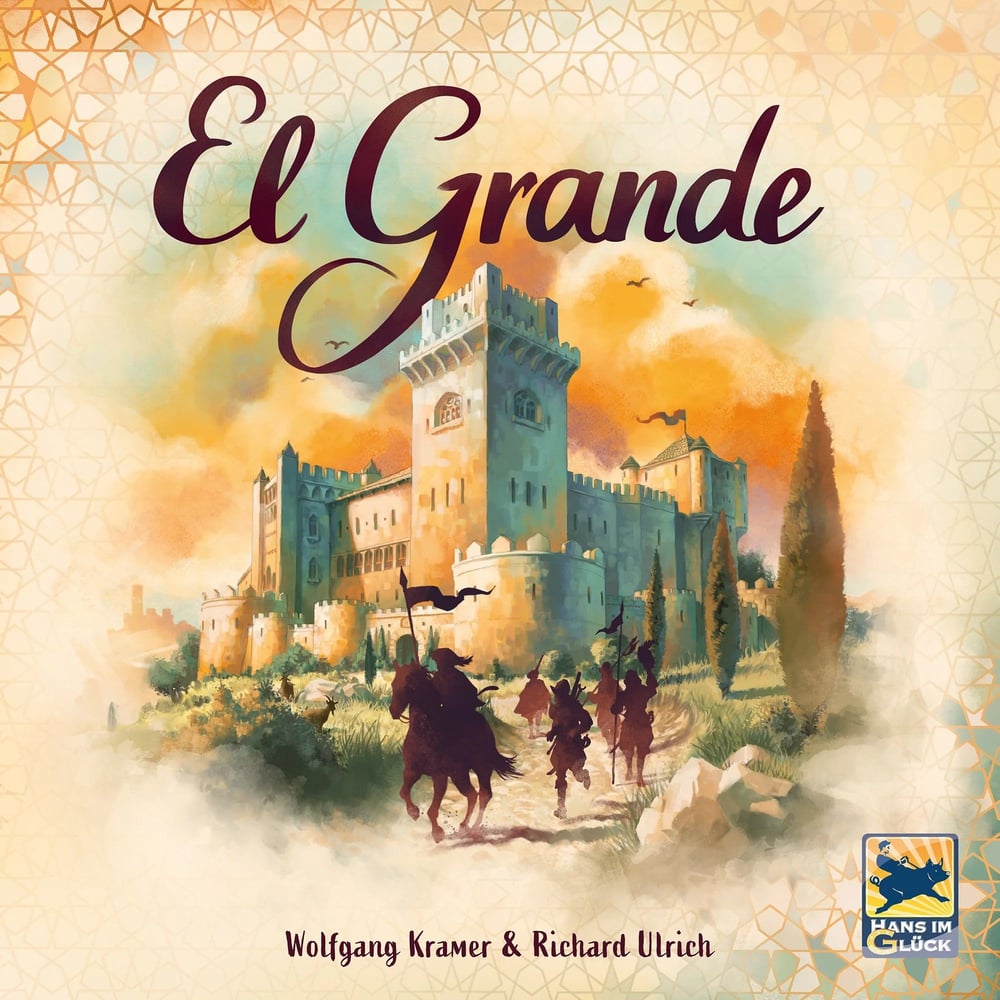
El Grande is covered on BoardGameVideo.com by 36 reviews, 18 how-to-play guides, 7 recorded sessions, 9 unboxings, and 10 other videos.
2 - 5 players60 - 120 minMedium weight: Teach it in one sittingView on BoardGameGeek ›About El Grande, from BoardGameGeek:
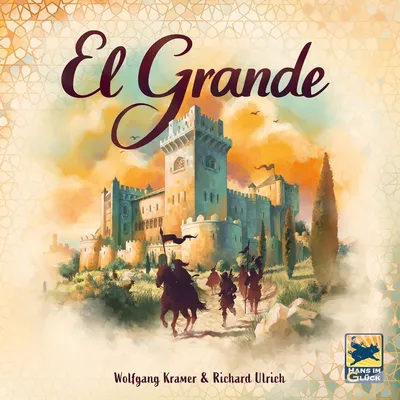
In this award-winning game, players take on the roles of Grandes in medieval Spain. The king's power is flagging, and these powerful lords are vying for control of the various regions. To that end, you draft caballeros (knights) into your court and subsequently move them onto the board to help seize control of regions. After every third round, the regions are scored, and after the ninth round, the player with the most points is the winner. In each of the nine rounds, you select one of your 13 power cards to determine turn order as well as the number of caballeros you get to move from the provinces (general supply) into your court (personal supply). A turn then consists of selecting one of five action cards which allow variations to the rules and additional scoring opportunities in addition to determining how many caballeros to move from your court to one or more of the regions on the board (or into the castillo - a secretive tower). Normally, you may only place your caballeros into regions adjacent to the one containing the king. The one hard and fast rule in El Grande is that nothing may move into or out of the king's region. One of the five action cards that is always available each round allows you to move the king to a new region. The other four action cards vary from round to round. The goal is to have a caballero majority in as many regions (and the castillo) as possible during a scoring round. Following the scoring of the castillo, you place any cubes you had there into the region you secretly indicated on your region dial. Each region is then scored individually according to a table printed in that region. Two-point bonuses are awarded for having sole majority in the region containing your Grande and in the region containing the king.

2010· 79 videos·Antoine BauzaMainly reviews
- Videos
- 79
- Creators
- 65
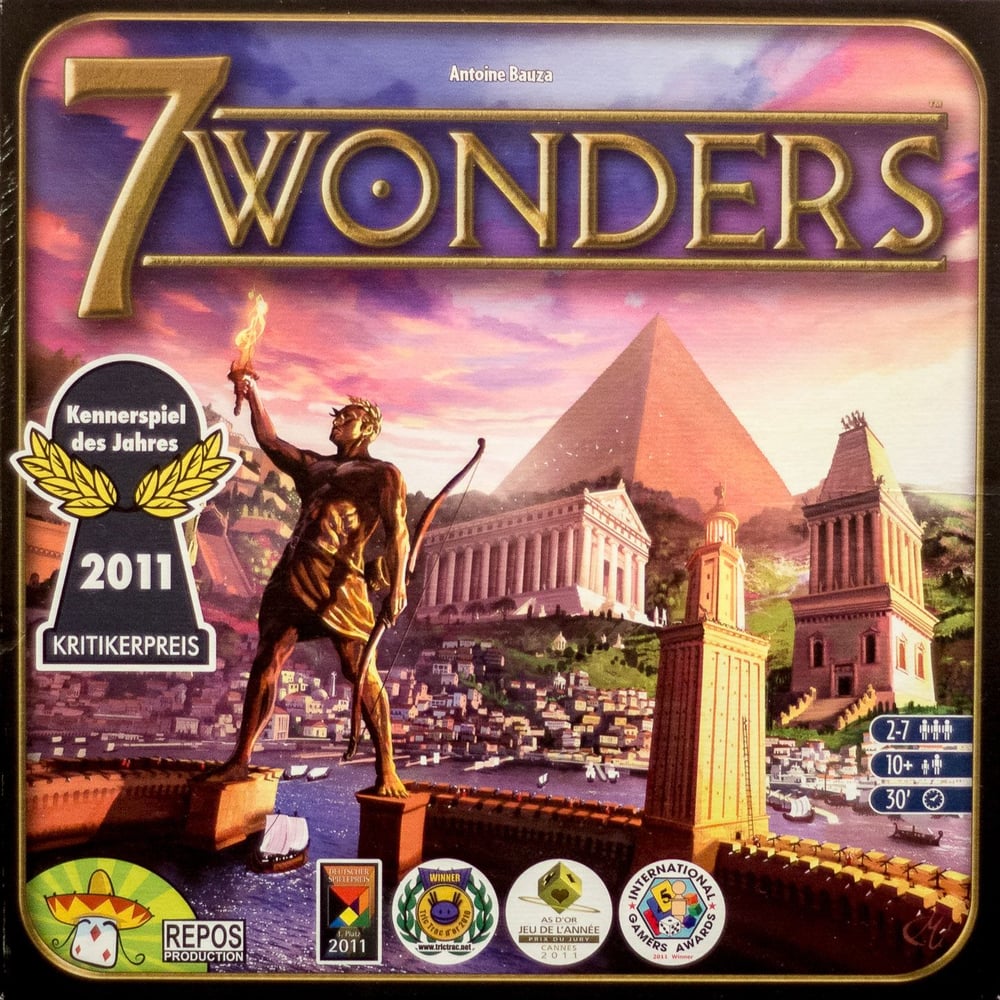
7 Wonders is covered on BoardGameVideo.com by 40 reviews, 14 how-to-play guides, 5 recorded sessions, 2 unboxings, and 18 other videos.
2 - 7 players30 minMedium weight: Teach it in one sittingView on BoardGameGeek ›About 7 Wonders, from BoardGameGeek:
You are the leader of one of the 7 great cities of the Ancient World. Gather resources, develop commercial routes, and affirm your military supremacy. Build your city and erect an architectural wonder which will transcend future times. 7 Wonders lasts three ages. In each age, players receive seven cards from a particular deck, choose one of those cards, then pass the remainder to an adjacent player. Players reveal their cards simultaneously, paying resources if needed or collecting resources or interacting with other players in various ways. (Players have individual boards with special powers on which to organize their cards, and the boards are double-sided). Each player then chooses another card from the deck they were passed, and the process repeats until players have six cards in play from that age. After three ages, the game ends. In essence, 7 Wonders is a card development game. Some cards have immediate effects, while others provide bonuses or upgrades later in the game. Some cards provide discounts on future purchases. Some provide military strength to overpower your neighbors and others give nothing but victory points. Each card is played immediately after being drafted, so you'll know which cards your neighbor is receiving and how her choices might affect what you've already built up. Cards are passed left-right-left over the three ages, so you need to keep an eye on the neighbors in both directions. Though the box of earlier editions is listed as being for 3–7 players, there is an official 2-player variant included in the instructions.
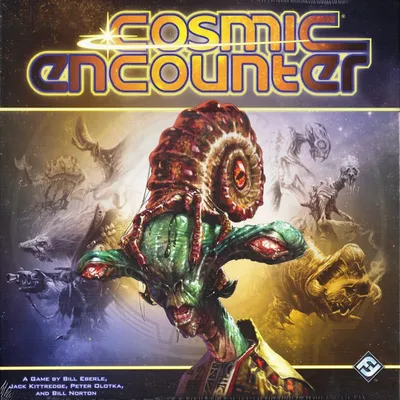
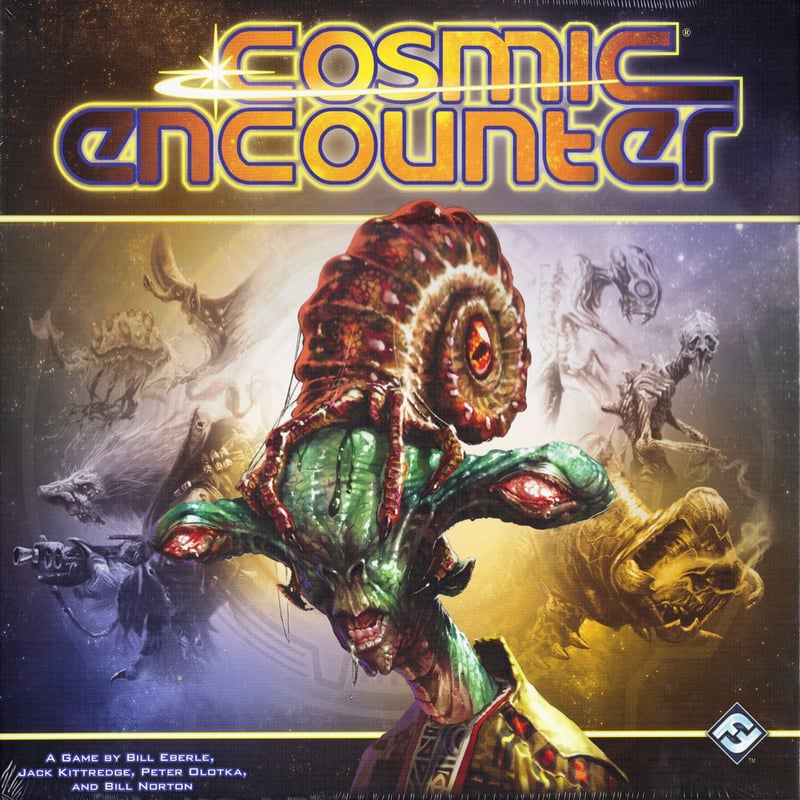
2008· 77 videos·Bill Eberle, Jack Kittredge, Bill Norton, Peter Olotka, Kevin WilsonMainly reviews
- Videos
- 77
- Creators
- 52
Cosmic Encounter is covered on BoardGameVideo.com by 38 reviews, 12 how-to-play guides, 6 recorded sessions, 2 unboxings, and 19 other videos.
3 - 5 players60 - 120 minMedium weight: Teach it in one sittingView on BoardGameGeek ›About Cosmic Encounter, from BoardGameGeek:
Build a galactic empire... In the depths of space, the alien races of the Cosmos vie with each other for control of the universe. Alliances form and shift from moment to moment, while cataclysmic battles send starships screaming into the warp. This classic game of alien politics returns from the warp once more! In Cosmic Encounter, each player becomes the leader of one of dozens of alien races, each with its own unique power. On a player's turn, he or she becomes the offense. The offense encounters another player on a planet by moving a group of his or her ships through the hyperspace gate to that planet. Both sides can invite allies and play cards to try and tip the encounter in their favor. The object of the game is for players to establish colonies in other players' planetary systems by landing their ships on the other players' planets. The winner(s) are the first player(s) to have five colonies on planets outside his or her home system. The players must use force, cunning, and diplomacy to ensure their victory. And, because alliances are a key part of the game, multiple players can win together!
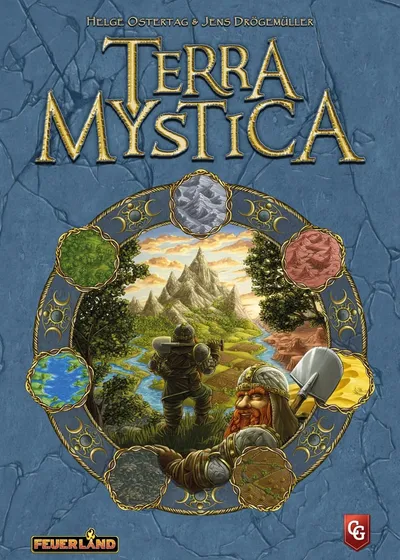
2012· 74 videos·Jens Drögemüller, Helge OstertagMostly reviews and how-to-play
- Videos
- 74
- Creators
- 59
Terra Mystica is covered on BoardGameVideo.com by 28 reviews, 24 how-to-play guides, 9 recorded sessions, 2 unboxings, and 11 other videos.
2 - 5 players60 - 150 minVery heavy weight: Rules-dense, long sessionsView on BoardGameGeek ›About Terra Mystica, from BoardGameGeek:
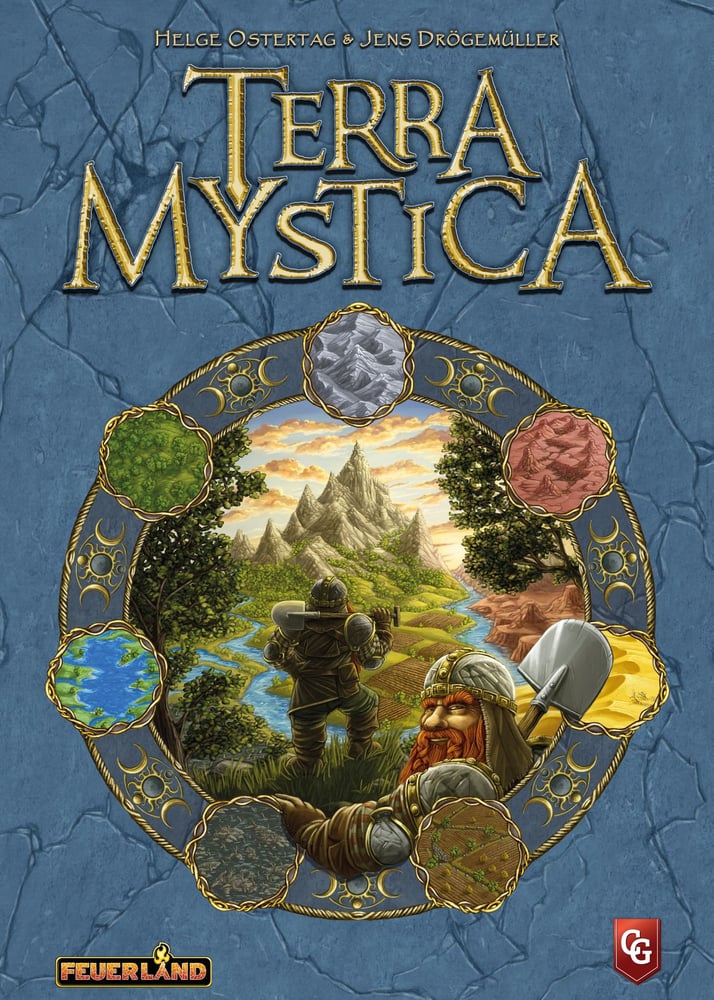
In the land of Terra Mystica dwell 14 different peoples in seven landscapes, and each group is bound to its own home environment, so to develop and grow, they must terraform neighboring landscapes into their home environments in competition with the other groups. Terra Mystica is a full information game, without any luck, that rewards strategic planning. Each player governs one of the 14 groups. With subtlety and craft, the player must attempt to rule as great an area as possible and to develop that group's skills. There are also four religious cults in which you can progress. To do all that, each group has special skills and abilities. Taking turns, the players execute their actions on the resources they have at their disposal. Different buildings allow players to develop different resources. Dwellings allow for more workers. Trading houses allow players to make money. Strongholds unlock a group's special ability, and temples allow you to develop religion and your terraforming and seafaring skills. Buildings can be upgraded: Dwellings can be developed into trading houses; trading houses can be developed into strongholds or temples; one temple can be upgraded to become a sanctuary. Each group must also develop its terraforming skill and its skill with boats to use the rivers. The groups in question, along with their home landscape, are: Desert (Fakirs, Nomads) Plains (Halflings, Cultists) Swamp (Alchemists, Darklings) Lake (Mermaids, Swarmlings) Forest (Witches, Auren) Mountain (Dwarves, Engineers) Wasteland (Giants, Chaos Magicians) Proximity to other groups is a double-edged sword in Terra Mystica. Being close to other groups gives you extra power, but it also means that expanding is more difficult... Terra Mystica FAQ
1997· 69 videos·Reiner KniziaMainly reviews
- Videos
- 69
- Creators
- 47
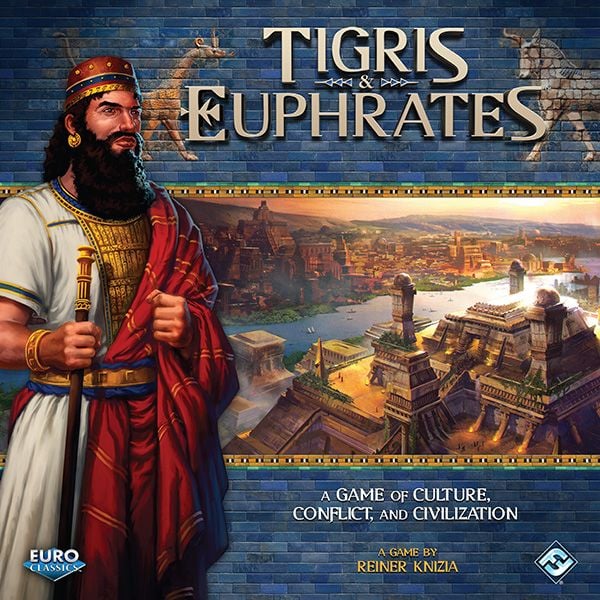
Tigris & Euphrates is covered on BoardGameVideo.com by 37 reviews, 15 how-to-play guides, 7 recorded sessions, 4 unboxings, and 6 other videos.
2 - 4 players60 - 120 minHeavy weight: Expect a long teachView on BoardGameGeek ›About Tigris & Euphrates, from BoardGameGeek:
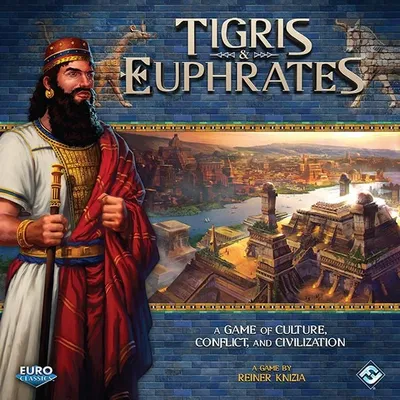
Regarded by many as Reiner Knizia's masterpiece, Tigris & Euphrates is set in the ancient fertile crescent with players building civilizations through tile placement. Players are given four different leaders: farming, trading, religion, and government. The leaders are used to collect victory points in these same categories. However, your score at the end of the game is the number of points in your weakest category, which encourages players not to get overly specialized. Conflict arises when civilizations connect on the board, i.e., external conflicts, with only one leader of each type surviving such a conflict. Leaders can also be replaced within a civilization through internal conflicts. Starting in the Mayfair edition from 2008, Tigris & Euphrates included a double-sided game board and extra components for playing an advanced version of the game. This "ziggurat expansion", initially released as a separate item in Germany for those who already owned the base game, is a special monument that extends across five spaces of the board. The monument can be built if a player has a cross of five civilization tokens of the same color by discarding those five tokens and replacing them with the ziggurat markers, placing a ziggurat tower upon the middle tile. The five ziggurat markers cannot be destroyed. All rules regarding monuments apply to the ziggurat monument as well. If your king is inside the kingdom of the ziggurat, you will get one victory point in a color of your choice at the end of your turn. Some versions of Tigris & Euphrates are listed as being for 2-4 players, while others incorrectly state that they're for 3-4 players. Tigris & Euphrates is part of what is sometimes called Reiner Knizia's tile-laying trilogy.
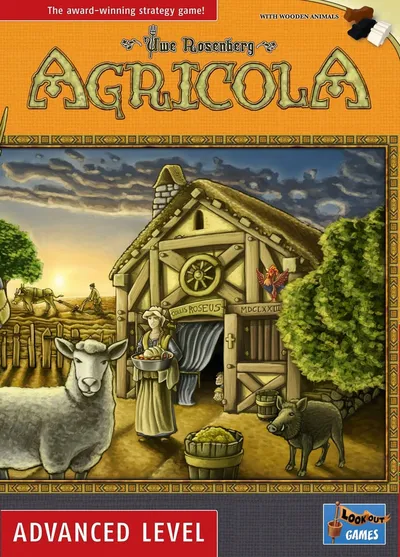
2007· 67 videos·Uwe RosenbergMostly reviews and how-to-play
- Videos
- 67
- Creators
- 53
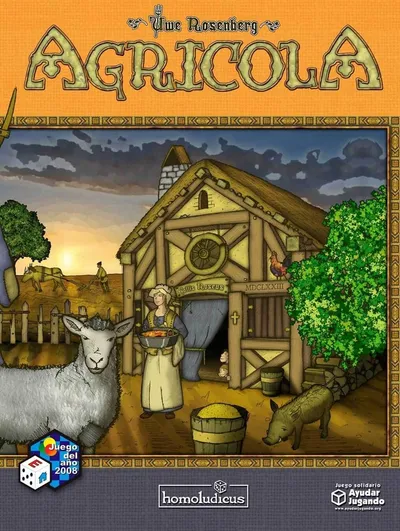
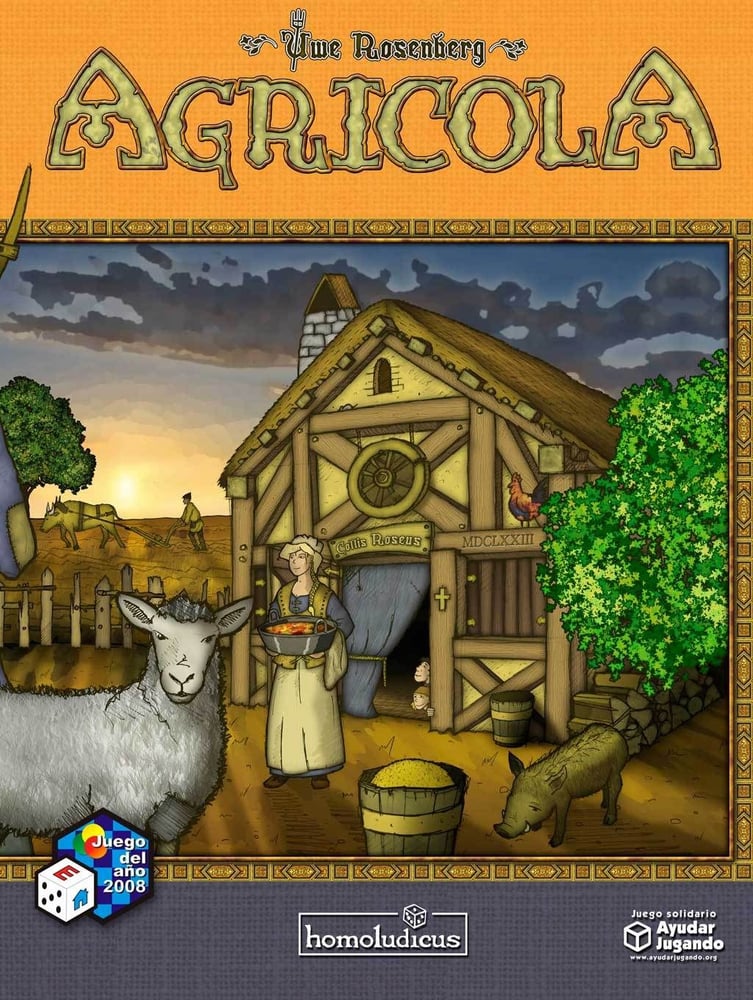
Agricola is covered on BoardGameVideo.com by 25 reviews, 23 how-to-play guides, 6 recorded sessions, and 13 other videos.
1 - 5 players30 - 150 minHeavy weight: Expect a long teachView on BoardGameGeek ›About Agricola, from BoardGameGeek:
In Agricola, you're a farmer in a wooden shack with your spouse and little else. At first, on a turn, your family gets to take only two actions, one for you and one for your spouse, as might be found among all the possibilities on a farm: plowing fields; collecting materials; building fences, and so on. There are numerous choices available, and while the game progresses you'll have more and more, as each round a new action card is flipped over, offering one more possible action. You might think about having kids in order to get more work accomplished but first you'll need to expand your house to make room - and what are you going to feed all the little rug rats? The game supports many levels of complexity, mainly through the distribution of cards which represent Minor Improvements and Occupations. In the beginner's version (called the Family Variant in the U.S. release) these cards are not used at all. For advanced play, the U.S. release includes three levels of both types of cards; Basic (E-deck), Interactive (I-deck), and Complex (K-deck), and the rulebook encourages players to experiment with the various decks and mixtures thereof. Aftermarket decks such as the Z-Deck and the L-Deck also exist. Each player starts with a hand of 7 Occupation cards (of more than 160 total) and 7 Minor Improvement cards (of more than 140 total) that he/she may use during the game if they fit into his/her strategy. Agricola is a turn-based game, and the problem to be overcome is that each available action can be taken by only one player each round so it's important to be careful about your choices. There are countless strategies, some of which depend on your hand of cards. The winner is the player with the most Victory Points from the Improvements made on his farm. -description originally from BoardgameNews
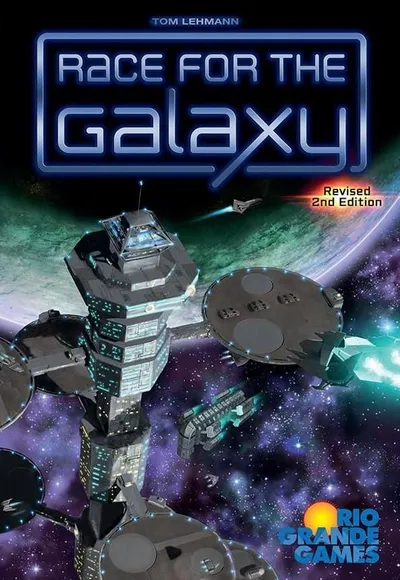
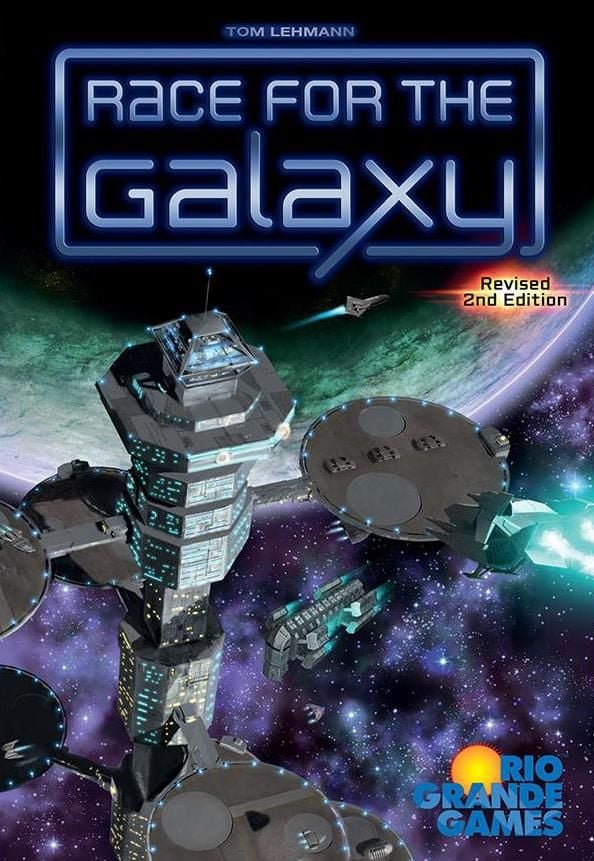
2007· 67 videos·Thomas LehmannMainly reviews and how-to-play
- Videos
- 67
- Creators
- 52
Race for the Galaxy is covered on BoardGameVideo.com by 23 reviews, 19 how-to-play guides, 10 recorded sessions, 3 unboxings, and 12 other videos.
2 - 4 players30 - 60 minMedium weight: Teach it in one sittingView on BoardGameGeek ›About Race for the Galaxy, from BoardGameGeek:
In Race for the Galaxy, players build galactic civilizations by playing cards representing worlds or technical and social developments. Each round, players secretly and simultaneously select an action card corresponding to one phase of a round. These phases let players draw cards, play cards, add goods to worlds, or consume goods for VP chips. Only the phases chosen will occur that round. Every player may act in a phase that occurs, but the players who chose that phase get a bonus. Game end is triggered either when a player has built a civilization of 12 cards or when the pool of VP chips is exhausted. Each player then totals the victory points in their tableau plus any VP chips earned during play. Detailed Overview Race for the Galaxy tells a story of galactic discovery and expansion through a single deck of cards. Every card in the deck represents either a world that you might settle or a development that you might implement. Cards placed into your tableau represent your current achievements -- worlds you have colonized, technology you now wield -- while cards in your hand represent the options currently available to you. To play a card, discard the number of cards equal to its cost, representing other opportunities you must forgo to concentrate on your current course. Once in your tableau, a card provides special powers during the game and, at the end, its listed number of victory points. Many worlds, once placed, also produce goods that can be traded for more cards or consumed for VP chips. Race for the Galaxy is played in rounds. In each round, you and your opponents secretly select an action phase for the upcoming turn. You can choose to: • Place a world in your tableau with settle or a development with develop. • Produce goods on worlds with produce. • Consume goods for VPs with consume. • Add cards to your hand with explore or by trading a good. Each round, only those phases that are selected will occur -- but they'll occur for everyone. Selecting a phase both ensures that it occurs that round and gains the selecting player a bonus. Round follows round until someone builds their tableau to twelve cards, or until the last VP chip is claimed. The victor is the player with the most VPs. 2018 UPDATE The second edition of the game is improved for CVD (color blindness) and includes 5 revised cards from the original version and 6 New Worlds promo homeworlds. The promo homeworlds and first edition compatible Revised Cards are both available for purchase through the BGG store. UPC 655132003018

2016· 64 videos·Uwe RosenbergMainly reviews and unboxings
- Videos
- 64
- Creators
- 50
Agricola (Revised Edition) is covered on BoardGameVideo.com by 22 reviews, 8 how-to-play guides, 10 recorded sessions, 14 unboxings, and 10 other videos.
1 - 4 players30 - 120 minHeavy weight: Expect a long teachView on BoardGameGeek ›About Agricola (Revised Edition), from BoardGameGeek:
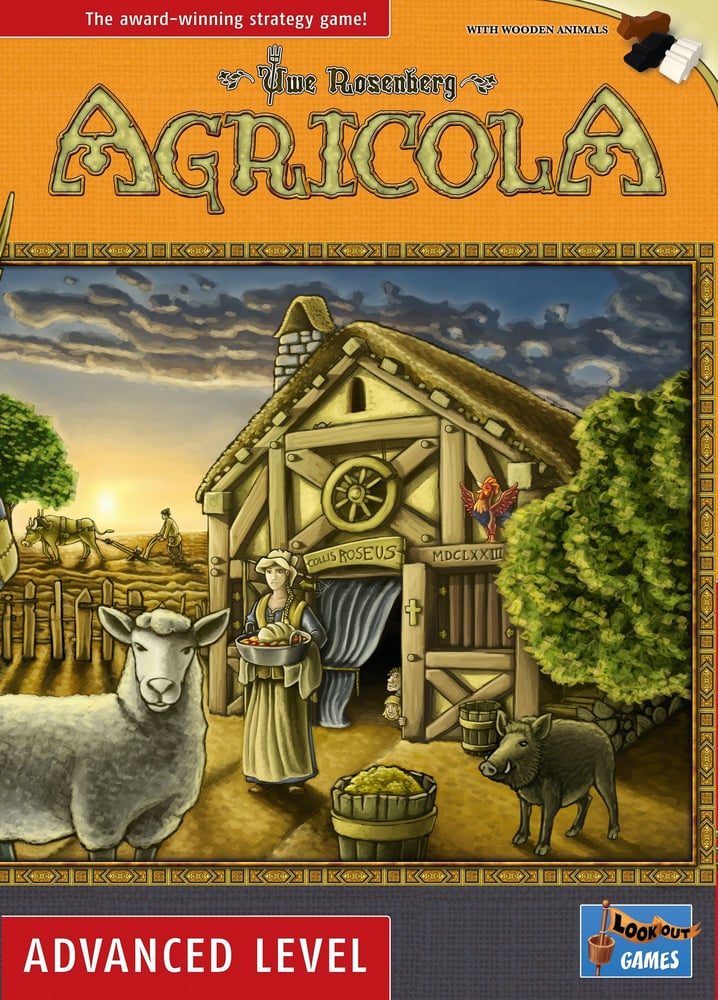
Updated and streamlined for a new generation of players, Agricola, the award-winning and highly acclaimed game by Uwe Rosenberg, features a revised rulebook and gameplay, wood pieces and components, and a card selection from the base game as well as its expansions, revised and updated for this edition. The 17th century was not an easy time to be a farmer. Players begin the game with two family members and can grow their families over the course of the game. This allows them more actions but remember you have to grow more food to feed your family as it grows! Feeding your family is a special kind of challenge and players will plant grain and vegetables while supplementing their food supply with sheep, wild boar and cattle. Guide your family to wealth, health and prosperity and you will win the game.
1959· 61 videos·Allan B. CalhamerMainly how-to-play and reviews
- Videos
- 61
- Creators
- 21
Diplomacy is covered on BoardGameVideo.com by 13 reviews, 21 how-to-play guides, 6 recorded sessions, 3 unboxings, and 18 other videos.
2 - 7 players360 minHeavy weight: Expect a long teachView on BoardGameGeek ›About Diplomacy, from BoardGameGeek:
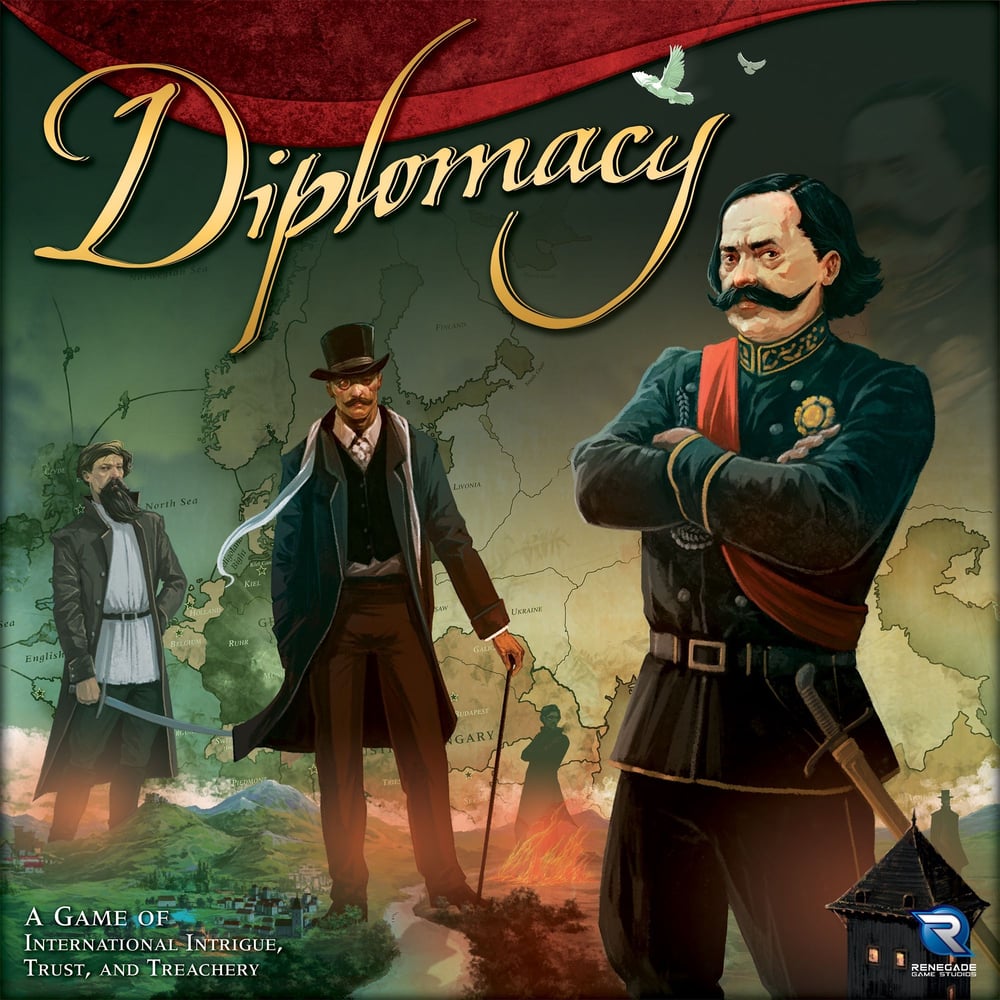
Diplomacy, the classic boardgame of pure negotiation has taken many forms over the years. The first The Avalon Hill Game Co version has perhaps the widest release, but Avalon Hill re-released the game in 1999, complete with a colorful new map and metal pieces. In 2008, Avalon Hill released a 50th anniversary edition with a new map and cardboard pieces representing the armies and navies. In the game, each player represents one of the seven "Great Powers of Europe" (Great Britain, France, Austria-Hungary, Germany, Italy, Russia or Turkey) in the years prior to World War I. Play begins in the Spring of 1901, and players must negotiate and make deals with other players in order to have any success in expanding their borders. They will make both Spring and Autumn moves each year. with two kinds of military units: armies and fleets. On any given turn, each of your military units has limited options: it can move into an adjoining territory, support an allied unit in an attack on an adjoining territory, support an allied unit in defending an adjoining territory, or hold its position. Players instruct each of their units by writing a set of "orders." The outcome of the various orders is basically determined by the total strength of the units involved. There are no dice rolls or other elements of chance. With its incredibly simplistic movement mechanism fused to a significant negotiation element, this system is highly respected by many gamers. Avalon Hill Complexity rating - 3 Re-implemented by: Colonial Diplomacy Diplomacy: Classical Variant Diplomacy: Hundred Variant

2019· 60 videos·Stefan FeldMainly reviews and playthroughs
- Videos
- 60
- Creators
- 47
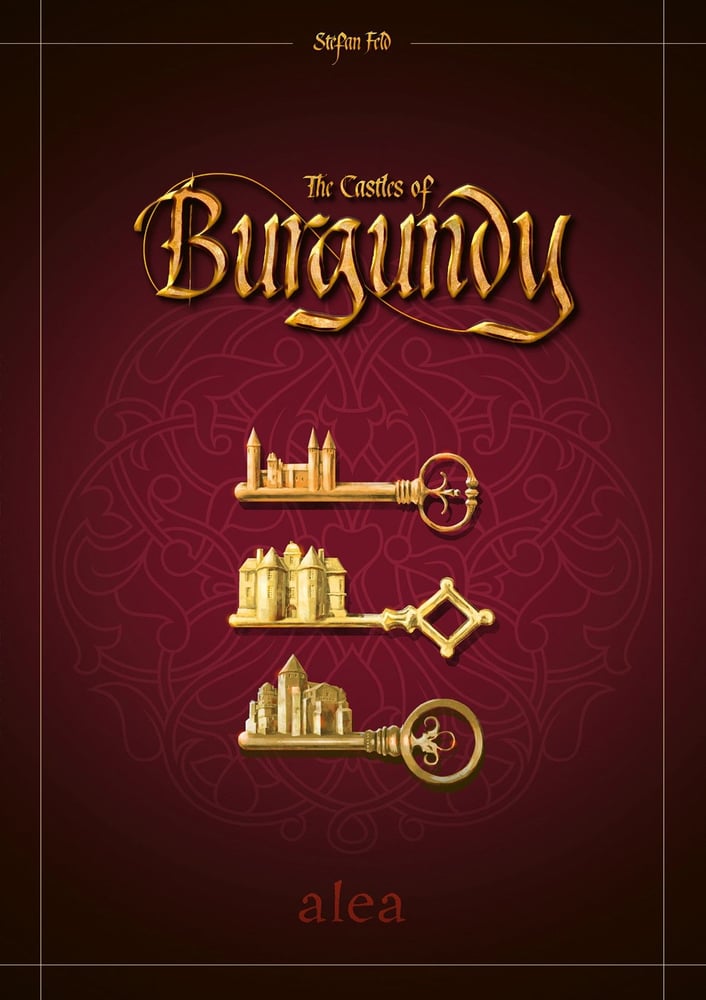
The Castles of Burgundy is covered on BoardGameVideo.com by 20 reviews, 9 how-to-play guides, 15 recorded sessions, 7 unboxings, and 9 other videos.
1 - 4 players70 - 120 minMedium weight: Teach it in one sittingView on BoardGameGeek ›About The Castles of Burgundy, from BoardGameGeek:
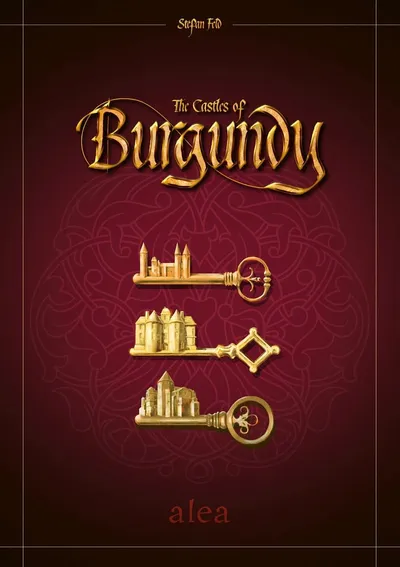
The Castles of Burgundy is set in the Burgundy region of High Medieval France. Each player takes on the role of an aristocrat, originally controlling a small princedom. While playing, they aim to build settlements and powerful castles, practice trade along the river, exploit silver mines, and use the knowledge of travelers. The game is about players taking settlement tiles from the game board and placing them into their princedom, which is represented by the player board. Every tile has a function that starts when the tile is placed in the princedom. The princedom itself consists of several regions, each of which demands its own type of settlement tile. The game is played in five phases, each consisting of five rounds. Each phase begins with the game board stocked with settlement tiles and goods tiles. During each round, players take their turns in the current turn order. During their turn, a player may perform any two of the four possible types of actions: Place a settlement tile in the staging area on their player board. Place a settlement tile from the staging area of their player board to a space on their player board. Deliver goods with a number matching one of their dice. Take worker tokens that allow the player to adjust the roll of their dice. Each settlement tile offers a benefit: additional actions, additional money, advancement on the turn order track, more goods tiles, die roll adjustment or victory points. Bonus victory points are awarded for filling a region with settlement tiles. The game ends when the last player finishes their turn of the fifth round of the fifth phase. Victory points are awarded for unused money and workers and for undelivered goods. Bonus victory points from certain settlement tiles are awarded at the end of the game. The player with the most victory points wins.
2020· 40 videos·Antoine BauzaMainly reviews and how-to-play
- Videos
- 40
- Creators
- 30
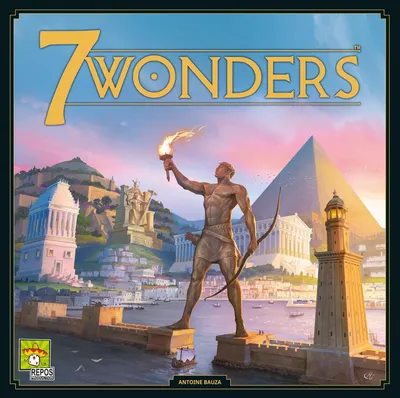
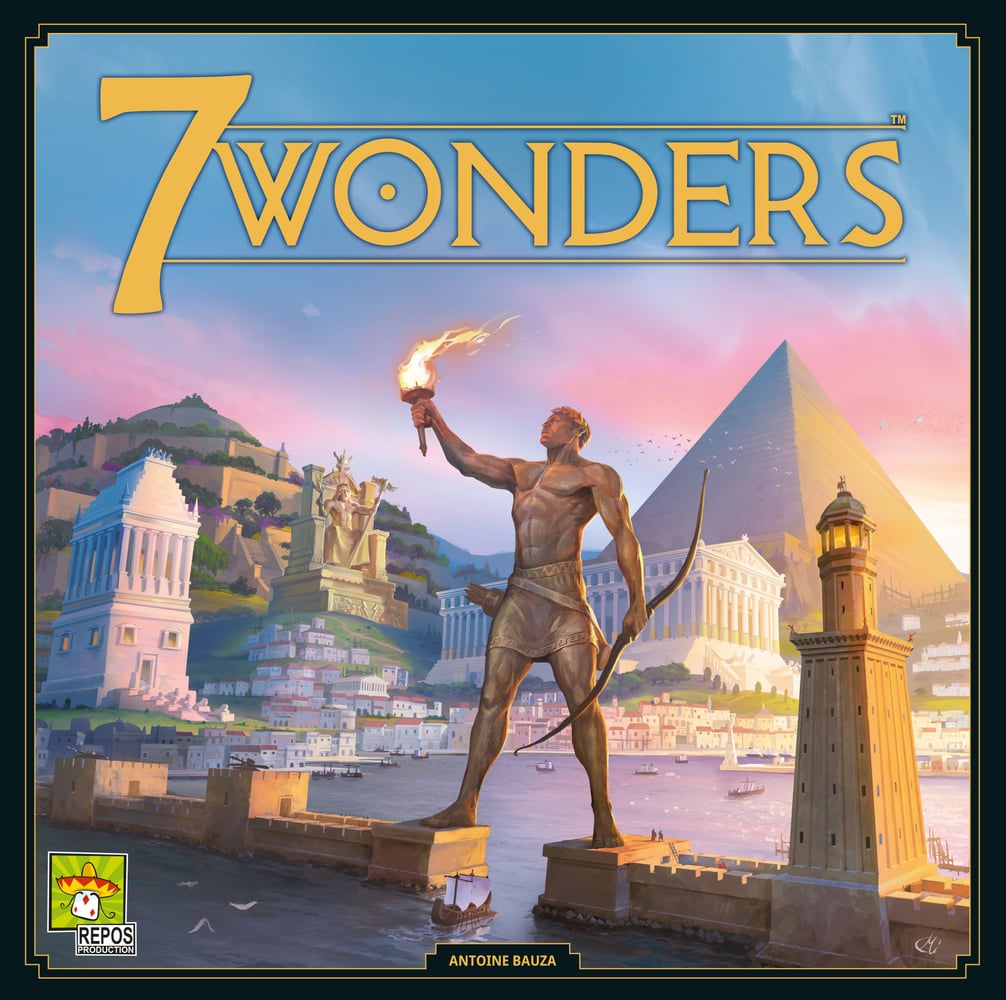
7 Wonders (Second Edition) is covered on BoardGameVideo.com by 12 reviews, 8 how-to-play guides, 5 recorded sessions, 7 unboxings, and 8 other videos.
3 - 7 players30 minMedium weight: Teach it in one sittingView on BoardGameGeek ›About 7 Wonders (Second Edition), from BoardGameGeek:
7 Wonders The board game with more awards than any other game on the planet. With over 30 international awards, and over a million copies sold throughout the world, rediscover 7 Wonders, the game which has won more awards than any other game in the world, in a whole new version. Lauded by both the public and critics, 7 Wonders has claimed its place as an unmissable reference point in modern board gaming. 7 Wonders is based on a simple and elegant mechanic (drafting) which allows up to 7 players to play with no dead time. Players make their choice and apply all of them at the same time. These choices are varied and their impact is real. Finally, the game is divided into 3 Ages which little by little increase the importance of these choices and thus the tension in the game. The global mechanics and the care given to the artwork are used to immerse the player in Antiquity and have contributed to the game's success. A game plays out over 3 rounds, called Ages, during which you simultaneously play cards, one at a time, to develop your City. These cards represent the various Buildings you can construct: resource producers, civilian, commercial, military, scientific structures, and guilds. At the end of each Age, you go to war with your nearest neighbours. At the end of all 3 Ages, you tally up all of the victory points earned by your City, your wonder, your military prowess, and your treasury. The player with the highest score wins the game. Content: 7 Wonder boards 148 Age cards: 49 Age I cards, 49 Age II cards, and 50 Age III cards 78 Coins: 54 Coins of value 1, and 24 Coins of value 3 48 Military Conflict tokens: 24 Defeats and 24 Victories (8 per Age) 1 pad of score sheets 3 quick reference sheets describing the effects of the cards 1 List of cards and chaining leaflet 1 rulebook
1980· 38 videos·Francis TreshamMainly playthroughs
- Videos
- 38
- Creators
- 4
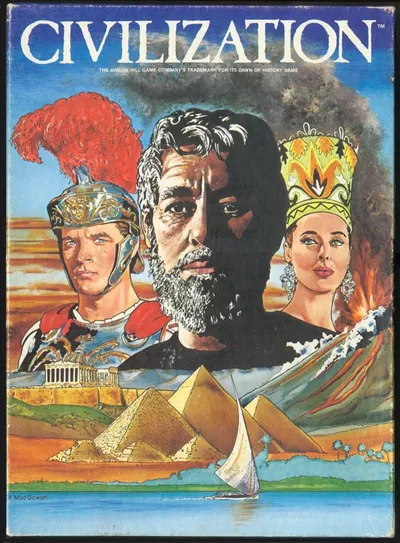
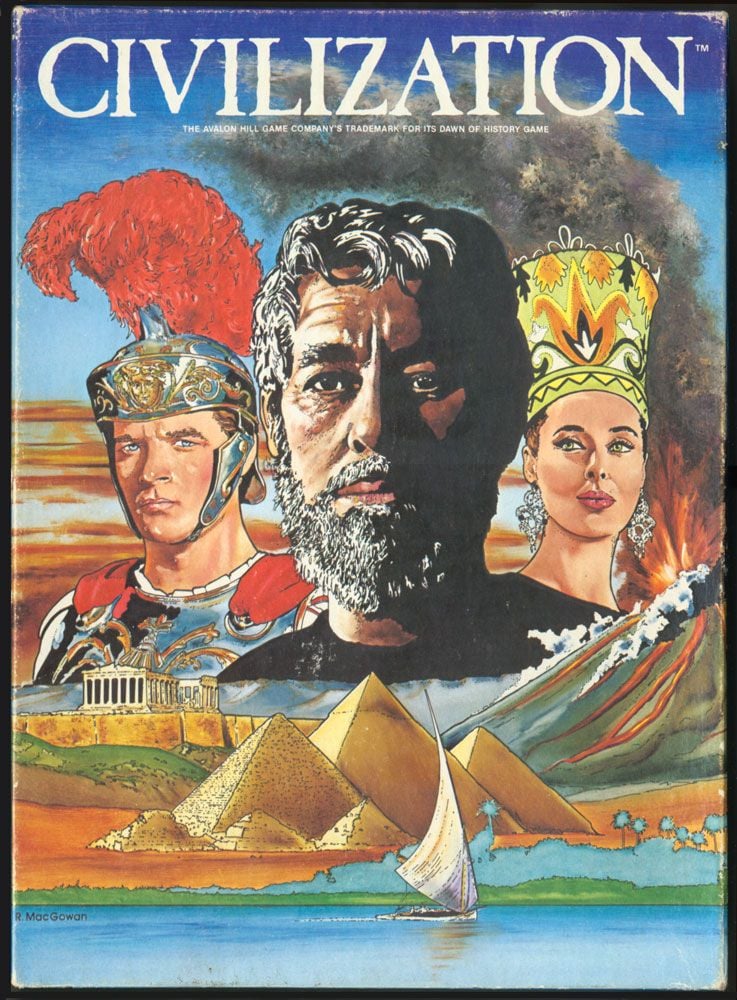
Civilization is covered on BoardGameVideo.com by 6 reviews, 3 how-to-play guides, 24 recorded sessions, 2 unboxings, and 3 other videos.
2 - 7 players360 minHeavy weight: Expect a long teachView on BoardGameGeek ›About Civilization, from BoardGameGeek:
Civilization is a game of skill for 2 to 7 players. It covers the development of ancient civilizations from the invention of agriculture c. 8000 B.C. to the emergence of Rome around the middle of the third century B.C. Each player leads a nation of peoples over a map board of the Eastern Mediterranean and Near East as they attempt to carve a niche for themselves and their culture. Although battles and territorial strategy are important, this is not a war game because it is not won by battle or conquest. Instead, the object of play is to gain a level of overall advancement involving cultural, economic, and political factors so that such conflicts that do arise are a result of rivalry and land shortage rather than a desire to eliminate other players. Nomad and farmer, warrior and merchant, artisan and citizen all have an essential part to play in the development of civilization. It is the player who most effectively changes emphasis between these various outlooks who will achieve the best balance and win. (from the Introduction to the Avalon Hill edition rulebook) This game has a huge following and is widely regarded as one of the best games about ancient civilizations. Each player takes on the role of leader of an ancient civilization, such as the Illyrians or Babylonians. Your task is to guide your people through the ages by expanding your empire and using its proceeds to finance new technological advances, such as Literacy, Metalworking, or Law. The advancements help your civilization better cope with its problems as well as help bring new advancements. Civilization is widely thought to be the first game ever to incorporate a "technology tree," allowing players to gain certain items and abilities only after particular other items were obtained. This influential mechanism has been adopted by countless other board games, card games, and computer games.
2004· 14 videos·Friedemann FrieseMainly reviews
- Videos
- 14
- Creators
- 11
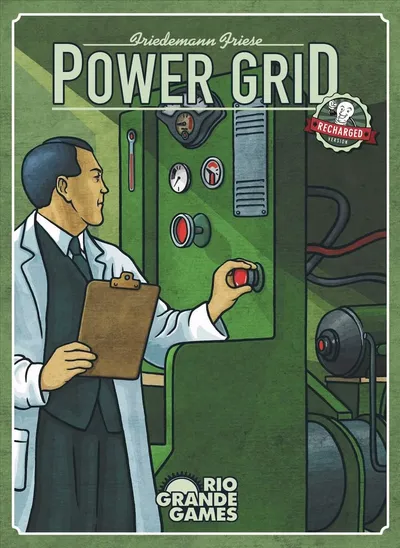
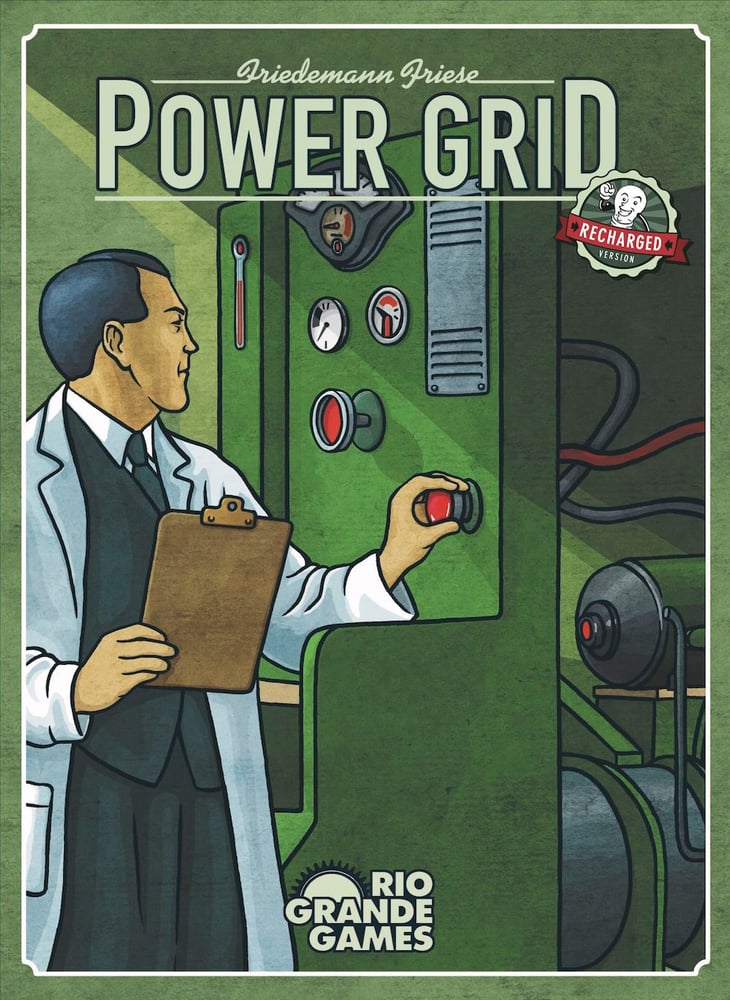
Power Grid is covered on BoardGameVideo.com by 7 reviews, 3 how-to-play guides, 1 unboxings, and 3 other videos.
2 - 6 players120 minHeavy weight: Expect a long teachView on BoardGameGeek ›About Power Grid, from BoardGameGeek:
Power Grid is the updated release of the Friedemann Friese crayon game Funkenschlag. It removes the crayon aspect from network building in the original edition, while retaining the fluctuating commodities market like Crude: The Oil Game and an auction round intensity reminiscent of The Princes of Florence. The objective of Power Grid is to supply the most cities with power when someone's network gains a predetermined size. In this new edition, players mark pre-existing routes between cities for connection, and then bid against each other to purchase the power plants that they use to power their cities. However, as plants are purchased, newer, more efficient plants become available, so by merely purchasing, you're potentially allowing others access to superior equipment. Additionally, players must acquire the raw materials (coal, oil, garbage, and uranium) needed to power said plants (except for the 'renewable' windfarm/ solar plants, which require no fuel), making it a constant struggle to upgrade your plants for maximum efficiency while still retaining enough wealth to quickly expand your network to get the cheapest routes. ☛ Power Grid FAQ - Please read this before posting a rules question! Many questions are asked over and over in the forums... If you have a question about a specific expansion, please check the rules forum or FAQ for that particular expansion.

2005· 9 videos·William AttiaSome how-to-play
- Videos
- 9
- Creators
- 5
Caylus is covered on BoardGameVideo.com by 1 reviews, 3 how-to-play guides, 1 recorded sessions, and 4 other videos.
2 - 5 players60 - 150 minHeavy weight: Expect a long teachView on BoardGameGeek ›About Caylus, from BoardGameGeek:
Once upon a time ... 1289. To strengthen the borders of the Kingdom of France, King Philip the Fair decided to have a new castle built. For the time being, Caylus is but a humble village, but soon, workers and craftsmen will be flocking by the cartload, attracted by the great prospects. Around the building site, a city is slowly rising up. The players embody master builders. By building the King's castle and developing the city around it, they earn prestige points and gain the King's favor. When the castle is finished, the player who has earned the most prestige wins the game. The expansion Caylus: Jeweler promo tile was included in the 2nd Edition. Each turn, players pay to place their workers in various buildings in the village. These buildings allow players to gather resources or money, or to build or upgrade buildings with those resources. Players can also use their resources to help build the castle itself, earning points and favors from the king, which provide larger bonuses. Building a building provides some immediate points, and potentially income throughout the game, since players receive bonuses when others use their buildings. The buildings chosen by the players have a heavy impact on the course of the game, since they determine the actions that will be available to all the players. As new buildings are built, they stretch along a road stretching away from the castle, and not all buildings can be used every turn. Players have some control over which buildings are active by paying to influence the movement of the Provost marker. The final position of the marker is the newest building that can be used that turn. The Provost marker also helps determine the movement of the Bailiff marker, which determines the end of the game. Generally, if players are building many buildings and the Provost is generous in allowing them to be used, the game ends more quickly.

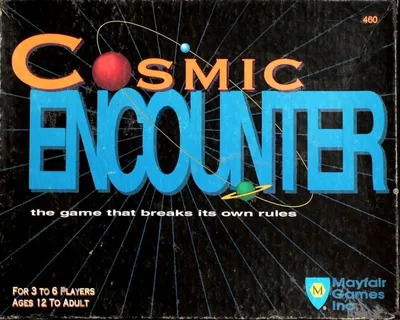
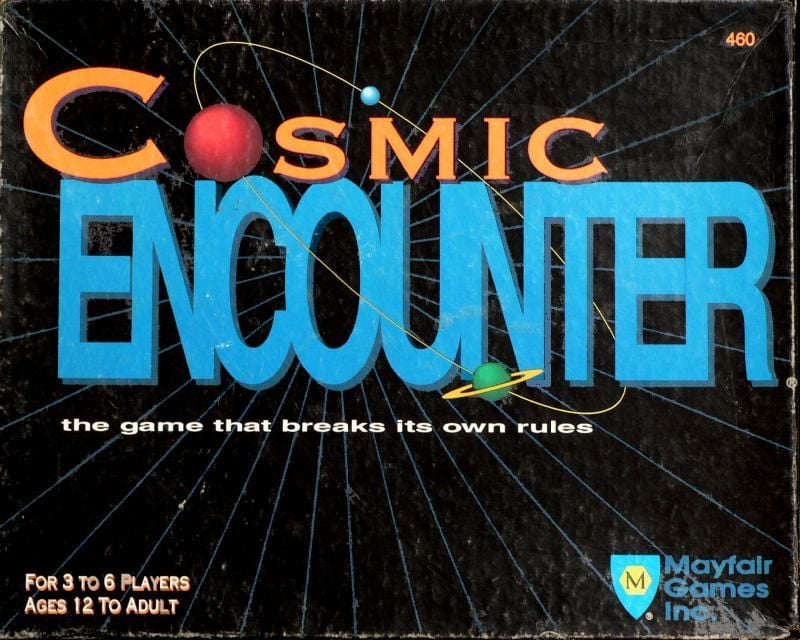
1991· 8 videos·Bill Eberle, Jack Kittredge, Bill Norton, Peter OlotkaMainly playthroughs
- Videos
- 8
- Creators
- 4
Cosmic Encounter is covered on BoardGameVideo.com by 1 reviews, 5 recorded sessions, and 2 other videos.
3 - 6 players60 minMedium weight: Teach it in one sittingView on BoardGameGeek ›About Cosmic Encounter, from BoardGameGeek:
Players represent alien races that are seeking to spread themselves onto five foreign worlds. To accomplish this, they make challenges against other players and enlist the aid of interested parties. But alien powers, which are unique to each race, give players ways to bend or outright break some rule in the game. This is an updated version of the original Eon Cosmic Encounter (1977). Major differences between this version and the Eon version: Flares in the Mayfair version are "use once and discard", as opposed to Eon's version, which lets players keep them in their hands and reuse them. Mayfair introduced phase / timing icons on all Powers, Flares, and Edicts to clearly indicate when each could be used. Mayfair introduced new Edicts, and several new Alien Powers with corresponding Flares. Moons (in the More Cosmic Encounter expansion) have text written on their backs (instead of only a number which you used to refer to a separate list). Moons were also divided into four categories: Full Moons have a major effect on the game; Half Moons are more moderate in their effects; Quarter Moons have a minor effect; Cheese Moons introduce silliness to the game. Lucre (also in the More Cosmic Encounter expansion) was revamped with additional uses, and players were required to spend it to affect their challenge totals. Mayfair introduced a new card: Reinforcements (also in the More Cosmic Encounter expansion). Expanded by: More Cosmic Encounter Cosmic Supreme (allows 2 more players) Re-implements: Eon's Cosmic Encounter (1977) Re-implemented by: Simply Cosmic, Mayfair's simplified version (which can be added to allow 4 more players)
Explore more videos
















Description provided by BoardGameGeek on YouTube:
00:00:00 Diplomacy 00:05:24 Acquire 00:08:24 Cosmic Encounter 00:13:13 Civilization 00:17:21 1830 00:25:46 Magic: The Gathering 00:37:04 CATAN 00:42:13 El Grande 00:46:01 Tigris & Euphrates 00:52:56 Ra 00:59:34 Carcassone 01:05:55 Power Grid 01:09:55 Ticket to Ride 01:16:24 Caylus 01:23:53 Twilight Struggle 01:29:46 Through the Ages 01:37:22 Agricola 01:42:12 Brass 01:49:49 Race for the Galaxy 01:54:06 Dominion 02:00:16 Pandemic 02:06:47 7 Wonders 02:11:19 The Castles of Burgundy 02:17:41 Terra Mystica 02:23:13 Concordia The BoardGameGeek Hall of Fame: https://boardgamegeek.com/geekpreview/72 #BoardGameGeek #BGGHallofFame #boardgame #halloffame Follow us at: https://bsky.app/profile/boardgamegeek.com https://instagram.com/boardgamegeek https://facebook.com/boardgamegeek https://www.twitch.tv/boardgamegeektv https://twitter.com/@boardgamegeek
Related Content
game
More Magic: The Gathering videos
game
More Catan videos
game
More Ra videos
game
More Ticket to Ride videos
game
More Twilight Struggle videos
game
More Concordia videos
game
More Pandemic videos
game
More Acquire videos
game
More The Castles of Burgundy videos
game
More Dominion videos
game
More El Grande videos
game
More 7 Wonders videos
game
More Cosmic Encounter videos
game
More Terra Mystica videos
game
More Tigris & Euphrates videos
game
More Agricola videos
game
More Race for the Galaxy videos
game
More Agricola (Revised Edition) videos
game
More Diplomacy videos
game
More The Castles of Burgundy videos
game
More 7 Wonders (Second Edition) videos
game
More Civilization videos
game
More Power Grid videos
game
More Caylus videos
game
More Cosmic Encounter videos
channel
More videos from this channel