
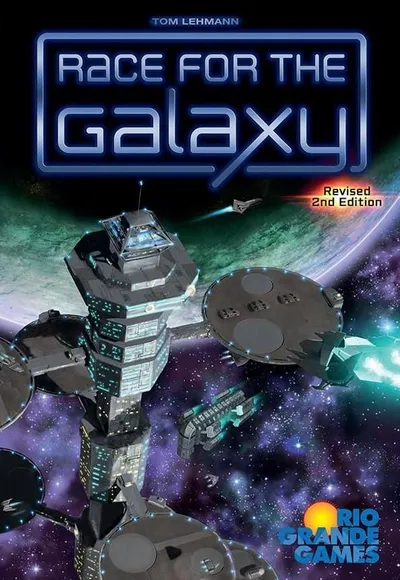
Race for the Galaxy
2007Thomas Lehmann
- Videos
- 64
- Creators
- 51
Mostly reviews and how-to-play. Race for the Galaxy is covered on BoardGameVideo.com by 23 reviews, 19 how-to-play guides, 10 recorded sessions, 3 unboxings, and 9 other videos.
2 - 4 players
30 - 60 min
Heavy weight: Expect a long teach
From BoardGameGeek
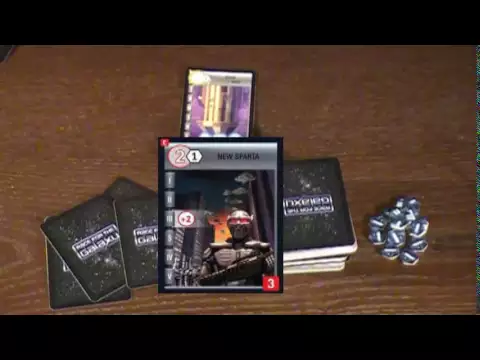
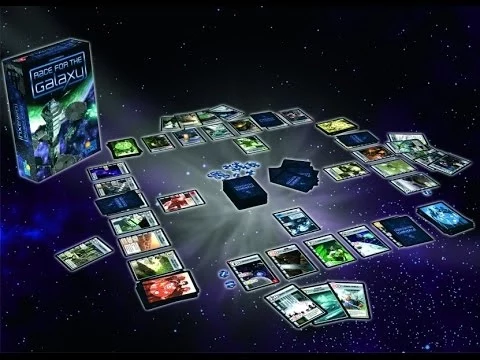
In Race for the Galaxy, players build galactic civilizations by playing cards representing worlds or technical and social developments. Each round, players secretly and simultaneously select an action card corresponding to one phase of a round. These phases let players draw cards, play cards, add goods to worlds, or consume goods for VP chips. Only the phases chosen will occur that round. Every player may act in a phase that occurs, but the players who chose that phase get a bonus. Game end is triggered either when a player has built a civilization of 12 cards or when the pool of VP chips is exhausted. Each player then totals the victory points in their tableau plus any VP chips earned during play. Detailed Overview Race for the Galaxy tells a story of galactic discovery and expansion through a single deck of cards. Every card in the deck represents either a world that you might settle or a development that you might implement. Cards placed into your tableau represent your current achievements -- worlds you have colonized, technology you now wield -- while cards in your hand represent the options currently available to you. To play a card, discard the number of cards equal to its cost, representing other opportunities you must forgo to concentrate on your current course. Once in your tableau, a card provides special powers during the game and, at the end, its listed number of victory points. Many worlds, once placed, also produce goods that can be traded for more cards or consumed for VP chips. Race for the Galaxy is played in rounds. In each round, you and your opponents secretly select an action phase for the upcoming turn. You can choose to: • Place a world in your tableau with settle or a development with develop. • Produce goods on worlds with produce. • Consume goods for VPs with consume. • Add cards to your hand with explore or by trading a good. Each round, only those phases that are selected will occur -- but they'll occur for everyone. Selecting a phase both ensures that it occurs that round and gains the selecting player a bonus. Round follows round until someone builds their tableau to twelve cards, or until the last VP chip is claimed. The victor is the player with the most VPs. 2018 UPDATE The second edition of the game is improved for CVD (color blindness) and includes 5 revised cards from the original version and 6 New Worlds promo homeworlds. The promo homeworlds and first edition compatible Revised Cards are both available for purchase through the BGG store. UPC 655132003018
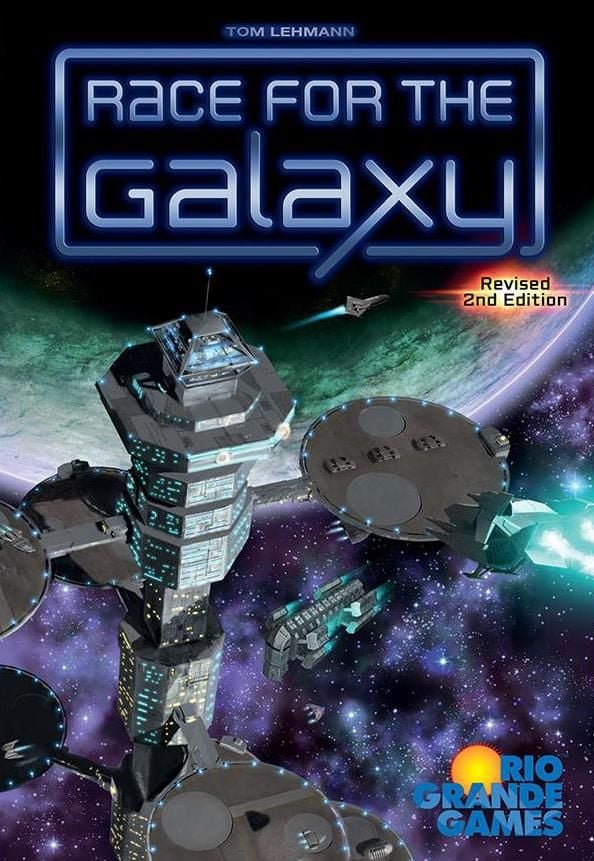
Watch first






Which Race for the Galaxy video should I watch?
Race for the Galaxy has 64 videos from 51 creators: 23 reviews, 19 how-to-play guides, 10 playthroughs, 3 unboxings and 9 other videos. They date from 2009 to September 2026.
To learn the rules, start with "Race for the Galaxy - The Rules and Gameplay Tutorial" by Modern Cardboard, which runs 30 min. For a quicker teach, "rftg-tutorial-3of3" by onigame runs 6 min.
For an opinion before you buy, start with "Race for the Galaxy Gameplay Runthrough" by Rahdo Runs Through. 20 creators have reviewed it. To see it played, watch "Play It - Race For The Galaxy (Solo)" by Super Happy Awesome Gaming, one of 10 playthroughs.
If you like it, try Res Arcana, New Frontiers, Dice Realms and Jump Drive, also by Thomas Lehmann.
All videos






























































8 of 51
Creators who cover this

The Dice Tower
4 videos of this game

Nights Around a Table
3 videos of this game

onigame
3 videos of this game

rayreviewsgames
3 videos of this game

bestdanggames
2 videos of this game

ChihuahuaPrint3D
2 videos of this game

JugandoConKetty
2 videos of this game

Legendary Tactics
2 videos of this game
Games like this

About Race for the Galaxy
From BoardGameGeek:
In Race for the Galaxy, players build galactic civilizations by playing cards representing worlds or technical and social developments. Each round, players secretly and simultaneously select an action card corresponding to one phase of a round. These phases let players draw cards, play cards, add goods to worlds, or consume goods for VP chips. Only the phases chosen will occur that round. Every player may act in a phase that occurs, but the players who chose that phase get a bonus. Game end is triggered either when a player has built a civilization of 12 cards or when the pool of VP chips is exhausted. Each player then totals the victory points in their tableau plus any VP chips earned during play. Detailed Overview Race for the Galaxy tells a story of galactic discovery and expansion through a single deck of cards. Every card in the deck represents either a world that you might settle or a development that you might implement. Cards placed into your tableau represent your current achievements -- worlds you have colonized, technology you now wield -- while cards in your hand represent the options currently available to you. To play a card, discard the number of cards equal to its cost, representing other opportunities you must forgo to concentrate on your current course. Once in your tableau, a card provides special powers during the game and, at the end, its listed number of victory points. Many worlds, once placed, also produce goods that can be traded for more cards or consumed for VP chips. Race for the Galaxy is played in rounds. In each round, you and your opponents secretly select an action phase for the upcoming turn. You can choose to: • Place a world in your tableau with settle or a development with develop. • Produce goods on worlds with produce. • Consume goods for VPs with consume. • Add cards to your hand with explore or by trading a good. Each round, only those phases that are selected will occur -- but they'll occur for everyone. Selecting a phase both ensures that it occurs that round and gains the selecting player a bonus. Round follows round until someone builds their tableau to twelve cards, or until the last VP chip is claimed. The victor is the player with the most VPs. 2018 UPDATE The second edition of the game is improved for CVD (color blindness) and includes 5 revised cards from the original version and 6 New Worlds promo homeworlds. The promo homeworlds and first edition compatible Revised Cards are both available for purchase through the BGG store. UPC 655132003018
Designer
Thomas Lehmann
Artists
Martin Hoffmann, Claus Stephan
Publisher
Rio Grande Games
Categories
Mechanics
End Game BonusesAction SelectionHand ManagementResource Management