























































2019Klaus Teuber
- Videos
- 39
- Creators
- 31
Mainly reviews and unboxings
3 - 4 players120 minMedium weight
1995Klaus Teuber
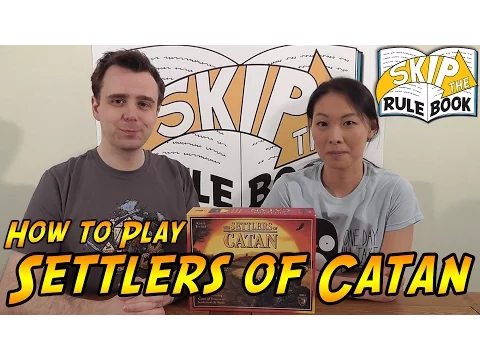
Mainly reviews and how-to-play. Catan is covered on BoardGameVideo.com by 38 reviews, 29 how-to-play guides, 17 recorded sessions, 7 unboxings, and 56 other videos.
From BoardGameGeek
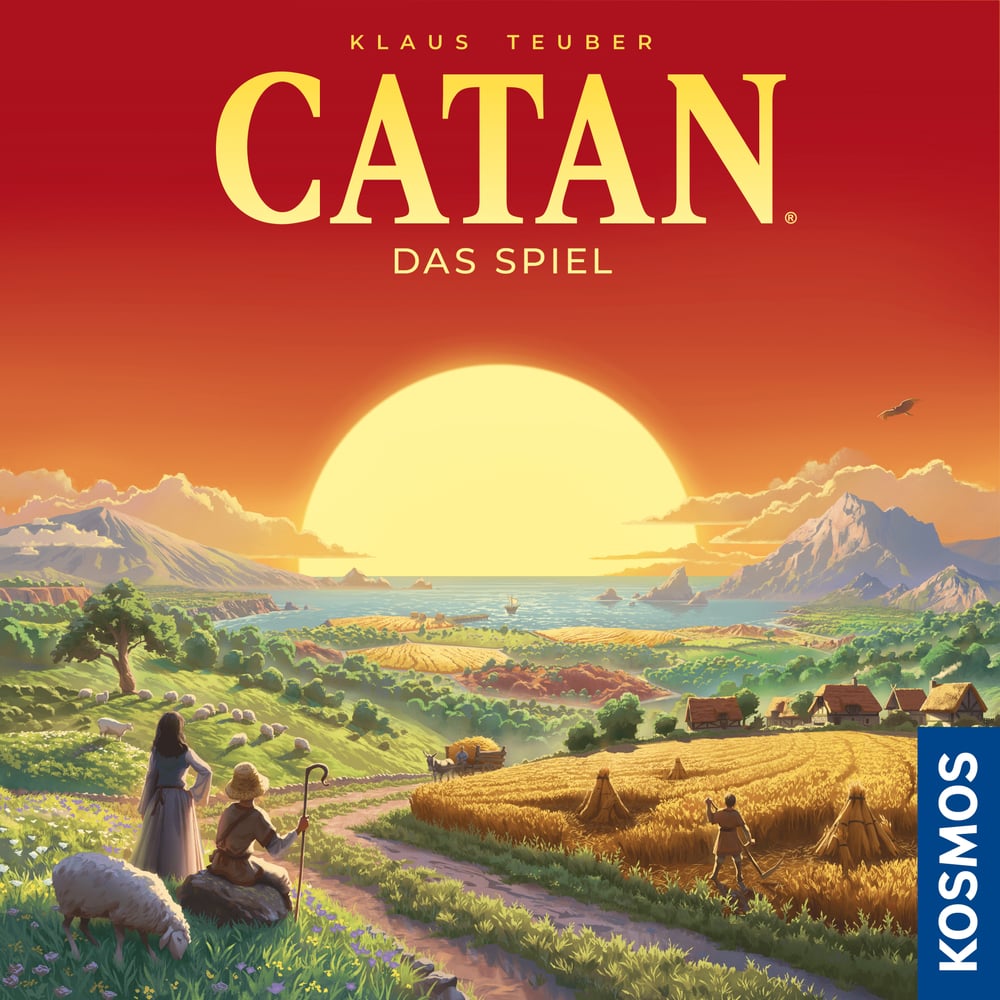
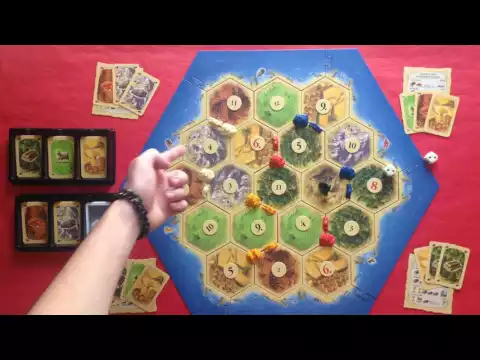
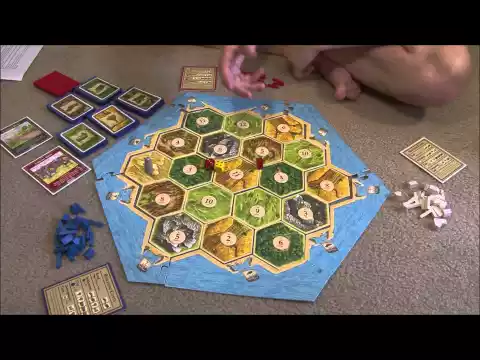
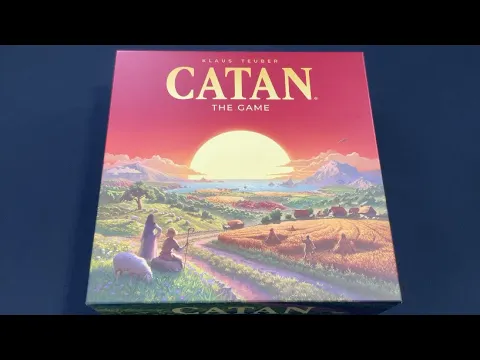
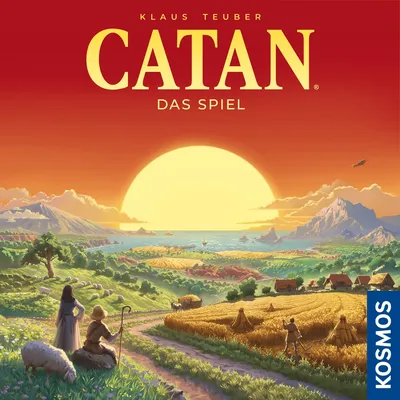
In CATAN (formerly The Settlers of Catan), players try to be the dominant force on the island of Catan by building settlements, cities and roads. On each turn dice are rolled to determine which resources the island produces. Players build structures by 'spending' resources (sheep, wheat, wood, brick and ore) which are represented by the relevant resource cards; each land type, with the exception of the unproductive desert, produces a specific resource: hills produce brick, forests produce wood, mountains produce ore, fields produce wheat, and pastures produce sheep. Set-up includes randomly placing large hexagonal tiles (each depicting one of the five resource-producing terrain types--or the desert) in a honeycomb shape and surrounding them with water tiles, some of which contain ports of exchange. A number disk, the value of which will correspond to the roll of two 6-sided dice, are placed on each terrain tile. Each player is given two settlements (think: houses) and roads (sticks) which are placed on intersections and borders of the terrain tiles. Players collect a hand of resource cards based on which terrain tiles their last-placed settlement is adjacent to. A robber pawn is placed on the desert tile. A turn consists of rolling the dice, collecting resource cards based on this dice roll and the position of settlements (or upgraded cities-think: hotels), turning in resource cards (if possible and desired) for improvements, trading cards at a port, possibly playing a development card, or trading resource cards with other players. If the dice roll is a 7, the active player moves the robber to a new terrain tile and steals a resource card from another player who has a settlement adjacent to that tile. Points are accumulated by building settlements and cities, having the longest road or the largest army (from some of the development cards), and gathering certain development cards that simply award victory points. When a player has gathered 10 points (some of which may be held in secret), s/he announces this and claims the win.
Catan has 147 videos from 113 creators: 38 reviews, 29 how-to-play guides, 17 playthroughs, 7 unboxings and 56 other videos. They date from 2007 to October 2026.
To learn the rules, start with "Catan - How To Play" by Watch It Played, which runs 23 min. For a quicker teach, "How to Play The Settlers of Catan" by Triple S Games runs 5 min.
For an opinion before you buy, start with "Settlers of Catan - with Tom Vasel" by The Dice Tower. 34 creators have reviewed it. To see it played, watch "Settlers of Catan: Wil Wheaton, Jane Espenson, James Kyson, Neil Grayston. TableTop Episode 2" by Geek & Sundry, one of 17 playthroughs.
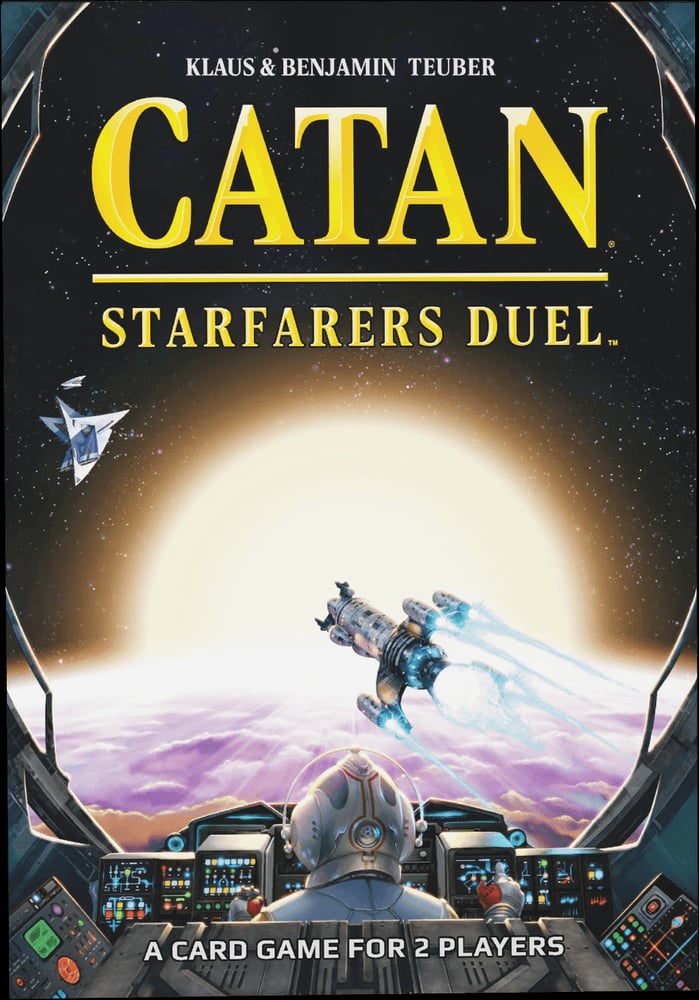
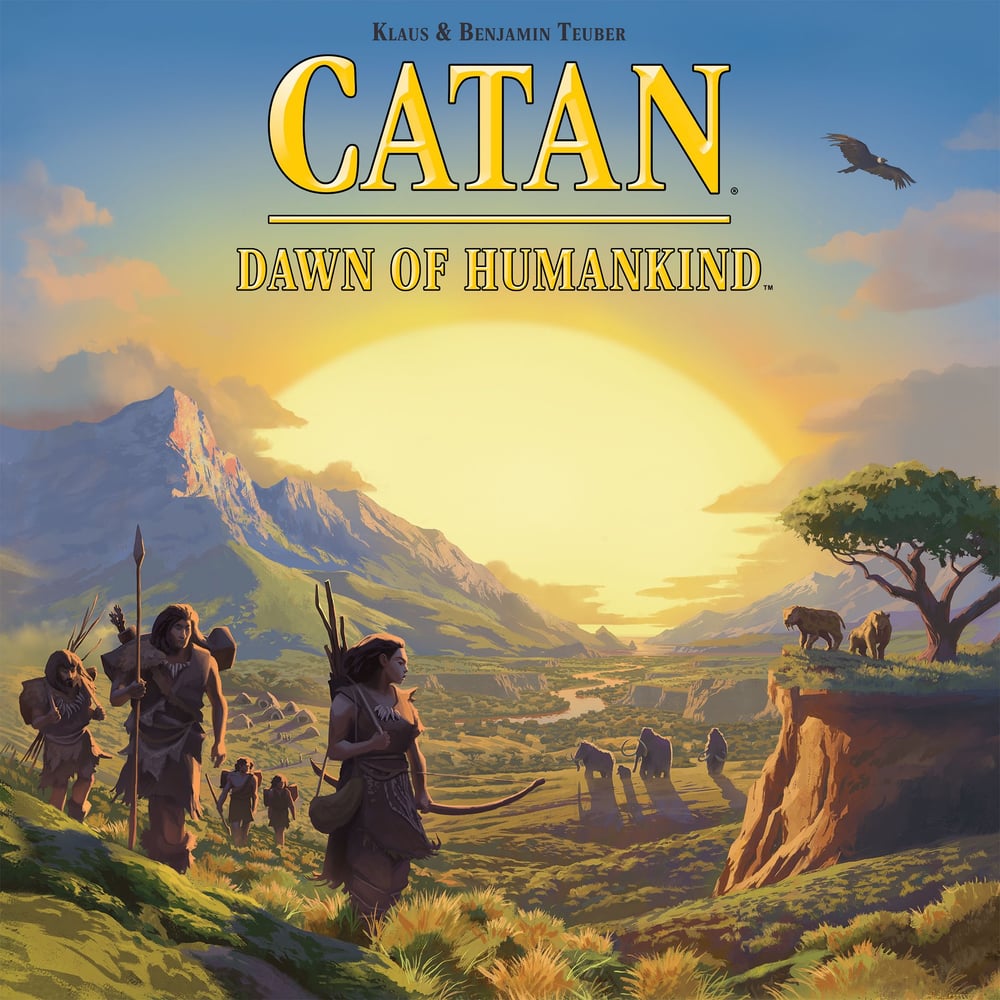
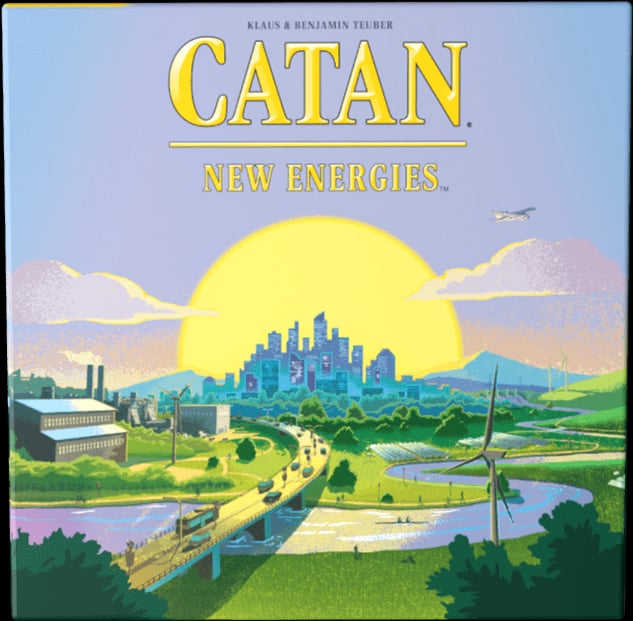
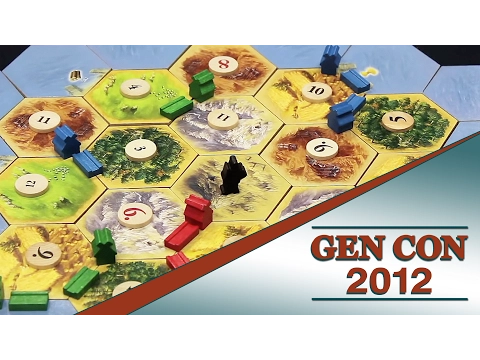
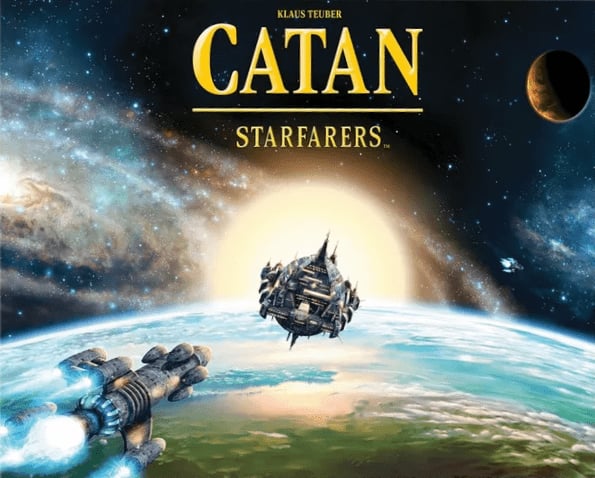
If you like it, try Catan: Starfarers, Catan: Starfarers Duel, Catan: Dawn of Humankind and Catan: New Energies, also by Klaus Teuber. It appears in convention videos from Gen Con 2012.
8 of 113


2019Klaus Teuber
3 - 4 players120 minMedium weight
2023Klaus Teuber, Benjamin Teuber
2 players75 minMedium weight
2022Klaus Teuber, Benjamin Teuber
3 - 4 players90 - 120 minMedium weight
2024Klaus Teuber, Benjamin Teuber
3 - 4 players90 minMedium weight
From BoardGameGeek:
In CATAN (formerly The Settlers of Catan), players try to be the dominant force on the island of Catan by building settlements, cities and roads. On each turn dice are rolled to determine which resources the island produces. Players build structures by 'spending' resources (sheep, wheat, wood, brick and ore) which are represented by the relevant resource cards; each land type, with the exception of the unproductive desert, produces a specific resource: hills produce brick, forests produce wood, mountains produce ore, fields produce wheat, and pastures produce sheep. Set-up includes randomly placing large hexagonal tiles (each depicting one of the five resource-producing terrain types--or the desert) in a honeycomb shape and surrounding them with water tiles, some of which contain ports of exchange. A number disk, the value of which will correspond to the roll of two 6-sided dice, are placed on each terrain tile. Each player is given two settlements (think: houses) and roads (sticks) which are placed on intersections and borders of the terrain tiles. Players collect a hand of resource cards based on which terrain tiles their last-placed settlement is adjacent to. A robber pawn is placed on the desert tile. A turn consists of rolling the dice, collecting resource cards based on this dice roll and the position of settlements (or upgraded cities-think: hotels), turning in resource cards (if possible and desired) for improvements, trading cards at a port, possibly playing a development card, or trading resource cards with other players. If the dice roll is a 7, the active player moves the robber to a new terrain tile and steals a resource card from another player who has a settlement adjacent to that tile. Points are accumulated by building settlements and cities, having the longest road or the largest army (from some of the development cards), and gathering certain development cards that simply award victory points. When a player has gathered 10 points (some of which may be held in secret), s/he announces this and claims the win.
Designer
Klaus Teuber
Artists
Volkan Baga, Tanja Donner, Pete Fenlon, Jason Hawkins, Eric Hibbeler, Michaela Kienle, Andreas Klober, Harald Lieske and 8 more
Publisher
KOSMOS
Categories
Mechanics