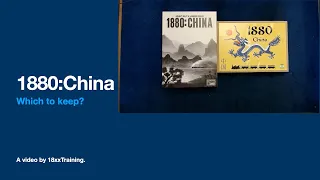
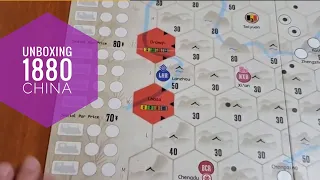
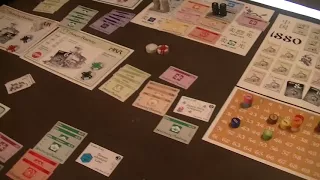
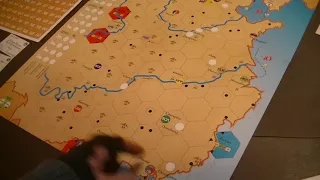
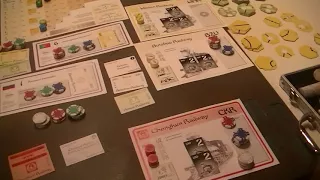
Watch “Wheel Tapping 07 - 1880: China,” a board game review for 1880: China from Wheel Tapping on BoardGameVideo.
Description provided by Wheel Tapping on YouTube:
This week Tony and I take a look at 1880: China from O&O Games! This is a real treat because we are joined by Ambie Valdes of The Dice Tower and Board Game Blitz. Ambie is no stranger to us as we have had her on talking about our favorite 18xx in the past as well being on our show, Game All Nite.
This conversation is a little tough as 80 is so different, but I think you will see why we are so in love with it!
Check out Ambie's Videos: https://www.youtube.com/playlist?list=PLOlRvTbmD6tJCzjOr2XGEwFMll79J58zv
Find Ambie: www.twitter.com/ambirona
Support us: 💳 www.patreon.com/wheeltapping
Find Chris: 🚇 www.twitter.com/wheeltapping
Find Tony: 🚂 www.twitter.com/afreyergames
Podcast: 🎤 wheeltapping.libsyn.com
Mostly playthroughs and how-to-play. 1880: China is covered on BoardGameVideo.com by 3 reviews, 5 how-to-play guides, 6 recorded sessions, and 2 unboxings.
3 - 7 players
300 min
Very heavy weight: Rules-dense, long sessions
About 1880: China, from BoardGameGeek:
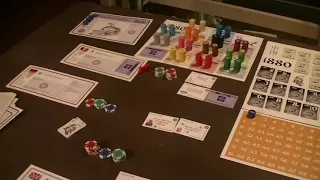
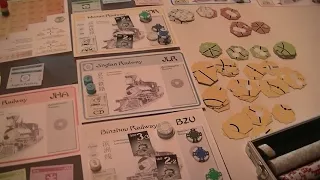
In 1880: China, based on 1829 by Francis Tresham, the players become railway barons in the far east, experiencing China's railway history in a game that was designed to represent related historical events as correctly as possible within its own game mechanisms. Being a classic 18xx game, the players compete to become the richest. In order to gain money, they buy and sell shares of China's historical railway companies, build and expand their railway network, and let trains travel on the networks. Shares of successful companies are worth more, and owning them will increase the chance to win the game. In the end, the player with the highest wealth combined from cash and shares wins.
1880: China innovates on the 18xx model as follows:
Turn order for companies doesn't change with the evolving stock prices; it is set along with the par price when a player opens a company.
The game includes a player-manipulated ratio of stock rounds and operation rounds. For example, a new stock round occurs when the last of a type of train is bought.