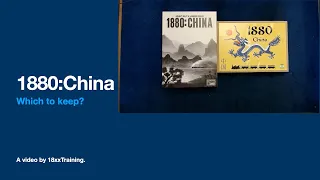
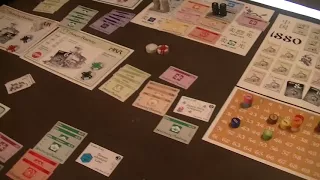
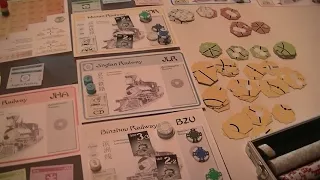
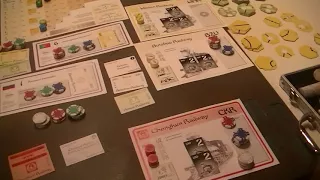
Watch “1880 Which to Keep?,” a gameplay video for 1880: China from 18xx Training Boardgame Zone on BoardGameVideo.
Description provided by 18xx Training Boardgame Zone on YouTube:
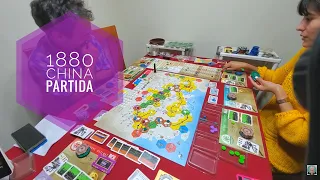
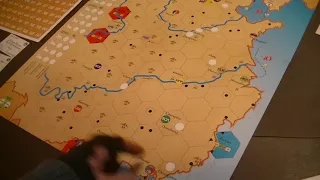
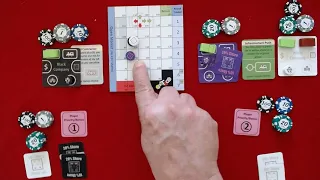
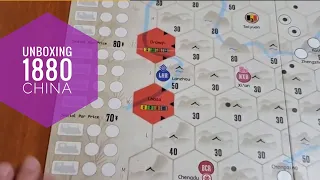
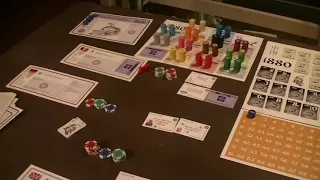
A look at 1880:China Lookout version and 1880:China Double O version. Trying to decide which one to keep. It shows how to fix the misprints on the Lookout version and the accessories available from cube4me. Then there is a live play of the initial auction, foreign investor selection, SR1 and OR1 at the end of the video. I apologize in advance, the live footage was a set up test and I considered not sharing it. Let me know what you think in the comments.
You can reach me at:
18xxtraining@gmail.com
Turn on the Klingon channel for corrections. Thank you.
Time Codes:
0:00 start
0:44 introduction
1:03 Misprints and fixes
1:56 Show case Cube4me accessories
03:55 Double O Edition
4:39 Initial Auction
8:18 Operating Round 1
14:10 Operating Round 2
16:50 Reseating
17:41 Investor Selection
22:38 Initial SR
34:05 OR1
Useful Links
Play games free at: 18xx.games
Golden Spike Games:
https://goldenspikegames.com/
All Aboard Games:
https://all-aboardgames.com/
Cubes4me.com (RailsonBoard)
https://cube4me.com/
Small White boxes:
https://www.walmart.com/ip/Pack-of-100-Solid-3-x-2-25-x-1-White-Gloss-Jewelry-Box-w-Non-Tarnish-Cotton-for-Small-Jewelry-Gifts/747164173
Mostly playthroughs and how-to-play. 1880: China is covered on BoardGameVideo.com by 3 reviews, 5 how-to-play guides, 6 recorded sessions, and 2 unboxings.
3 - 7 players
300 min
Very heavy weight: Rules-dense, long sessions
About 1880: China, from BoardGameGeek:
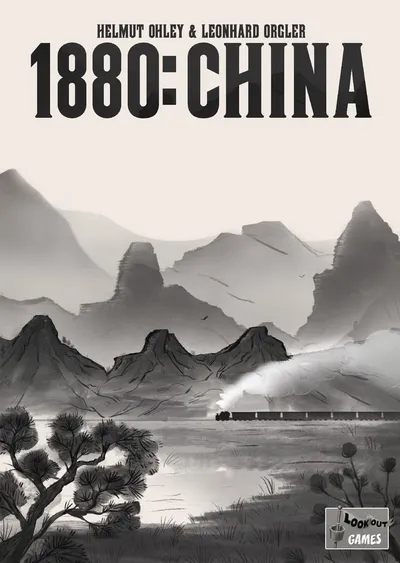
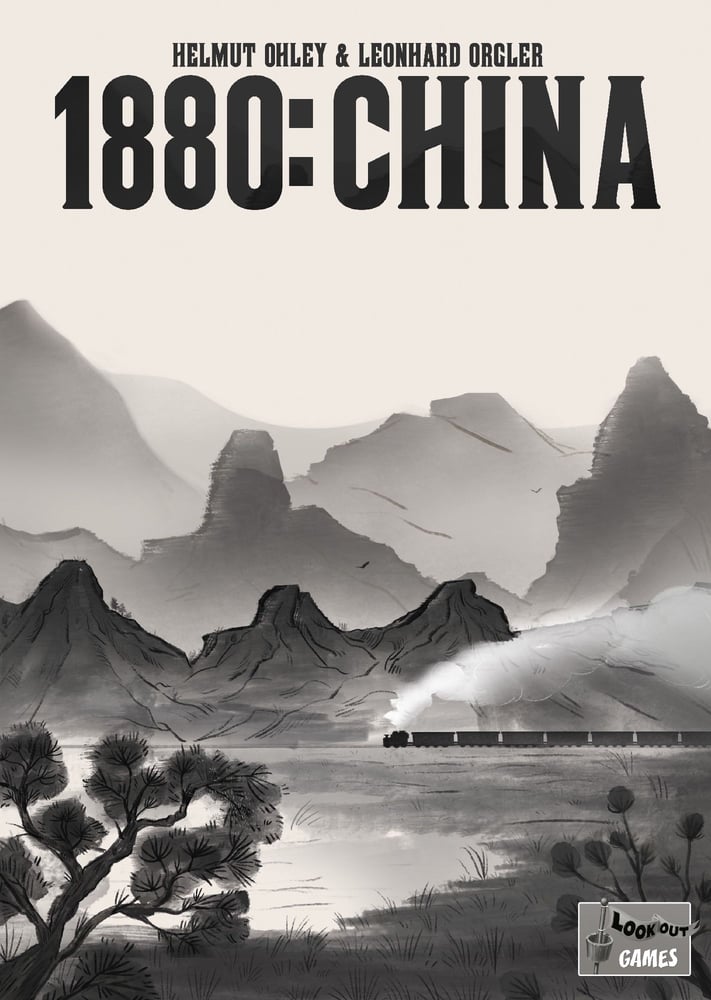
In 1880: China, based on 1829 by Francis Tresham, the players become railway barons in the far east, experiencing China's railway history in a game that was designed to represent related historical events as correctly as possible within its own game mechanisms. Being a classic 18xx game, the players compete to become the richest. In order to gain money, they buy and sell shares of China's historical railway companies, build and expand their railway network, and let trains travel on the networks. Shares of successful companies are worth more, and owning them will increase the chance to win the game. In the end, the player with the highest wealth combined from cash and shares wins.
1880: China innovates on the 18xx model as follows:
Turn order for companies doesn't change with the evolving stock prices; it is set along with the par price when a player opens a company.
The game includes a player-manipulated ratio of stock rounds and operation rounds. For example, a new stock round occurs when the last of a type of train is bought.