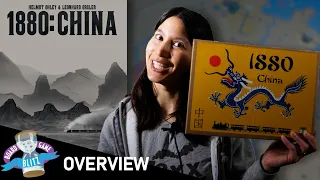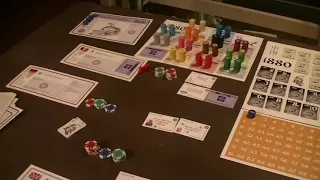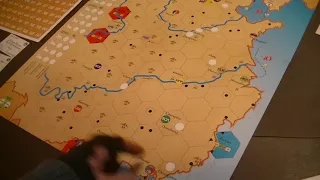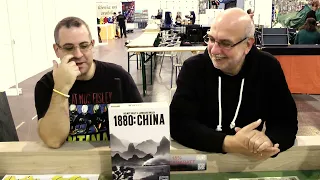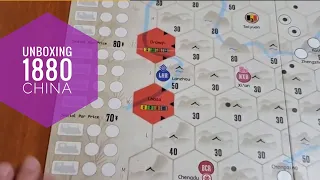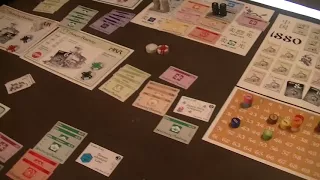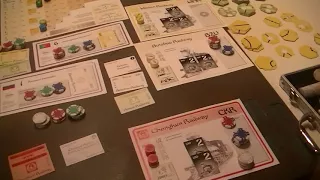
Watch “1880 China Live Teach & Play w/Train Shuffling and Eric Brosius,” a how-to-play guide for 1880: China from Train Shuffling on BoardGameVideo.
Description provided by Train Shuffling on YouTube:
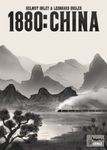
Join the Train Shuffling crew as they are joined by Eric Brosius for a full teach and play-through of 1880: China by Lonny Orgler and Helmut Ohley of Double-O games.
Link to the spreadsheet used during the game to track revenue and speed up play: https://drive.google.com/file/d/0B80xuSDRR3Fzcm9aYUdBanB0TU1rV3F0Z2d5QTN0YkFoQjFz/view
www.patreon.com/trainshuffling
YT Channel: youtube.com/c/TrainShuffling
Check out our Merchandise store (Benefits the ACLU): www.bonfire.com/store/trainshuffling/
Email: trainshuffling@gmail.com
@TrainShuffling on Twitter
BGG Guild: https://boardgamegeek.com/guild/3710
Facebook: www.facebook.com/TrainShuffling/
Mostly playthroughs and how-to-play. 1880: China is covered on BoardGameVideo.com by 3 reviews, 5 how-to-play guides, 6 recorded sessions, and 2 unboxings.
3 - 7 players
300 min
Very heavy weight: Rules-dense, long sessions
About 1880: China, from BoardGameGeek:
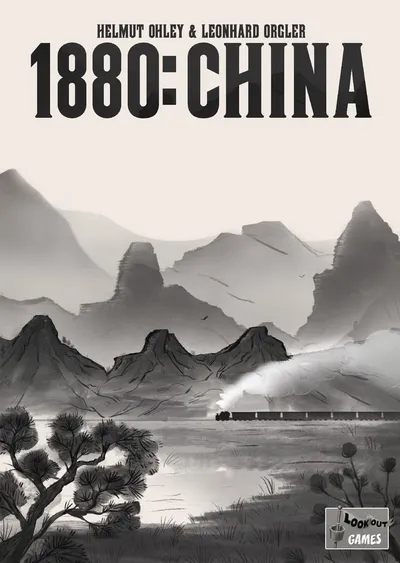
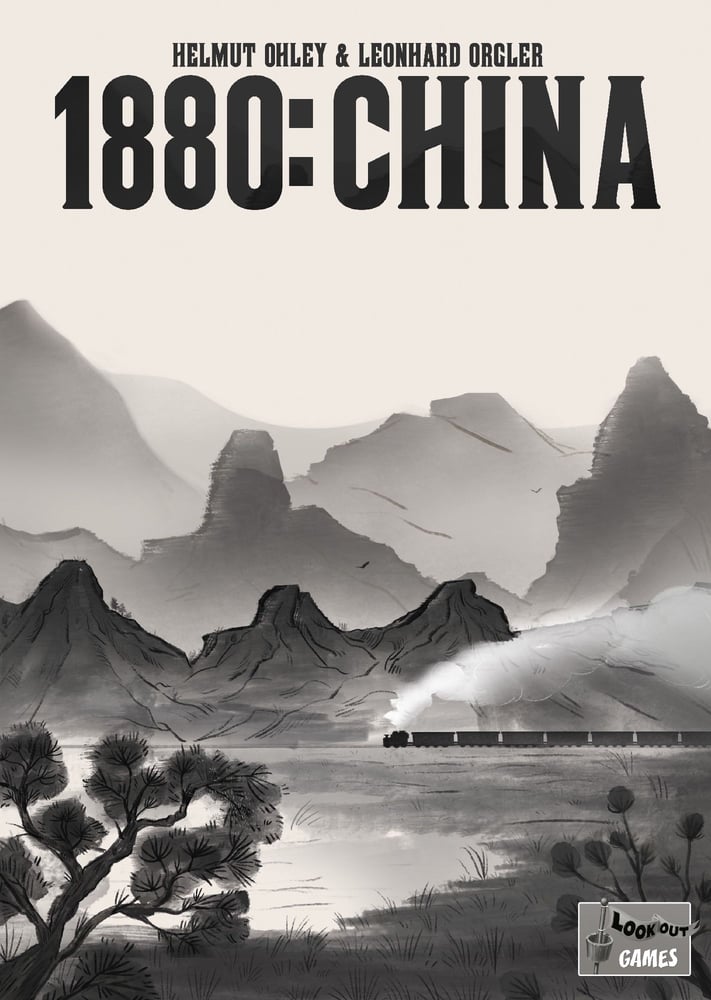
In 1880: China, based on 1829 by Francis Tresham, the players become railway barons in the far east, experiencing China's railway history in a game that was designed to represent related historical events as correctly as possible within its own game mechanisms. Being a classic 18xx game, the players compete to become the richest. In order to gain money, they buy and sell shares of China's historical railway companies, build and expand their railway network, and let trains travel on the networks. Shares of successful companies are worth more, and owning them will increase the chance to win the game. In the end, the player with the highest wealth combined from cash and shares wins.
1880: China innovates on the 18xx model as follows:
Turn order for companies doesn't change with the evolving stock prices; it is set along with the par price when a player opens a company.
The game includes a player-manipulated ratio of stock rounds and operation rounds. For example, a new stock round occurs when the last of a type of train is bought.