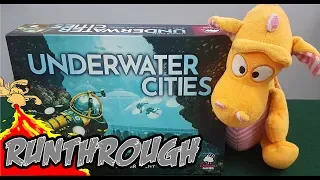
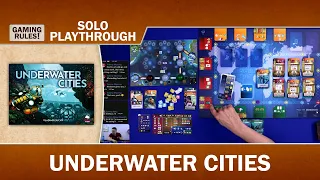
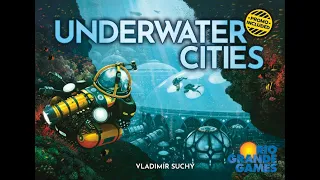
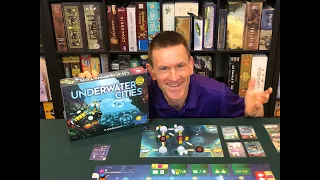
Watch “Underwater Cities - Gameplay Runthrough,” a board game review for Underwater Cities from Boardgames with Niramas on BoardGameVideo.
Description provided by Boardgames with Niramas on YouTube:
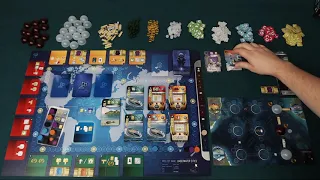
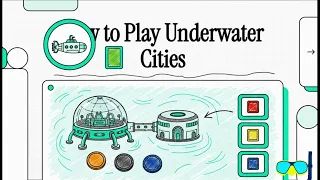
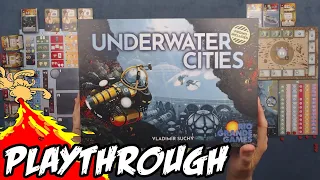
Niramas and Drako plays a 2 Player game of Underwater Cities. Using card play and worker placement we gather resources and use them to build our network of Underwater Cities, tunnels and buildings. Check it out in this Gameplay Runthrough!
Solo Playthrough: https://youtu.be/x3J289_kXZM
BGG: https://boardgamegeek.com/boardgame/247763/underwater-cities
#bgwNiramas #UnderwaterCities #DeliciousGames
---------------------------------------------------------------------------
Support the channel on Patreon!
https://www.patreon.com/bgwNiramas
Check out Livestreams of Digital Board games on www.Twitch.tv/BGwNiramas
Like and follow the Facebook page for bgwNiramas !
https://www.facebook.com/bgwNiramas
-------------------------------------------------------
https://youtu.be/ZCEL3L2seA4
Mainly reviews. Underwater Cities is covered on BoardGameVideo.com by 36 reviews, 19 how-to-play guides, 4 recorded sessions, 8 unboxings, and 6 other videos.
1 - 4 players
80 - 150 min
Heavy weight: Expect a long teach
About Underwater Cities, from BoardGameGeek:
In Underwater Cities, which takes about 30-45 minutes per player, players represent the most powerful brains in the world, brains nominated due to the overpopulation of Earth to establish the best and most livable underwater areas possible.
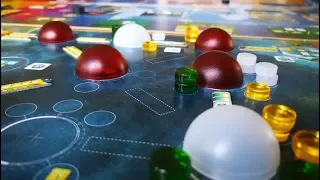
The main principle of the game is card placement. Three colored cards are placed along the edge of the main board into 3 x 5 slots, which are also colored. Ideally players can place cards into slots of the same color. Then they can take both actions and advantages: the action depicted in the slot on the main board and also the advantage of the card. Actions and advantages can allow players to intake raw materials; to build and upgrade city domes, tunnels and production buildings such as farms, desalination devices and laboratories in their personal underwater area; to move their marker on the initiative track (which is important for player order in the next turn); to activate the player's "A-cards"; and to collect cards, both special ones and basic ones that allow for better decision possibilities during gameplay.
All of the nearly 220 cards - whether special or basic - are divided into five types according to the way and time of use. Underwater areas are planned to be double-sided, giving players many opportunities to achieve VPs and finally win.