
Top 10 Trendsetting Games

Watch “Top 10 Trendsetting Games,” a board game video for 10 games from BoardGameGeek on BoardGameVideo.
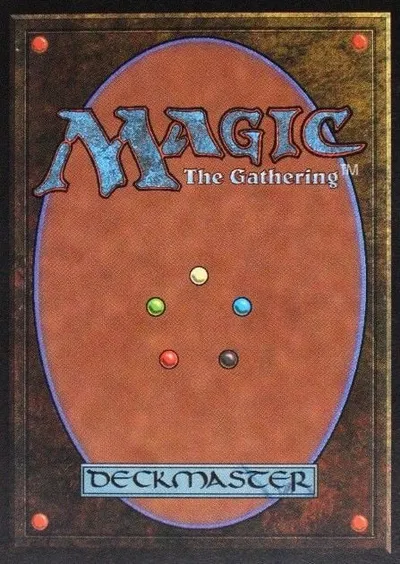
1993· 255 videos·Richard GarfieldMainly unboxings
- Videos
- 255
- Creators
- 54
Magic: The Gathering is covered on BoardGameVideo.com by 18 reviews, 9 how-to-play guides, 42 recorded sessions, 147 unboxings, and 39 other videos.
2 - 6 players20 minHeavy weight: Expect a long teachView on BoardGameGeek ›About Magic: The Gathering, from BoardGameGeek:
GAME SYSTEM This entry is to allow for discussion/rating of the game system as a whole. It is not for a specific product or release. Versions will appear on the individual item pages. From the official website: In the Magic game, you play the role of a planeswalker-a powerful wizard who fights other planeswalkers for glory, knowledge, and conquest. Your deck of cards represents all the weapons in your arsenal. It contains the spells you know and the creatures you can summon to fight for you. This is the grandfather of the collectible card game (or CCG) genre. Cards are categorized as common, uncommon, rare, and mythic rare. Players collect cards and build decks out of their collection. Players build a deck of cards and duel against an opponent's deck. Players are wizards attempting to reduce their opponent's life total to zero. The first player to reduce his opponent's life to zero (or meet another set win condition) wins the game. An important part of the game is deck construction, which is done prior to the actual game by selecting what cards are included in a particular deck. There are over 25,000 different cards from which to build your deck! Cards can be lands, which usually generate mana of various colors, or spells, which require a certain amount of mana to be used. Some cards (creatures, artifacts, and enchantments) stay on the board and continue to affect the game, while others have a one-time effect. Players randomly draw spells to see what they get and can play each turn. Although this limits your choices, there is a lot of strategy in how you play those spells. A robust list of game mechanics, including intricate rules for reactive card play called "the stack," provide for rich tactics and tough choices each turn. Though traditionally a two-player duel, there are several casual and tournament formats to Magic that allow more players to play.
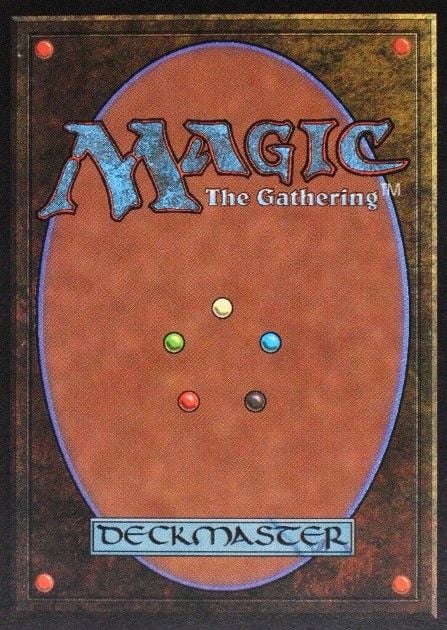
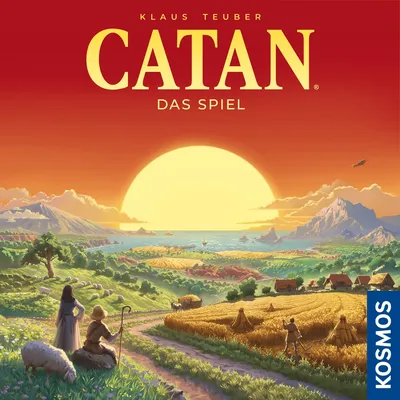
1995· 152 videos·Klaus TeuberMainly reviews and how-to-play
- Videos
- 152
- Creators
- 113
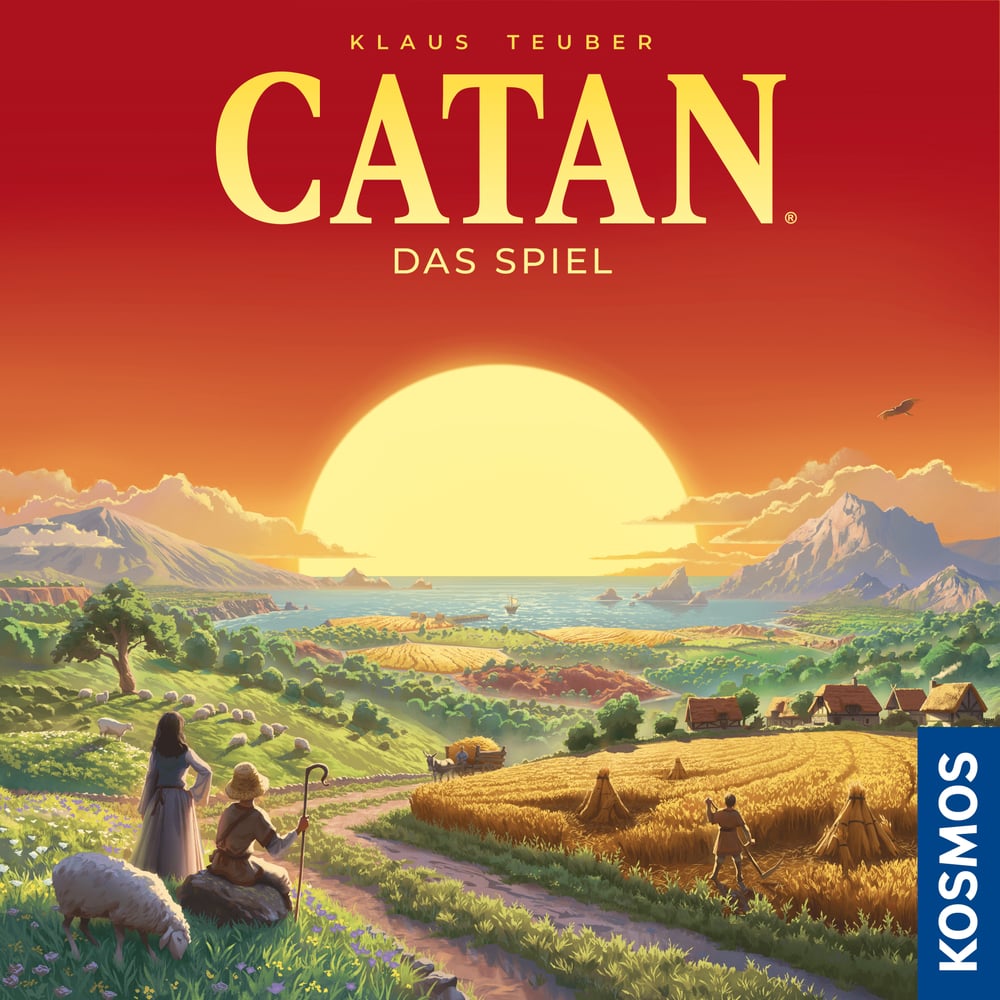
Catan is covered on BoardGameVideo.com by 38 reviews, 29 how-to-play guides, 17 recorded sessions, 7 unboxings, and 61 other videos.
3 - 4 players60 - 120 minMedium weight: Teach it in one sittingView on BoardGameGeek ›About Catan, from BoardGameGeek:
In CATAN (formerly The Settlers of Catan), players try to be the dominant force on the island of Catan by building settlements, cities and roads. On each turn dice are rolled to determine which resources the island produces. Players build structures by 'spending' resources (sheep, wheat, wood, brick and ore) which are represented by the relevant resource cards; each land type, with the exception of the unproductive desert, produces a specific resource: hills produce brick, forests produce wood, mountains produce ore, fields produce wheat, and pastures produce sheep. Set-up includes randomly placing large hexagonal tiles (each depicting one of the five resource-producing terrain types--or the desert) in a honeycomb shape and surrounding them with water tiles, some of which contain ports of exchange. A number disk, the value of which will correspond to the roll of two 6-sided dice, are placed on each terrain tile. Each player is given two settlements (think: houses) and roads (sticks) which are placed on intersections and borders of the terrain tiles. Players collect a hand of resource cards based on which terrain tiles their last-placed settlement is adjacent to. A robber pawn is placed on the desert tile. A turn consists of rolling the dice, collecting resource cards based on this dice roll and the position of settlements (or upgraded cities-think: hotels), turning in resource cards (if possible and desired) for improvements, trading cards at a port, possibly playing a development card, or trading resource cards with other players. If the dice roll is a 7, the active player moves the robber to a new terrain tile and steals a resource card from another player who has a settlement adjacent to that tile. Points are accumulated by building settlements and cities, having the longest road or the largest army (from some of the development cards), and gathering certain development cards that simply award victory points. When a player has gathered 10 points (some of which may be held in secret), s/he announces this and claims the win.

2015· 122 videos·Rob Daviau, Matt LeacockMainly playthroughs
- Videos
- 122
- Creators
- 36
Pandemic Legacy: Season 1 is covered on BoardGameVideo.com by 19 reviews, 5 how-to-play guides, 76 recorded sessions, and 22 other videos.
2 - 4 players60 minMedium weight: Teach it in one sittingView on BoardGameGeek ›About Pandemic Legacy: Season 1, from BoardGameGeek:
Pandemic Legacy is a co-operative campaign game, with an overarching story arc played through 12-24 sessions, depending on how well your group does at the game. At the beginning, the game starts in a very similar fashion as basic Pandemic, in which your team of disease-fighting specialists races against the clock to travel around the world, treating disease hot spots while researching cures for each of four plagues before they get out of hand. During a player's turn, they have four actions available, with which they may travel around in the world in various ways (sometimes needing to discard a card), build structures like research stations, treat diseases (removing one cube from the board; if all cubes of a color have been removed, the disease has been eradicated), trade cards with other players, or find a cure for a disease (requiring five cards of the same color to be discarded while at a research station). Each player has a unique role with special abilities to help them at these actions. After a player has taken their actions, they draw two cards. These cards can include epidemic cards, which will place new disease cubes on the board, and can lead to an outbreak, spreading disease cubes even further. Outbreaks additionally increase the panic level of a city, making that city more expensive to travel to. Each month in the game, you have two chances to achieve that month's objectives. If you succeed, you win and immediately move on to the next month. If you fail, you have a second chance, with more funding for beneficial event cards. During the campaign, new rules and components will be introduced. These will sometimes require you to permanently alter the components of the game; this includes writing on cards, ripping up cards, and placing permanent stickers on components. Your characters can gain new skills, or detrimental effects. A character can even be lost entirely, at which point it's no longer available for play. Part of the Pandemic series


2000· 113 videos·Klaus-Jürgen WredeMainly reviews and how-to-play
- Videos
- 113
- Creators
- 90
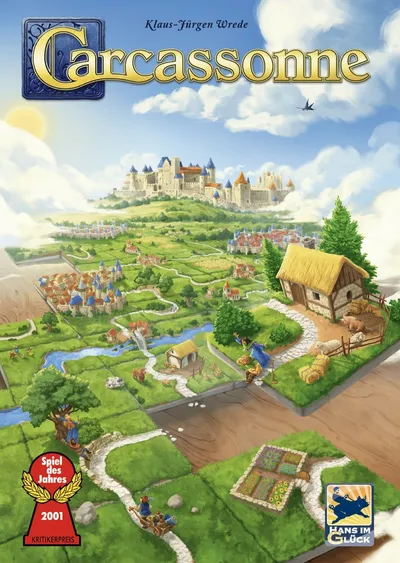
Carcassonne is covered on BoardGameVideo.com by 34 reviews, 26 how-to-play guides, 17 recorded sessions, 3 unboxings, and 33 other videos.
2 - 5 players30 - 45 minLight weight: Learn it in minutesView on BoardGameGeek ›About Carcassonne, from BoardGameGeek:
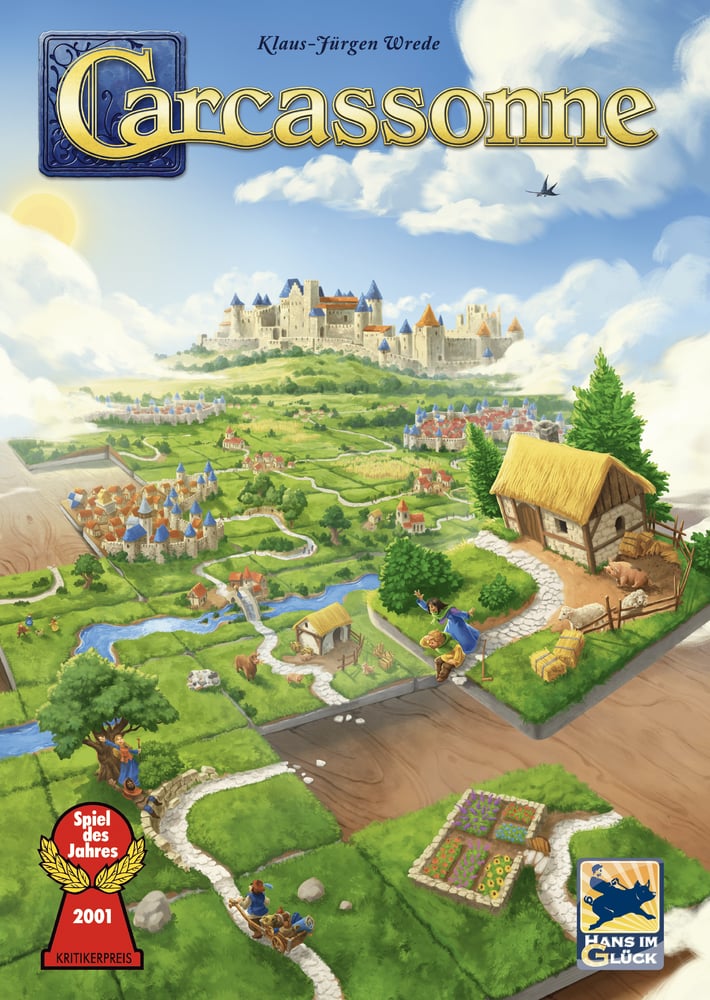
Carcassonne is a tile placement game in which the players draw and place a tile with a piece of southern French landscape represented on it. The tile might feature a city, a road, a cloister, grassland or some combination thereof, and it must be placed adjacent to tiles that have already been played, in such a way that cities are connected to cities, roads to roads, et cetera. Having placed a tile, the player can then decide to place one of their meeples in one of the areas on it: in the city as a knight, on the road as a robber, in the cloister as a monk, or in the field as a farmer. When that area is complete that meeple scores points for its owner. During a game of Carcassonne, players are faced with decisions like: "Is it really worth putting my last meeple there?" or "Should I use this tile to expand my city, or should I place it near my opponent instead, thus making it harder for them to complete it and score points?" Since players place only one tile and have the option to place one meeple on it, turns proceed quickly even if it is a game full of options and possibilities. Its a competition game First game in the Carcassonne series.
2014· 105 videos·Uwe RosenbergMostly reviews and how-to-play
- Videos
- 105
- Creators
- 85
Patchwork is covered on BoardGameVideo.com by 40 reviews, 29 how-to-play guides, 15 recorded sessions, 7 unboxings, and 14 other videos.
2 players15 - 30 minLight weight: Learn it in minutesView on BoardGameGeek ›About Patchwork, from BoardGameGeek:
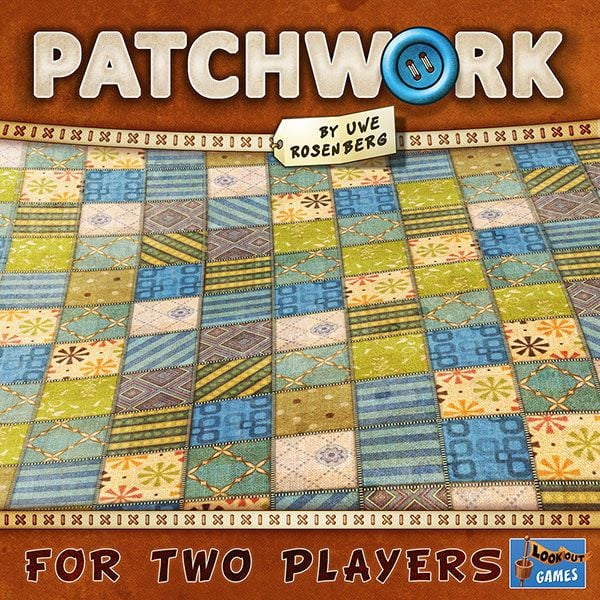
In Patchwork, two players compete to build the most aesthetic (and high-scoring) patchwork quilt on a personal 9x9 game board. To start play, lay out all of the patches at random in a circle and place a marker directly clockwise of the 2-1 patch. Each player takes five buttons - the currency/points in the game - and someone is chosen as the start player. On a turn, a player either purchases one of the three patches standing clockwise of the spool or passes. To purchase a patch, you pay the cost in buttons shown on the patch, move the spool to that patch's location in the circle, add the patch to your game board, then advance your time token on the time track a number of spaces equal to the time shown on the patch. You're free to place the patch anywhere on your board that doesn't overlap other patches, but you probably want to fit things together as tightly as possible. If your time token is behind or on top of the other player's time token, then you take another turn; otherwise the opponent now goes. Instead of purchasing a patch, you can choose to pass; to do this, you move your time token to the space immediately in front of the opponent's time token, then take one button from the bank for each space you moved. In addition to a button cost and time cost, each patch also features 0-3 buttons, and when you move your time token past a button on the time track, you earn "button income": sum the number of buttons depicted on your personal game board, then take this many buttons from the bank. What's more, the time track depicts five 1x1 patches on it, and during set-up you place five actual 1x1 patches on these spaces. Whoever first passes a patch on the time track claims this patch and immediately places it on his game board. Additionally, the first player to completely fill in a 7x7 square on his game board earns a bonus tile worth 7 extra points at the end of the game. (Of course, this doesn't happen in every game.) When a player takes an action that moves his time token to the central square of the time track, he takes one final button income from the bank. Once both players are in the center, the game ends and scoring takes place. Each player scores one point per button in his possession, then loses two points for each empty square on his game board. Scores can be negative. The player with the most points wins.
2008· 96 videos·Matt LeacockSome reviews
- Videos
- 96
- Creators
- 62
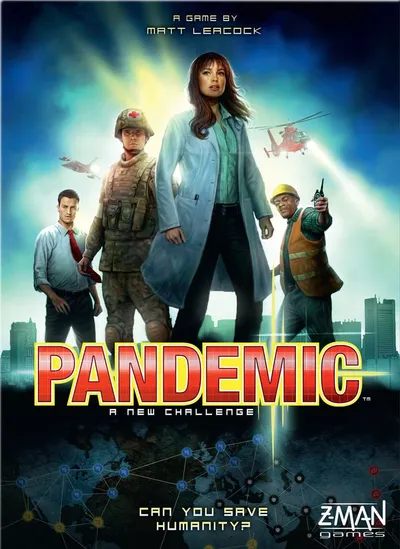
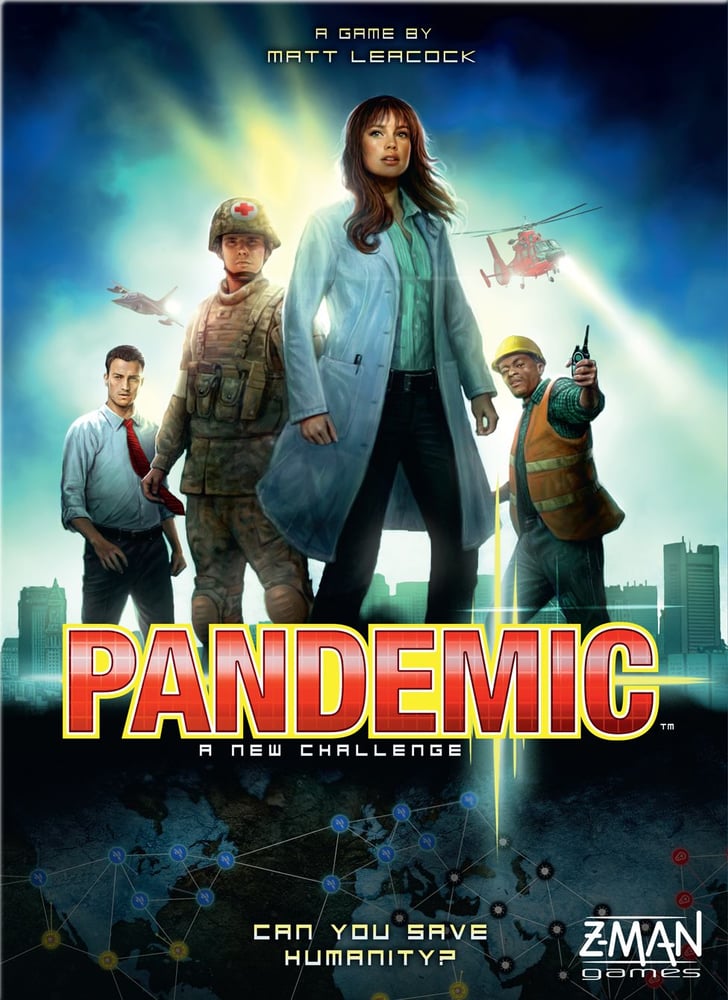
Pandemic is covered on BoardGameVideo.com by 35 reviews, 17 how-to-play guides, 19 recorded sessions, 3 unboxings, and 22 other videos.
2 - 4 players45 minMedium weight: Teach it in one sittingView on BoardGameGeek ›About Pandemic, from BoardGameGeek:
In Pandemic, several virulent diseases have broken out simultaneously all over the world! The players are disease-fighting specialists whose mission is to treat disease hotspots while researching cures for each of four plagues before they get out of hand. The game board depicts several major population centers on Earth. On each turn, a player can use up to four actions to travel between cities, treat infected populaces, discover a cure, or build a research station. A deck of cards provides the players with these abilities, but sprinkled throughout this deck are Epidemic! cards that accelerate and intensify the diseases' activity. A second, separate deck of cards controls the "normal" spread of the infections. Taking a unique role within the team, players must plan their strategy to mesh with their specialists' strengths in order to conquer the diseases. For example, the Operations Expert can build research stations which are needed to find cures for the diseases and which allow for greater mobility between cities; the Scientist needs only four cards of a particular disease to cure it instead of the normal five-but the diseases are spreading quickly and time is running out. If one or more diseases spreads beyond recovery or if too much time elapses, the players all lose. If they cure the four diseases, they all win! The 2013 edition of Pandemic includes two new characters-the Contingency Planner and the Quarantine Specialist-not available in earlier editions of the game. Pandemic is the first game in the Pandemic series.
2008· 80 videos·Donald X. VaccarinoMainly reviews
- Videos
- 80
- Creators
- 59
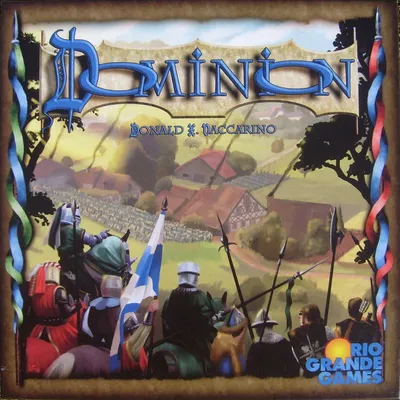
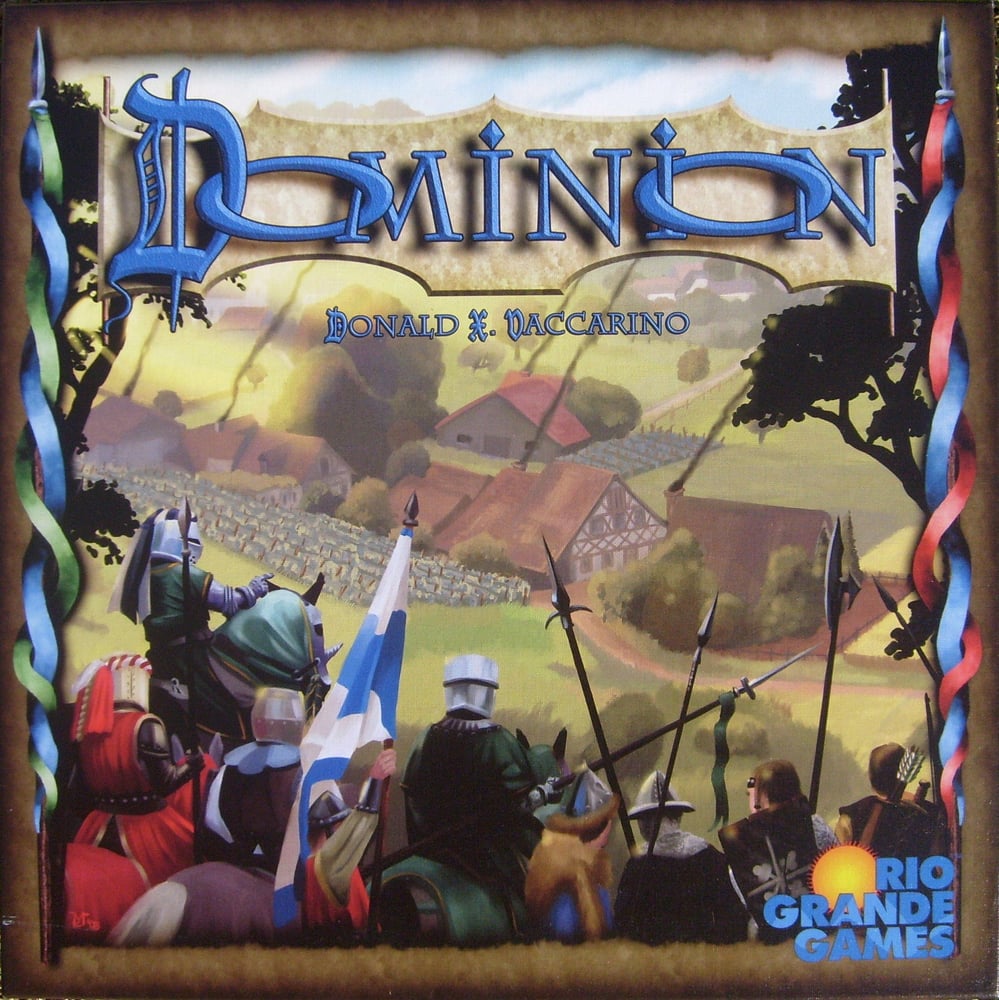
Dominion is covered on BoardGameVideo.com by 34 reviews, 18 how-to-play guides, 10 recorded sessions, 2 unboxings, and 16 other videos.
2 - 4 players30 minMedium weight: Teach it in one sittingView on BoardGameGeek ›About Dominion, from BoardGameGeek:
"You are a monarch, like your parents before you, a ruler of a small pleasant kingdom of rivers and evergreens. Unlike your parents, however, you have hopes and dreams! You want a bigger and more pleasant kingdom, with more rivers and a wider variety of trees. You want a Dominion! In all directions lie fiefs, freeholds, and feodums. All are small bits of land, controlled by petty lords and verging on anarchy. You will bring civilization to these people, uniting them under your banner. But wait! It must be something in the air; several other monarchs have had the exact same idea. You must race to get as much of the unclaimed land as possible, fending them off along the way. To do this you will hire minions, construct buildings, spruce up your castle, and fill the coffers of your treasury. Your parents wouldn't be proud, but your grandparents, on your mother's side, would be delighted." -description from the back of the box In Dominion, each player starts with an identical, very small deck of cards. In the center of the table is a selection of other cards the players can "buy" as they can afford them. Through their selection of cards to buy, and how they play their hands as they draw them, the players construct their deck on the fly, striving for the most efficient path to the precious victory points by game end. Dominion is not a Collectible Card Game (CCG), but the play of the game is similar to the construction and play of a CCG deck. The game comes with 500 cards. You select 10 of the 25 Kingdom card types to include in any given play-leading to immense variety. -user summary Part of the Dominion series.
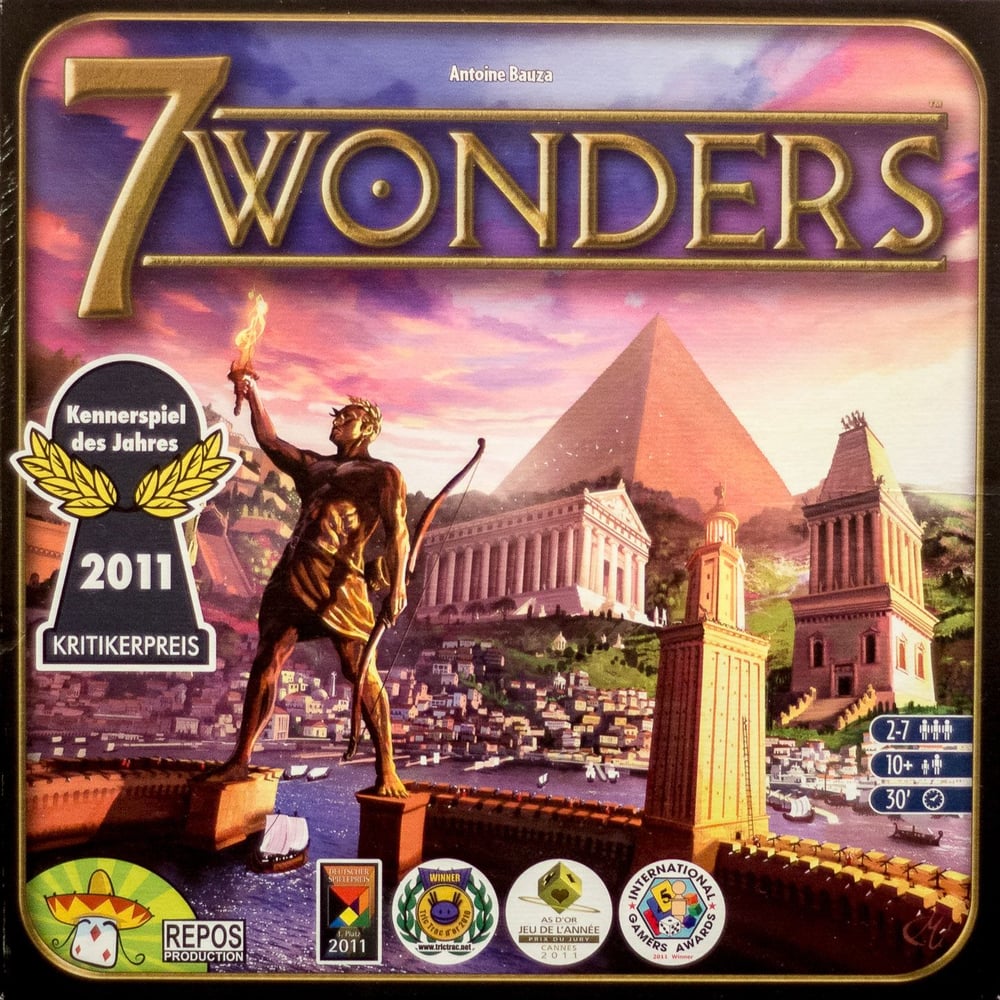
2010· 79 videos·Antoine BauzaMainly reviews
- Videos
- 79
- Creators
- 65
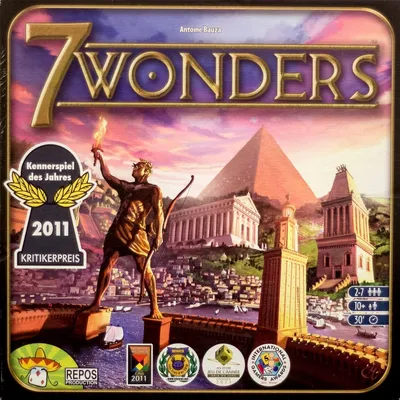
7 Wonders is covered on BoardGameVideo.com by 40 reviews, 14 how-to-play guides, 5 recorded sessions, 2 unboxings, and 18 other videos.
2 - 7 players30 minMedium weight: Teach it in one sittingView on BoardGameGeek ›About 7 Wonders, from BoardGameGeek:
You are the leader of one of the 7 great cities of the Ancient World. Gather resources, develop commercial routes, and affirm your military supremacy. Build your city and erect an architectural wonder which will transcend future times. 7 Wonders lasts three ages. In each age, players receive seven cards from a particular deck, choose one of those cards, then pass the remainder to an adjacent player. Players reveal their cards simultaneously, paying resources if needed or collecting resources or interacting with other players in various ways. (Players have individual boards with special powers on which to organize their cards, and the boards are double-sided). Each player then chooses another card from the deck they were passed, and the process repeats until players have six cards in play from that age. After three ages, the game ends. In essence, 7 Wonders is a card development game. Some cards have immediate effects, while others provide bonuses or upgrades later in the game. Some cards provide discounts on future purchases. Some provide military strength to overpower your neighbors and others give nothing but victory points. Each card is played immediately after being drafted, so you'll know which cards your neighbor is receiving and how her choices might affect what you've already built up. Cards are passed left-right-left over the three ages, so you need to keep an eye on the neighbors in both directions. Though the box of earlier editions is listed as being for 3–7 players, there is an official 2-player variant included in the instructions.
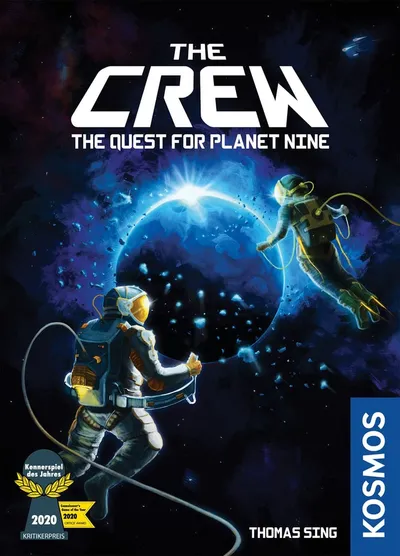
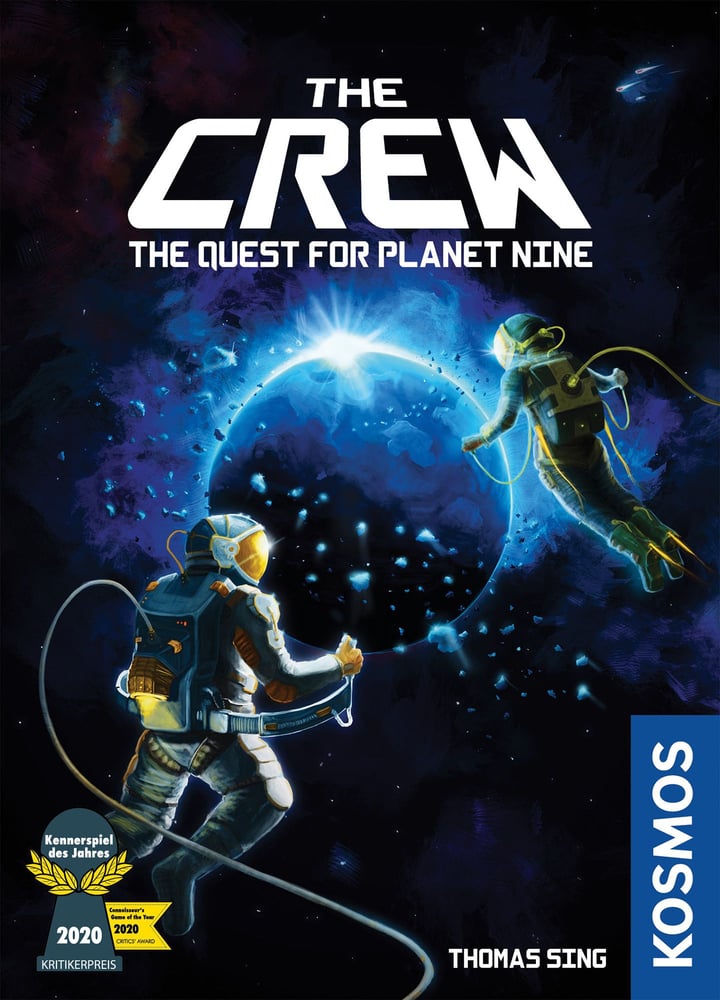
2019· 65 videos·Thomas SingMainly reviews
- Videos
- 65
- Creators
- 56
The Crew: The Quest for Planet Nine is covered on BoardGameVideo.com by 33 reviews, 14 how-to-play guides, 5 recorded sessions, 4 unboxings, and 9 other videos.
2 - 5 players20 minMedium weight: Teach it in one sittingView on BoardGameGeek ›About The Crew: The Quest for Planet Nine, from BoardGameGeek:
In the co-operative trick-taking game The Crew: The Quest for Planet Nine, the players set out as astronauts on an uncertain space adventure. What are the rumors regarding the unknown planet about? The eventful journey through space extends over 50 exciting missions. But this game can only be defeated by meeting common individual tasks of each player. In order to meet the varied challenges communication is essential in the team. But this is more difficult than expected in space. With each mission the game becomes more difficult. After each mission the game can be paused and continued later. During each mission it is not the number of tricks but the right tricks at the right time that count. The team completes a mission only if every single player is successful in fulfilling their tasks. The game comes with 50 missions, with three additional missions published in spielbox 2/2020.


2005· 9 videos·William AttiaSome how-to-play
- Videos
- 9
- Creators
- 5
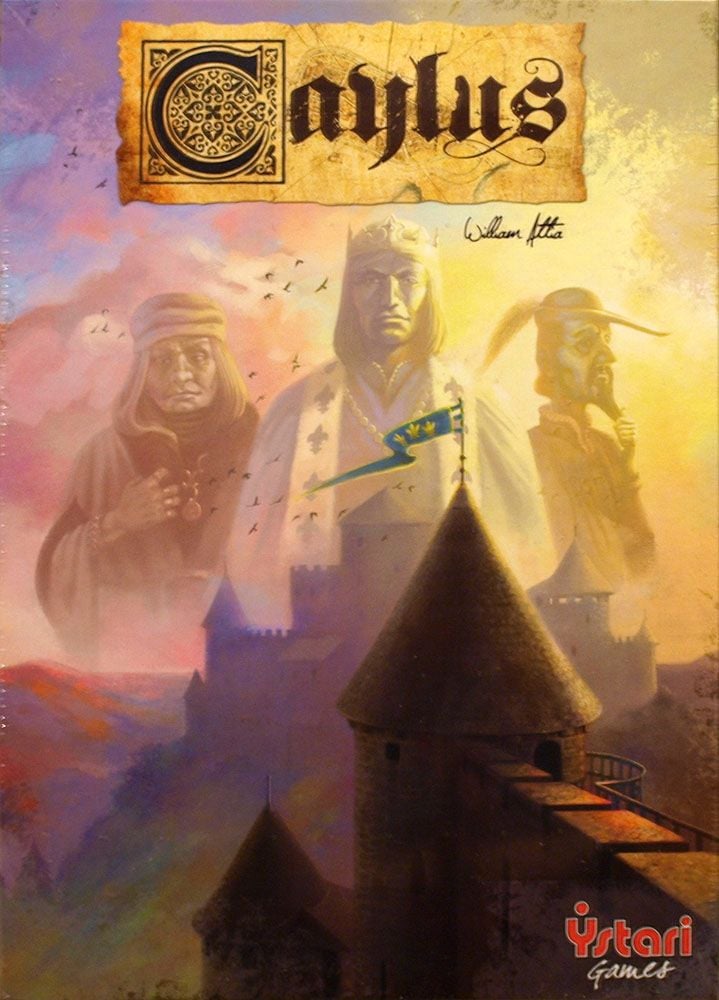
Caylus is covered on BoardGameVideo.com by 1 reviews, 3 how-to-play guides, 1 recorded sessions, and 4 other videos.
2 - 5 players60 - 150 minHeavy weight: Expect a long teachView on BoardGameGeek ›About Caylus, from BoardGameGeek:
Once upon a time ... 1289. To strengthen the borders of the Kingdom of France, King Philip the Fair decided to have a new castle built. For the time being, Caylus is but a humble village, but soon, workers and craftsmen will be flocking by the cartload, attracted by the great prospects. Around the building site, a city is slowly rising up. The players embody master builders. By building the King's castle and developing the city around it, they earn prestige points and gain the King's favor. When the castle is finished, the player who has earned the most prestige wins the game. The expansion Caylus: Jeweler promo tile was included in the 2nd Edition. Each turn, players pay to place their workers in various buildings in the village. These buildings allow players to gather resources or money, or to build or upgrade buildings with those resources. Players can also use their resources to help build the castle itself, earning points and favors from the king, which provide larger bonuses. Building a building provides some immediate points, and potentially income throughout the game, since players receive bonuses when others use their buildings. The buildings chosen by the players have a heavy impact on the course of the game, since they determine the actions that will be available to all the players. As new buildings are built, they stretch along a road stretching away from the castle, and not all buildings can be used every turn. Players have some control over which buildings are active by paying to influence the movement of the Provost marker. The final position of the marker is the newest building that can be used that turn. The Provost marker also helps determine the movement of the Bailiff marker, which determines the end of the game. Generally, if players are building many buildings and the Provost is generous in allowing them to be used, the game ends more quickly.
Explore more videos

















Description provided by BoardGameGeek on YouTube:
They may not have been first but when it came to trends these are the games that made people take notice. 00:00 Intro 01:23 #10 Patchwork – 2014 – Uwe Rosenberg – Lookout Games https://boardgamegeek.com/boardgame/163412/patchwork 03:13 #9 The Crew: The Quest for Planet Nine – 2019 – Thomas Sing – KOSMOS https://boardgamegeek.com/boardgame/284083/the-crew-the-quest-for-planet-nine 06:10 #8 Pandemic Legacy: Season 1 – 2015 – Rob Daviau, Matt Leacock – Z-Man Games https://boardgamegeek.com/boardgame/161936/pandemic-legacy-season-1 7:58 #7 7 Wonders – 2010 – Antoine Bauza – Repos Production https://boardgamegeek.com/boardgame/68448/7-wonders 09:50 #6 Carcassonne – 2000 – Klaus-Jürgen Wrede – Hans im Glück https://boardgamegeek.com/boardgame/822/carcassonne 12:21 #5 Caylus – 2005 – William Attia – Ystari Games https://boardgamegeek.com/boardgame/18602/caylus 14:17 #4 Dominion – 2008 – Donald X. Vaccarino – Rio Grande Games https://boardgamegeek.com/boardgame/36218/dominion 16:15 #3 Pandemic – 2008 – Matt Leacock – Z-Man Games https://boardgamegeek.com/boardgame/30549/pandemic 18:08 #2 Catan – 1995 – Klaus Teuber – KOSMOS https://boardgamegeek.com/boardgame/13/catan 19:42 #1 Magic: The Gathering – 1993 – Richard Garfield – Wizards of the Coast https://boardgamegeek.com/boardgame/463/magic-the-gathering 21:44 Outro
Related Content
game
More Magic: The Gathering videos
game
More Catan videos
game
More Pandemic Legacy: Season 1 videos
game
More Carcassonne videos
game
More Patchwork videos
game
More Pandemic videos
game
More Dominion videos
game
More 7 Wonders videos
game
More The Crew: The Quest for Planet Nine videos
game
More Caylus videos
channel
More videos from this channel