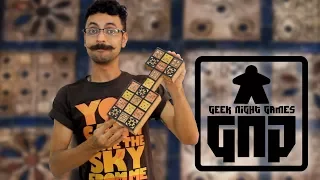
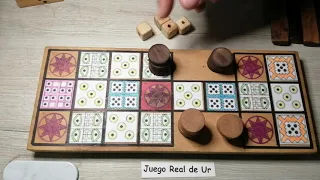
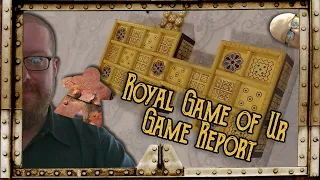
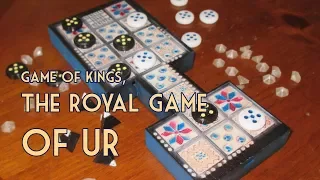
Watch “Juego Real de Ur [DIY],” a how-to-play guide for The Royal Game of Ur from Geek Night Games on BoardGameVideo.
Description provided by Geek Night Games on YouTube:
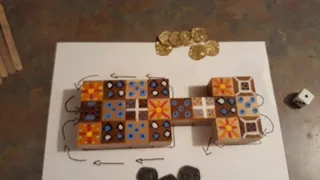
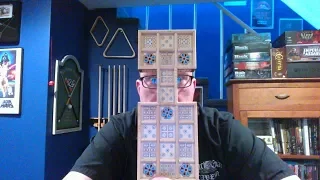
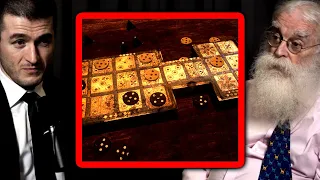
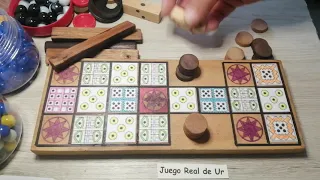
Aldo nos platica sobre el juego de mesa más antiguo del que se tiene conocimiento, el juego real de Ur, y se dispone a crear el suyo propio.
Imágenes del juego real de Ur y tablilla usadas bajo licencia Creative Commons Attribution - Non Commercial - Share Alike 4.0 International.
Juego real de Ur en el British Museum: https://www.britishmuseum.org/research/collection_online/collection_object_details.aspx?objectId=8817&partId=1
Tablilla con las reglas: https://www.britishmuseum.org/research/collection_online/collection_object_details.aspx?objectId=796973&partId=1
Imagen de antiguo juego de Backgammon usado con licencia Creative Commons Attribution-Share Alike 3.0 Unported
Old Backgammon https://commons.wikimedia.org/wiki/File:Old_Backgammon_Vasa_Edit.jpg
Geek Night Games http://geeknightgames.blogspot.mx/
Aldo en BoardGameGeek https://boardgamegeek.com/user/aldoojeda
Aldo en Twitter https://twitter.com/aldoojeda/
Mainly how-to-play. The Royal Game of Ur is covered on BoardGameVideo.com by 3 reviews, 10 how-to-play guides, 2 recorded sessions, and 3 other videos.
2 players
30 min
Light weight: Learn it in minutes
About The Royal Game of Ur, from BoardGameGeek:
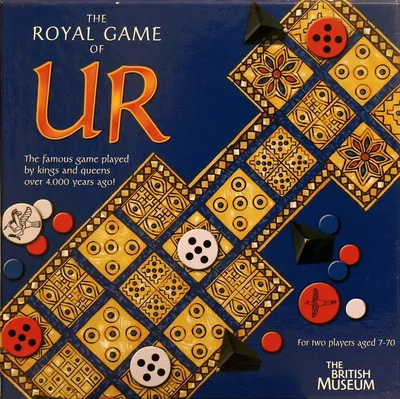
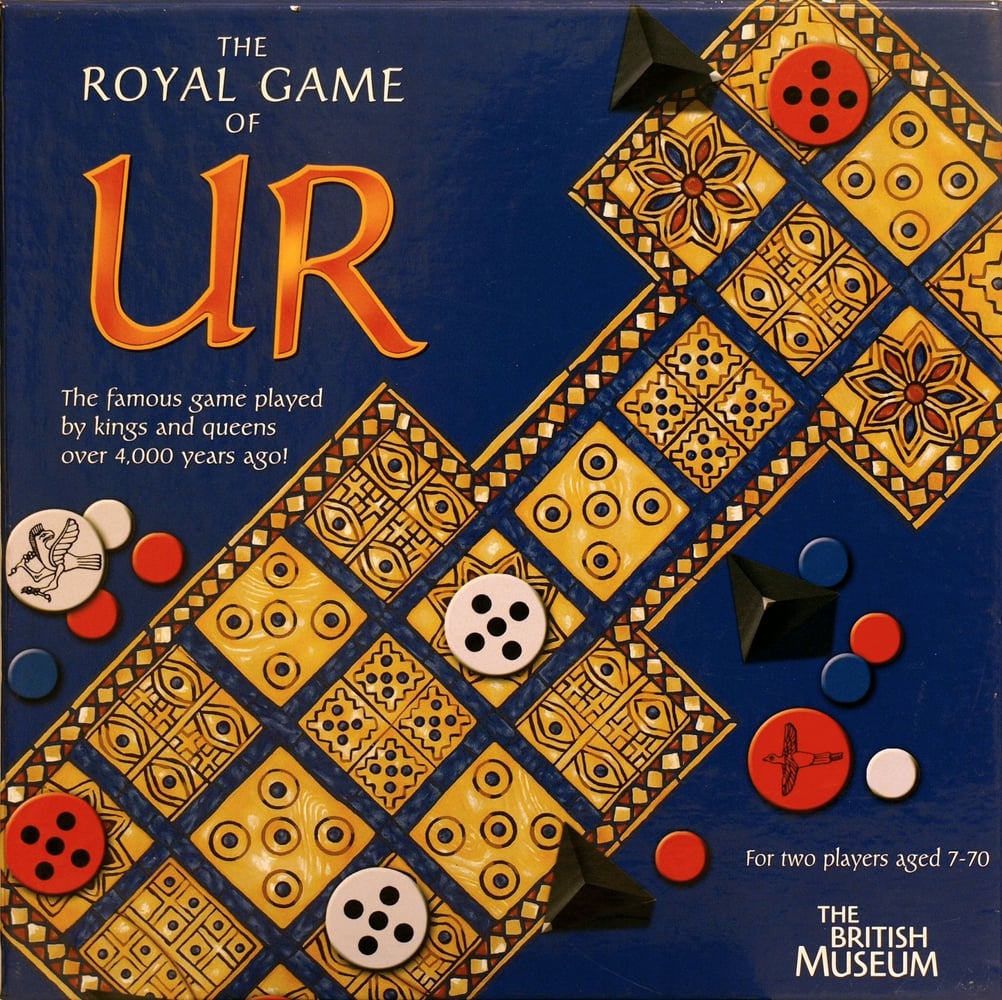
The game has been published under different names but it is a simple race game very much like Backgammon. This edition has a board that is a reproduction of the original found in the Mesopotamian city of Ur. Each player brings their 7 pieces in to play and takes them off of their outer track. Opposing pieces come into conflict on the inner track that they must travel on to the exit. If you land on a space occupied by a single opponent's piece you send it back to the start. If you land on a space occupied by 2 or more opponent's pieces then your piece goes back to the start.
The four dice give a marked or blank result. They are tetrahedral (four-sided) dice.
Each die gives a "1" or a "0". You can roll 0,1,2,3, or 4. Statistically, 2 is most common- a good thing to bear in mind. The rosette in the central track is a "safe" place from which you cannot be bumped, but you can be bumped on others. Landing on any rosette allows you to roll again, but you don't need to move that same piece.
All moves must be made by one piece only.
First to bear off all 7 of his pieces wins.
Note - Rules update in line with guidance from Irving Finkel from British Museum.
The game may be a relative of Senet and Aseb.