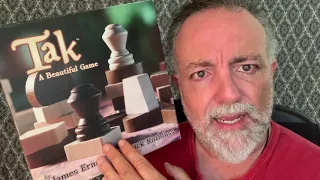
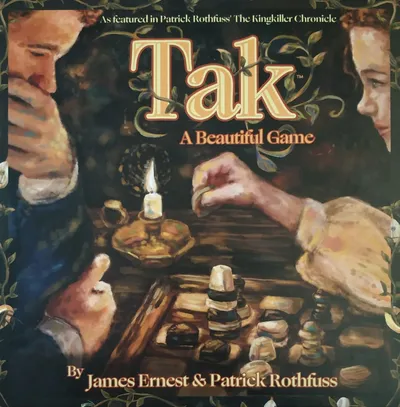
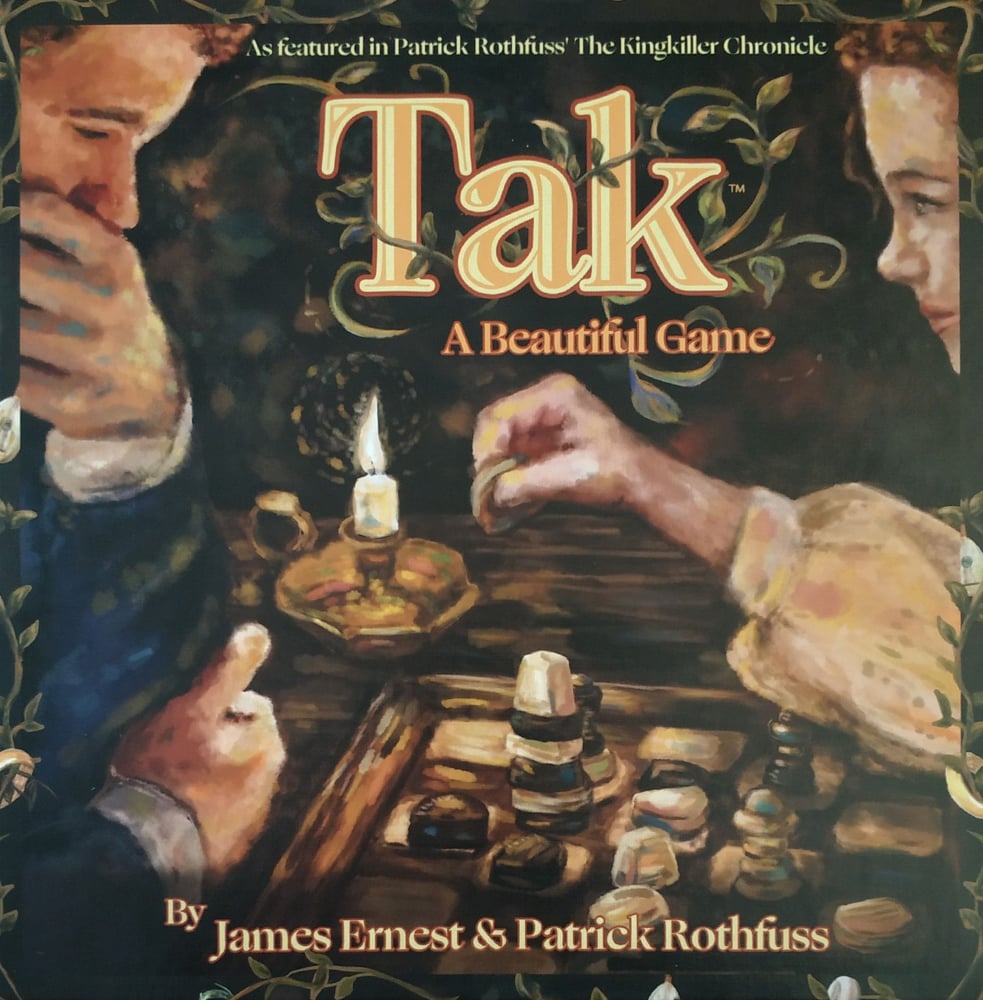
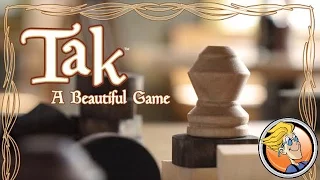
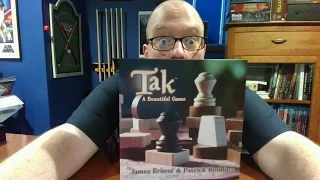
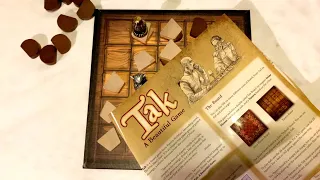
Watch “TAK - A Beautiful Game - Abstract Strategy,” a board game review for Tak from Dual Brain Games on BoardGameVideo.
Description provided by Dual Brain Games on YouTube:
SUBSCRIBE NOW! You Don't Want To Miss A Thing!
TAK - A Beautiful Game
NOTE: I have no financial interest on the sale of any of these items or these links placed below, I'm just sharing the love - Alex
Designer: James Ernest, Patrick Rothfuss
Artist: Echo Chernik
Publisher: Cheapass Games, Maldito Games, Wyrmwood Gaming
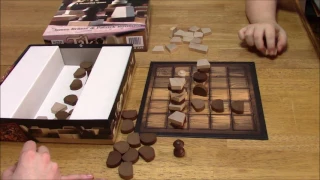
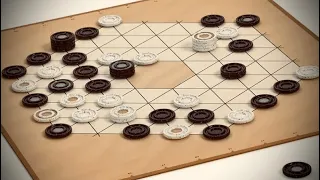
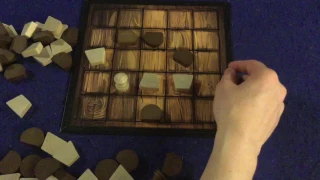
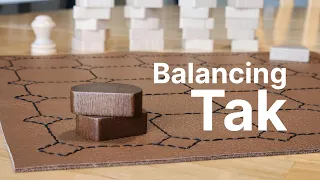
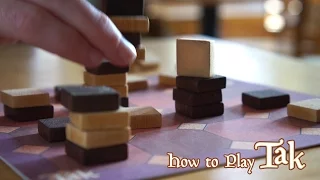
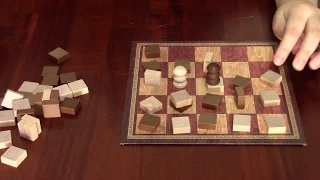
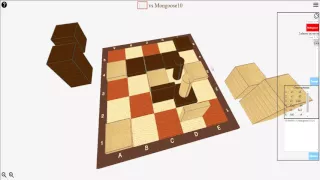
To win a game of Tak, a player must be the first to create a “road” of stones connecting opposite sides of the board.
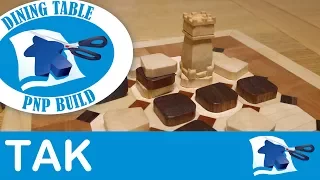
Stones can be laid flat or stood on end. When played flat, they are called “flat stones.” In this orientation, other stones can be stacked on them. If they are stood on end, they are called “standing stones” or “walls.” Nothing can be stacked atop a standing stone, but these do not count as part of a player’s road.
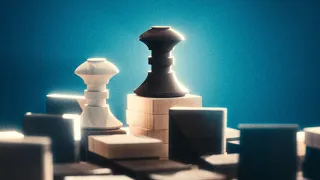
Depending on the size of the game, players may also have capstones, which can can come in many decorative shapes. Capstones serve as both a flat stone and a wall, and can also flatten standing walls.
LEARN TO PLAY TAK: https://youtu.be/iEXkpS-Q9dI
TAK STUFF: https://worldbuildersmarket.com/collections/tak-a-beautiful-game
MORE TAK: https://cheapass.com/tak/
Mostly playthroughs. Tak is covered on BoardGameVideo.com by 13 reviews, 5 how-to-play guides, 179 recorded sessions, 3 unboxings, and 5 other videos.
2 players
20 - 60 min
Medium weight: Teach it in one sitting
About Tak, from BoardGameGeek:
"My next several hours were spent learning how to play tak. Even if I had not been nearly mad with idleness, I would have enjoyed it. Tak is the best sort of game: simple in its rules, complex in its strategy. Bredon beat me handily in all five games we played, but I am proud to say that he never beat me the same way twice." -Kvothe
Tak is a two-player abstract strategy game where players attempt to make a road of their pieces connecting two opposite sides of the board.
To win a game of Tak, a player must be the first to create a “road” of stones connecting opposite sides of the board.
Stones can be laid flat or stood on end. When played flat, they are called “flat stones.” In this orientation, other stones can be stacked on them. If they are stood on end, they are called “standing stones” or “walls.” Nothing can be stacked atop a standing stone, but these do not count as part of a player's road.
Depending on the size of the game, players may also have capstones, which can can come in many decorative shapes. Capstones serve as both a flat stone and a wall, and can also flatten standing walls.