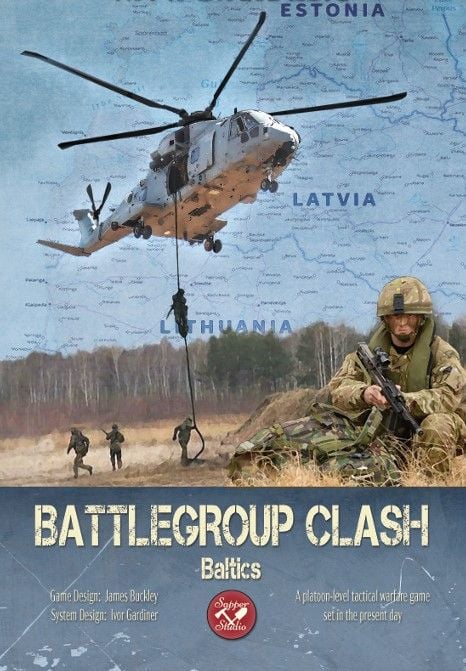
Battlegroup Clash: Baltics

Battlegroup Clash: Baltics

2025James Buckley

Videos
14
Creators
6

Mainly playthroughs. Battlegroup Clash: Baltics is covered on BoardGameVideo.com by 2 reviews, 2 how-to-play guides, 7 recorded sessions, and 2 unboxings.

1 - 6 players
60 - 180 min
3.2/5 weight

From BoardGameGeek

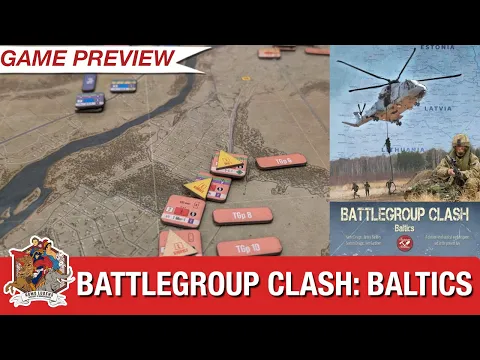
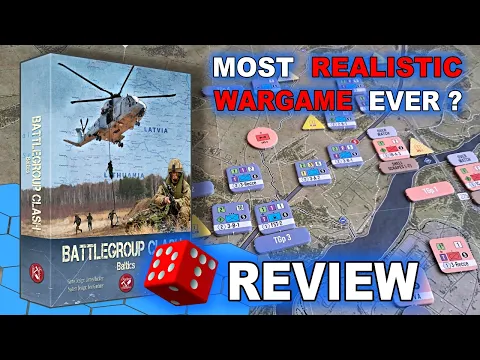
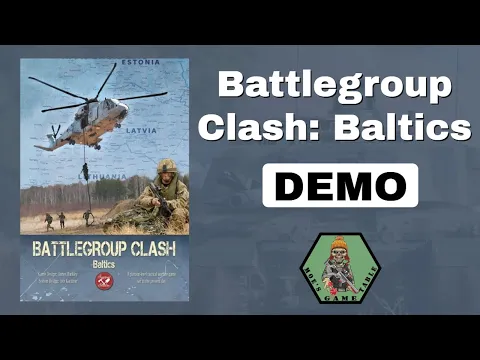
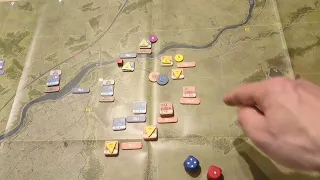
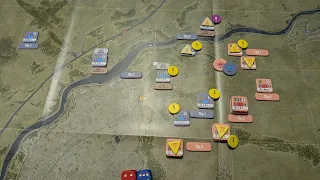
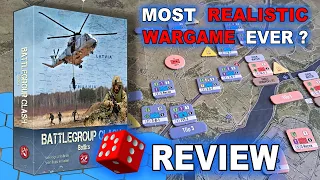
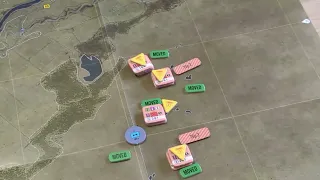
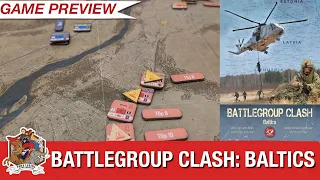
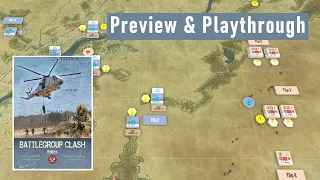
Battlegroup Clash: Baltics is a two-to six-player tactical land warfare game that plays in two to three hours. It is a commercially-adapted version of a game recently developed for the British Army to help train its junior officers. It is easy to learn and quick to play, and will appeal both to professional and hobby gamers looking to better understand combat on the modern battlefield. The game is set in Estonia and covers a hypothetical near-future Russian invasion of the country, and attempts by NATO land forces to repulse it. Each side has a maximum force size equivalent to a reinforced battalion, with individual unit sizes being platoons or sections. It comes with six scenarios and has three play modes and optional rules, allowing for players to vary the level of realism and complexity of play. The Basic mode of play is equivalent to a light complexity commercial wargame. The Standard and Advanced modes are equivalent to a medium-light complexity game. While the game mechanics and components will be familiar to anyone that has played a hex and counter wargame, there are several unique features about Battlegroup Clash: Baltics: Preparation & planning - In the Standard and Advanced modes of the game players will need to draft Orders for their forces. This happens at the start of the game. These Orders drive the actions individual units take in the game. This is a simplified version of the type of planning that would occur in real life. It presents both a challenge and opportunity to players, and greatly enhances the immersion of the game. Drones and Electronic Warfare - Events in Ukraine have shown how much the use of drones has changed the modern battlefield. Reflecting this, in the game players use UAS drones for reconnaissance and FPV (‘kamikazi') drones to attack enemy units. Each side can intercept their opponent's electronic transmissions to improve targeting, and apply tactical Electronic Warfare effects such as jamming the enemy's drone assets or crippling their GPS navigation. Real world mapping - The four maps in the game are based on satellite imagery from key locations in Estonia. Using computer aided design, that imagery has been turned into a highly realistic map. There are no hexes, just grid lines, the same as a real world map. Players must read the map terrain to determine key locations and terrain features, and assess how they fit into their battleplan and objectives. -description from the publisher

Watch first

All videos

Creators who cover this

Joe Boyle - Hexbyhex
5 videos of this game
Moe's Game Table
Moe's Game Table
3 videos of this game
The Dice Treasures
The Dice Treasures
3 videos of this game
Homo Ludens
Homo Ludens
1 video of this game
Let's Play History
Let's Play History
1 video of this game
Peter Robbins
Peter Robbins
1 video of this game

Games like this

2016Nate French, MJ Newman

Videos
367
Creators
76
Mostly playthroughs and reviews

1 - 2 players60 - 120 min3.6 weight
2022John H. Butterfield

Videos
296
Creators
18
Playthroughs

1 - 2 players15 - 300 min4.0 weight

2019Jamey Stegmaier

Videos
279
Creators
179
Mainly reviews

1 - 5 players90 - 120 min3.0 weight

About Battlegroup Clash: Baltics

From BoardGameGeek:

Battlegroup Clash: Baltics is a two-to six-player tactical land warfare game that plays in two to three hours. It is a commercially-adapted version of a game recently developed for the British Army to help train its junior officers. It is easy to learn and quick to play, and will appeal both to professional and hobby gamers looking to better understand combat on the modern battlefield. The game is set in Estonia and covers a hypothetical near-future Russian invasion of the country, and attempts by NATO land forces to repulse it. Each side has a maximum force size equivalent to a reinforced battalion, with individual unit sizes being platoons or sections. It comes with six scenarios and has three play modes and optional rules, allowing for players to vary the level of realism and complexity of play. The Basic mode of play is equivalent to a light complexity commercial wargame. The Standard and Advanced modes are equivalent to a medium-light complexity game. While the game mechanics and components will be familiar to anyone that has played a hex and counter wargame, there are several unique features about Battlegroup Clash: Baltics: Preparation & planning - In the Standard and Advanced modes of the game players will need to draft Orders for their forces. This happens at the start of the game. These Orders drive the actions individual units take in the game. This is a simplified version of the type of planning that would occur in real life. It presents both a challenge and opportunity to players, and greatly enhances the immersion of the game. Drones and Electronic Warfare - Events in Ukraine have shown how much the use of drones has changed the modern battlefield. Reflecting this, in the game players use UAS drones for reconnaissance and FPV (‘kamikazi') drones to attack enemy units. Each side can intercept their opponent's electronic transmissions to improve targeting, and apply tactical Electronic Warfare effects such as jamming the enemy's drone assets or crippling their GPS navigation. Real world mapping - The four maps in the game are based on satellite imagery from key locations in Estonia. Using computer aided design, that imagery has been turned into a highly realistic map. There are no hexes, just grid lines, the same as a real world map. Players must read the map terrain to determine key locations and terrain features, and assess how they fit into their battleplan and objectives. -description from the publisher

Designer

James Buckley

Artist

Shayne Logan

Categories

Modern WarfareWargame

Mechanics

Dice RollingForce CommitmentLine of SightMeasurement Movement
View on BoardGameGeek ›