- Videos
- 7
- Creators
- 4
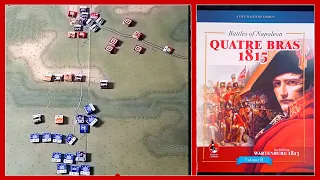
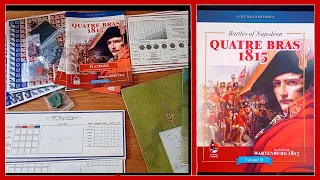
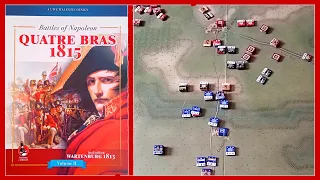
Mostly unboxings and how-to-play. Battles of Napoleon: Volume II – QUATRE BRAS 1815 is covered on BoardGameVideo.com by 2 how-to-play guides, 2 recorded sessions, and 3 unboxings.
About Battles of Napoleon: Volume II – QUATRE BRAS 1815, from BoardGameGeek:
Battles of Napoleon is an epic wargame series that simulates the most famous battles of Napoleon on a Tactical level sharing the same basic rules. The series portrays the most important aspects of battles of the Napoleonic era with easy to learn and remember rules, intuitive mechanics and procedures. Players may focus on taking decisions and playing rather than consulting rules. Quatre Bras 1815, depicting the encounter at the Quatre Bras crossroads, is the second volume in this series. Special rules like the possibility to activate the French light cavalry brigade, the defense of special structures, the possible arrival of d'Erlon's I Corps add distinctive flavor of the battle.
The system focusses on the "cat-and-mouse game" of coordination and timing of the various formations of the different arms without too much crunchy chrome. By a simple game mechanic, players will never know the exact strength and power of an enemy unit. Units have a number of strength points that will gradually decrease while engaged with enemy units.
Players are under constant pressure to decide which formation to activate, deciding which formation is activated when a chit is drawn. A formation may be activated several times per turn. But, by each new activation, it performs less effective. Formations are given orders at the beginning of a game turn and are therefore limited by the actions they can perform on the battlefield. The more "aggressive" orders formations will receive, the more likely is the army will collapse due to fatigue. On the other hand, an army is more likely to gain the initiative on the battlefield by "aggressive" orders.
The scale of the series is appr. 150 meters per hex, infantry units are battalions, artillery is batteries and cavalry is represented as regiments.
-description from the publisher