

2025Rodrigo Rego, Danilo Valente
- Videos
- 26
- Creators
- 18
Mainly reviews and playthroughs
1 - 5 players90 minMedium weight
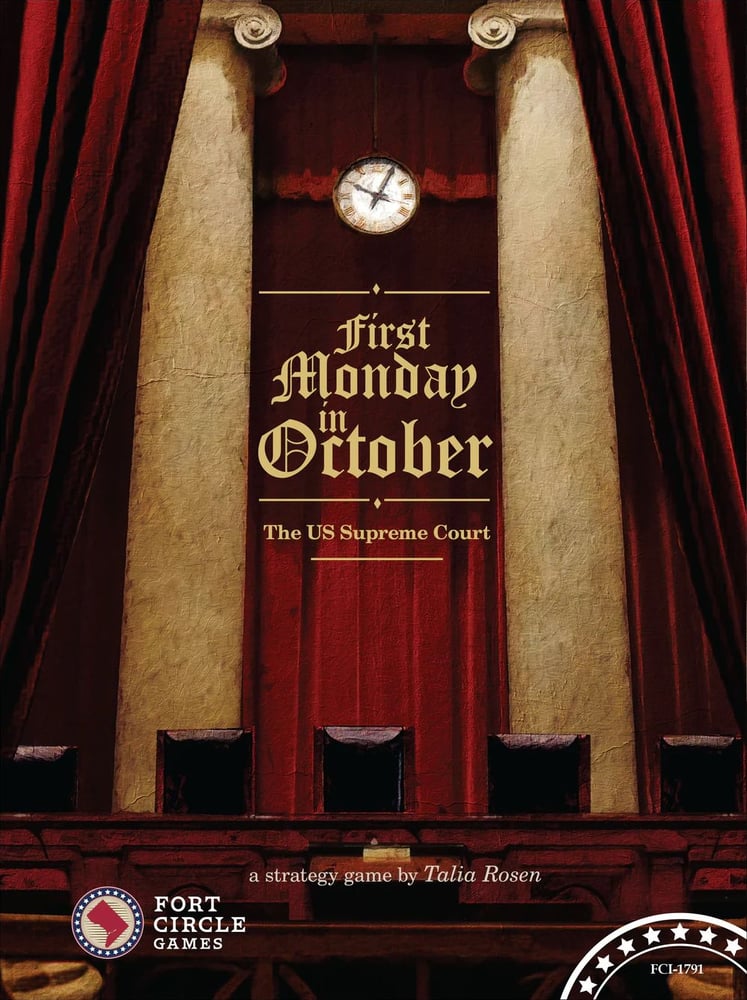
2026Talia Rosen
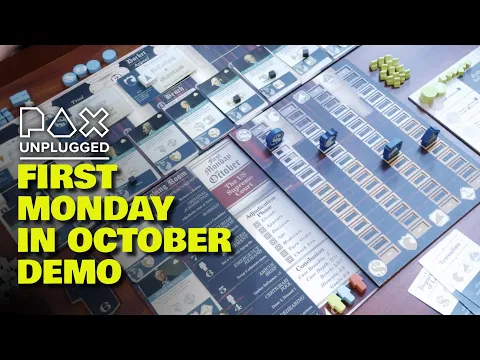
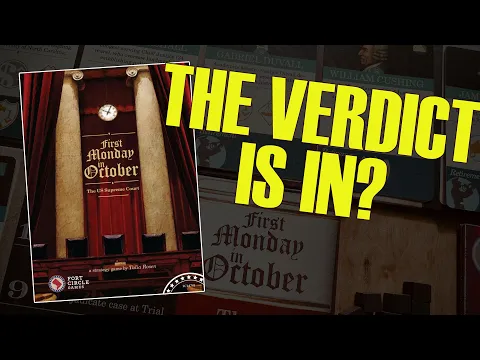
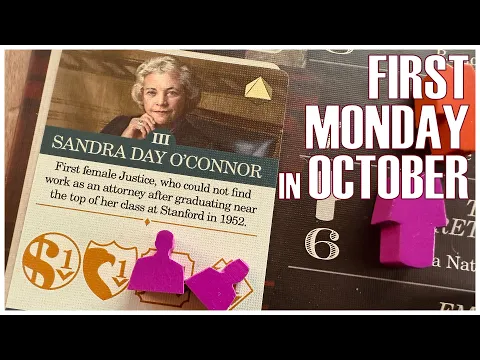
Mainly reviews and playthroughs. First Monday in October is covered on BoardGameVideo.com by 2 reviews, 1 how-to-play guides, 2 recorded sessions, 1 unboxings, and 3 other videos.
From BoardGameGeek
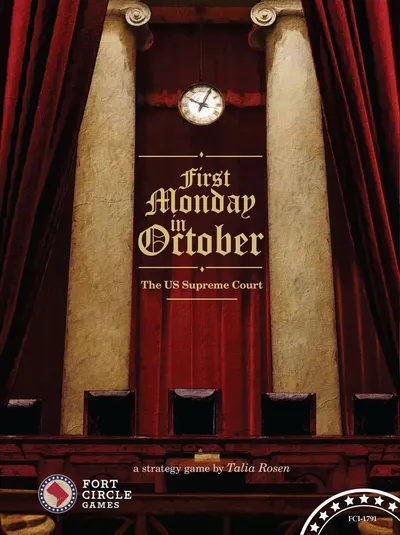
On the First Monday in October, the all-powerful Justices of the U.S. Supreme Court gather each year in their "marble palace" to decide the fate of a nation. Over the course of two hours, First Monday in October re-creates the history of the U.S. Supreme Court from 1789 to the present day, through three distinct eras: Era I represents the founding of the Court in 1789 through the Civil War in 1865; Era II represents the time period from 1866 until the seminal decision of Brown v. Board in 1954; and Era III represents the modern era from 1955 until 2010. Players compete to score renown points in this card-driven strategy game by advocating for the winning side of cases decided by the Supreme Court and by shaping the judicial philosophy of the Court to align with their objectives. During each round, players can choose to place their clerks on what they hope to be the winning side of cases as they progress along the Docket track. In order to help their litigants win, players can take actions to change the composition of the Court by encouraging Justices throughout history to retire and by supporting judicial candidates. At the end of each round, one case will be scored and awarded to the player with the most clerks on the prevailing side. The player with the most points at the end of the game wins. Each player represents a long-standing institution or school of thought attempting to gain renown by shaping the composition of the high court. Players need to use their limited influence and actions wisely to manipulate the judicial philosophy of the Court and to prevail in as many cases as possible. Commerce Clause: This track represents the scope of Article I, Section 8 of the U.S. Constitution, which grants Congress the power to "regulate commerce" among the several states. Equality & Liberty: This track broadly represents the scope of individual equality and liberty, including but not limited to the 14th Amendment (i.e., equal protection, due process, and privacy rights). Free Speech: This track represents the obligation in the 1st Amendment that Congress make no law abridging a person's freedom of speech, and the scope of permissible restrictions on that freedom. Executive Power: This track broadly represents the scope of Article II of the U.S. Constitution, which enumerates the powers of the executive branch, including the Office of the President and law enforcement. Shifting each philosophy one way generally represents a more expansive Federalist interpretation of the above constitutional provisions that supports a stronger centralized federal government, whereas shifting each philosophy the other direction generally represents a more narrow Anti-Federalist application of these provisions that supports a more decentralized approach to government with less power concentrated at the federal level. -description from the publisher
First Monday in October has 9 videos from 6 creators: 2 reviews, 1 how-to-play guide, 2 playthroughs, 1 unboxing and 3 other videos. They date from 2024 to April 2025.
To learn the rules, start with "First Monday in October PAXU preview" by GAMINGTREND, which runs 32 min.
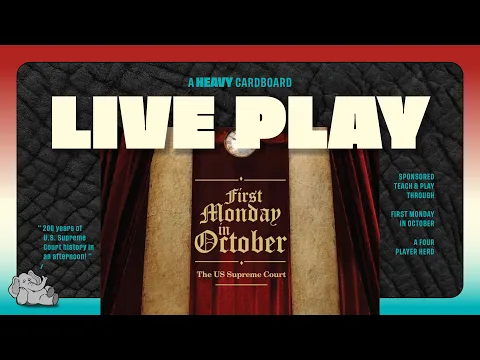
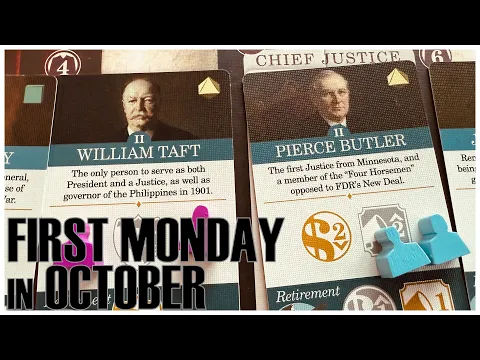
For an opinion before you buy, start with "First Monday in October Impressions & Light Review | Board Historical Game | Fort Circle Games" by Zilla Blitz. To see it played, watch "First Monday in October - 3p Teaching & Play-through by Heavy Cardboard" by Heavy Cardboard, one of 2 playthroughs.
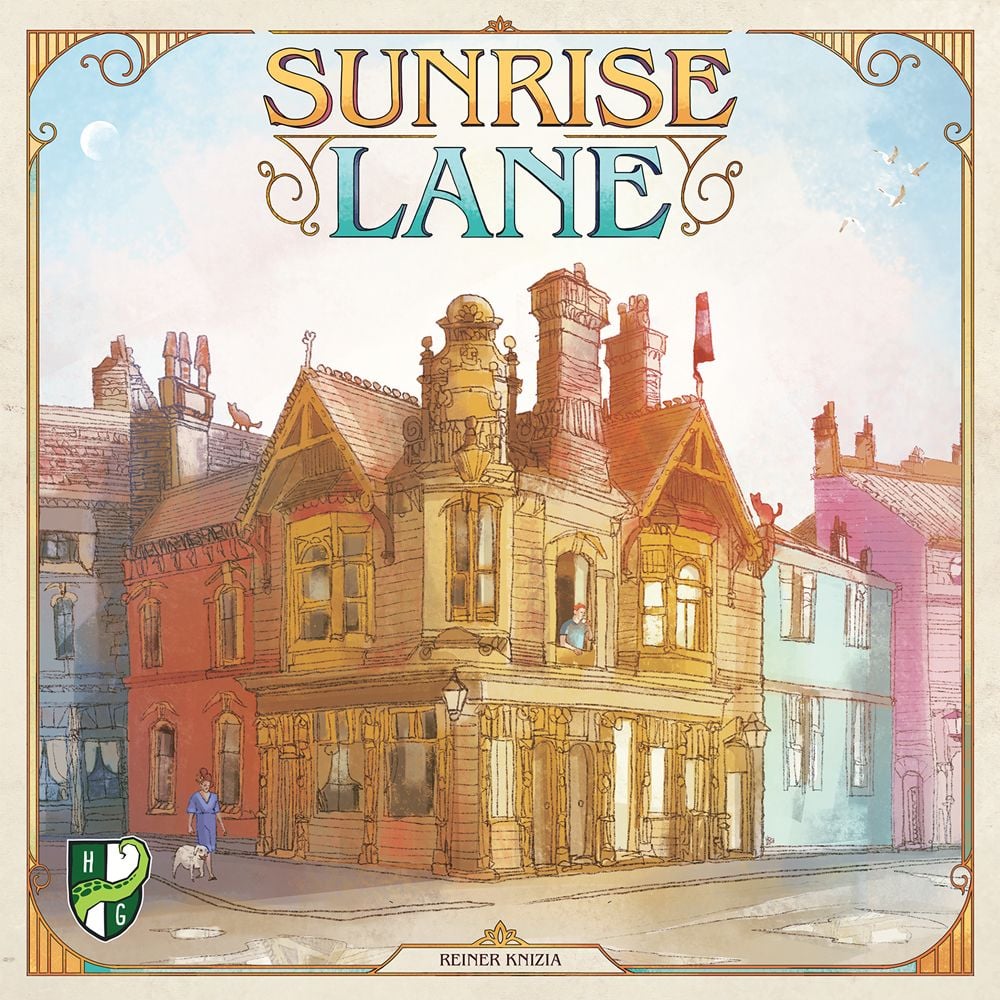
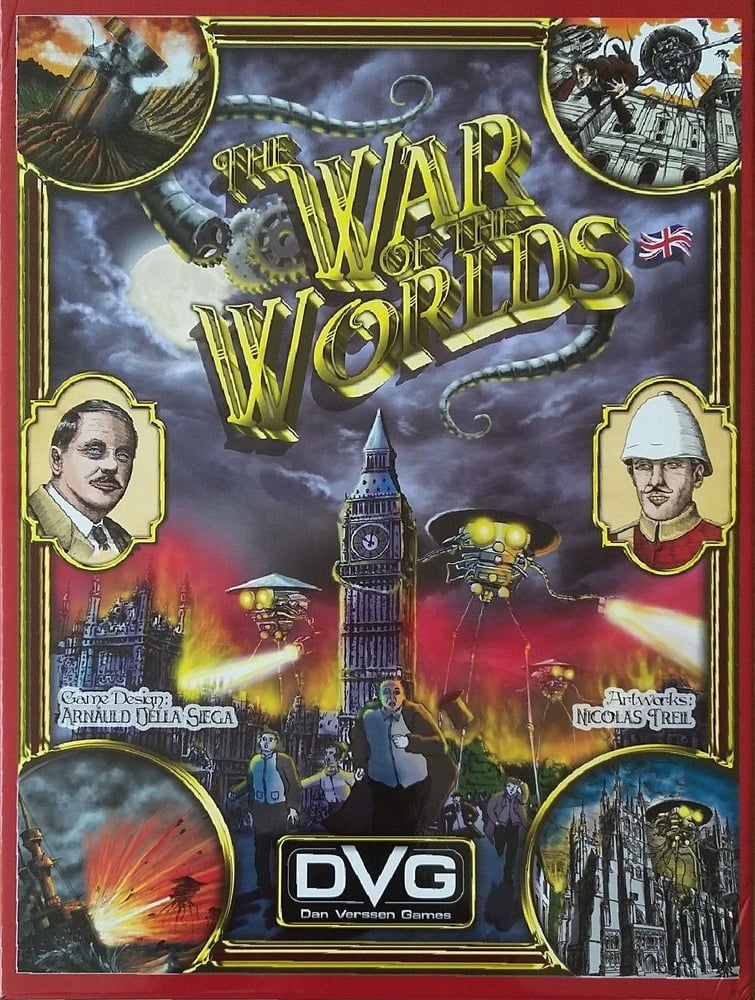
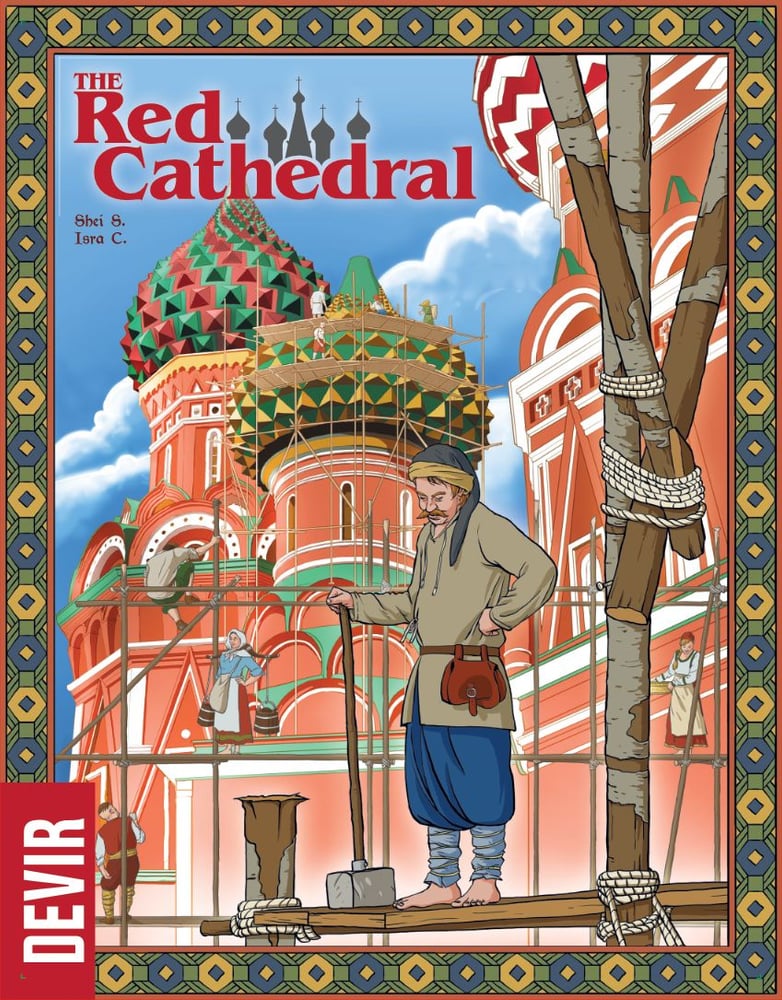
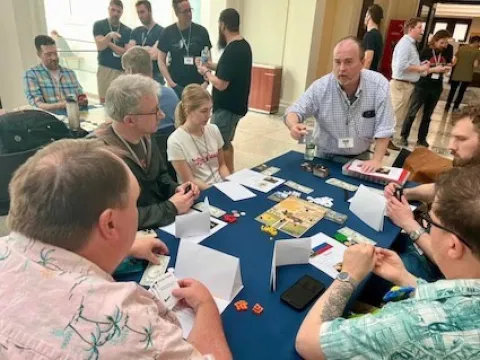
If you like it, try Abroad, Sunrise Lane, The War of the Worlds: England or The Red Cathedral, which share several of its mechanics. It appears in convention videos from PAX Unplugged 2024.


2025Rodrigo Rego, Danilo Valente
1 - 5 players90 minMedium weight
2023Reiner Knizia
2 - 4 players45 minLight weight
2018Arnauld Della Siega
1 players60 minMedium weight
2020Isra C., Shei S.
1 - 4 players80 minMedium weight
From BoardGameGeek:
On the First Monday in October, the all-powerful Justices of the U.S. Supreme Court gather each year in their "marble palace" to decide the fate of a nation. Over the course of two hours, First Monday in October re-creates the history of the U.S. Supreme Court from 1789 to the present day, through three distinct eras: Era I represents the founding of the Court in 1789 through the Civil War in 1865; Era II represents the time period from 1866 until the seminal decision of Brown v. Board in 1954; and Era III represents the modern era from 1955 until 2010. Players compete to score renown points in this card-driven strategy game by advocating for the winning side of cases decided by the Supreme Court and by shaping the judicial philosophy of the Court to align with their objectives. During each round, players can choose to place their clerks on what they hope to be the winning side of cases as they progress along the Docket track. In order to help their litigants win, players can take actions to change the composition of the Court by encouraging Justices throughout history to retire and by supporting judicial candidates. At the end of each round, one case will be scored and awarded to the player with the most clerks on the prevailing side. The player with the most points at the end of the game wins. Each player represents a long-standing institution or school of thought attempting to gain renown by shaping the composition of the high court. Players need to use their limited influence and actions wisely to manipulate the judicial philosophy of the Court and to prevail in as many cases as possible. Commerce Clause: This track represents the scope of Article I, Section 8 of the U.S. Constitution, which grants Congress the power to "regulate commerce" among the several states. Equality & Liberty: This track broadly represents the scope of individual equality and liberty, including but not limited to the 14th Amendment (i.e., equal protection, due process, and privacy rights). Free Speech: This track represents the obligation in the 1st Amendment that Congress make no law abridging a person's freedom of speech, and the scope of permissible restrictions on that freedom. Executive Power: This track broadly represents the scope of Article II of the U.S. Constitution, which enumerates the powers of the executive branch, including the Office of the President and law enforcement. Shifting each philosophy one way generally represents a more expansive Federalist interpretation of the above constitutional provisions that supports a stronger centralized federal government, whereas shifting each philosophy the other direction generally represents a more narrow Anti-Federalist application of these provisions that supports a more decentralized approach to government with less power concentrated at the federal level. -description from the publisher
Designer
Talia Rosen
Artist
Donal Hegarty
Publisher
Fort Circle Games
Categories
Mechanics