
Top 10 60 Minute Games

Watch “Top 10 60 Minute Games,” a board game video for 10 games from BoardGameGeek on BoardGameVideo.
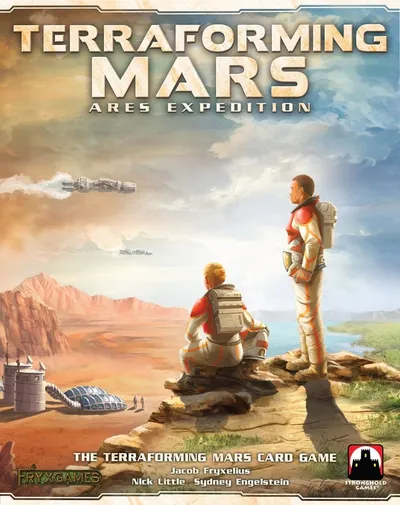
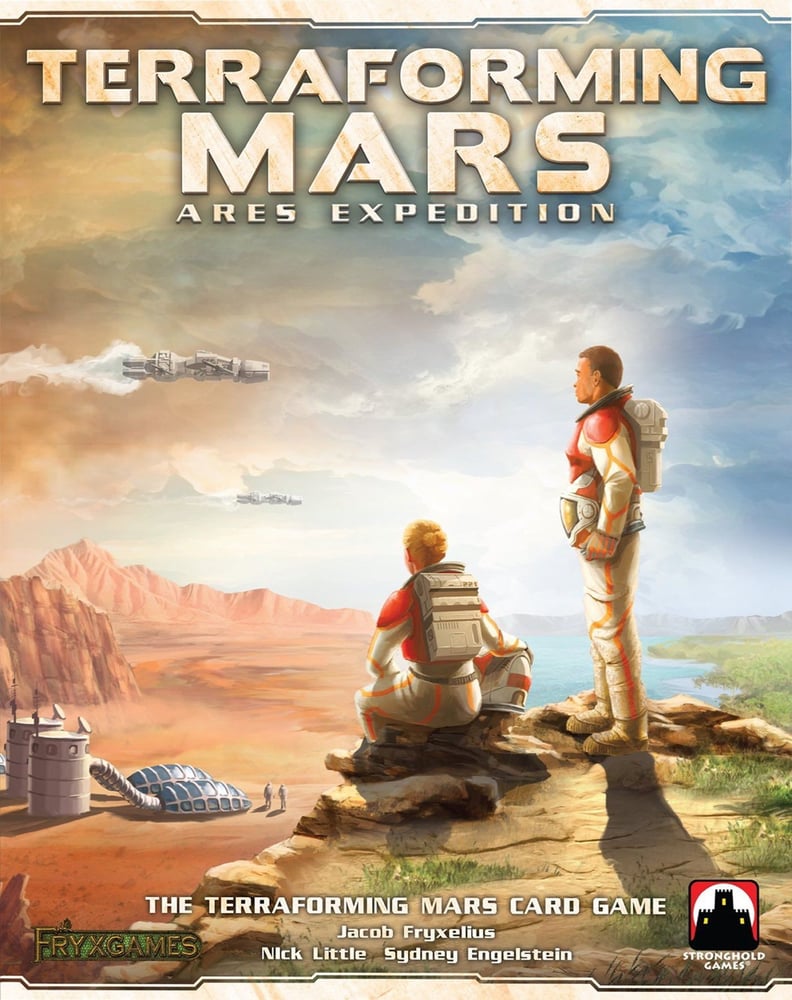
2021· 119 videos·Sydney Engelstein, Jacob Fryxelius, Nick Little (I)Mainly reviews
- Videos
- 119
- Creators
- 72
Terraforming Mars: Ares Expedition is covered on BoardGameVideo.com by 52 reviews, 11 how-to-play guides, 22 recorded sessions, 20 unboxings, and 14 other videos.
1 - 4 players45 - 60 minMedium weight: Teach it in one sittingView on BoardGameGeek ›About Terraforming Mars: Ares Expedition, from BoardGameGeek:
Terraforming Mars: Ares Expedition is an engine-building game in which players control interplanetary corporations with the goal of making Mars habitable (and profitable). You will do this by investing mega credits (MC) into project cards that will directly or indirectly contribute to the terraforming process. In order to win, you will want to accumulate a high terraform rating (TR) and as many victory points (VP) as you can. Players raise their TR by increasing global parameters: oceans, oxygen, and temperature. TR also determines each corporation's basic income, and, at the end of the game TR counts as VP. Additional VP and production capabilities are awarded for building project cards and other actions taken during the game. The game is played in rounds, and each round the players will choose one of five phases, which determines which activities will take place during that round. This means every round is different, but can consist of building new project cards, taking general and project-specific actions, producing income and resources (plants and heat), or researching to draw more project cards. Every player will take all the phases selected for the round, and will receive a special bonus during the phase that they selected. To speed up the game, within each phase, players can act simultaneously without waiting for each other! The game board has tracks for oxygen, temperature, and terraform rating, as well as a place for all of the ocean tiles that will be flipped over the course of the game. The game ends when there is enough oxygen to breath (14%), oceans enough to allow Earth-like weather (9), and the temperature is well above freezing (+8°C). It will then be possible, if not comfortable, to live on the surface of Mars! The winner is the player with the most VP at the end of the game.

2023· 104 videos·Shem PhillipsMostly playthroughs and reviews
- Videos
- 104
- Creators
- 64
Legacy of Yu is covered on BoardGameVideo.com by 40 reviews, 6 how-to-play guides, 44 recorded sessions, 11 unboxings, and 3 other videos.
1 players60 minMedium weight: Teach it in one sittingView on BoardGameGeek ›About Legacy of Yu, from BoardGameGeek:
During the reign of Emperor Yao, the people of ancient China were constantly plagued by deadly floods along the Yellow River. Eager to put an end to the devastation, Yao selected Gun, one of his officials, to devise a plan. After nine years of failed attempts using dams and dikes, Gun's employment came to a questionable end. After his passing, Yu inherited his father's work. Learning from Gun's failures, Yu set out to construct a series of canals to direct the surging river into nearby fields and smaller waterways. Legacy of Yu is a solo-only, fully-resettable, nonlinear campaign game in which you step into the role of the legendary hero of the Xia Dynasty, Yu the Great. It will be your job to build the canals ahead of the impending flood, while also defending your growing village against neighboring barbarian tribes. With each game, stories will be shared and new gameplay elements added. The campaign features a self-balancing system which adapts to how well you are doing. The campaign ends once you either win or lose seven games. -description from the publisher


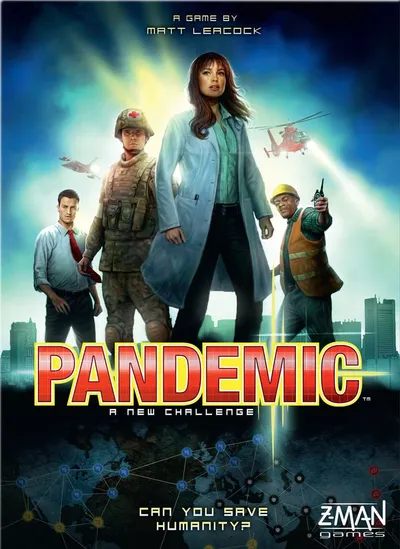
2008· 96 videos·Matt LeacockSome reviews
- Videos
- 96
- Creators
- 62
Pandemic is covered on BoardGameVideo.com by 35 reviews, 17 how-to-play guides, 19 recorded sessions, 3 unboxings, and 22 other videos.
2 - 4 players45 minMedium weight: Teach it in one sittingView on BoardGameGeek ›About Pandemic, from BoardGameGeek:
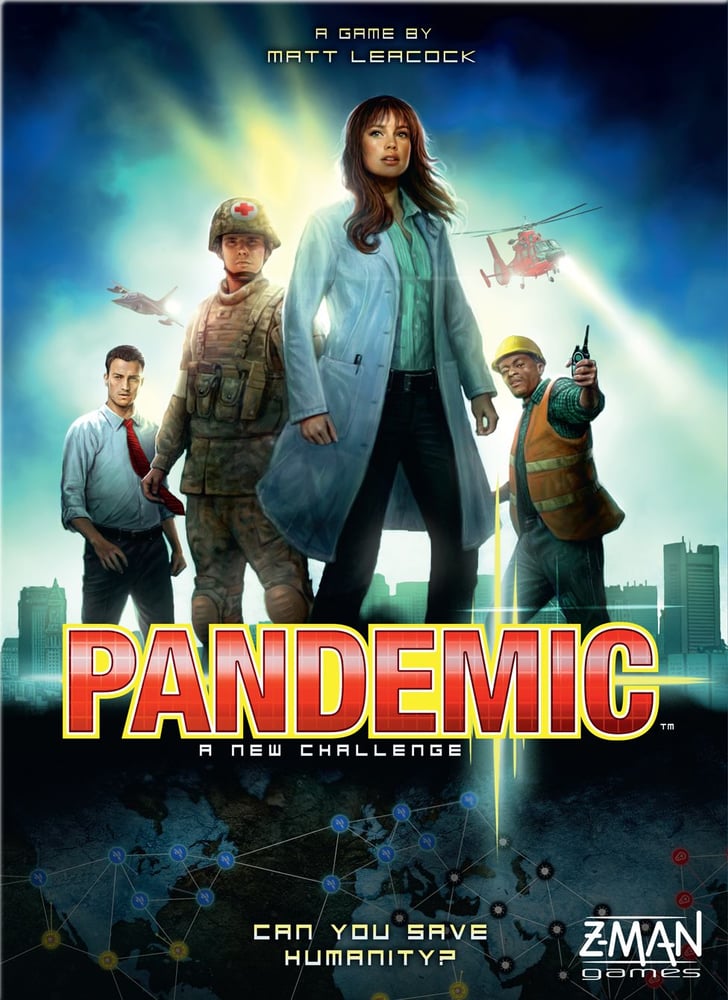
In Pandemic, several virulent diseases have broken out simultaneously all over the world! The players are disease-fighting specialists whose mission is to treat disease hotspots while researching cures for each of four plagues before they get out of hand. The game board depicts several major population centers on Earth. On each turn, a player can use up to four actions to travel between cities, treat infected populaces, discover a cure, or build a research station. A deck of cards provides the players with these abilities, but sprinkled throughout this deck are Epidemic! cards that accelerate and intensify the diseases' activity. A second, separate deck of cards controls the "normal" spread of the infections. Taking a unique role within the team, players must plan their strategy to mesh with their specialists' strengths in order to conquer the diseases. For example, the Operations Expert can build research stations which are needed to find cures for the diseases and which allow for greater mobility between cities; the Scientist needs only four cards of a particular disease to cure it instead of the normal five-but the diseases are spreading quickly and time is running out. If one or more diseases spreads beyond recovery or if too much time elapses, the players all lose. If they cure the four diseases, they all win! The 2013 edition of Pandemic includes two new characters-the Contingency Planner and the Quarantine Specialist-not available in earlier editions of the game. Pandemic is the first game in the Pandemic series.
2017· 89 videos·Reiner KniziaMainly reviews
- Videos
- 89
- Creators
- 65
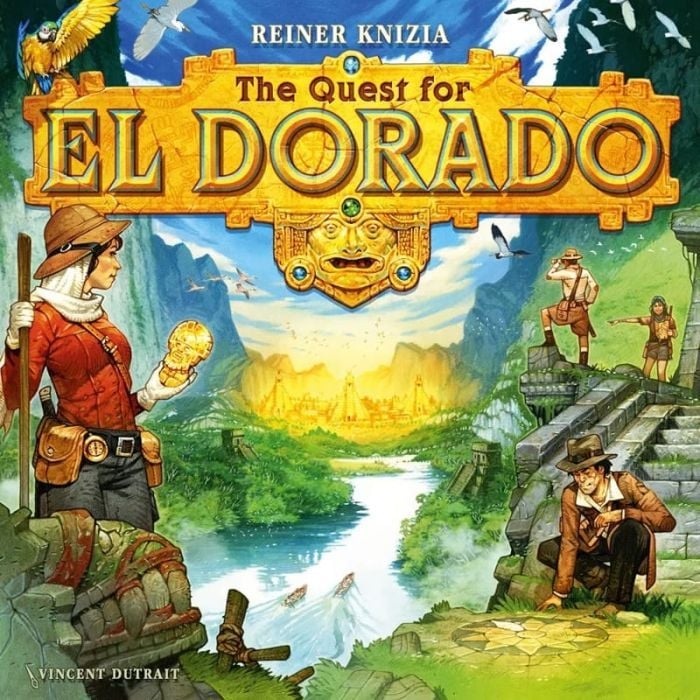
The Quest for El Dorado is covered on BoardGameVideo.com by 48 reviews, 11 how-to-play guides, 15 recorded sessions, 6 unboxings, and 9 other videos.
2 - 4 players30 - 60 minLight weight: Learn it in minutesView on BoardGameGeek ›About The Quest for El Dorado, from BoardGameGeek:
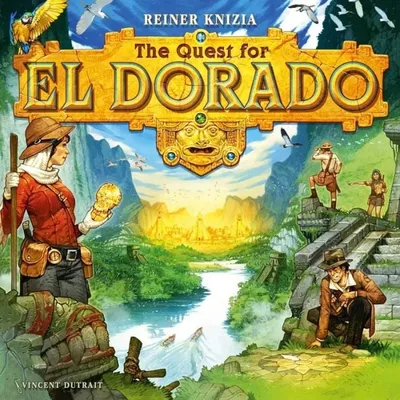
In The Quest for El Dorado, players take the roles of expedition leaders who have embarked on a search for the legendary land of gold in the dense jungles of South America. Each player assembles and equips their own team, hiring various helpers from the scout to the scientist to the aborigine. All of them have one goal in mind: Reaching the golden border first and winning all of the riches for themselves. Whoever chooses the best tactics will be rewarded! Each player starts with a face-down deck of 8 cards - his or her expedition - to draw from. You start each turn with 4 cards in your hand. Use expedition cards to move through the jungle or hire more people for your expedition. Each card in your hand can only be used once per turn - to move or to buy 1 new card. When a player reaches one of the 3 finishing spaces, he moves to El Dorado and this triggers the final round. The other players will now play their final turn. Once the round is completed, the game is over. If the final round ends up with multiple players reaching El Dorado, the player who has collected the most blockades wins the game.
2019· 84 videos·Frédéric GuérardMainly reviews
- Videos
- 84
- Creators
- 68
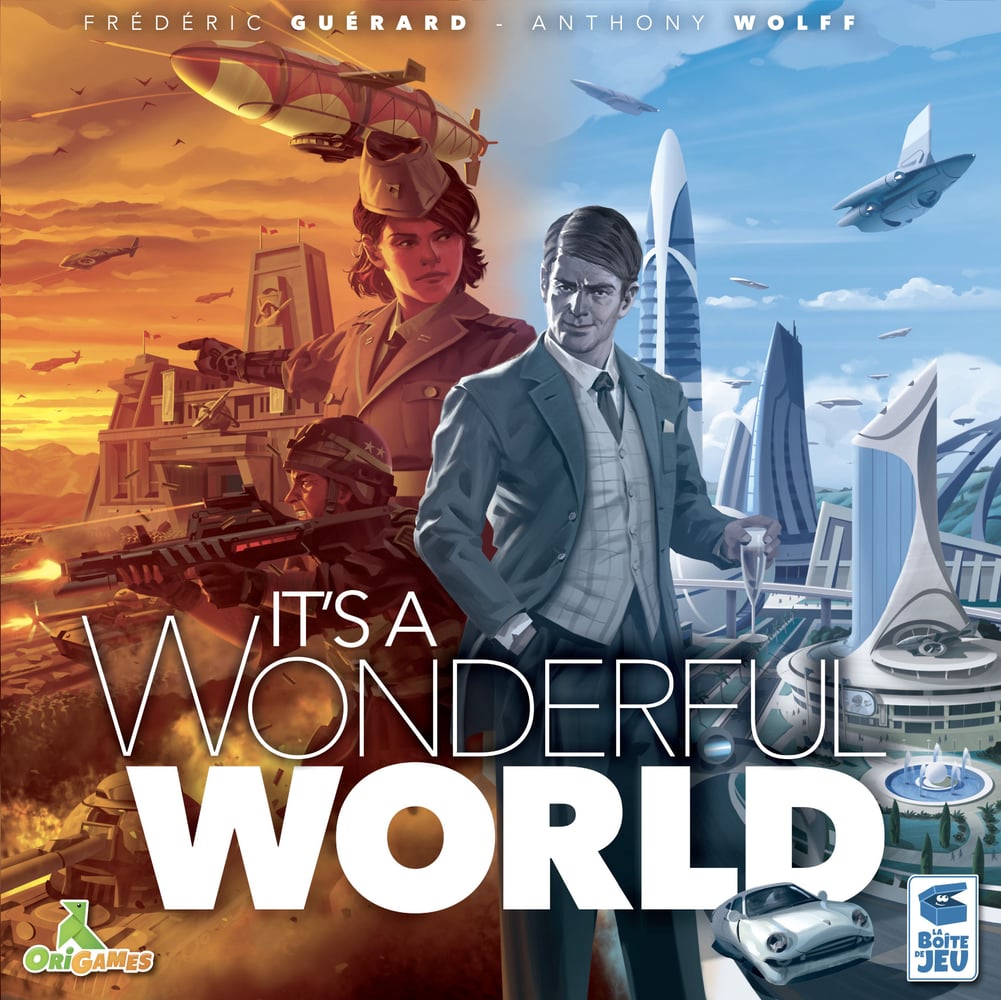
It's a Wonderful World is covered on BoardGameVideo.com by 38 reviews, 15 how-to-play guides, 16 recorded sessions, 6 unboxings, and 9 other videos.
1 - 5 players45 minMedium weight: Teach it in one sittingView on BoardGameGeek ›About It's a Wonderful World, from BoardGameGeek:
In It's a Wonderful World, you are an expanding Empire and must choose your path to your future. You must develop faster and better than your competitors. You'll carefully plan your expansion to develop your production power and rule over this new world. It's a Wonderful World is a cards drafting and engine building game from 1 to 5 players. Each round, players will draft 7 cards and then choose which ones will be recycled to immediately acquire Resources, and which ones will be kept for construction to produce Resources each round and/or gain victory points. When a card is fully built, it's added to the player's Empire to increase the player's production capacity for each round. The mechanical twist being that the production phase works in a specific order. You'll have to plan your constructions carefully! For a deeper insight of the gameplay, please follow this link : It's a Wonderful World - First steps In addition to the base game, players can also enjoy expansions boxes introducing an innovative Campaign mode. Each Campaign offers a storyline to follow and many gameplay twists. At the end of each campaign, players will open a reward booster to unlock new cards, enhance their base game and keep a memory of what happened during the campaign. All the campaigns can be replayed and don't imply game components destruction. More info on the Campaign mode : It's a Wonderful World - Campaign Mode -description from the publisher

2021· 80 videos·John D. ClairMainly reviews
- Videos
- 80
- Creators
- 65
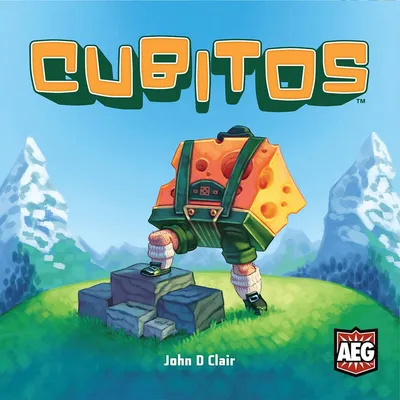
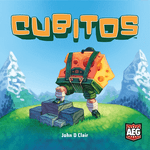
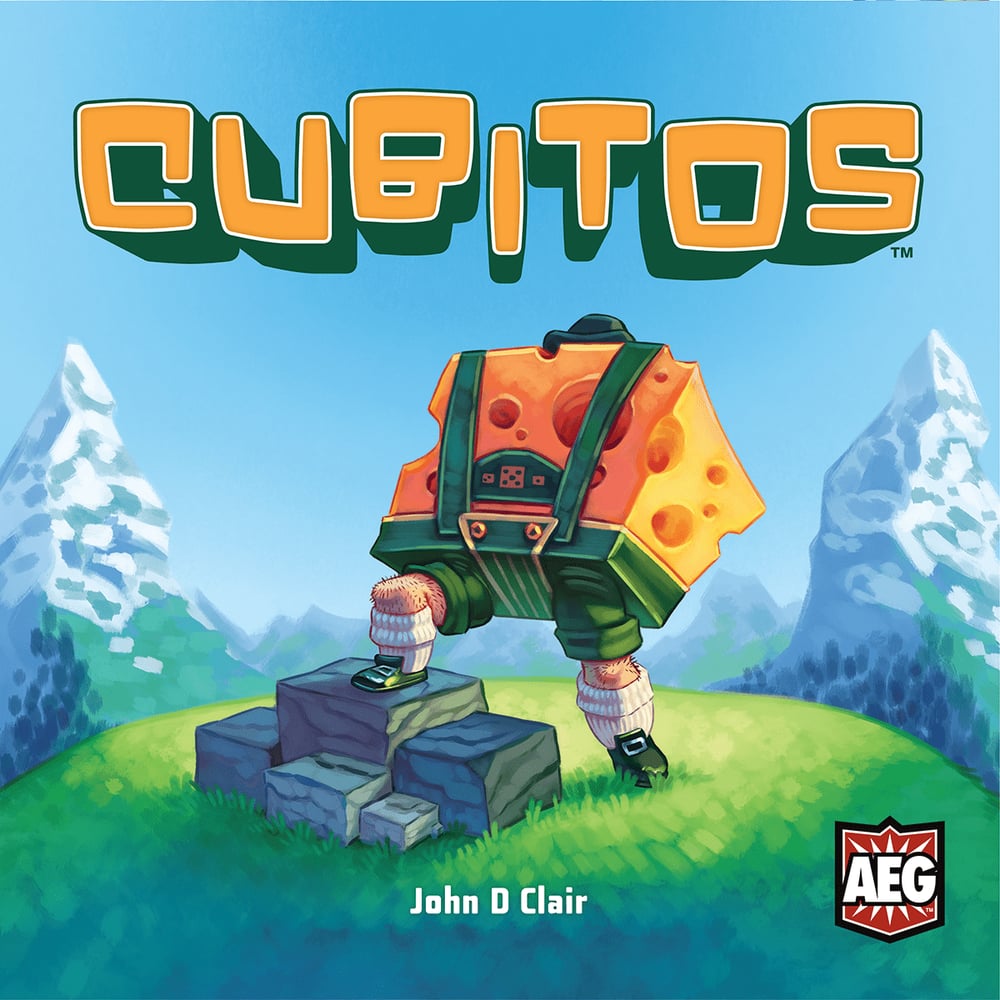
Cubitos is covered on BoardGameVideo.com by 40 reviews, 13 how-to-play guides, 10 recorded sessions, 10 unboxings, and 7 other videos.
2 - 4 players30 - 60 minMedium weight: Teach it in one sittingView on BoardGameGeek ›About Cubitos, from BoardGameGeek:
Be fast or be last! In Cubitos, players take on the role of participants in the annual Cube Cup, a race of strategy and luck to determine the Cubitos Champion. Each player has a runner on the racetrack and a support team, which is represented by all the dice you roll. Each turn, you roll dice and use their results to move along the racetrack, buy new dice, and use abilities - but you must be careful not to push your luck rolling too much or you could bust! -description from the publisher
2012· 64 videos·Andreas SteigerMainly reviews
- Videos
- 64
- Creators
- 55
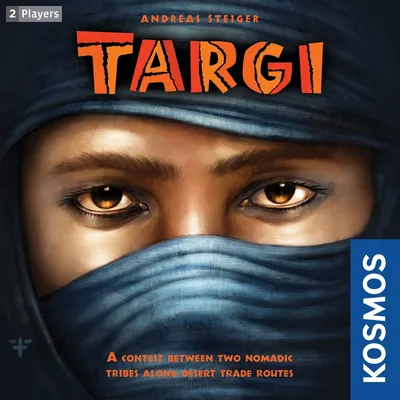
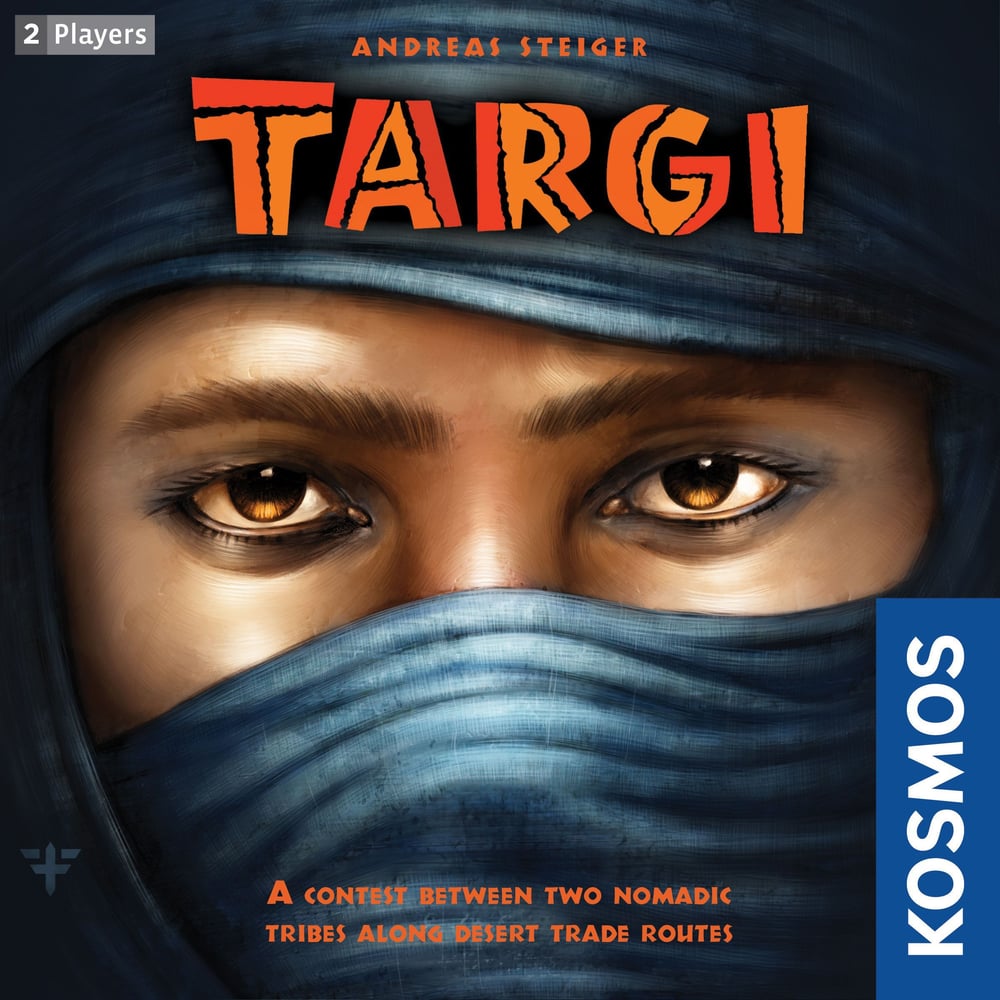
Targi is covered on BoardGameVideo.com by 33 reviews, 17 how-to-play guides, 6 recorded sessions, 3 unboxings, and 5 other videos.
2 players60 minMedium weight: Teach it in one sittingView on BoardGameGeek ›About Targi, from BoardGameGeek:
Unlike in other cultures, the desert Tuareg men, known as Targi, cover their faces, whereas women of the tribe do not wear veils. They run the household and have the last word at home in the tents. Different families are divided into tribes, headed by the ‘Imascheren' (or nobles). As leader of a Tuareg tribe, players trade goods from near (such as dates and salt) and far (like pepper) in order to obtain gold and other benefits, and enlarge their family. In each round their new offerings are made. Cards are a means to an end in order to obtain the popular tribe cards. The board consists of a 5x5 grid: a border of 16 squares with printed action symbols and then 9 blank squares in the centre onto which cards are dealt. Meeples are placed one at a time on the spaces at the edges of the board (not including corner squares). You cannot place a meeple on a square the opponent has a meeple on already, nor on a square facing an opponent's meeple. Once all meeples are placed, players then execute the actions on the border squares the meeples are on and also take the cards from the centre that match the row and column of the border meeples. The game is predominantly scored and won by playing tribal cards to your display. These give advantages during the game and victory points at the end. Usually cards are played (or discarded) immediately once drawn. A single card can be kept in hand, but then requires a special action to play it (or to discard it to free the hand spot for another card). Each card has a cost in goods to play. Goods are obtained either from border spaces or from goods cards. The display (for scoring) consists of three rows of four cards that are filled from left to right and cannot be moved once placed (barring some special cards). There is also a balance to be found between the victory point score on the cards themselves (1-3 VP per tribal card) and the combinations per row (a full row of four identical card types gets you an additional 4 VP, and a full row of four distinct card types gets you 2 VP). The winner at the end of the game is the player with the most victory points.

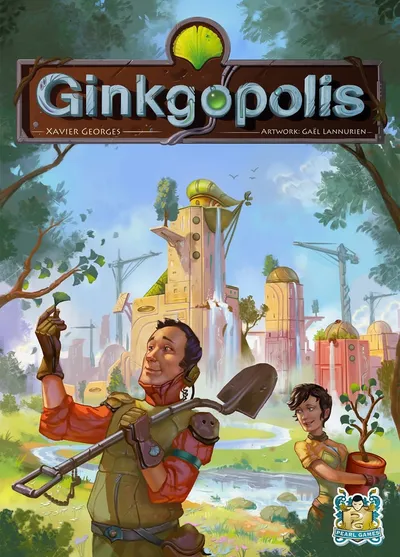
2012· 52 videos·Xavier GeorgesMainly reviews
- Videos
- 52
- Creators
- 44
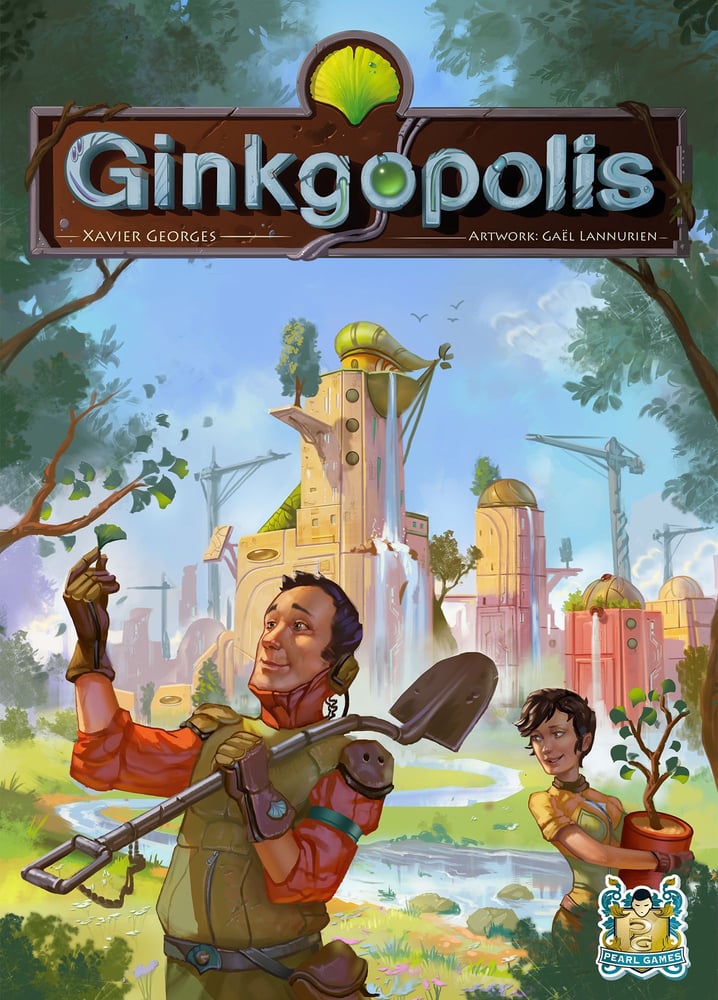
Ginkgopolis is covered on BoardGameVideo.com by 23 reviews, 12 how-to-play guides, 6 recorded sessions, 4 unboxings, and 7 other videos.
1 - 5 players45 minMedium weight: Teach it in one sittingView on BoardGameGeek ›About Ginkgopolis, from BoardGameGeek:
2212: Ginkgo Biloba, the oldest and strongest tree in the world, has become the symbol of a new method for building cities in symbiosis with nature. Humans have exhausted the resources that the Earth offered them, and humanity must now develop cities that maintain a delicate balance between resource production and consumption. Habitable space is scarce, however, and mankind must now face the challenge of building ever upwards. To develop this new type of city, you will gather a team of experts around you, and try to become the best urban planner for Ginkgopolis. In Ginkgopolis, the city tiles come in three colors: yellow, which provides victory points; red, which provides resources; and blue, which provides new city tiles. Some tiles start in play, and they're surrounded by letter markers that show where new tiles can be placed. Begin with three Character cards which grant you starting resources and bonuses to power your game actions. On a turn, each player chooses a Construction or Urbanization card from his hand simultaneously. Players reveal these cards, adding new tiles to the border of the city in the appropriate location or placing tiles on top of existing tiles. Each card in your hand that you don't play is passed on to your left-hand neighbor, so keep in mind how your play might set up theirs! When you build over a tile, you add its “power" card to your tableau, which provides you additional abilities during the game, allowing you to scale up your building and point-scoring efforts.
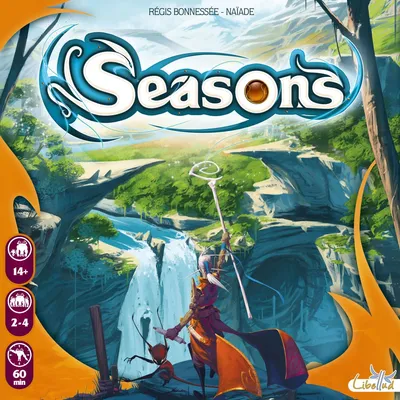
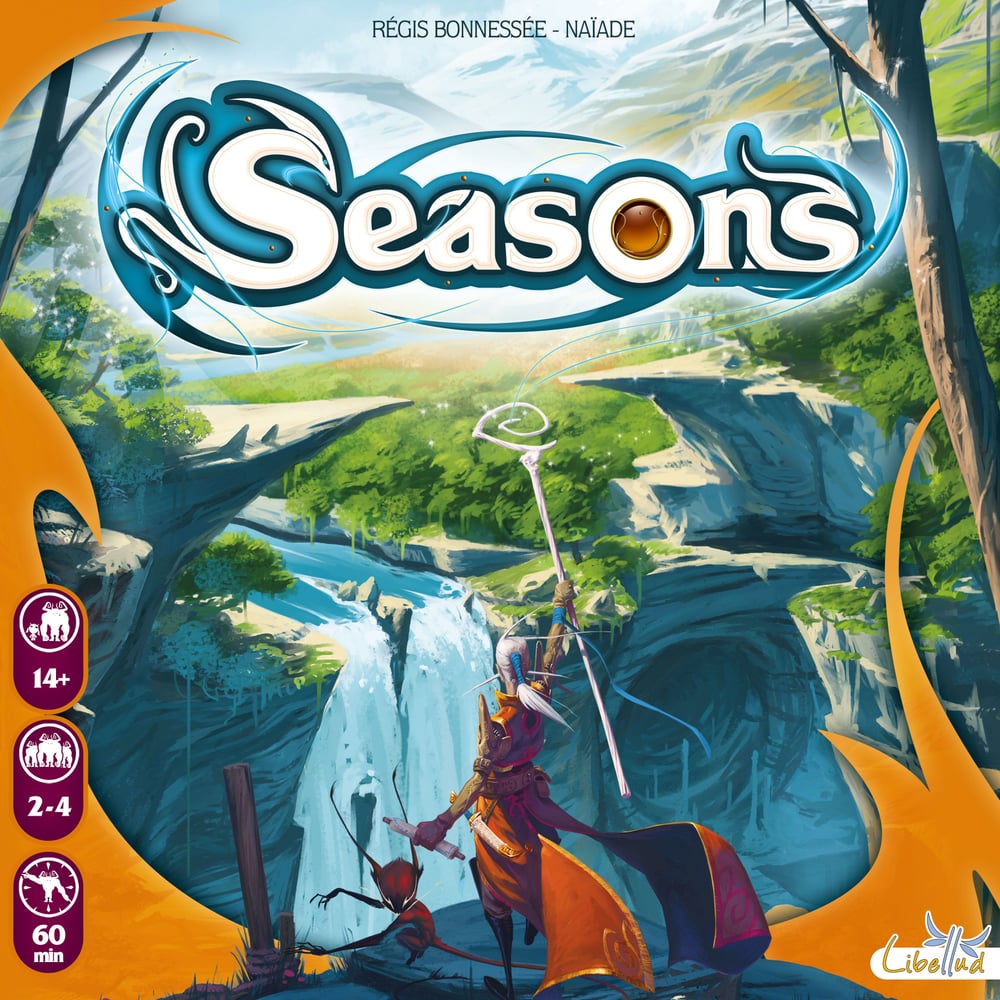
2012· 4 videos·Régis Bonnessée
2 - 4 players60 minMedium weight: Teach it in one sittingView on BoardGameGeek ›About Seasons, from BoardGameGeek:
The greatest sorcerers of the kingdom have gathered at the heart of the Argos forest, where the legendary tournament of the 12 seasons is taking place. At the end of the three year competition, the new archmage of the kingdom of Xidit will be chosen from among the competitors. Take your place, wizard! Equip your ancestral magical items, summon your most faithful familiars to your side and be ready to face the challenge! Seasons is a tactical game of cards and dice which takes place in two phases: The first phase "Prelude" consists of a card draft: the goal during this phase will be to establish your own 9-card deck for the main part of the game and with it the strategy. Once the Prelude is complete, each player must separate their 9 cards into 3 packs of 3 cards. They will begin the second phase of the game with their first pack of three cards, then gradually as the game progresses, they will receive the other two packets of three cards. Next comes the Tournament: at the beginning of each round a player will roll the seasons dice (dice = number of players +1). These cubes offer a variety of actions to the players: - Increase your gauge (maximum number of cards you may have placed on the table and in play) - Harvesting energy (water, earth, fire, air) to pay the cost of power cards - Crystallizing the energy (during the current season) to collect crystals. Crystals serve both as a resource to pay for some cards, but also as victory points in the end. - Draw new cards Each player can choose only one die per turn. The die not chosen by anyone determines how many fields the "time track" would move forward. In addition, all the dice are different depending on the season. For example, there are not the same energies to a particular season. Throughout the game, players will therefore have to adapt to these changes - also the "exchange rates" of energy to crystals vary during seasons - the energy not present on the dice in any given season is also the best paid during the season. At the end of the game, the crystals are summed with victory points granted by the cards (minus some penalties, where applicable). The highest score wins.

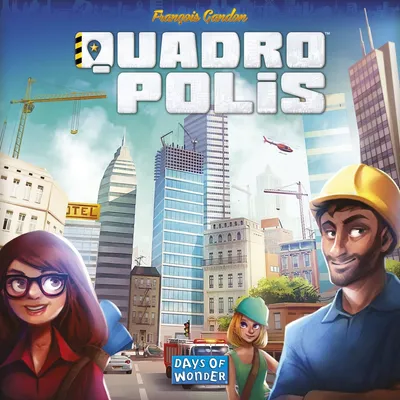
2016· 3 videos·François Gandon
2 - 4 players30 - 60 minMedium weight: Teach it in one sittingView on BoardGameGeek ›About Quadropolis, from BoardGameGeek:
Each player builds their own metropolis in Quadropolis (first announced as City Mania), but they're competing with one another for the shops, parks, public services and other structures to be placed in them. The game lasts four rounds, and in each round players first lay out tiles for the appropriate round at random on a 5x5 grid. Each player has four architects numbered 1-4 and on a turn, a player places an architect next to a row or column in the grid, claims the tile that's as far in as the number of the architect placed (e.g., the fourth tile in for architect #4), places that tile in the appropriately numbered row or column on the player's 4x4 city board, then claims any resources associated with the tile (inhabitants or energy). When a player takes a tile, a figure is placed in this now-empty space and the next player cannot place an architect in the same row or column where this tile was located. In addition, you can't place one architect on top of another, so each placement cuts off play options for you and everyone else later in the round. After all players have placed all four architects, the round ends, all remaining tiles are removed, and the tiles for the next round laid out. After four rounds, the game ends. Players can move the inhabitants and energy among their tiles at any point during the game to see how to maximize their score. At game end, they then score for each of the six types of buildings depending on how well they build their city - as long as they have activated the buildings with inhabitants or energy as required: Residential buildings score depending on their height Shops score depending on how many customers they have Public services score depending on the number of districts in your city that have them Parks score depending on the number of residential buildings next to them Harbors score based on the longest row or column of activated harbors in the city Factories score based on the number of adjacent shops and harbors Some buildings are worth victory points (VPs) on their own, and once players sum these values with what they've scored for each type of building in their city, whoever has the highest score wins.

Explore more videos


















Description provided by BoardGameGeek on YouTube:
You’ve only got an hour but you got to get a game in! Don’t you worry we’ve got the list for you! These are the Top 10 Games that Play in 60 Minutes! 00:00 Intro 01:33 #10 Legacy of Yu - 2023 - Shem Phillips - Garphill Games https://boardgamegeek.com/boardgame/354934/legacy-of-yu 02:55 #9 Quadropolis - 2016 - François Gandon - Days of Wonder https://boardgamegeek.com/boardgame/176396/quadropolis 05:16 #8 Cubitos - 2021 - John D. Claire - AEG https://boardgamegeek.com/boardgame/298069/cubitos 07:28 #7 Seasons - 2012 - Régis Bonnessée - Libellud https://boardgamegeek.com/boardgame/108745/seasons 09:19 #6 It’s a Wonderful World - 2019 - Frédéric Guérard - La Boîte de Jeu https://boardgamegeek.com/boardgame/271324/its-a-wonderful-world 11:25 #5 Targi - 2012 - Andreas Steiger - KOSMOS https://boardgamegeek.com/boardgame/118048/targi 13:19 #4 Pandemic - 2008 - Matt Leacock - Z-Man Games https://boardgamegeek.com/boardgame/30549/pandemic 15:13 #3 The Quest for El Dorado - 2017 - Reiner Knizia - Ravensburger https://boardgamegeek.com/boardgame/217372/the-quest-for-el-dorado 17:08 #2 Ginkgopolis - 2017 - Xavier Georges - Pearl Games https://boardgamegeek.com/boardgame/128271/ginkgopolis 19:57 #1 Terraforming Mars: Ares Expedition - 2021 - Sydney Engelstein, Jacob Fryxelius, Nick Little (I) - Fryx Games https://boardgamegeek.com/boardgame/328871/terraforming-mars-ares-expedition 22:20 Outro
Related Content
game
More Terraforming Mars: Ares Expedition videos
game
More Legacy of Yu videos
game
More Pandemic videos
game
More The Quest for El Dorado videos
game
More It's a Wonderful World videos
game
More Cubitos videos
game
More Targi videos
game
More Ginkgopolis videos
game
More Seasons videos
game
More Quadropolis videos
channel
More videos from this channel