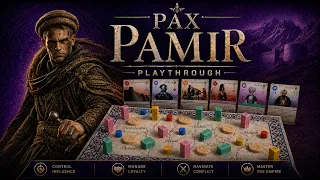
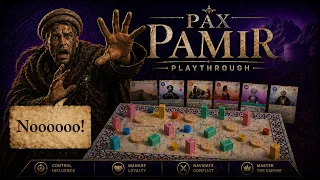
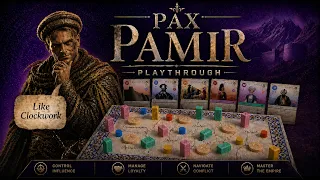
Watch “'The Shortest Game on Earth' - Pax Pamir Playthrough - Part 3 - Wakhan Blocks, the Trap is Set,” a gameplay video on BoardGameVideo.
Description provided by BoardThru on YouTube:
Part 3 of 5 in this Pax Pamir playthrough titled 'The Shortest Game on Earth'. See how the Wakhan can be bested by pushing it to excess.
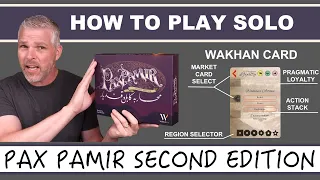
Designed by Cole Wehrle and published by Wehrlegig Games, Pax Pamir: Second Edition is a deeply historical, highly interactive strategy experience set in nineteenth-century Afghanistan during the Great Game, where every coalition, alliance, and betrayal reshapes the balance of empire across Central Asia.
Players step into the role of Afghan leaders navigating the dangerous politics of Kabul, Herat, Kandahar, Persia, Punjab, Wakhan, Transcaspia, and the wider Pamir Mountains as British, Russian, and Afghan interests compete for influence, sovereignty, and regional dominance. Rather than controlling a single nation, each patriot manipulates tribal networks, spies, armies, roads, and coalition blocks through diplomacy, warfare, intelligence, taxation, negotiation, gifting, and strategic coalition switching.
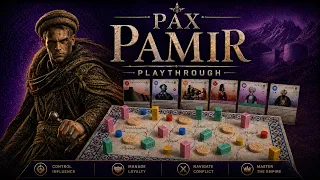
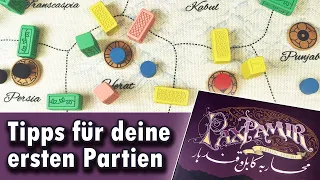
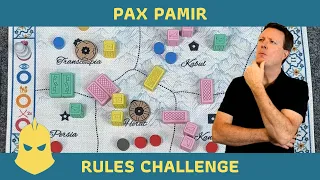
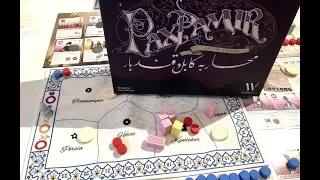
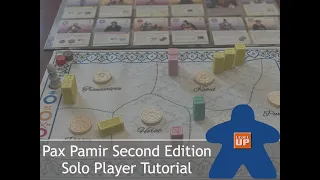
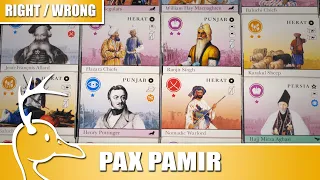
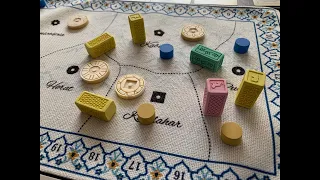
At its core, the game is a tableau builder driven by cards, court cards, event cards, dominance check cards, and a constantly shifting market row. Every suit in your tableau grants new powers tied to military, economic, or political ambitions, while influence pips, military stars, economic stars, and political stars determine your leverage inside fragile alliances. Players use cylinders, wooden blocks, resin coalition blocks, and cylindrical pieces across an elegant cloth map to establish roads, move armies, spread spies, secure borders, and dominate critical terrain along the Silk Road.
The game’s asymmetry, player interaction, and emergent narrative create a uniquely interactive eurogame filled with tactical decisions, strategic timing, court management, and region adjacency puzzles. Every dominance check can trigger instability, overthrow existing power structures, or create a sudden power vacuum where loyalty becomes temporary and negotiated alliances collapse into backstabbing and deception. Coalition loyalty is never guaranteed, and players must constantly evaluate whether stability or betrayal offers the better path toward prestige and victory points.
Historically, the game explores Afghan politics during the era of colonialism, focusing on the ambitions of the East India Company, Tsarist Russia, and competing local factions struggling for survival after the collapse of imperial authority. Rather than glorifying empire, the design emphasizes historical simulation, political manoeuvring, and the shifting loyalties that defined the region. This historical sandbox strategy game transforms the Great Game into a tense web of diplomacy, bribes, intelligence actions, military campaigns, and economic pressure.
Mechanically, players build a personal court using multi-use cards while manipulating favoured suit conditions, conducting battles, exploiting market opportunities, and leveraging coalition blocks to gain regional control. The influence map evolves dynamically as roads connect territories, armies clash, spies infiltrate rival courts, and tribal influence spreads through Afghanistan and neighbouring regions. Because dominance is temporary and coalition switching is always possible, even the strongest alliance can collapse under pressure from a well-timed betrayal or strategic negotiation.
The handmade aesthetic, lavish resin blocks, cloth map, and richly illustrated components reinforce the feeling of an heirloom-quality historical experience inspired partly by Sierra Madre traditions and the broader Pax series lineage. Through its layered systems of influence, loyalty, coalition politics, and military tension, Pax Pamir: Second Edition delivers an unforgettable blend of historical depth, strategic complexity, and interactive storytelling unlike almost any other board game.