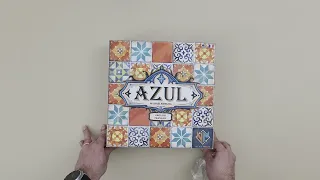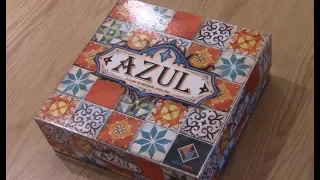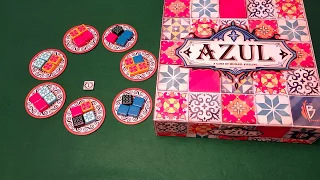
Watch “How to Play Azul | How to Game with Becca Scott,” a how-to-play guide for Azul from Good Time Society on BoardGameVideo.
Description provided by Good Time Society on YouTube:
Becca Scott teaches you how to play Azul: an aesthetically pleasing tile placing game in which you compete to build the most beautiful mosaic walls.

Looking to pick up a copy of Azul? You can support us and get yours here!
https://amzn.to/3D8Fd7b
BGG: https://boardgamegeek.com/boardgame/230802/azul
Good Time Society is a group of friends creating board game tutorials, reviews, podcasts, sketches, and more, created by Becca Scott (@thebeccascott), Jake Michels (@thejakemichels), and our friends!

Find more from Good Time Society here:
► https://www.twitch.com/goodtimesociety
► https://www.twitter.com/goodtimesociety
► https://www.instagram.com/goodtimesociety
► https://www.goodtimesociety.net
► info@goodtimesociety.net Business Inquiries Only
Find more Becca Scott here:
► https://www.instagram.com/thebeccascott
► https://www.twitter.com/thebeccascott
► https://www.twitch.com/thebeccascott
#tabletop #howtoplay #azul
Mainly reviews. Azul is covered on BoardGameVideo.com by 61 reviews, 33 how-to-play guides, 14 recorded sessions, 10 unboxings, and 11 other videos.
2 - 4 players
30 - 45 min
Light weight: Learn it in minutes
About Azul, from BoardGameGeek:
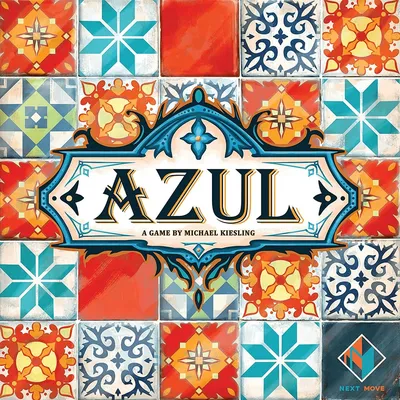
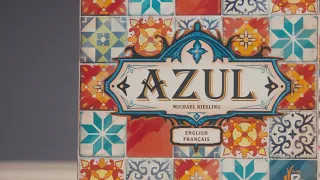
Introduced by the Moors, azulejos (originally white and blue ceramic tiles) were fully embraced by the Portuguese when their king Manuel I, on a visit to the Alhambra palace in Southern Spain, was mesmerized by the stunning beauty of the Moorish decorative tiles. The king, awestruck by the interior beauty of the Alhambra, immediately ordered that his own palace in Portugal be decorated with similar wall tiles. As a tile-laying artist, you have been challenged to embellish the walls of the Royal Palace of Evora.
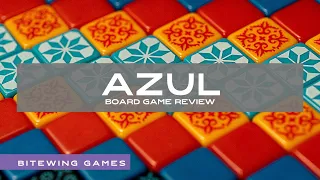
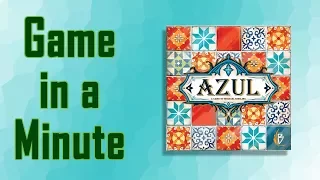
In the game Azul, players take turns drafting colored tiles from suppliers to their player board. Later in the round, players score points based on how they've placed their tiles to decorate the palace. Extra points are scored for specific patterns and completing sets; wasted supplies harm the player's score. The player with the most points at the end of the game wins.