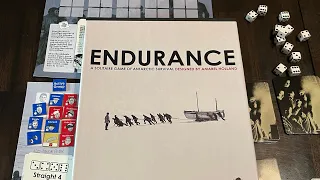
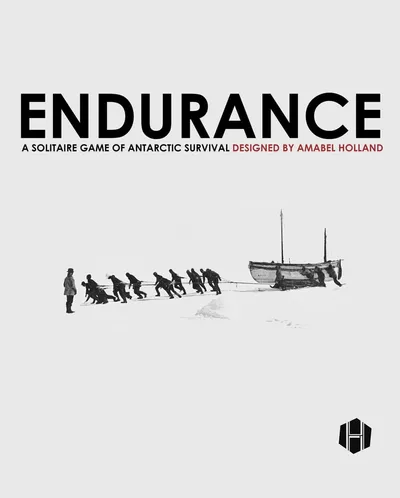
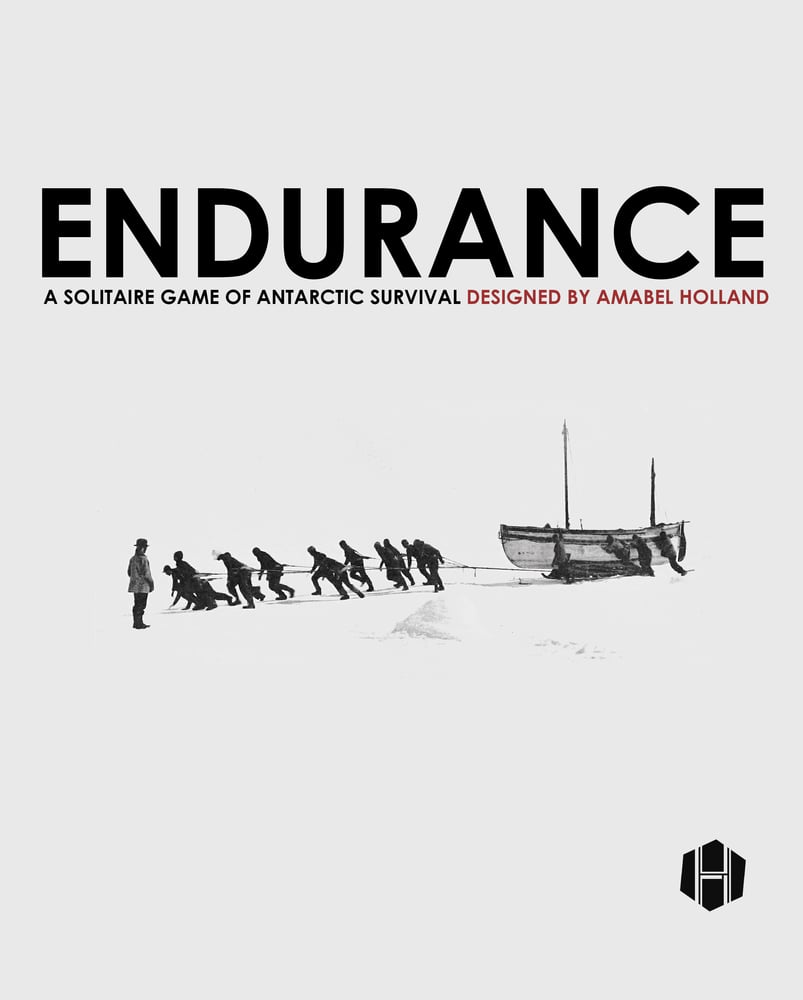
Watch “Endurance (Hollandspiele) - AAR (April 24, 1916),” a gameplay video for Endurance from KilroyWasHere on BoardGameVideo.
Description provided by KilroyWasHere on YouTube:
Unbox - https://youtu.be/LVtVnctEE2I?si=WtLEvXNUAes4ub4l
Endurance departed from South Georgia for the Weddell Sea on 5 December 1914, heading for Vahsel Bay. As the ship moved southward navigating in ice, she encountered first-year ice, which slowed progress. Deep in the Weddell Sea, conditions gradually grew worse until, on 19 January 1915, Endurance became frozen fast in an ice floe.
On 24 February, realising that they would be trapped until the following spring, Shackleton ordered the abandonment of the ship's routine and her conversion to a winter station. Endurance drifted slowly northward with the ice through the following months. When spring arrived in September, the breaking of the ice and its later movements put extreme pressure on the ship's hull.
Shackleton had been hoping that the ship, when released from the ice, could work her way back towards Vahsel Bay, but his hopes were dashed on 24 October when water began pouring in. After a few days, with the position at 69°5′ S, 51°30′ W, he gave the order to abandon ship, saying, "She's going down!"; and men, provisions and equipment were transferred to camps on the ice. On 21 November 1915, the wreck of Endurance finally slipped beneath the surface.
For almost two months, Shackleton and his party camped on a large, flat floe, hoping that it would drift towards Paulet Island, approximately 250 miles (402 km) away, where it was known that stores were cached. After failed attempts to march across the ice to this island, Shackleton decided to set up another more permanent camp (Patience Camp) on another floe, and trust to the drift of the ice to take them towards a safe landing. By 17 March, their ice camp was within 60 miles (97 km) of Paulet Island; however, separated by impassable ice, they were unable to reach it. On 9 April, their ice floe broke into two, and Shackleton ordered the crew into the lifeboats and to head for the nearest land.
After five harrowing days at sea, the exhausted men landed their three lifeboats at Elephant Island, 346 miles (557 km) from where the Endurance had sunk. This was the first time they had set foot on solid ground for 497 days. Shackleton's concern for his men was such that he gave his mittens to photographer Frank Hurley, who had lost his own mittens during the boat journey. Shackleton suffered frostbitten fingers as a result.
Shackleton chose five companions for the journey: the ship's captain Frank Worsley, who would be responsible for navigation; Tom Crean, who had "begged to go"; two strong sailors in John Vincent and Timothy McCarthy; and McNish. The carpenter had earlier clashed with Shackleton when the party was stranded on the ice but, while not forgetting his earlier insubordination, Shackleton recognised McNish's value for this particular job.
Shackleton insisted on packing only enough supplies to last for four weeks, knowing that if they failed to reach South Georgia within that time, the boat and its crew would be lost. The James Caird was launched on 24 April 1916; during the next fifteen days, it sailed through the waters of the southern ocean, at the mercy of the stormy seas and in peril of capsizing. Thanks to Worsley's navigational skills, the cliffs of South Georgia came into sight on 8 May, but hurricane-force winds prevented any possibility of landing. The party was forced to ride out the storm offshore, in continual danger of being dashed against the rocks. They later learned that the same storm had sunk a 500-ton steamer bound for South Georgia from Buenos Aires.