Watch “Dungeon Universalis - Actions & Quick Actions,” a how-to-play guide for Dungeon Universalis from Ron @ DUNGEON UNIVERSALIS on BoardGameVideo.
Description provided by Ron @ DUNGEON UNIVERSALIS on YouTube:
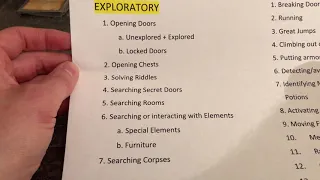
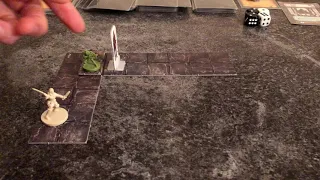
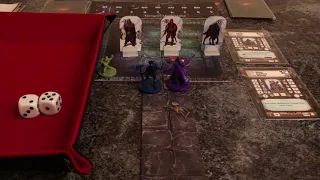
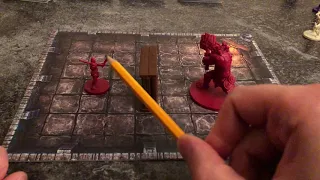
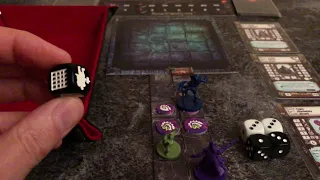
There are a lot of actions that a character can take in #DungeonUniversalis during their turn. A few of them, the Exploratory Actions, can only be performed by heroes. In the video I show the most common actions and quick actions with examples and background information.
00:00 Intro
01:00 Moving + Action + Quick Action
02:30 Running
05:40 Running into traps
09:25 Exploration (with doors)
13:30 Unlocking doors
14:45 Breaking doors
18:35 Chests
19:40 Doors reprise
21:22 Searching secret doors
23:12 Searching rooms
24:05 Searching furniture & special elements
29:42 Searching corpses
32:08 Other attribute tests
32:19 Moving furniture
33:02 Activating a source of light
34:01 Identifying magic power and potions
35:49 Putting armor on/off
36:40 Great jumps & climbing out of a pit
37:28 Exploratory Actions
41:30 Actions in Melee Range
44:05 Quick Actions
46:45 One more magic potion (tactical hint)
48:15 Misc
50:55 Recap & Outro
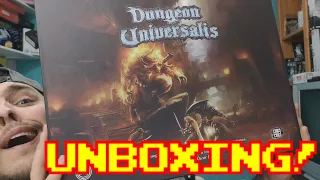
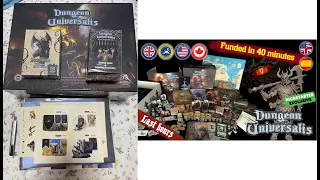
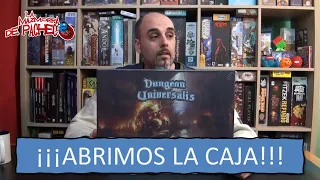
Mainly playthroughs and how-to-play. Dungeon Universalis is covered on BoardGameVideo.com by 11 reviews, 17 how-to-play guides, 25 recorded sessions, 14 unboxings, and 9 other videos.
1 - 6 players
60 - 180 min
Very heavy weight: Rules-dense, long sessions
About Dungeon Universalis, from BoardGameGeek:
A classic Dungeon Crawler board game for 1 to 6 players (Age 12+). The game includes many game modes, including a lone wolf one. DUN´s system merges its intuitive mechanics, card games and the almost unlimited possibilities and options of a RPG.
DUN includes a huge narrative campaign and several independent quests. It also allows you to design your own quests or simply to use its rulebook, system, and cards to replay missions and quests from other dungeon crawlers.
The game adapts to any medieval fantastic background. However, it has its own background: the one used in the novel Raazbal, written by the author of the game and published in 2010.
It is one game system that presents many different game modes:
Standard mode with a Dark Player: The Dark Player is a player who competes against the others. In this mode some quests have an undefined length and finish when the quest´s goal is achieved. Others have a set number of turns assigned. Players may gain experience which improves their attributes and skills according to the cooperative achievements of the players´ group.
Individual mode: players gain experience according to their individual achievements.
Cooperative mode (including lone-wolf player): a 100% cooperative game, with an Artificial Dark Player.
RPG mode: the Dark Player is omniscient (just like a classical RPG master).
Open-map mode: scenarios without a gridded floor.
-description from the publisher (slightly edited)
Designer
Oscar Bribian
Artists
Black Scroll, Jacob Blackmon, Brian Brinlee, Valerio Korax Carbone, Claudio Casini, Jose David Lanza Cebrian, Daniel Comerci, Gary Dupuis and 16 more