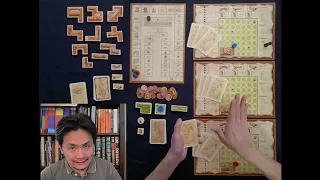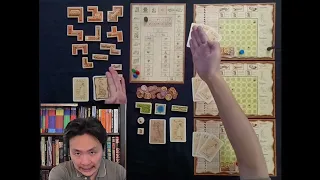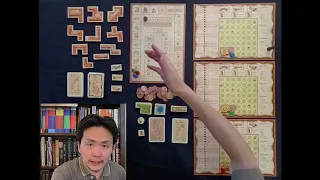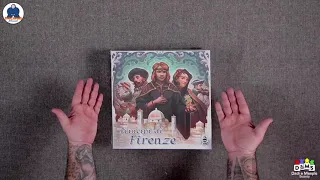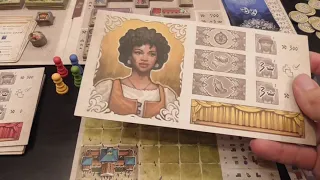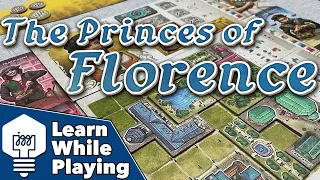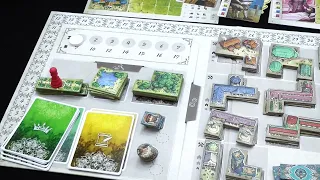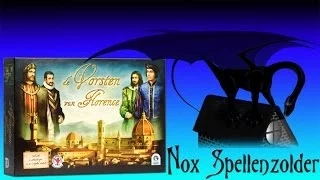
Watch “De Vorsten van Florence (NL),” a how-to-play guide for The Princes of Florence from Nox' Spellenzolder on BoardGameVideo.
Description provided by Nox' Spellenzolder on YouTube:

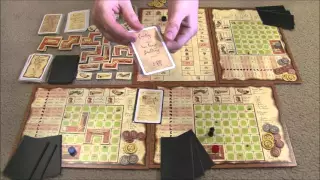
Uitleg & Review van het spel "De Vorsten van Florence", uitgegeven door QWG Games, door Nox' Spellenzolder.
Vragen, opmerkingen of verzoekjes, mail mij gerust.
2-5 Spelers
[b]Verduidelijking[/b] (dankzij een alerte kijker):
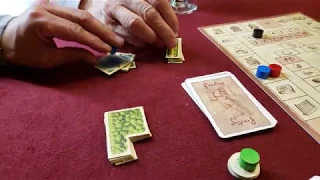
De pion moet worden gebruikt om de totaalscore bij te houden. De cylinder wordt gebruikt om de punten voor het hoogste werkgetal dat een speler in een ronde heeft behaald bij te houden. Op het moment dat een werk gespeeld wordt, wordt de cylinder geplaatst op het bereikte werkgetal. Dan beslist de speler hoeveel hij wil krijgen uitbetaald, en hoeveel hij wil krijgen in punten. Hij verplaatst zijn pion naar voren zoveel punten als hij kan en wil scoren. Aan het einde van de ronde kijken we welke speler zijn cylinder het hoogste heeft staan (dus wie het hoogste werkgetal bereikt heeft in die ronde), en die speler mag zijn pion nog eens drie plaatsen naar voren schuiven.
Nogmaals: de pion houdt de totaalscore bij, de cylinder het hoogste werkgetal van een ronde, en niets anders. Heel simpel, eigenlijk.
Daarnaast: Vergat ik te vermelden dat het bouwen van een gebouw ook drie punten oplevert.
90-150 Minuten Speeltijd
2000·Wolfgang Kramer, Richard Ulrich, Jens Christopher Ulrich
Videos
40
Creators
36
Mostly reviews and how-to-play. The Princes of Florence is covered on BoardGameVideo.com by 17 reviews, 16 how-to-play guides, 4 recorded sessions, 2 unboxings, and 1 other video.
1 - 5 players
75 - 100 min
Heavy weight: Expect a long teach
About The Princes of Florence, from BoardGameGeek:
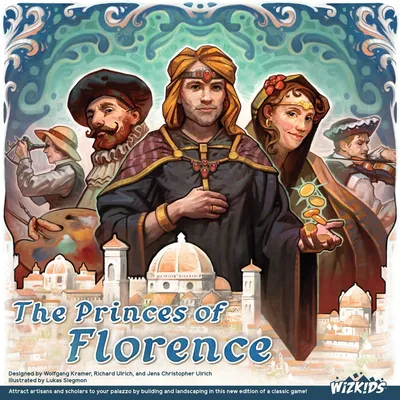
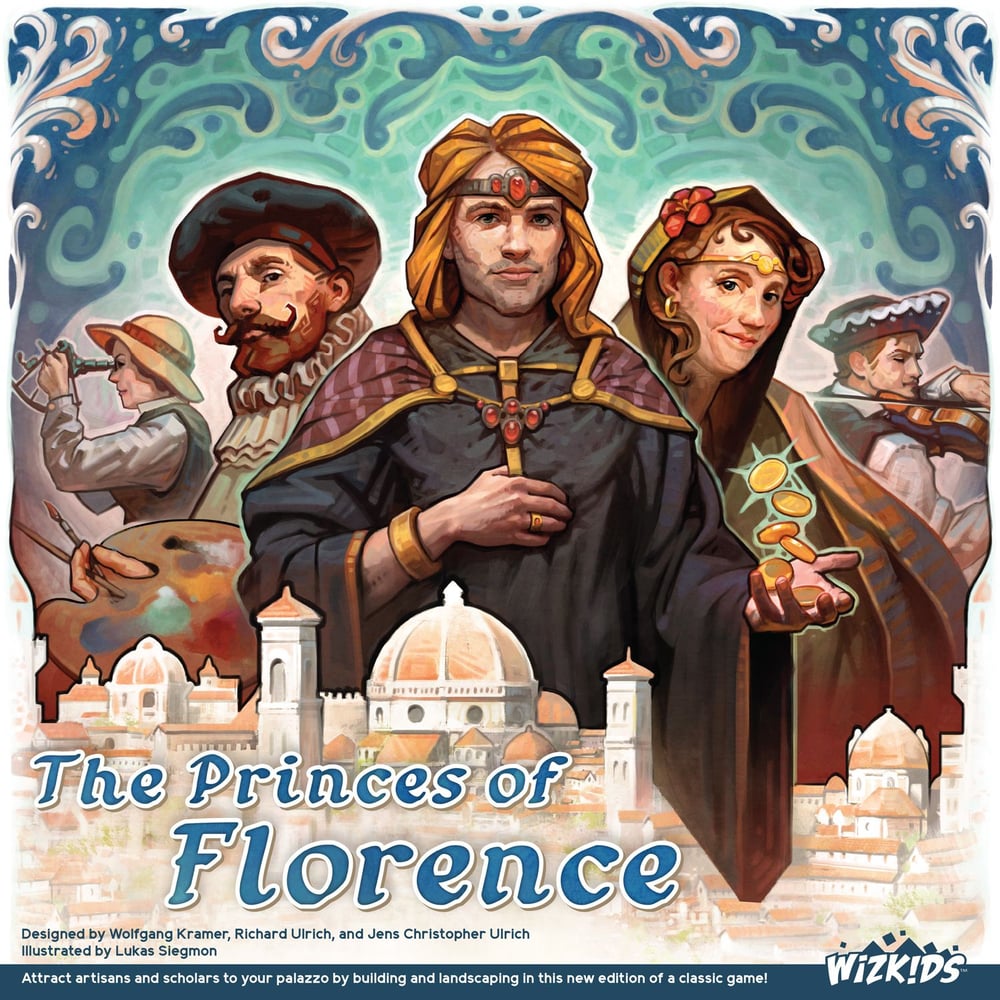
In The Princes of Florence, players attract artists and scholars to their palace while trying to become the most prestigious family in Florence.
Over seven rounds, players attempt to score points in various ways, with most points being earned by playing profession cards to generate "work points", which can be exchanged for money or victory points. The game includes a variety of professions, such astronomers, organists, and architects; each profession is attracted to a particular combination of building, landscape feature, and social freedom, and players acquire these items via auctions. The more that a player can match these preferences, the more work points they earn - but the minimum requirement of work points increases each round, and you must meet that threshold in order to convert the work points.

Designers

Wolfgang Kramer, Richard Ulrich, Jens Christopher Ulrich
Artists
Arnaud Demaegd, Eckhard Freytag, Wolfgang Kramer, Mirco Paganessi, Lukas Siegmon, Richard Ulrich, Franz Vohwinkel