









2013Oliver Sibthorpe, Gary Sibthorpe
- Videos
- 32
- Creators
- 24
Mostly reviews and playthroughs
2 - 4 players20 minLight weight
2021Stefan Nikolić
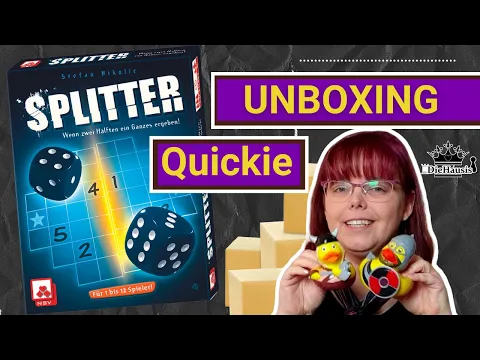
Mostly reviews and how-to-play. Splitter is covered on BoardGameVideo.com by 9 reviews, 6 how-to-play guides, 3 recorded sessions, 3 unboxings, and 2 other videos.
From BoardGameGeek
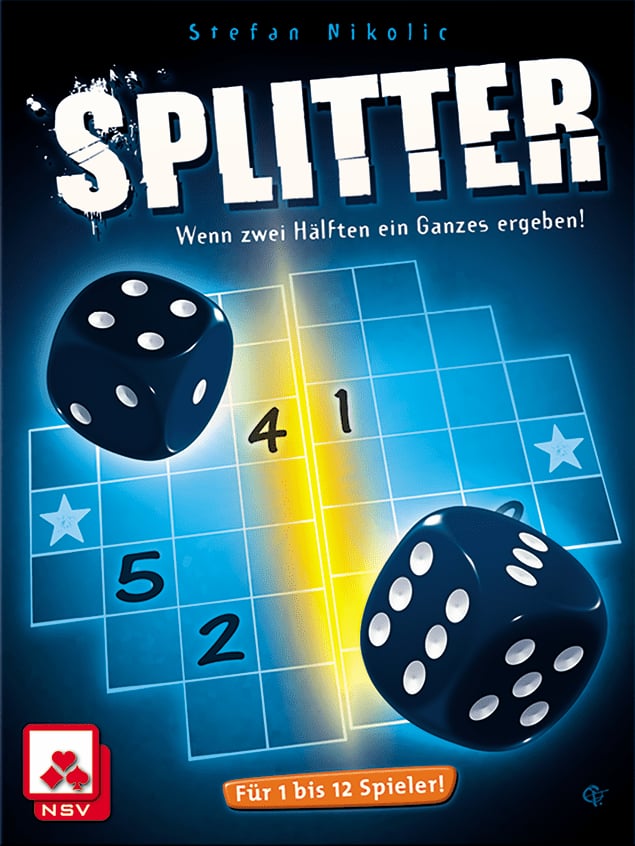
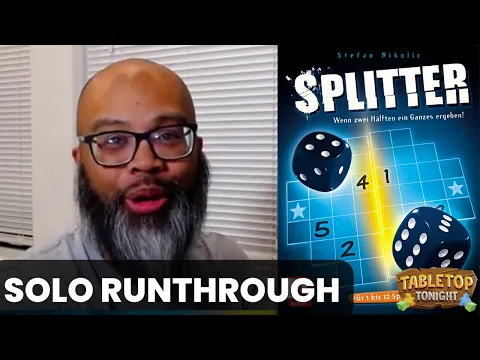
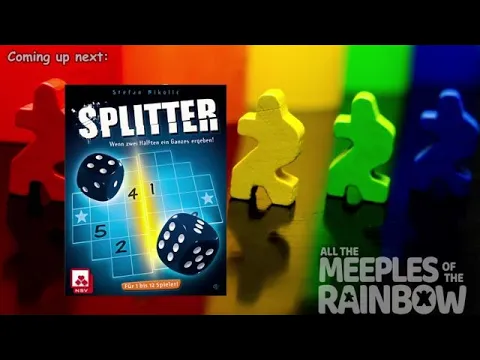
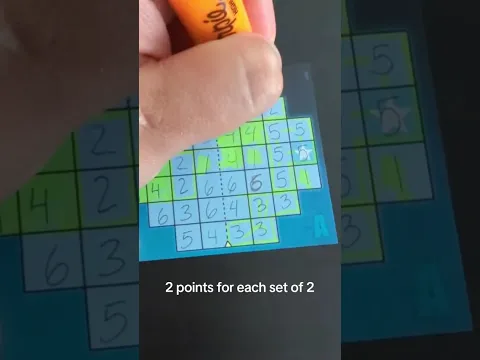
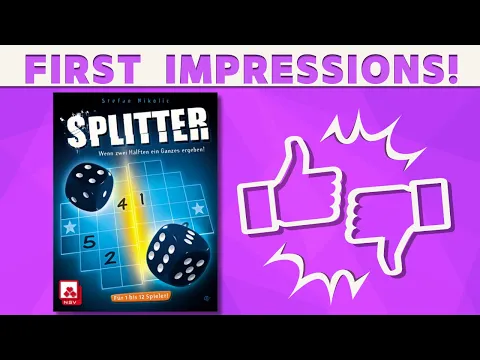
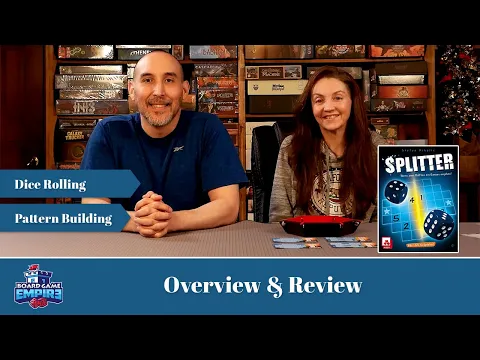
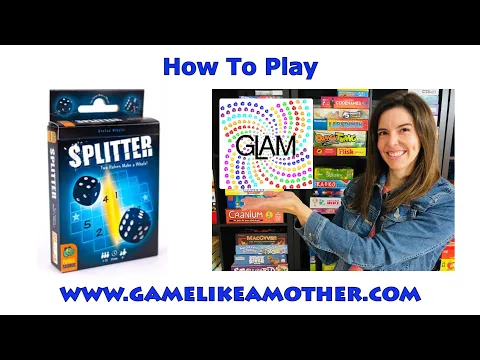
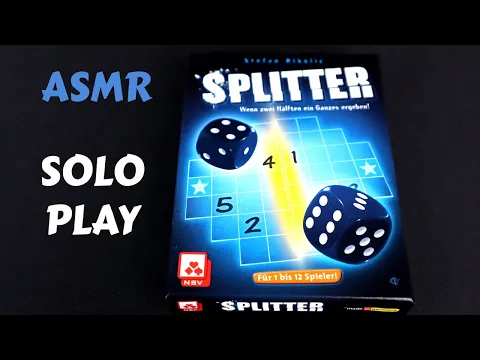
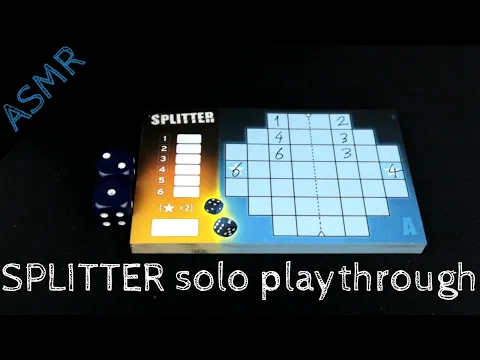
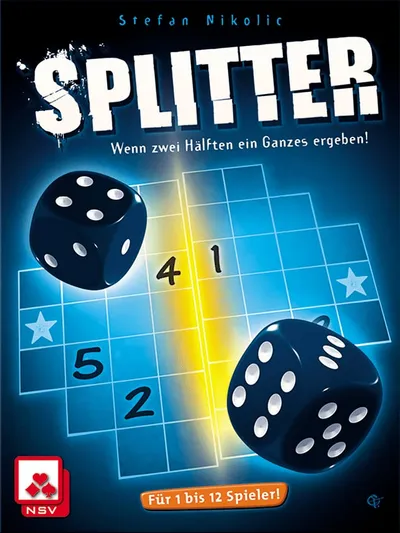
In Splitter, you must group numbers together to score points - two 2s, three 3s, and so on - but you're placing two numbers at a time, so things won't always work out. Each player has their own score sheet with 44 empty spaces on it, with two different patterns of spaces included in the box; each pattern has a dashed line through the middle that splits it into two mirrored halves. On a turn, someone rolls two six-sided dice. Each player then writes the results, e.g. 1 and 4, in empty spaces in the pattern, with each number being in the mirrored space of the other. If, say, you place the 1 in the leftmost space of the top row, then you must place the 4 in the rightmost space of the top row. After 22 dice rolls, everyone's pattern will be filled. Each 1 on its own - that is, with no other 1s orthogonally adjacent - scores 1 point; each set of two 2s that have no other orthogonally adjacent 2s score 2 points; and so on up to a set of six 6s with no other orthogonally adjacent 6s being worth 6 points. A starred space is present on each half of the pattern, and a scored group that contains this starred space has its points doubled. (One pattern has a set of three spaces with hearts, and if you fill all three hearts with the same number, you score 5 points.) Whoever has the highest score wins.
Splitter has 23 videos from 19 creators: 9 reviews, 6 how-to-play guides, 3 playthroughs, 3 unboxings and 2 other videos. They date from 2021 to April 2026.
To learn the rules, start with "Splitter Runthrough | Play Along!" by Ruel Gaviola, which runs 10 min.
For an opinion before you buy, start with "Splitter Review - with Tom Vasel" by The Dice Tower. 9 creators have reviewed it. To see it played, watch "All the Games with Steph: Splitter" by Steph Hodge, one of 3 playthroughs.
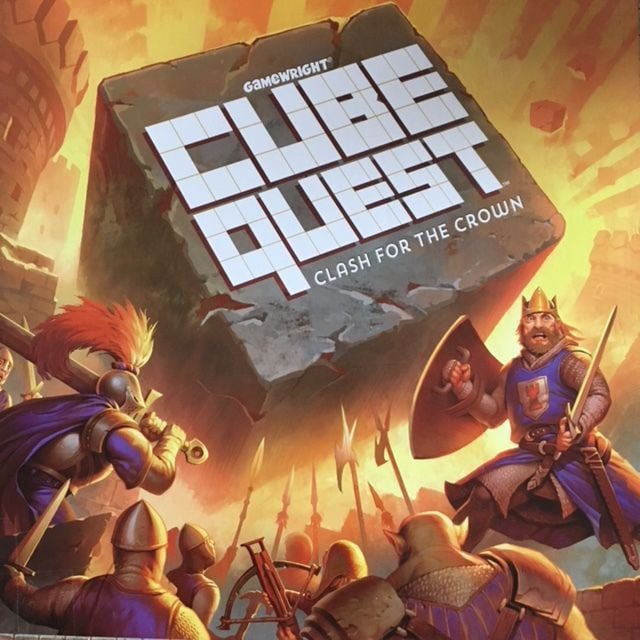
If you like it, try Cube Quest, Monasterium, Encore! or Wild Tiled West, which share several of its mechanics. It appears in convention videos from Spiel Essen 2021.
8 of 19


2013Oliver Sibthorpe, Gary Sibthorpe
2 - 4 players20 minLight weight
2023Paul Dennen
1 - 5 players45 - 90 minMedium weight
From BoardGameGeek:
In Splitter, you must group numbers together to score points - two 2s, three 3s, and so on - but you're placing two numbers at a time, so things won't always work out. Each player has their own score sheet with 44 empty spaces on it, with two different patterns of spaces included in the box; each pattern has a dashed line through the middle that splits it into two mirrored halves. On a turn, someone rolls two six-sided dice. Each player then writes the results, e.g. 1 and 4, in empty spaces in the pattern, with each number being in the mirrored space of the other. If, say, you place the 1 in the leftmost space of the top row, then you must place the 4 in the rightmost space of the top row. After 22 dice rolls, everyone's pattern will be filled. Each 1 on its own - that is, with no other 1s orthogonally adjacent - scores 1 point; each set of two 2s that have no other orthogonally adjacent 2s score 2 points; and so on up to a set of six 6s with no other orthogonally adjacent 6s being worth 6 points. A starred space is present on each half of the pattern, and a scored group that contains this starred space has its points doubled. (One pattern has a set of three spaces with hearts, and if you fill all three hearts with the same number, you score 5 points.) Whoever has the highest score wins.
Designer
Stefan Nikolić
Artist
Oliver Freudenreich
Publisher
Nürnberger-Spielkarten-Verlag
Mechanics