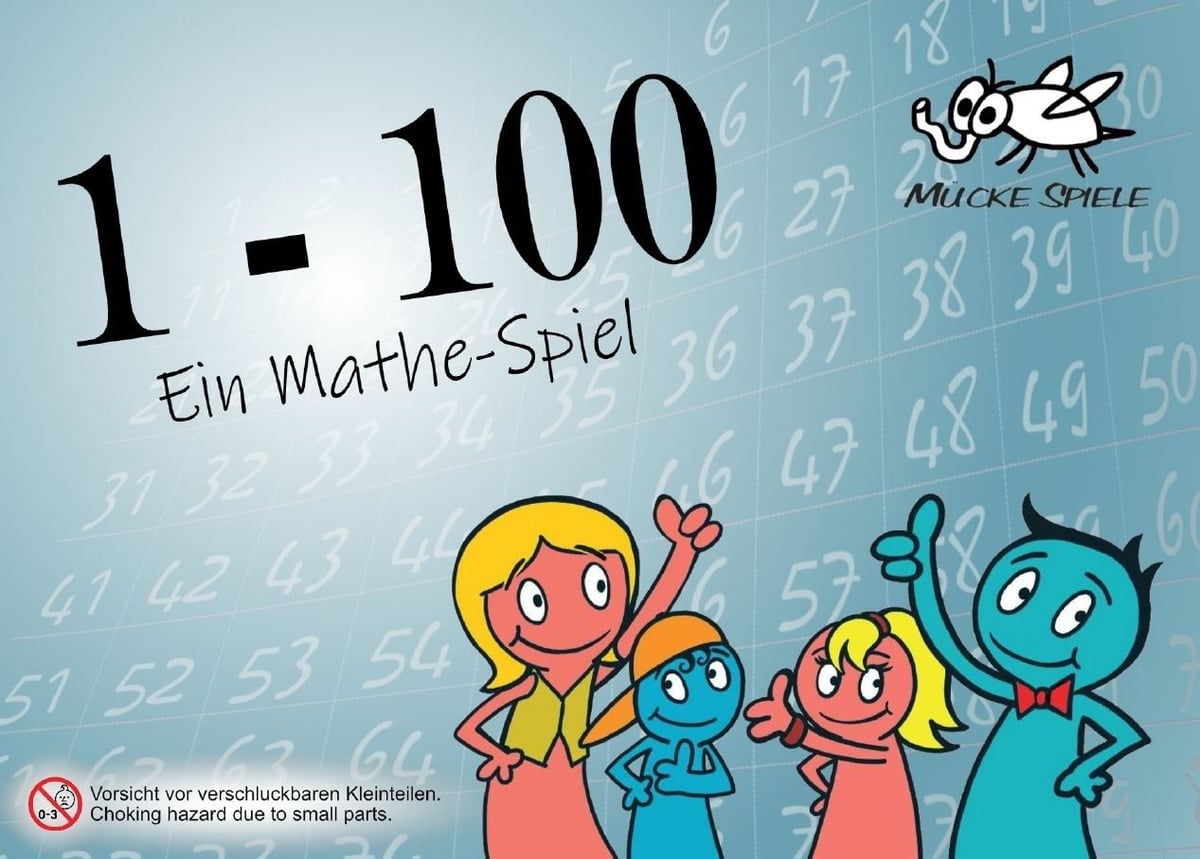
1-100 Mathespiel
2020Harald Mücke
1 - 8 players
30 - 60 min
From BoardGameGeek
(You should know how to calculate) Rules: Each player should have a pencil in his own color. Define a starting player. The active player rolls the dice and has to combine all 5 dice using the basic arithmetic methods (addition / subtraction / multiplication / division) to reach a number that has not been calculated by any other player before. He then can mark this number (e.g. circle, cross out, box ). The player can, but does not have to, use all types of calculations methods. He can e.g. use only addition or e.g. once addition, once subtraction and twice multiplication. He can use brackets to work with the dot-before-dash calculation. Only whole numbers are allowed in the calculation process. End of game: The players play alternately. The game ends as soon as the numbers in 3 rows or columns (or a combination thereof) are circled. Valuation: The rows and the columns then are evaluated one after the other: Whoever has the majority in a row receives 5 points Whoever has the majority in a row where the numbers are completely circled/marked receives 10 points If several players have circled the same amount of numbers, nobody gets points The backside shows the game Knüller, which also can be played. -description from the designer
All videos
Creators who cover this

www.spielmaterial.de / Mücke-Spiele
2 videos of this game
Games like this


2015Adam Poots
- Videos
- 162
- Creators
- 48
Mainly playthroughs
1 - 4 players60 - 180 min4.3 weight
2017Adrian Adamescu, Daryl Andrews
- Videos
- 109
- Creators
- 81
Mainly reviews
1 - 4 players30 - 45 min1.9 weight
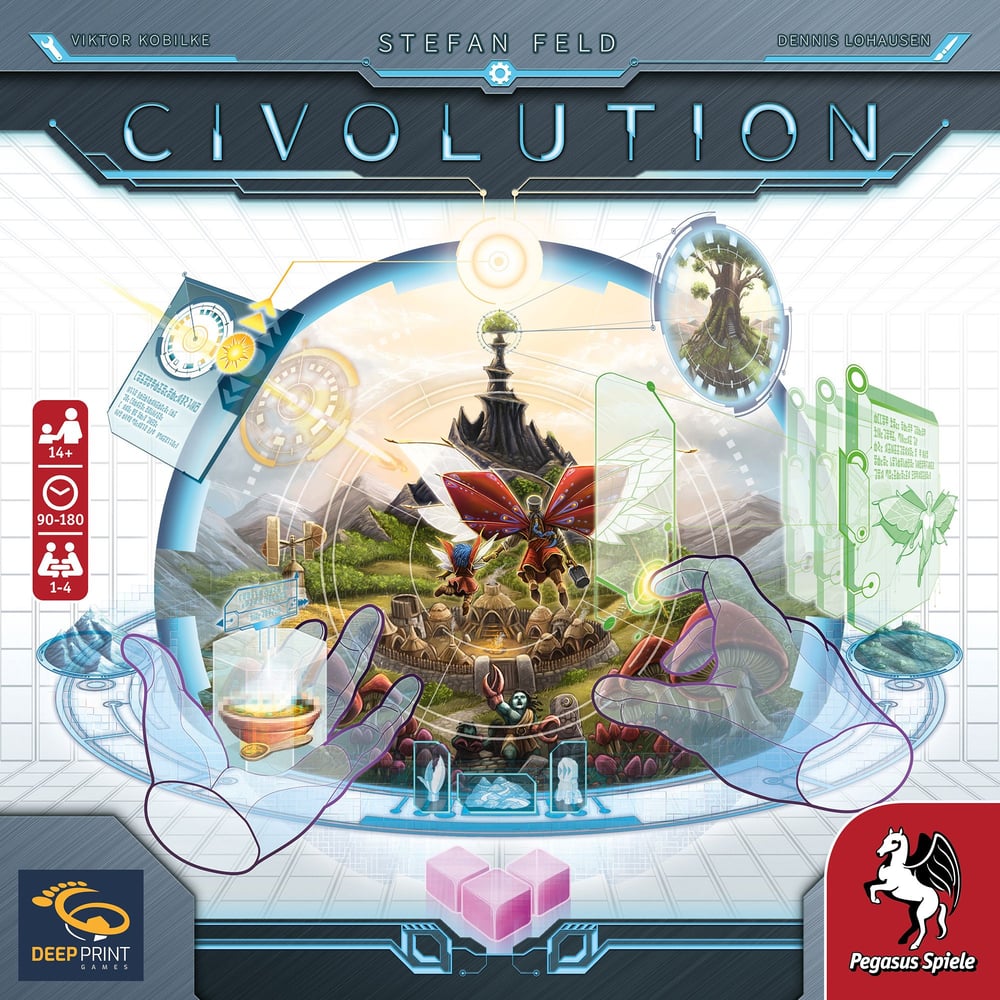
2024Stefan Feld
- Videos
- 90
- Creators
- 58
Mainly reviews and playthroughs
1 - 4 players90 - 180 min4.3 weight
About 1-100 Mathespiel
From BoardGameGeek:
Designer
Harald Mücke
Artist
Ansgar Trecksel
Categories
EducationalNumber
Mechanics
DeductionDice RollingPattern Building