



2025Andrew Rader
- Videos
- 26
- Creators
- 4
Mostly playthroughs
1 - 7 players20 - 360 minHeavy weight
2020Andrew Rader
Mostly playthroughs. Stellar Horizons is covered on BoardGameVideo.com by 4 reviews, 3 how-to-play guides, 39 recorded sessions, 3 unboxings, and 1 other video.
From BoardGameGeek
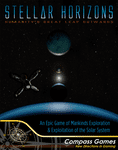
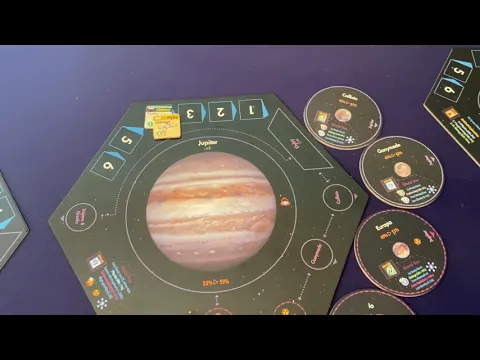
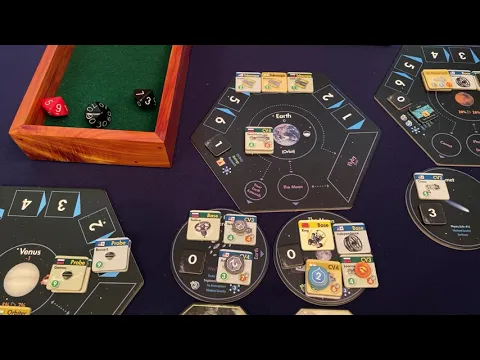
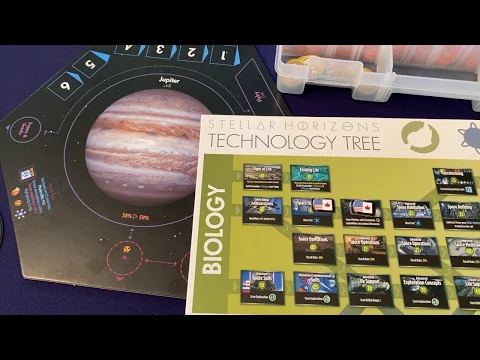
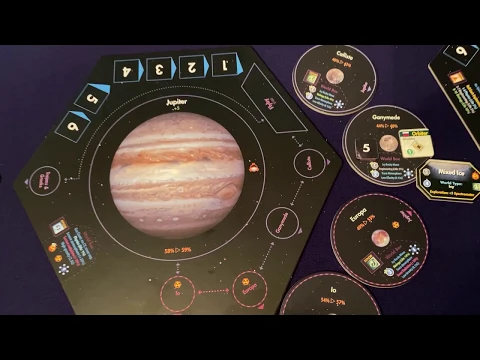
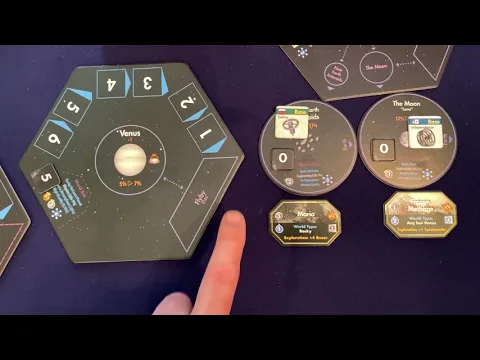
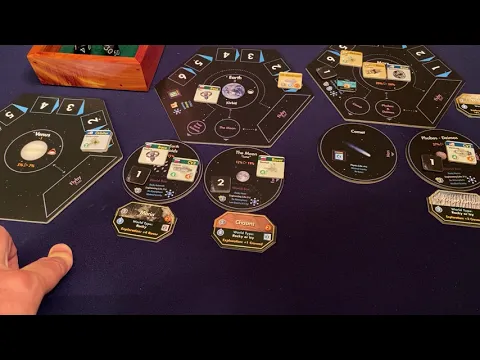
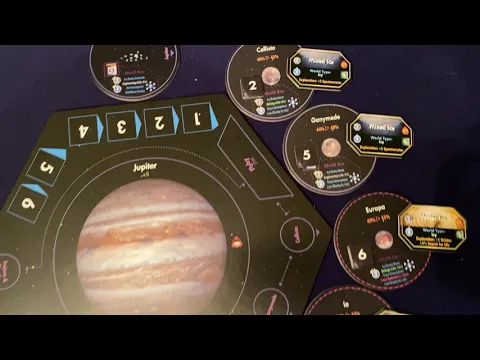
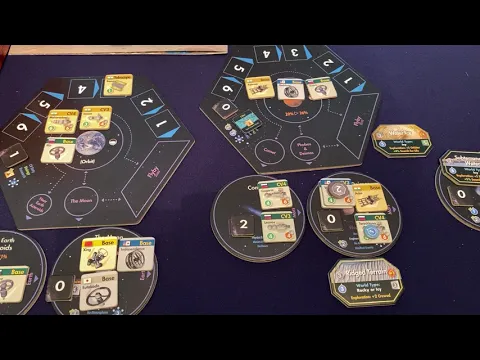
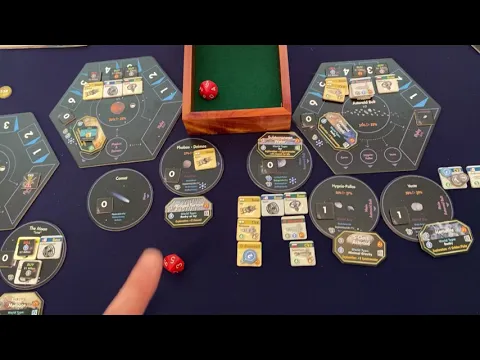
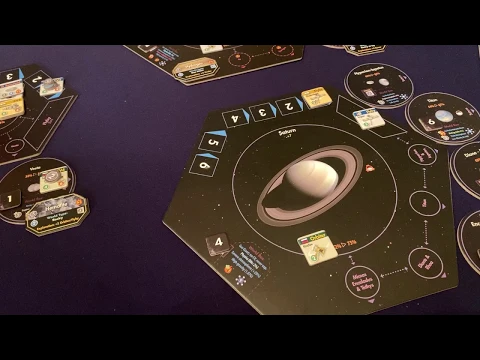
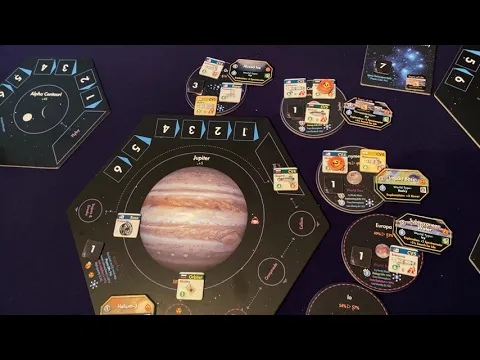
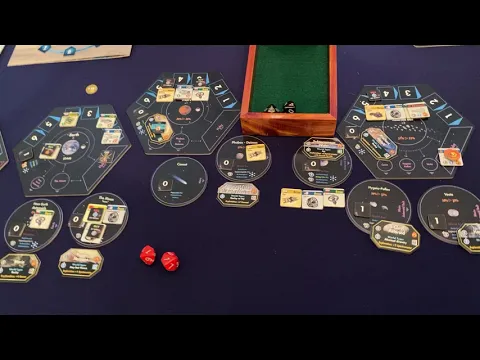
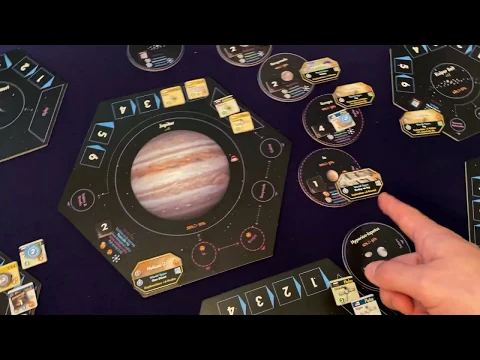
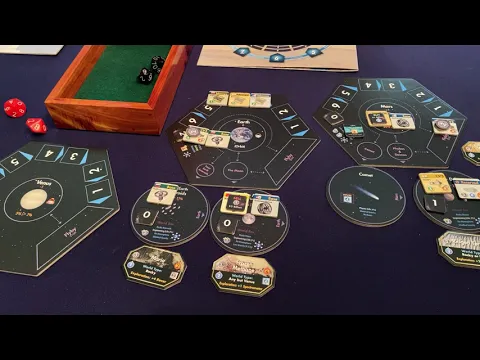
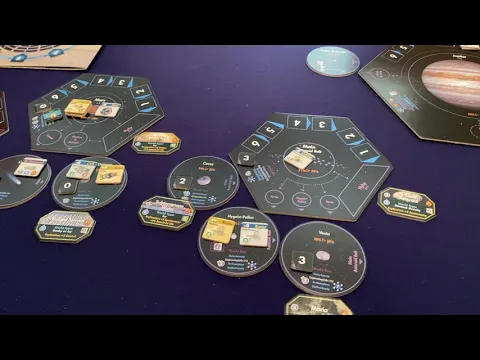
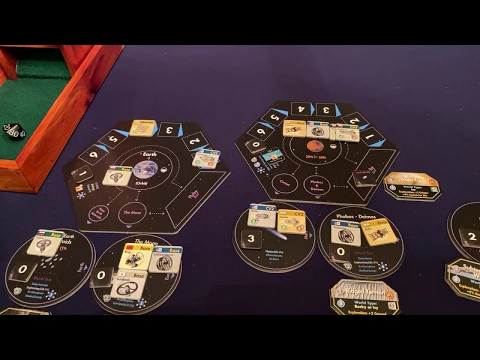
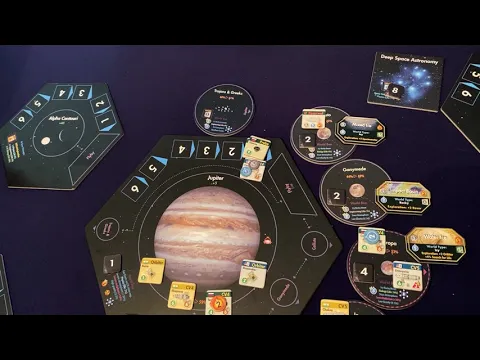
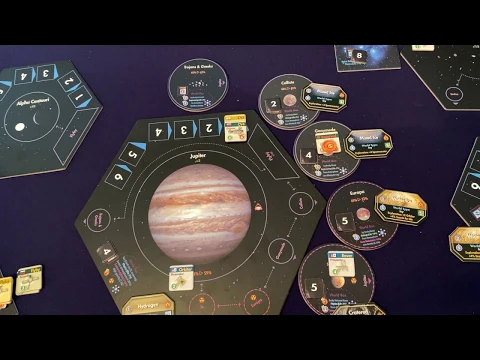
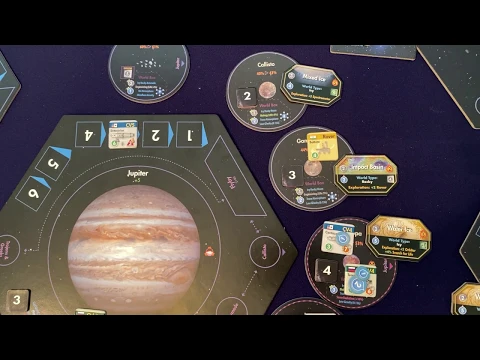
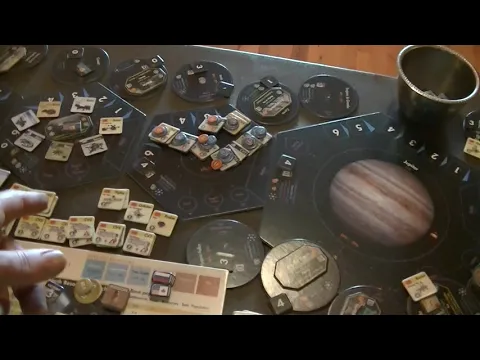
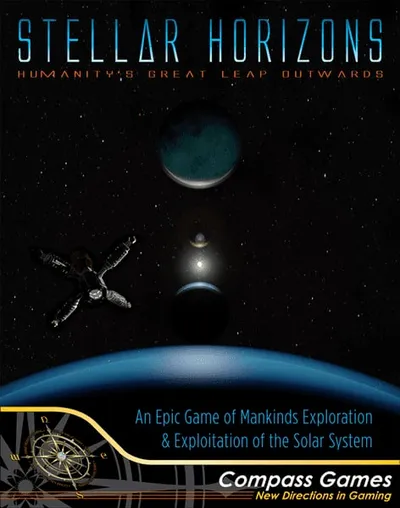
Stellar Horizons is a "build your own space program" game in which you lead one of seven Earth factions to explore and develop our solar system. Designed by a real-life space engineer with a PhD in long-duration spaceflight from MIT, Stellar Horizons is intended to be a plausible representation of the first steps of humanity towards the stars between 2030 and 2169, with each turn representing a year of time. You control your faction's space program, outposts, and fleets spanning across the solar system, although you also have some influence over your faction's politics back home on Earth as space development becomes more important. Movement is based on real physics. You move from orbit to orbit, or conduct long range transfers to move between planetary systems like Earth, Mars, or Jupiter. As you send out robotic explorers and crewed vehicles to explore the solar system, they bring back valuable data to further your scientific research. Technologies are intended to represent plausible extrapolations of existing development during the next 150 years: there are no transporters or warp drive, but you will be able to develop rockets powered by fusion and even anti-matter. In the engineering and biology domains, you'll eventually be able to construct space elevators and put your crews into safe hibernation for long journeys. You'll have access to a wide variety of robot explorers and crewed ships. These range from tiny probes intended to merely take photographs as you fly past Jupiter, to giant destroyers, cruisers, and battleships which ply the space lanes with peaceful or hostile intentions. New ship types become available as you gain access to better technology over the course of the game. You'll be given a budget to spend on Earth and can also build bases to harvest minerals, organics, and fuel to expands your economy. You can also forge diplomatic relationships with players and non-player factions alike, and trade resources at their bases to earn extra cash. Each of the seven factions has different strengths, weaknesses, abilities, and available ships based on their unique geopolitical situation. Military conflict is certainly possible but not always encouraged. Stellar Horizons features more diplomatic, technological, and economic competition than outright combat, although neglecting warships entirely leaves you vulnerable to pirates, trade embargoes, and sneak attacks by rogue players and factions. Stellar Horizons includes short co-operative and competitive scenarios lasting an hour or more, and campaigns lasting a day up to about a full weekend for experienced players. Up to seven players can play at a time and the game is most fun with at least two, but there are also one-player scenarios, and the campaigns are highly suited for solo play. There are three ways to win the campaign: be the first to develop an Interstellar Colonizer, terraform a world, or achieve dominance in space over your rivals.
Learn to play
Watch it played
Stellar Horizons has 50 videos from 3 creators: 4 reviews, 3 how-to-play guides, 39 playthroughs, 3 unboxings and 1 other video. They date from 2020 to December 2024.
To learn the rules, start with "SH - intro a", which runs 1 h 13 min.
For an opinion before you buy, start with "Ardwulf Reviews Stellar Horizons". To see it played, watch "Scenario 1 - Race to Mars (solo) - Part 1", one of 39 playthroughs.
If you like it, try Stellar Horizons II: Galactic Frontier and Fatal Alliances: The Great War 1914-1918, also by Andrew Rader, or Machi Koro 2 and The Republic of Rome, which share several of its mechanics.
2 of 3


2025Andrew Rader
1 - 7 players20 - 360 minHeavy weight
2016Andrew Rader, Harry Rowland
2 - 6 players240 - 1200 minVery heavy weight
1990Richard Berthold, Don Greenwood, Robert Haines
1 - 6 players300 minVery heavy weight
From BoardGameGeek:
Stellar Horizons is a "build your own space program" game in which you lead one of seven Earth factions to explore and develop our solar system. Designed by a real-life space engineer with a PhD in long-duration spaceflight from MIT, Stellar Horizons is intended to be a plausible representation of the first steps of humanity towards the stars between 2030 and 2169, with each turn representing a year of time. You control your faction's space program, outposts, and fleets spanning across the solar system, although you also have some influence over your faction's politics back home on Earth as space development becomes more important. Movement is based on real physics. You move from orbit to orbit, or conduct long range transfers to move between planetary systems like Earth, Mars, or Jupiter. As you send out robotic explorers and crewed vehicles to explore the solar system, they bring back valuable data to further your scientific research. Technologies are intended to represent plausible extrapolations of existing development during the next 150 years: there are no transporters or warp drive, but you will be able to develop rockets powered by fusion and even anti-matter. In the engineering and biology domains, you'll eventually be able to construct space elevators and put your crews into safe hibernation for long journeys. You'll have access to a wide variety of robot explorers and crewed ships. These range from tiny probes intended to merely take photographs as you fly past Jupiter, to giant destroyers, cruisers, and battleships which ply the space lanes with peaceful or hostile intentions. New ship types become available as you gain access to better technology over the course of the game. You'll be given a budget to spend on Earth and can also build bases to harvest minerals, organics, and fuel to expands your economy. You can also forge diplomatic relationships with players and non-player factions alike, and trade resources at their bases to earn extra cash. Each of the seven factions has different strengths, weaknesses, abilities, and available ships based on their unique geopolitical situation. Military conflict is certainly possible but not always encouraged. Stellar Horizons features more diplomatic, technological, and economic competition than outright combat, although neglecting warships entirely leaves you vulnerable to pirates, trade embargoes, and sneak attacks by rogue players and factions. Stellar Horizons includes short co-operative and competitive scenarios lasting an hour or more, and campaigns lasting a day up to about a full weekend for experienced players. Up to seven players can play at a time and the game is most fun with at least two, but there are also one-player scenarios, and the campaigns are highly suited for solo play. There are three ways to win the campaign: be the first to develop an Interstellar Colonizer, terraform a world, or achieve dominance in space over your rivals.
Designer
Andrew Rader
Artists
Brien J. Miller, Andrew Rader
Publisher
Compass Games
Categories
Mechanics