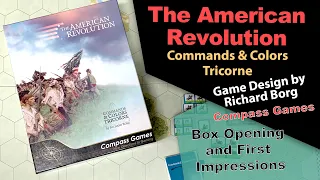
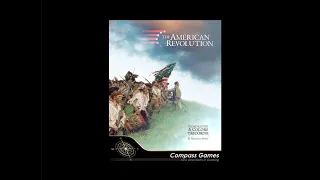
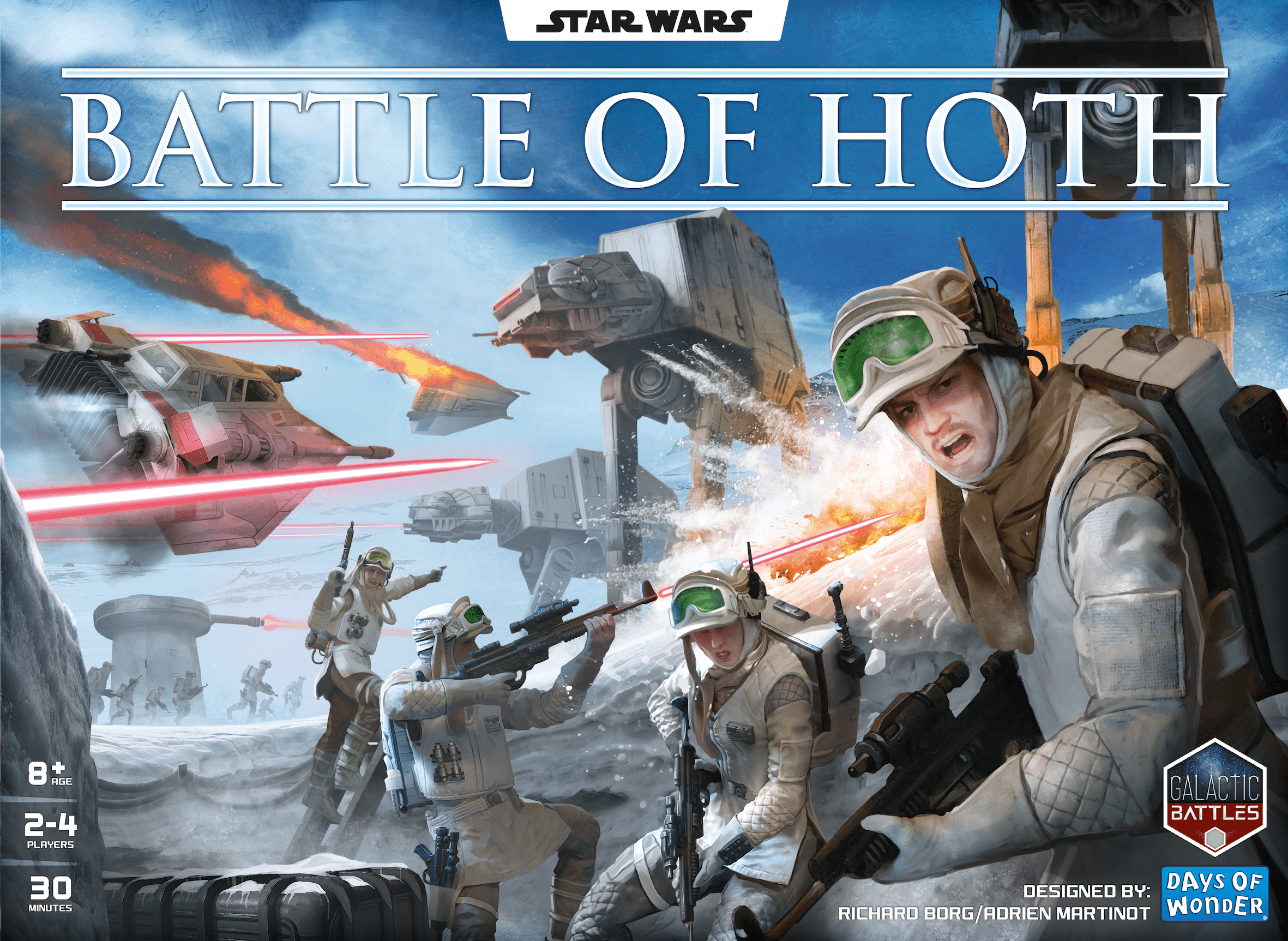
Commands & Colors Tricorne: The American Revolution

Commands & Colors Tricorne: The American Revolution

2017Richard Borg

2 players
60 - 90 min
2.5/5 weight

From BoardGameGeek

By design, Commands & Colors Tricorne - The American Revolution is not overly complex. The game is based on the highly successful Commands & Colors game system, where the Command cards drive movement while creating a “fog of war” and the battle dice resolve combat quickly and efficiently. Commands & Colors Tricorne - The American Revolution, however, introduces many new game concepts, which will add historical depth and provide even the most veteran Commands & Colors player many new play experiences and challenges. The scale of the game fluctuates, which allows players to effectively portray some of the larger American Revolution battles, as well as smaller size skirmish actions. In some scenarios, an infantry unit may represent an entire brigade, while in others a unit may only represent a few companies of soldiers. Still the linear tactics of the period, that you will need to execute to gain victory, conform remarkably well to the advantages and limitations inherent to the various American Revolution Armies of the day, and the battlefield terrain features on which they fought. To further emphasize the differences in battlefield doctrine between the British and Continental forces, each army has its own unique deck of Combat cards. Players, that are familiar with other Commands & Colors games, will soon note that unit combat losses in a Tricorne game are typically not as great as other games covered in the Commands & Colors series. This is a direct result of the linear tactic fighting style of the armies that fought during the American Revolution. Unit morale is the main thematic focus in a Tricorne battle as it was historically. Knowing that an entire unit, that has only taken minimal losses when forced to retreat, may actually break and rout from the battlefield, will definitely keep players on the edge of their command chairs during an entire battle. The 12 battles, showcased in the scenario section of this booklet, feature a stylized battlefield map that emphasize the important terrain features and highlight the historical deployment of forces in scale with the game system. These scenarios are a smattering of some of the better-known engagements of the American Revolution. Bunker Hill -17 June 1775 Long Island (Grant's Attack) - 27 August 1776 Long Island (British Flank March) - 27 August 1776 Freeman's Farm - 19 September 1777 Bemis Heights - 7 October 1777 Bemis Heights (British Redoubts) - 7 October 1777 Monmouth - 28 June 1778 Camden - 16 August 1780 Cowpens - 17 January 1781 Guilford Courthouse - 15 March 1781 Hobkirk's Hill - 25 April 1781 Eutaw Springs - 8 September 1781

Creators who cover this

Nerd Workshop
Nerd Workshop
1 video of this game
The Name Of The Game
1 video of this game

Games like this

2025Richard Borg, Adrien Martinot

Videos
169
Creators
79
Mainly playthroughs

2 - 4 players30 min1.9 weight
2004Richard Borg

Videos
99
Creators
53
Mostly playthroughs and reviews

2 - 4 players30 - 45 min2.3 weight

1800Richard Borg

Videos
64
Creators
54
Mainly reviews and how-to-play

2 - 10 players15 - 30 min1.2 weight

About Commands & Colors Tricorne: The American Revolution

From BoardGameGeek:

By design, Commands & Colors Tricorne - The American Revolution is not overly complex. The game is based on the highly successful Commands & Colors game system, where the Command cards drive movement while creating a “fog of war” and the battle dice resolve combat quickly and efficiently. Commands & Colors Tricorne - The American Revolution, however, introduces many new game concepts, which will add historical depth and provide even the most veteran Commands & Colors player many new play experiences and challenges. The scale of the game fluctuates, which allows players to effectively portray some of the larger American Revolution battles, as well as smaller size skirmish actions. In some scenarios, an infantry unit may represent an entire brigade, while in others a unit may only represent a few companies of soldiers. Still the linear tactics of the period, that you will need to execute to gain victory, conform remarkably well to the advantages and limitations inherent to the various American Revolution Armies of the day, and the battlefield terrain features on which they fought. To further emphasize the differences in battlefield doctrine between the British and Continental forces, each army has its own unique deck of Combat cards. Players, that are familiar with other Commands & Colors games, will soon note that unit combat losses in a Tricorne game are typically not as great as other games covered in the Commands & Colors series. This is a direct result of the linear tactic fighting style of the armies that fought during the American Revolution. Unit morale is the main thematic focus in a Tricorne battle as it was historically. Knowing that an entire unit, that has only taken minimal losses when forced to retreat, may actually break and rout from the battlefield, will definitely keep players on the edge of their command chairs during an entire battle. The 12 battles, showcased in the scenario section of this booklet, feature a stylized battlefield map that emphasize the important terrain features and highlight the historical deployment of forces in scale with the game system. These scenarios are a smattering of some of the better-known engagements of the American Revolution. Bunker Hill -17 June 1775 Long Island (Grant's Attack) - 27 August 1776 Long Island (British Flank March) - 27 August 1776 Freeman's Farm - 19 September 1777 Bemis Heights - 7 October 1777 Bemis Heights (British Redoubts) - 7 October 1777 Monmouth - 28 June 1778 Camden - 16 August 1780 Cowpens - 17 January 1781 Guilford Courthouse - 15 March 1781 Hobkirk's Hill - 25 April 1781 Eutaw Springs - 8 September 1781

Designer

Richard Borg

Artist

Michael Monfront

Categories

Age of ReasonAmerican Revolutionary WarWargame

Mechanics

Campaign / Battle Card DrivenDice RollingHand ManagementHexagon Grid
View on BoardGameGeek ›