

2002Andrew S. Berton, Michael Marra, David Wyman
- Videos
- 2
- Creators
- 2
Mainly reviews
2 - 4 players60 - 90 minLight weight
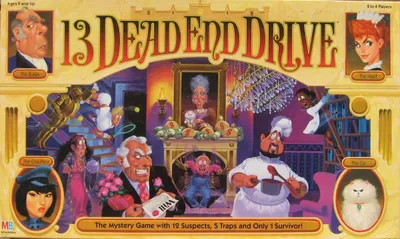
1993Andrew S. Berton, Michael Marra, David Wyman
Mainly reviews. 13 Dead End Drive is covered on BoardGameVideo.com by 2 reviews, 1 recorded sessions, and 2 other videos.
From BoardGameGeek
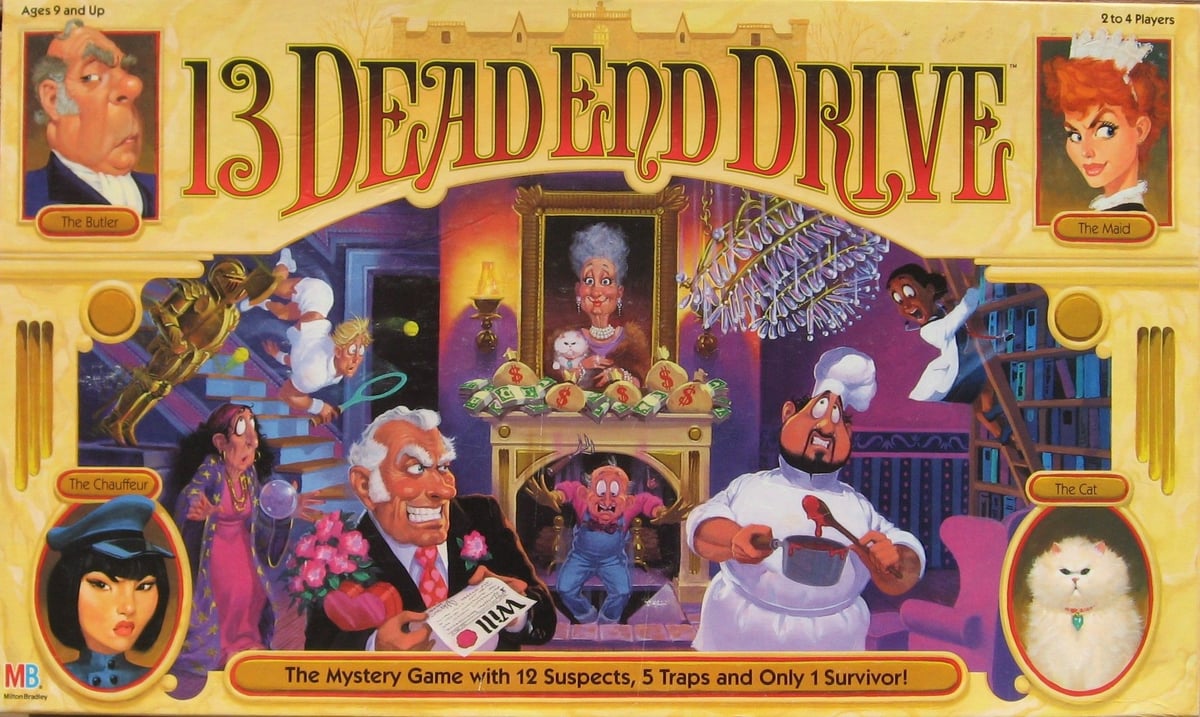
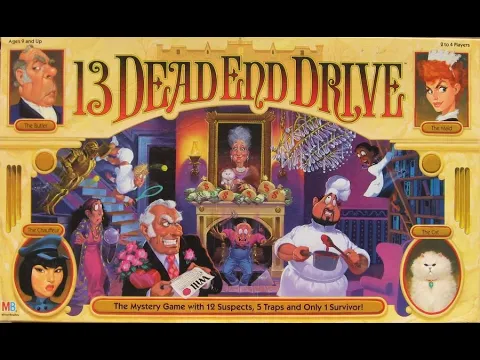
A bluffing game where you try to conceal your identity. On your turn you move two of the character pawns on the board. Movement is decided by dice. The board is a 3D house with several traps. If you move a character to a trap space, you may spring the trap if you have the corresponding card in your hand. You can bluff by moving your opponents' characters towards the entrance or moving your own character onto a trap space, but not release it. The portrait above the fireplace contains cards for each character plus Aunt Agatha. When you roll doubles, you may change the portrait. You can win the game in three different ways: 1) If you can move your own game counter out of the house when it's the same as the portrait on the wall. 2) If your game counter is the last surviving. 3) If your game counter's portrait is on the wall when the detective enters the main entrance.
13 Dead End Drive has 5 videos from 5 creators: 2 reviews, 1 playthrough and 2 other videos. They date from 2017 to May 2025.
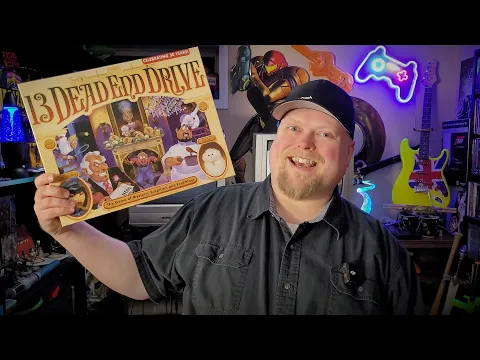
For an opinion before you buy, start with "13 Dead End Drive: 1993 vs 2023 – What Changed After 30 Years?" by Old Crappy Couch. To see it played, watch "Smosh Visits 13 Dead End Drive! (Board AF)" by Smosh Games.
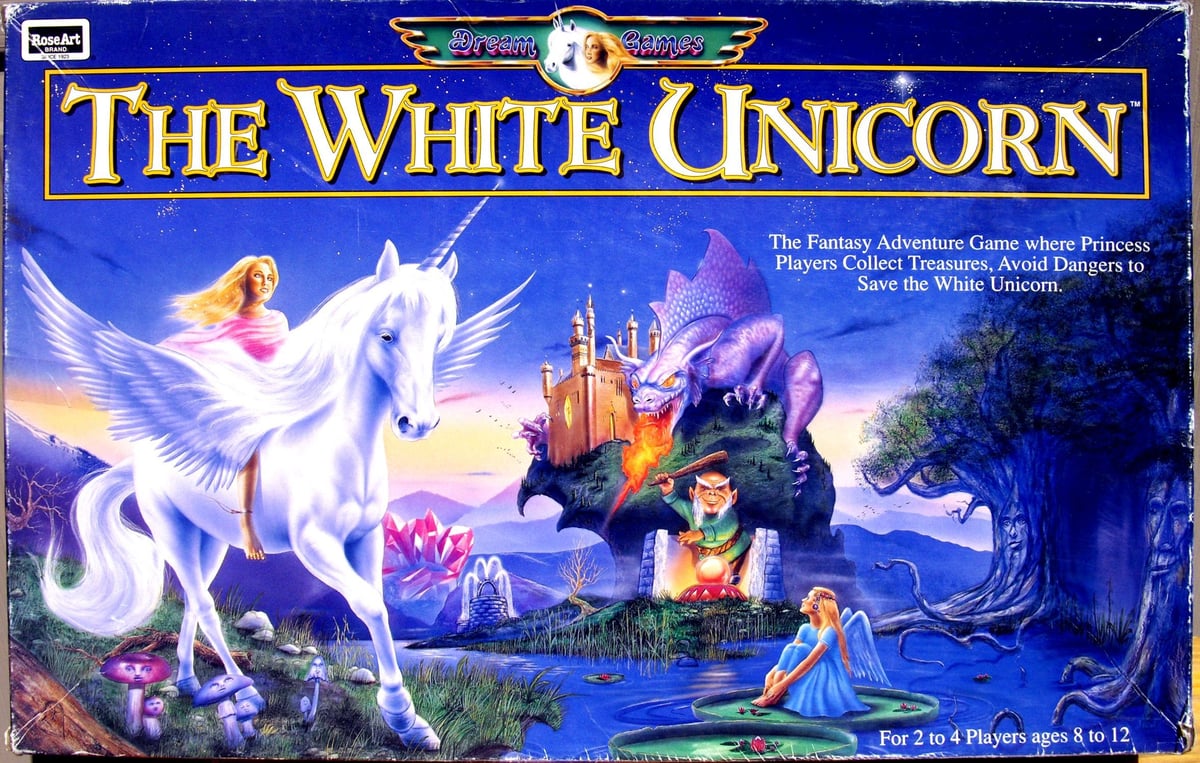
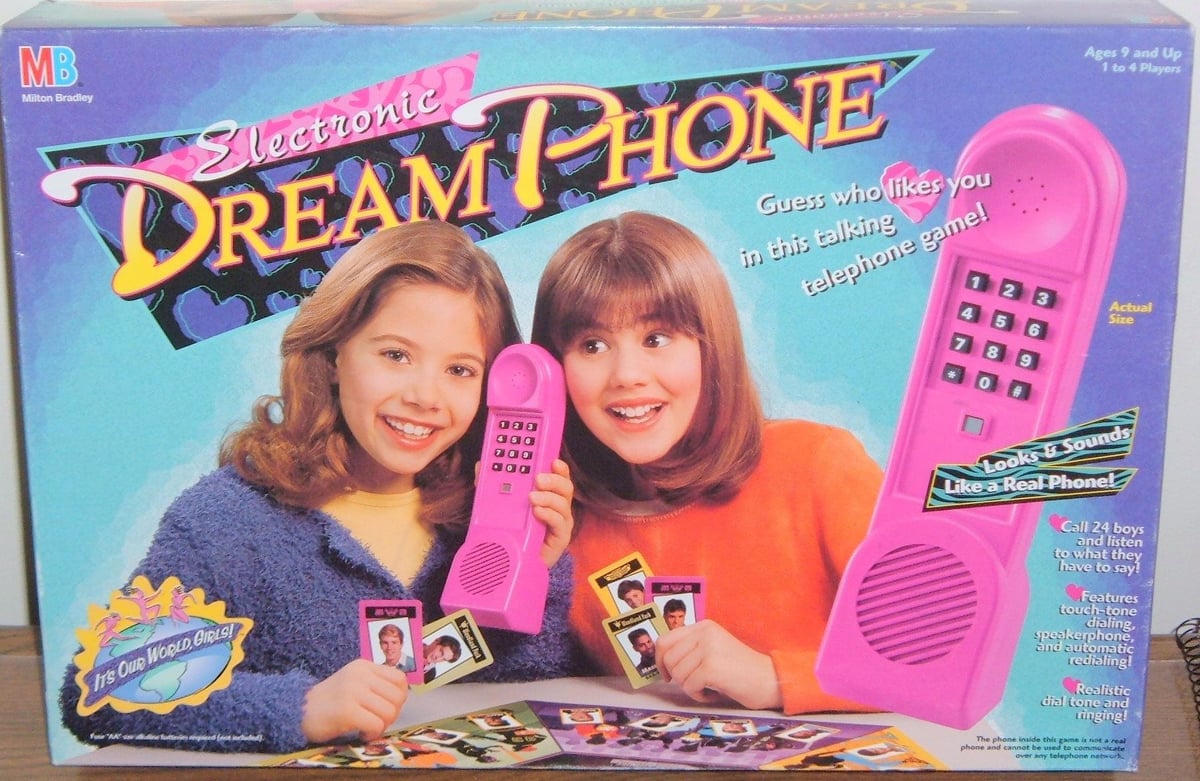
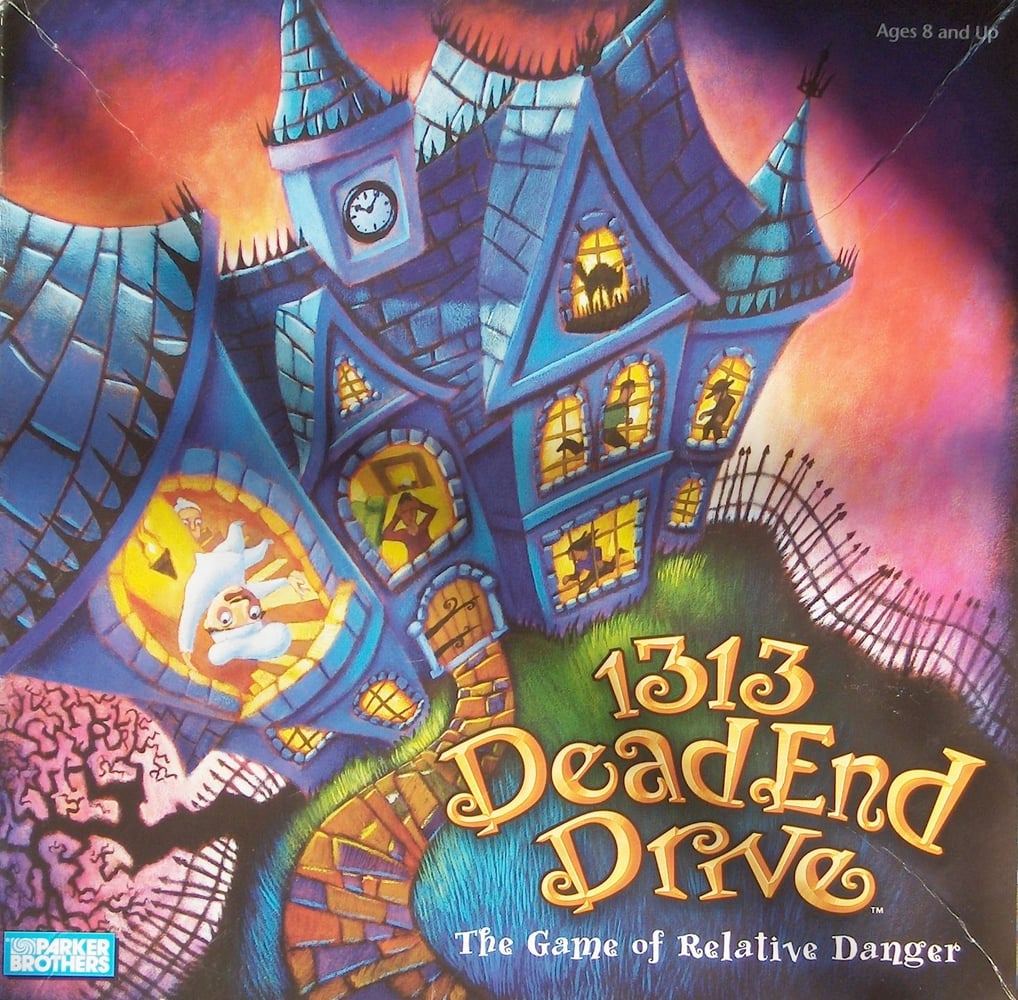
If you like it, try 1313 Dead End Drive and The White Unicorn, also by David Wyman, or Thunder Road: Ignition and Electronic Dream Phone, which share several of its mechanics.
 5:24

Calvin Jacks (Original)
3 of 5


2002Andrew S. Berton, Michael Marra, David Wyman
2 - 4 players60 - 90 minLight weight
2026Noah Cohen, Rob Daviau, Justin D. Jacobson, Justin Kemppainen
2 - 4 players25 - 45 min
1991Michael Gray
1 - 4 players20 minLight weight
From BoardGameGeek:
A bluffing game where you try to conceal your identity. On your turn you move two of the character pawns on the board. Movement is decided by dice. The board is a 3D house with several traps. If you move a character to a trap space, you may spring the trap if you have the corresponding card in your hand. You can bluff by moving your opponents' characters towards the entrance or moving your own character onto a trap space, but not release it. The portrait above the fireplace contains cards for each character plus Aunt Agatha. When you roll doubles, you may change the portrait. You can win the game in three different ways: 1) If you can move your own game counter out of the house when it's the same as the portrait on the wall. 2) If your game counter is the last surviving. 3) If your game counter's portrait is on the wall when the detective enters the main entrance.
Designers
Andrew S. Berton, Michael Marra, David Wyman
Artist
Michael Gray
Publisher
Bizak
Categories
Mechanics