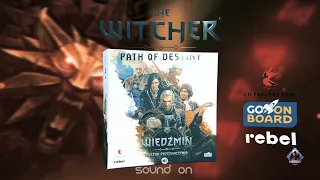
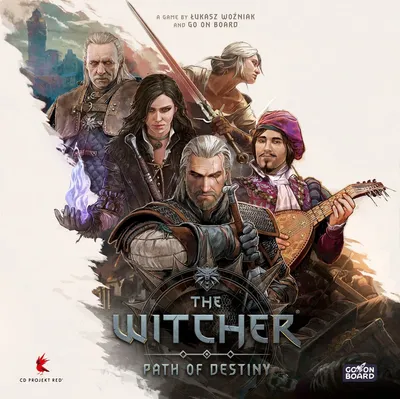
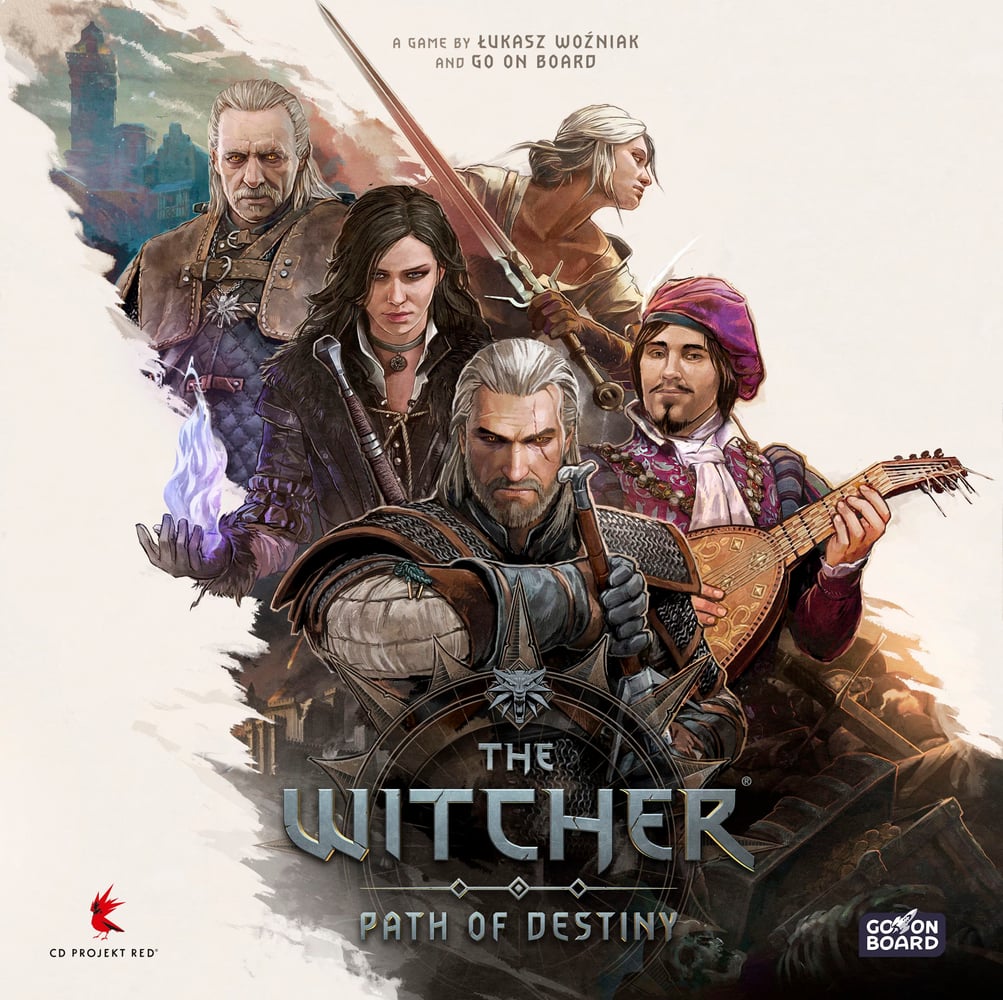
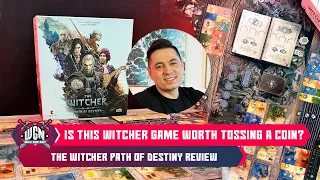
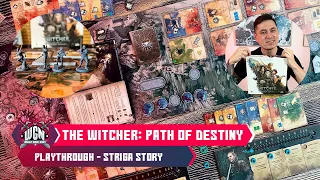
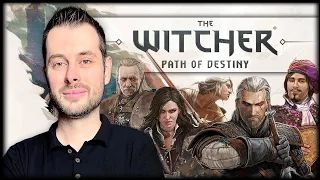
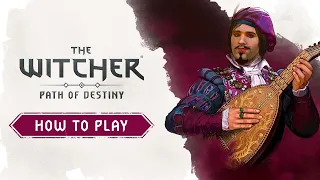
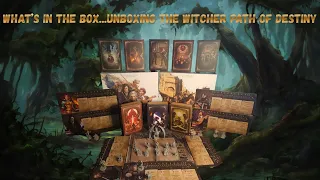
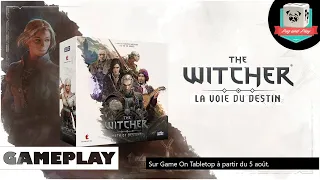
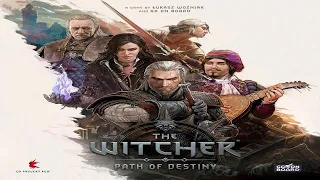
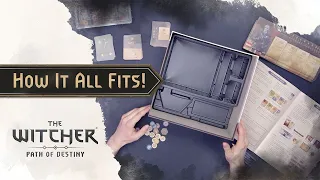
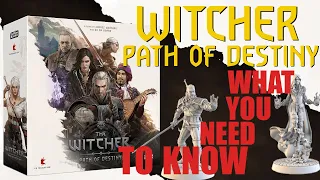
Watch “Witcher: Path of Destiny | board game by Go on Board | overview & review,” a board game review for The Witcher: Path of Destiny on BoardGameVideo.
Description provided by Dice on Board on YouTube:
Witcher: Path of Destiny by Go On Board is, at the very least, a controversial title. Based on an incredibly popular and beloved IP, beautifully produced, yet offering gameplay that might not sit well with everyone – especially when viewed through the lens of the Witcher universe. Because when we see “Witcher,” we expect adventure, monster-slaying, and as many RPG elements as possible. What we don’t expect is a game that’s… quite this simple at its core.
The newest title from the Poznań-based studio, led by the well-known Łukasz Woźniak, is a perfect example of the saying “don’t judge a book by its cover.” It starts with simple ideas – for medium or advanced players, almost too simple.
The core box offers three scenarios, described by the creators as easy, medium, and hard. I’m pointing that out for a reason – while each introduces new mechanics, it’s the expansions that truly add depth and challenge, transforming the game into a solid mid-weight experience. Though, admittedly, that comes with an extra investment.
The core gameplay loop is quite straightforward. After choosing a scenario – each inspired by one of Sapkowski’s iconic short stories – players select a character with unique starting cards and abilities. It adds a touch of asymmetry, but nothing extreme.
Each story is divided into three chapters, and in each chapter, players make two major choices that determine how the plot unfolds. This brings some non-linearity, eight possible endings, and – most importantly – a chance to experience familiar stories in a completely new way.
Decisions are made through voting, using cards that represent symbols tied to specific story outcomes (for example, “kill the striga or save her?”). The more matching symbols you play, the better – not only do you steer the story your way, but you also earn victory points and experience, unlocking new abilities.
Simple, right? Well, not quite. Cards also have secondary symbols, colors, and combo effects. You can chain them in multiple ways depending on the scenario, unlocking additional bonuses.
Overall, Witcher: Path of Destiny is essentially a fantasy-flavored solitaire, enriched by engaging storytelling and meaningful player choices. And while you might think that if you’re not into card-driven puzzle games this isn’t for you – I thought the same! I consider myself a seasoned, demanding player, yet this “simple” and relatively short game surprised me with how fun it was. Not only for me – every group I played with left the table satisfied. Maybe not in love, but definitely pleased – and that matters.
Finally, the key takeaway – and, I think, the core design intent – is this: the base game is perfect for newcomers to board gaming or for those wanting something lighter, faster, and easy to get to the table. Meanwhile, the expansions and stretch goals make the game far richer, adding new mechanics and systems: allies, legendary monsters, hidden missions, investigations, rituals, and even a one-vs-many mode.
So, to wrap up – would I have bought this game if it weren’t set in the Witcher universe? Probably not. I would’ve assumed it’s too light for me. But if I had known the mechanics beforehand? Absolutely. I’d pick it up even with a different theme. It’s been a long time since I’ve had this much satisfaction from chaining together intricate card sequences.
🎲 Toss a coin to your Witcher, because there’s a good chance you’ll have just as much fun as I did – especially once you dive into the expansions.
Rating:
Core box: ⭐️ 7/10
Expansions: ⭐️ 8/10