
Top 10 Oldest Games We Love

Watch “Top 10 Oldest Games We Love,” a board game video for 10 games from BoardGameGeek on BoardGameVideo.
1876· 85 videosMainly reviews and how-to-play
- Videos
- 85
- Creators
- 60
Crokinole is covered on BoardGameVideo.com by 29 reviews, 26 how-to-play guides, 14 recorded sessions, 3 unboxings, and 13 other videos.
2 - 4 players30 minLight weight: Learn it in minutesView on BoardGameGeek ›About Crokinole, from BoardGameGeek:
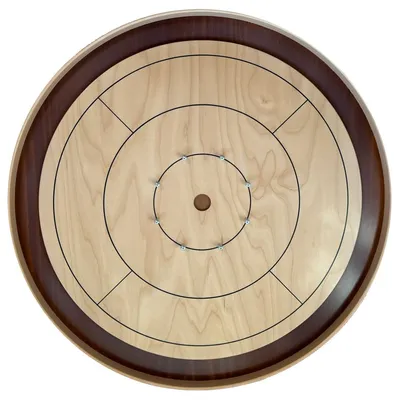
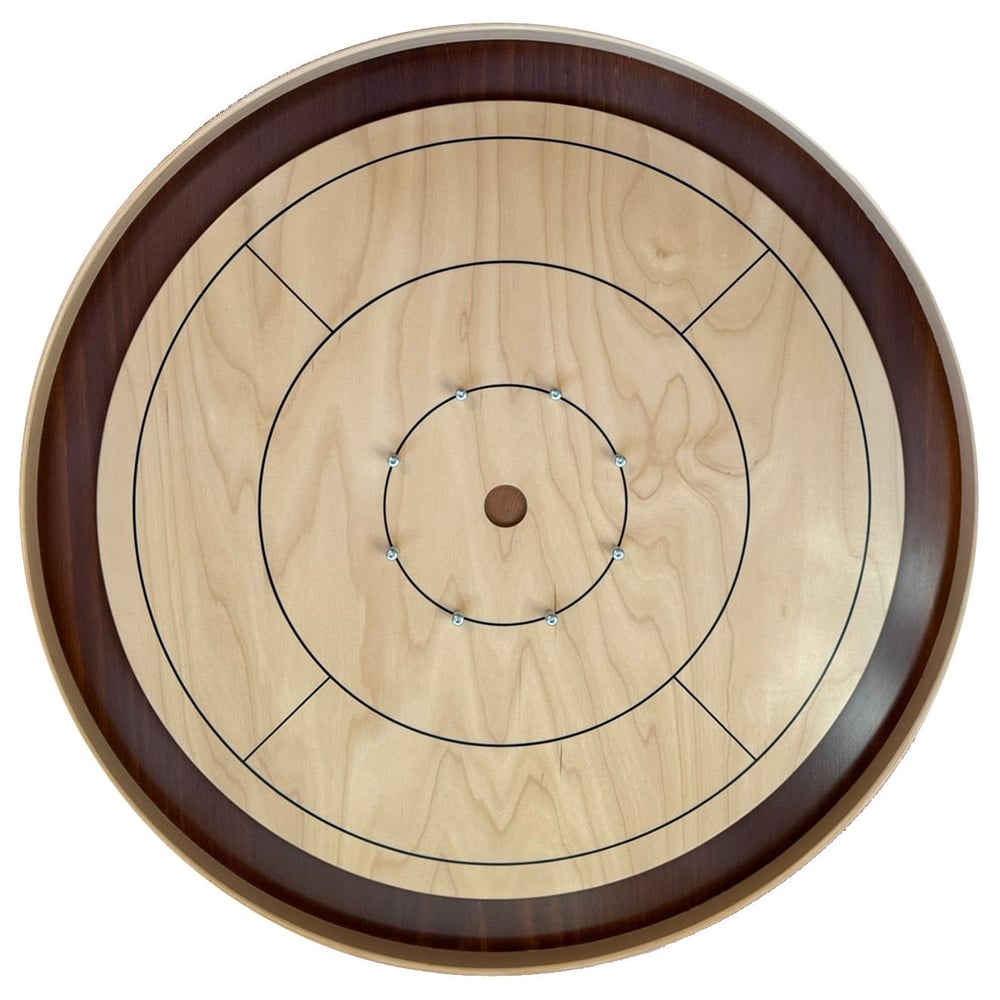
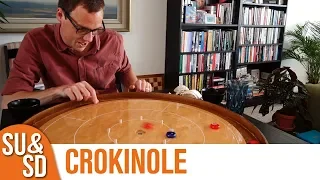
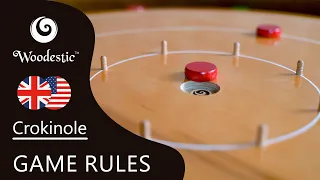
Crokinole is a traditional two- or four-player dexterity game, played on a circular wooden board, with 3 rings and an inner recessed 'bullseye'. A ring of posts is set around the inner circle, which functions as an obstacle to reach this area. Playing pieces are wooden circular disks similar to checkers pieces. Players take turns shooting disks across the board by flicking them with their fingers in an effort to land them in the highest scoring ring on the board, the highest score (20 points) achieved by shooting a disk into the centre, recessed hole. From the outside in, rings are worth 5, 10, 15 points. As a traditional game, there are often many variations played, but the following method is based on the National Crokinole Association's rules which also govern the World Crokinole Championship. Each disk to be shot must be placed on the outer boundary and within the shooting player's quadrant. If there are no opponent's disks on the board, the shot disk must land in the inner ring or it is removed. If there is an opponent's disk on the board, the shot disk must hit an opponent's piece, either directly, or by bumping another disk into it. Disks landing in the centre hole are removed and scored at the end of the round. Disks that lie outside--or are touching--the outer boundary after each shot are removed from play for the round. The player to score the most points wins the round and scores 2 points, and if a tie, each player scores 1 point. A "game" is usually played to four rounds. The number of "games" in a match is set by the tournament. Alternatively, play is to a set score, usually the first player or team to 100, and each round is scored by cancellation. For example if Player One scores 250, and Player Two scores 225, then Player One will add 25 to his/her game score.
1963· 83 videos·Sid SacksonMostly reviews and how-to-play
- Videos
- 83
- Creators
- 59
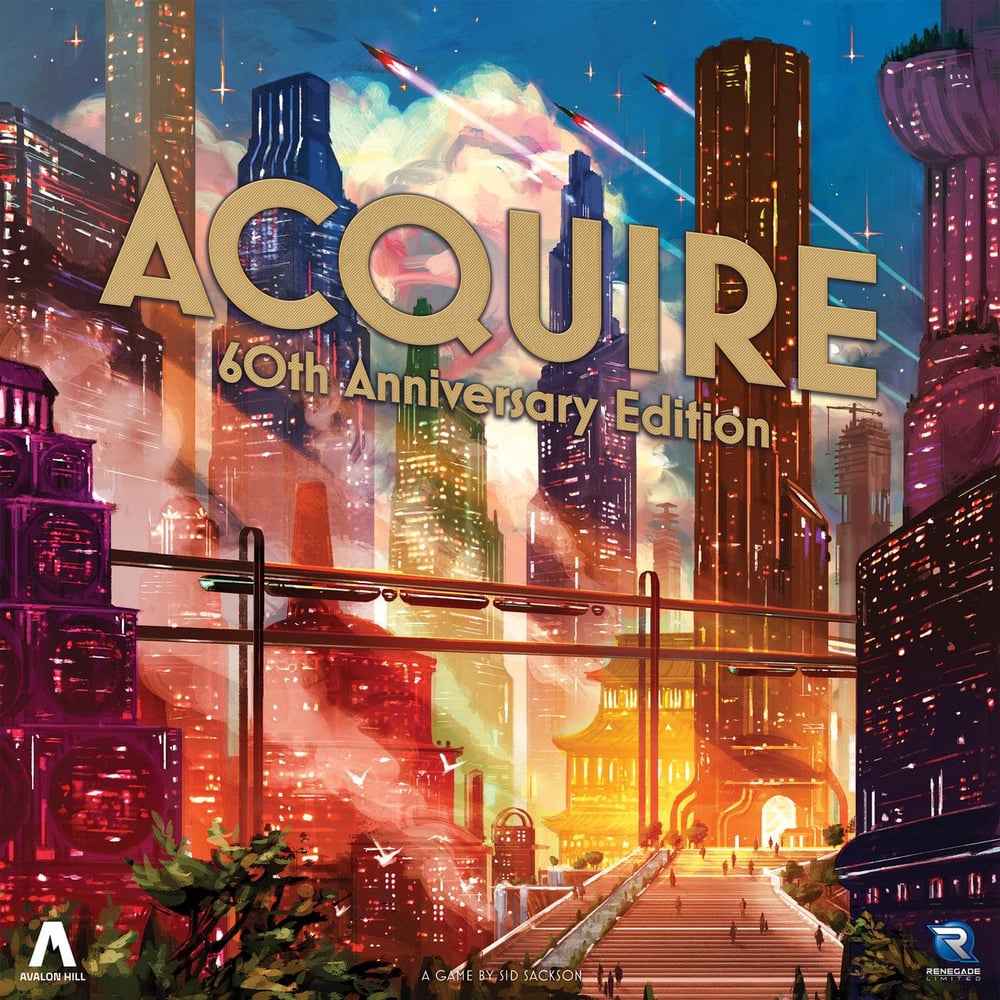
Acquire is covered on BoardGameVideo.com by 33 reviews, 27 how-to-play guides, 14 recorded sessions, 2 unboxings, and 7 other videos.
2 - 6 players90 minMedium weight: Teach it in one sittingView on BoardGameGeek ›About Acquire, from BoardGameGeek:
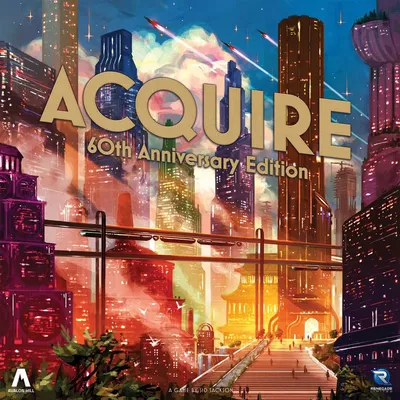
In Acquire, each player strategically invests in businesses, trying to retain a majority of stock. As the businesses grow with tile placements, they also start merging, giving the majority stockholders of the acquired business sizable bonuses, which can then be used to reinvest into other chains. All of the investors in the acquired company can then cash in their stocks for current value or trade them 2-for-1 for shares of the newer, larger business. The game is a race to acquire the greatest wealth. History of Acquire: This Sid Sackson classic has taken many different forms over the years depending on the publisher, yet the rules and game play have stayed the same. The 1966 version of the 3M bookshelf edition included rules for a 2-player variant. The original version is part of the 3M Bookshelf Series. Many books and websites incorrectly list this as a 1962 publication as the 3M Company used previously copyrighted artwork when they released the game in 1964. 3M actually received the idea for the game of "Vacations" from Sid Sackson in May of 1963 and decided to take his idea and put it into artwork they had developed the year before for a game called "ACQUIRE." 3M's original game idea for a game called ACQUIRE must not have been very good so they decided to take Sid's idea of Vacations and put it into their concept of ACQUIRE. They released some limited test market games in 8 Midwestern U.S. cities in December of 1963 with a box that had a 1963 copyright. These games had Sid's original rules. When 3M released the mass market games in 1964, they had developed some of Sid's original ideas and changed some rules and game play to match their production desires. They released them with outer boxes that were copyrighted 1962 and inner boxes with rules that were dated 1963. December 1963 - Test Market World Map Wood Tile Edition 1964 - Dated 1962/63 wood tiles, chipboard with plastic overlay & stocks with printed backs 1965 - Dated 1962/63 plastic tiles, chipboard with plastic overlay & stocks with printed backs (last edition made with printed backs until 1999) 1966 - Dated 1962/66 plastic tiles, chipboard with plastic overlay & non-wax coated stocks (Only edition with these stocks) 1968 - Dated 1968/66 plastic tiles, clear plastic board with paper underlay (Both 1966 inner box games have a lot of mixed parts) 1971 - Dated 1968/71 plastic tiles, yellow hard plastic board 1975 - 3M sells rights for game of ACQUIRE to the Avalon Hill Company 1976 - Dated 1976 plastic tiles, yellow hard plastic board, redesigned money, no inner box (This edition was also produced in 1977, 79, 81, 82, & 86) 1989 - Dated 1976 Gray box edition with new box artwork same contents as regular 1976 editions (This edition was also produced in 1992) 1995 - Dated 1995 Large box cardboard edition with chipboard board and tiles, Special Powers Variant Tiles inspired by German editions 1997 - Avalon Hill sells the rights to the game of ACQUIRE to Hasbro 1999 - Dated 1999 Large box with large plastic board and tiles, 3D company buildings, redesigned stocks & money, large info cards 2006 - Hasbro assigns rights for the game of ACQUIRE to their subsidiary, Wizards of the Coast 2006 - Lloyd's (private) Rules of ACQUIRE are made public, two major rule changes that help to bring the balance of the game of ACQUIRE back to the intentions of Sid Sackson's original ideas. Lloyd Solon's Rules help players to correct poor strategy during the beginning of the game that can been seen with new and unexperienced players (running out of money soon is the main mistake that must be omitted!). 2008 - Dated 2008 cardboard edition with chipboard board & tiles, redesigned stocks & money 2016 - Dated 2016 The current affordable mass-market edition. It looks at first sight to be similar to previous modern editions, but has been criticised for the use of inferior design choices such as hard-to-read grey-on-grey embossed slots and the unusual tile fonts. It contains modified rules and a slightly smaller playing grid. Although these changes have been criticised for not ultimately improving upon Sackson's original design, they are generally regarded as not being too damaging to it. 2023 - Renegade Game Studio partners with Hasbro, and releases their new version, with Classic Mode or Tycoon Mode - play with or without tertiary stockholder merger bonus. 2024 - The Renegade 60th Anniversary edition includes a set of plastic weighted poker chips, and Special Powers Variant cards.


1980· 65 videos·Sid SacksonSome reviews
- Videos
- 65
- Creators
- 53
Can't Stop is covered on BoardGameVideo.com by 25 reviews, 10 how-to-play guides, 11 recorded sessions, 5 unboxings, and 14 other videos.
2 - 4 players30 minLight weight: Learn it in minutesView on BoardGameGeek ›About Can't Stop, from BoardGameGeek:
In this Sid Sackson classic, players must press their luck with dice and choose combinations tactically to close out three columns. The board has one column for each possible total of two six-sided dice, but the number of spaces in each column varies: the more probable a total, the more spaces in that column and the more rolls it takes to complete. On their turn, a player rolls four dice and arranges them in duos: 1 4 5 6 can become 1+4 and 5+6 for 5 & 11, 1+5 and 4+6 for 6 & 10, or 1+6 and 4+5 for 7 & 9. The player places or advances progress markers in the open column(s) associated with their chosen totals, then chooses whether to roll again or end their turn and replace the progress markers with markers of their color. A player can only advance three different columns in a turn and cannot advance a column which any player has closed out by reaching the end space; if a roll doesn't result in any legal plays, the turn ends with that turn's progress lost. A predecessor from 1974, The Great Races, exists as a paper-and-pencil game.


1986· 46 videos·Max J. KobbertMostly reviews and how-to-play
- Videos
- 46
- Creators
- 40
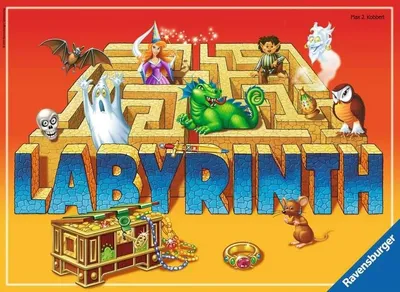
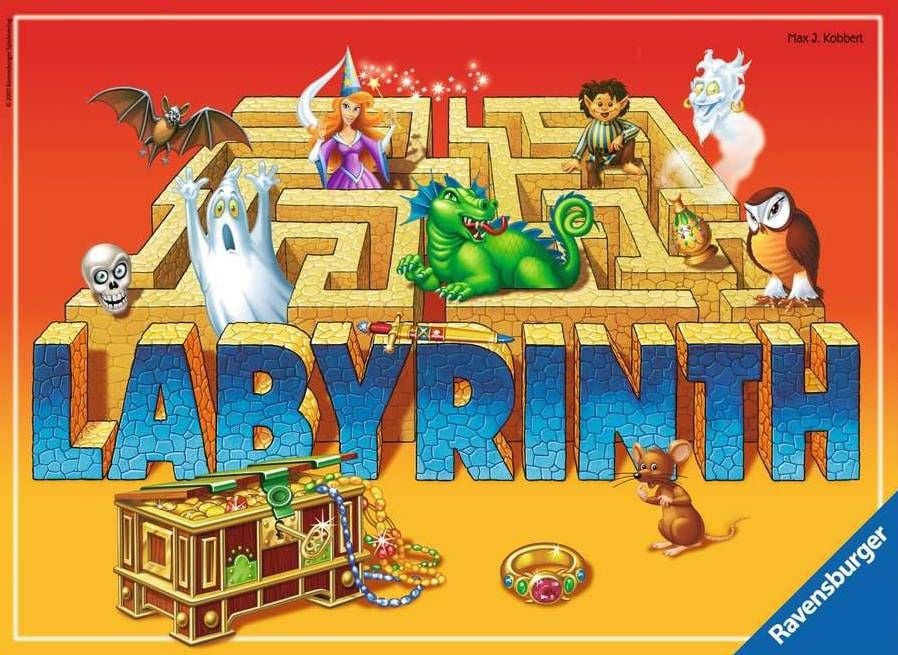
Labyrinth is covered on BoardGameVideo.com by 15 reviews, 15 how-to-play guides, 6 recorded sessions, 5 unboxings, and 5 other videos.
2 - 4 players20 minLight weight: Learn it in minutesView on BoardGameGeek ›About Labyrinth, from BoardGameGeek:
Labyrinth (formerly The aMAZEing Labyrinth) has spawned a whole line of Labyrinth games. The game board has a set of tiles fixed solidly onto it; the remaining tiles that make up the labyrinth slide in and out of the rows created by the tiles that are locked in place. One tile always remains outside the labyrinth, and players take turns taking this extra tile and sliding it into a row of the labyrinth, moving all those tiles and pushing one out the other side of the board; this newly removed tile becomes the piece for the next player to add to the maze. Players move around the shifting paths of the labyrinth in a race to collect various treasures. Whoever collects all of his treasures first and returns to his home space wins! Labyrinth is simple at first glance and an excellent puzzle-solving game for children; it can also be played by adults using more strategy and more of a cutthroat approach.
1988· 22 videosSome reviews
- Videos
- 22
- Creators
- 12
Scattergories is covered on BoardGameVideo.com by 6 reviews, 2 how-to-play guides, 1 recorded sessions, 1 unboxings, and 12 other videos.
2 - 6 players30 minLight weight: Learn it in minutesView on BoardGameGeek ›About Scattergories, from BoardGameGeek:
In Scattergories, published in 1988 by Milton Bradley, each player fills out a category list with answers that begin with the same letter. If no other player matches your answers, you score points. The game is played in rounds. After 3 rounds a winner is declared, and a new game can be begun. Scattergories is a commercial version of an old parlor game known as Categories or Guggenheim. Similar to: Facts in Five

1984· 14 videos·Laura Robinson, Paul ToyneSome reviews
- Videos
- 14
- Creators
- 10
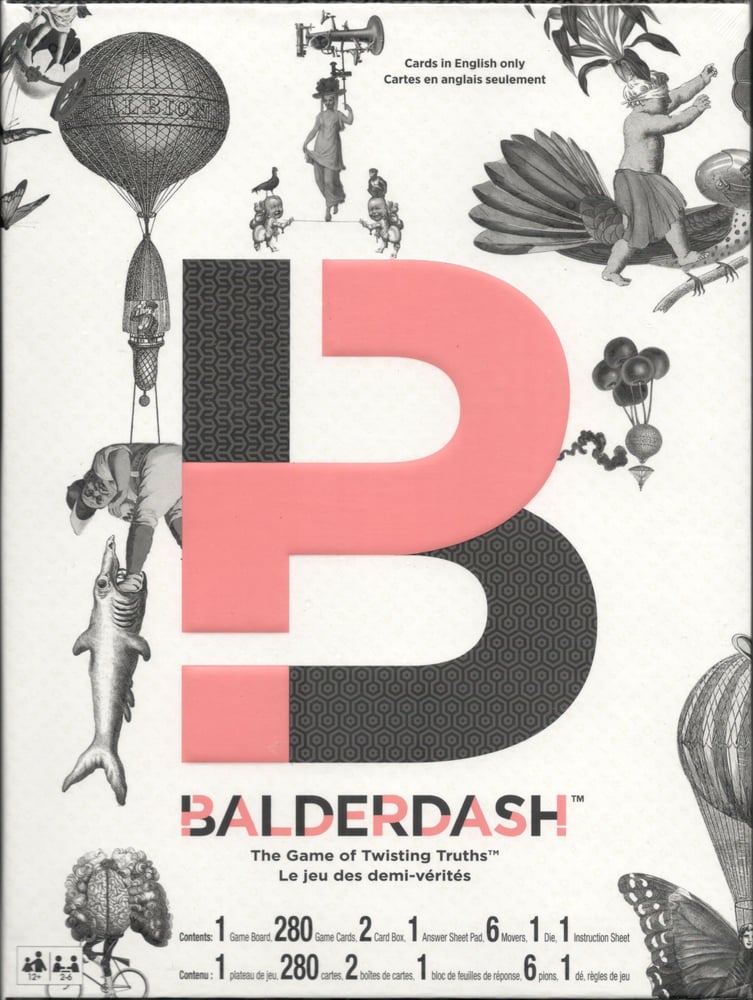
Balderdash is covered on BoardGameVideo.com by 4 reviews, 1 how-to-play guides, 2 recorded sessions, and 7 other videos.
2 - 6 players60 minLight weight: Learn it in minutesView on BoardGameGeek ›About Balderdash, from BoardGameGeek:
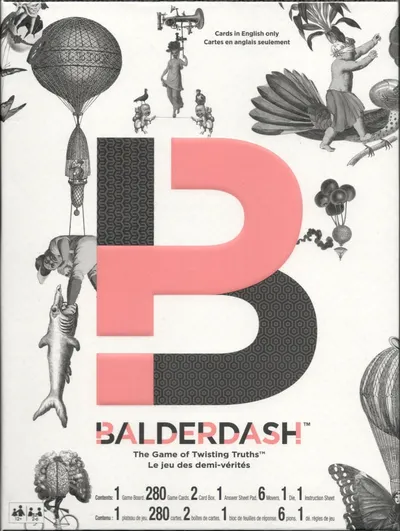
A clever repackaging of the parlor game Dictionary, Balderdash contains several cards with real words nobody has heard of. After one of those words has been read aloud, players try to come up with definitions that at least sound plausible, because points are later awarded for every opposing player who guessed that your definition was the correct one. Versions of the game as a parlor game go back at least as far as 1970, although Balderdash itself was not published until 1984. Mattel, Inc. republished Balderdash in 2006 in a form that derives its gameplay from the sequel Beyond Balderdash. Re-implemented by: Beyond Balderdash / Absolute Balderdash Kokkelimonke Jubileum Re-implements: Beyond Balderdash* In a peculiar situation, this game was reimplemented by Beyond/Absolute Balderdash and then combined back into the original title (Balderdash) but with the rules and cards from Beyond/Absolute; while Tactic re-published their version of Beyond/Absolute combined with the original Balderdash and called it Kokkelimonke Jubileum.
11 videosSir John SucklingSome how-to-play
- Videos
- 11
- Creators
- 8
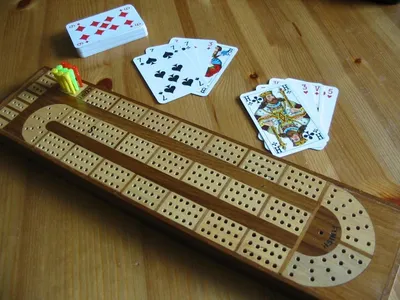
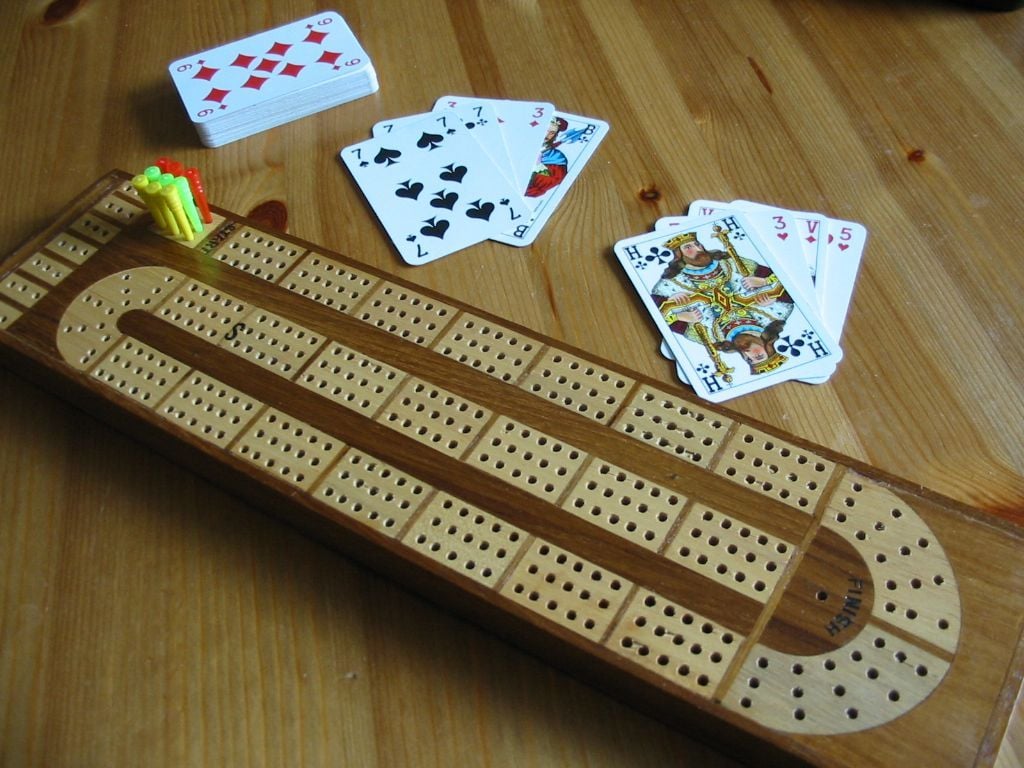
Cribbage is covered on BoardGameVideo.com by 2 reviews, 4 how-to-play guides, 1 recorded sessions, and 4 other videos.
2 - 6 players30 minMedium weight: Teach it in one sittingView on BoardGameGeek ›About Cribbage, from BoardGameGeek:
Cribbage is a card game invented in the early 17th century, based on the earlier game Noddy. It is played with a deck of standard playing cards and a signature piece of equipment called the cribbage board. Cribbage is traditionally played as a 2 player game. In the version usually played today, each player is dealt a hand of 6 cards, from which they discard 2 into a special pile called the Crib. One card is then cut from the draw pile and turned face up - it is considered part of each player's hand and of the Crib. The players then play cards in turn, scoring points for hitting certain totals, or for making sets or sequences. Score is kept by moving pegs along tracks on the cribbage board. This is repeated until both players have exhausted their hand of cards. Next, each player picks up their hand and determines all possible scoring combinations, pegging points again on the cribbage board. The dealer then picks up the Crib and scores it for all possible points. Then the cards are shuffled and the deal alternates. The winner is the first to reach 121 points. The origin date listed for this game is approximate.
1991· 9 videos·Blaise MullerMainly reviews and how-to-play
- Videos
- 9
- Creators
- 8
Quarto is covered on BoardGameVideo.com by 3 reviews, 2 how-to-play guides, 1 recorded sessions, 1 unboxings, and 2 other videos.
2 players20 minLight weight: Learn it in minutesView on BoardGameGeek ›About Quarto, from BoardGameGeek:
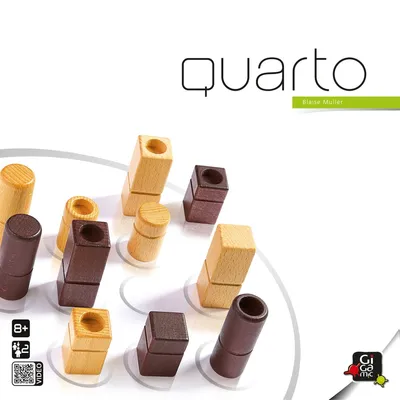
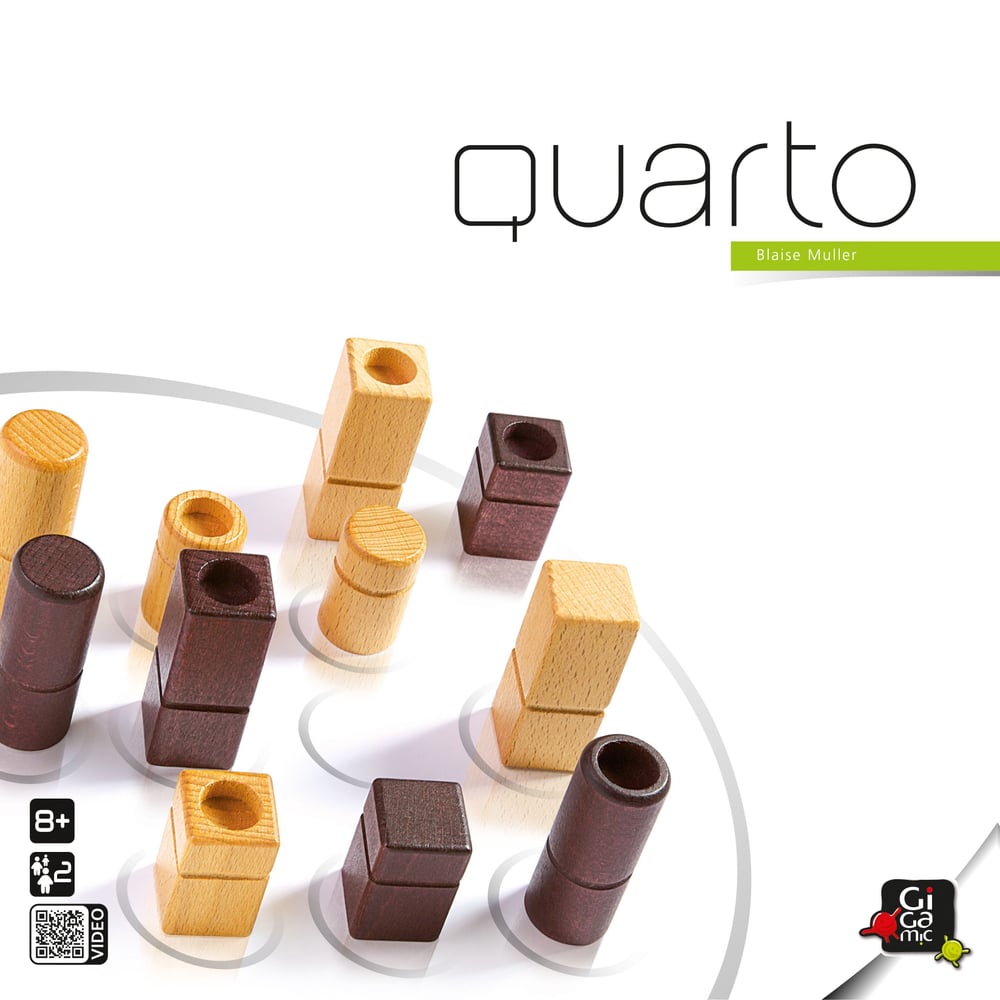
Quarto has a 4×4 board and 16 pieces. Each piece has four dichotomous attributes - color, height, shape, and consistency - so each piece is either black or white, tall or short, square or round, and hollow or solid. The object is to place the fourth piece in a row in which all four pieces have at least one attribute in common. The twist is that your opponent gets to choose the piece you place on the board each turn. A winner of the 1985 Concours International de Créateurs de Jeux de Société.

1983· 6 videos·Robert HarrisMainly playthroughs
- Videos
- 6
- Creators
- 4
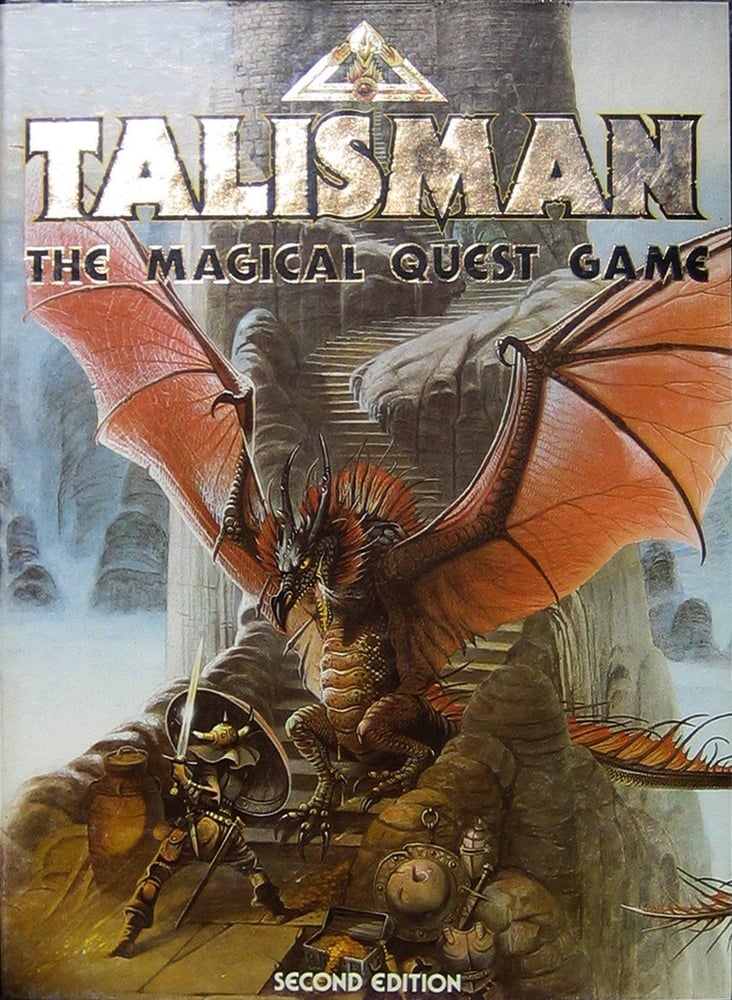
Talisman is covered on BoardGameVideo.com by 1 how-to-play guides, 3 recorded sessions, and 2 other videos.
2 - 6 players240 minMedium weight: Teach it in one sittingView on BoardGameGeek ›About Talisman, from BoardGameGeek:
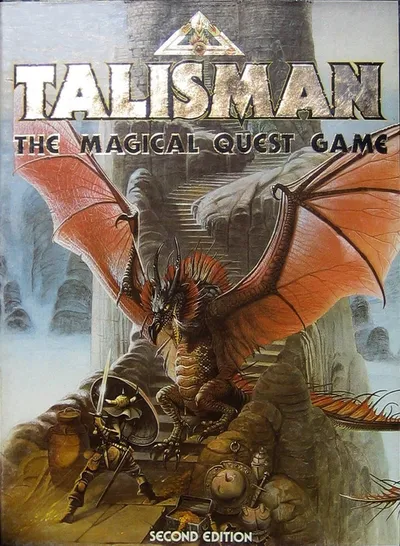
The game board represents a fantasy land. Players chose a character from a list of semi-standard fantasy types: Barbarian, Wizard, Monk, etc. The objective of the game is to travel through the land encountering event cards and gathering strength along the way. Hopefully players will eventually become powerful enough to travel to the center of the board, endure the trials there and take the Crown of Command for the victory. There were also several expansions released for this game, which add new character choices and new places to travel. Part of the Talisman series of games and expansions published by Games Workshop Ltd.. The first edition differs from the second only in the box cover art and the cards, which were printed in black and white (same artwork as the second edition, though). The first edition had no expansions. Expanded by: Talisman: Expansion Set Talisman: The Adventure The Talisman: Dungeon Talisman: Timescape Talisman: City Talisman Dragons Also by: The Jewel in the Crown Talisman (Second Edition): White Dwarf #115 Cards Re-implemented by: Talisman (Third Edition) Talisman: Revised 4th Edition
1938· 3 videos
4 players60 minMedium weight: Teach it in one sittingView on BoardGameGeek ›About Spades, from BoardGameGeek:
This trick-taking game is a standard deck playing card game and takes on many different group-specific rules. Generally speaking, each player is given thirteen cards and a partner who sits across the table. Each player bids the number of tricks they'll take, and then the partners collectively attempt to take at least as many as they bid. The tricks are fairly standard with following suit if you can, and spades as the trump suit. If you make your bid you earn ten times the number of tricks you bid, otherwise you lose that many points. Plus there is usually a nil bid, which means you personally won't take any tricks but your partner still plays as normal. Call Break is a popular variation of Spades among card game players in South Asian countries. To win, players must score the maximum points in 5 rounds. Points equal the number of tricks bid in each hand. The player who wins that hand gains point, the loser loses the same amount of points.
Explore more videos


















Description provided by BoardGameGeek on YouTube:
These 10 great games have truly stood the test of time. 00:00 Intro 01:38 #10 Quarto – 1991 – Blaise Muller – Gigamic https://boardgamegeek.com/boardgame/681/quarto 03:56 #9 Scattergories – 1988 – Uncredited – Hasbro – https://boardgamegeek.com/boardgame/2381/scattergories 05:33 #8 Labyrinth – 1986 – Max J. Kobbert – Ravensburger https://boardgamegeek.com/boardgame/1219/labyrinth 08:05 #7 Balderdash – 1984 – Laura Robinson, Paul Toyne– Mattel https:// boardgamegeek.com/boardgame/163/balderdash 10:18 #6 Talisman - 1983 – Robert Harris – Games Workshop Ltd. https://boardgamegeek.com/boardgame/714/talisman 13:10 #5 Can’t Stop – 1980 – Sid Sackson – Parker Brothers https://boardgamegeek.com/boardgame/41/cant-stop 16:00 #4 Acquire – 1963 – Sid Sackson– The Avalon Hill Game Co https://boardgamegeek.com/boardgame/5/acquire 19:28 #3 Spades – 1938 – Uncredited – Public Domain – https://boardgamegeek.com/boardgame/592/spades 22:11 #2 Crokinole – 1876 – Uncredited – Public Domain https://boardgamegeek.com/boardgame/521/crokinole 24:40 #1 Cribbage – 1630 – Sir John Suckling – Public Domain https://boardgamegeek.com/boardgame/2398/cribbage 27:56 Outro