
Top 10 Games of 2016

Watch “Top 10 Games of 2016,” a board game video for 10 games from BoardGameGeek on BoardGameVideo.
2016· 164 videos·Jacob FryxeliusMainly reviews and playthroughs
- Videos
- 164
- Creators
- 94
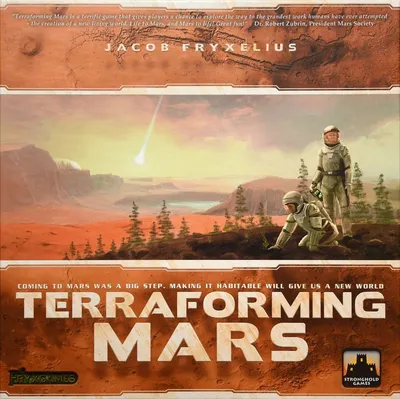
Terraforming Mars is covered on BoardGameVideo.com by 47 reviews, 36 how-to-play guides, 43 recorded sessions, 6 unboxings, and 32 other videos.
1 - 5 players120 minHeavy weight: Expect a long teachView on BoardGameGeek ›About Terraforming Mars, from BoardGameGeek:
In the 2400s, mankind begins to terraform the planet Mars. Giant corporations, sponsored by the World Government on Earth, initiate huge projects to raise the temperature, the oxygen level, and the ocean coverage until the environment is habitable. In Terraforming Mars, you play one of those corporations and work together in the terraforming process, but compete for getting victory points that are awarded not only for your contribution to the terraforming, but also for advancing human infrastructure throughout the solar system, and doing other commendable things. As a player, you acquire unique project cards (from over two hundred different ones) by buying them to your hand. The cards can give you immediate bonuses, as well as increasing your production of different resources. Many cards also have requirements and they become playable when the temperature, oxygen, or ocean coverage increases enough. Buying cards is costly, so there is a balance between buying cards and actually playing them. Standard Projects are always available to complement your hand of cards. Your basic income, as well as your basic score, are based on your Terraform Rating. However, your income is boosted by your production, and VPs are also gained from many other sources. You keep track of your production and resources on your player board. The game uses six types of resources: MegaCredits, Steel, Titanium, Plants, Energy, and Heat. On the game board, you compete for the best places for your city tiles, ocean tiles, and greenery tiles. You also compete for different Milestones and Awards worth many VPs. Each round is called a generation and consists of the following phases: 1) Player order shifts clockwise. 2) Research phase: All players buy cards from four privately drawn. 3) Action phase: Players take turns doing 1-2 actions from these options: Playing a card, claiming a Milestone, funding an Award, using a Standard project, converting plant into greenery tiles (and raising oxygen), converting heat into a temperature raise, and using the action of a card in play. The turn continues around the table (sometimes several laps) until all players have passed. 4) Production phase: Players get resources according to their terraform rating and production parameters. When the three global parameters (temperature, oxygen, ocean) have all reached their required levels, the terraforming is complete, and the game ends after that generation. Combine your Terraform Rating and other VPs to determine the winning corporation!

2016· 160 videos·Corey KonieczkaMainly playthroughs
- Videos
- 160
- Creators
- 54
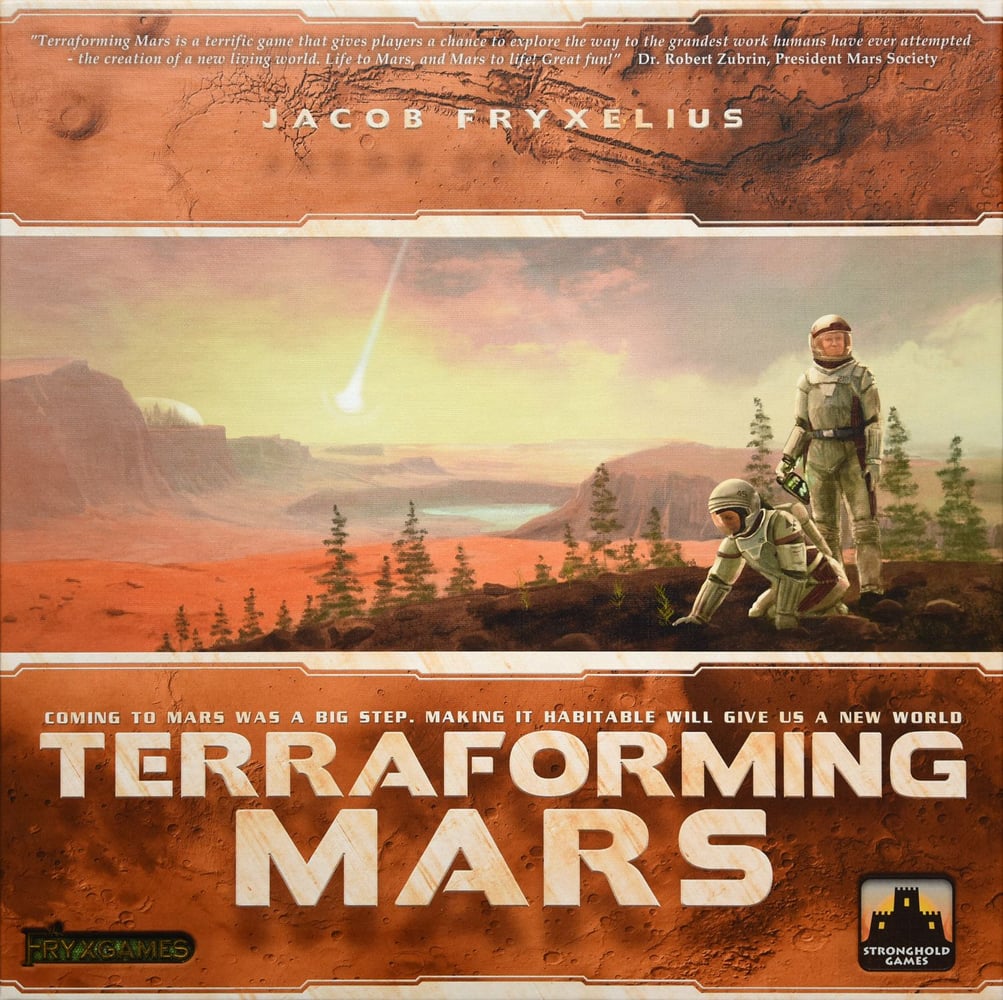
Star Wars: Rebellion is covered on BoardGameVideo.com by 28 reviews, 24 how-to-play guides, 91 recorded sessions, 3 unboxings, and 14 other videos.
2 - 4 players180 - 240 minHeavy weight: Expect a long teachView on BoardGameGeek ›About Star Wars: Rebellion, from BoardGameGeek:
Star Wars: Rebellion is a board game of epic conflict between the Galactic Empire and Rebel Alliance for two to four players. Experience the Galactic Civil War like never before. In Rebellion, you control the entire Galactic Empire or the fledgling Rebel Alliance. You must command starships, account for troop movements, and rally systems to your cause. Given the differences between the Empire and Rebel Alliance, each side has different win conditions, and you'll need to adjust your play style depending on who you represent: As the Imperial player, you can command legions of Stormtroopers, swarms of TIEs, Star Destroyers, and even the Death Star. You rule the galaxy by fear, relying on the power of your massive military to enforce your will. To win the game, you need to snuff out the budding Rebel Alliance by finding its base and obliterating it. Along the way, you can subjugate worlds or even destroy them. As the Rebel player, you can command dozens of troopers, T-47 airspeeders, Corellian corvettes, and fighter squadrons. However, these forces are no match for the Imperial military. In terms of raw strength, you'll find yourself clearly overmatched from the very outset, so you'll need to rally the planets to join your cause and execute targeted military strikes to sabotage Imperial build yards and steal valuable intelligence. To win the Galactic Civil War, you'll need to sway the galaxy's citizens to your cause. If you survive long enough and strengthen your reputation, you inspire the galaxy to a full-scale revolt, and you win. Featuring more than 150 plastic miniatures and two game boards that account for thirty-two of the Star Wars galaxy's most notable systems, Rebellion features a scope that is as large and sweeping as any Star Wars game before it. Yet for all its grandiosity, Rebellion remains intensely personal, cinematic, and heroic. As much as your success depends upon the strength of your starships, vehicles, and troops, it depends upon the individual efforts of such notable characters as Leia Organa, Mon Mothma, Grand Moff Tarkin, and Emperor Palpatine. As civil war spreads throughout the galaxy, these leaders are invaluable to your efforts, and the secret missions they attempt will evoke many of the most inspiring moments from the classic trilogy. You might send Luke Skywalker to receive Jedi training on Dagobah or have Darth Vader spring a trap that freezes Han Solo in carbonite!

2016· 96 videos·Uwe RosenbergMainly reviews
- Videos
- 96
- Creators
- 69
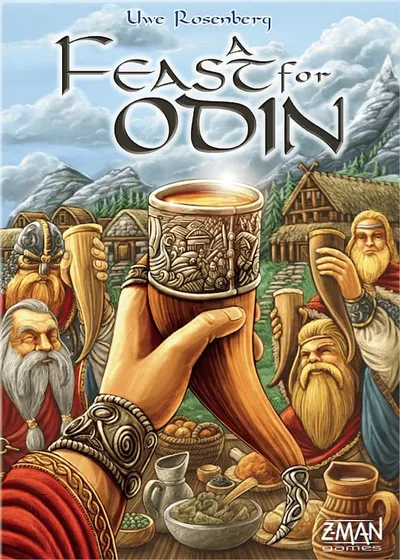
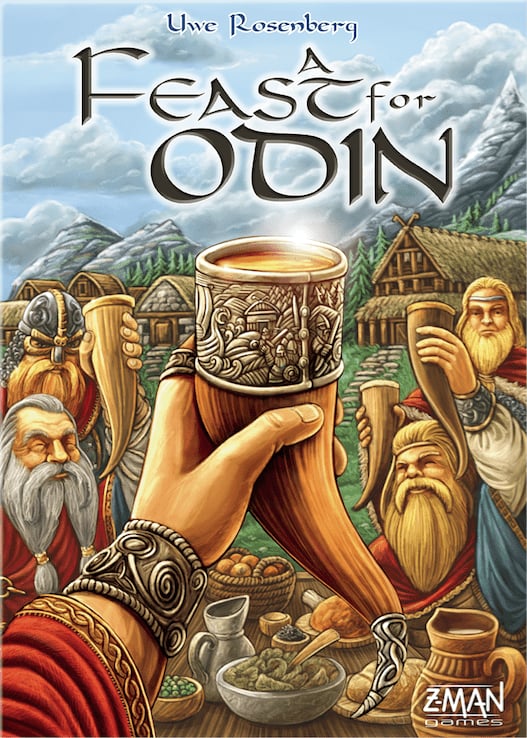
A Feast for Odin is covered on BoardGameVideo.com by 39 reviews, 18 how-to-play guides, 12 recorded sessions, 7 unboxings, and 20 other videos.
1 - 4 players30 - 120 minHeavy weight: Expect a long teachView on BoardGameGeek ›About A Feast for Odin, from BoardGameGeek:
A Feast for Odin is a saga in the form of a board game. You are reliving the cultural achievements, mercantile expeditions, and pillages of those tribes we know as Viking today - a term that was used quite differently towards the end of the first millennium. When the northerners went out for a raid, they used to say they headed out for a viking. Their Scandinavian ancestors, however, were much more than just pirates. They were explorers and founders of states. Leif Eriksson is said to be the first European in America, long before Columbus. In what is known today as Normandy, the intruders were not called Vikings but Normans. One of them is the famous William the Conqueror who invaded England in 1066. He managed to do what the king of Norway failed to do only a few years prior: conquer the Throne of England. The reason the people of these times became such strong seafarers was their unfortunate agricultural situation: crop shortfalls caused great distress. In this game, you will raid and explore new territories. You will also engage in the day-to-day activity of collecting goods with which to achieve a financially secure position in society. In the end, the player whose possessions bear the greatest value will be declared the winner. --gameplay description from @StoryBoardGamer's review: A Feast for Odin is a points-driven game, with a plethora of pathways to victory, with a range of risks balanced against rewards. A significant portion of this is your central hall, which has a whopping -86 points of squares and a major part of your game is attempting to cover these up with various tiles. Likewise, long halls and island colonies can also offer large rewards, but they will have penalties of their own. Each year follows a familiar pattern of preparation, worker placement, and then meeting the requirements of your feast. The main phase of each year is a worker placement affair. You start with a selection of Vikings, and a large action board with a whopping 61 different options to choose from. Each of these will be arranged from left to right in one of four columns. Each column requires an additional Viking to activate, but they are proportionally more powerful. At the end of each round, you will need to fill a feast table with food, alternating between plants and vegetable matter. You will also have a chance to lay the valuable green and blue tiles into your main hall. The configuration of these tiles must follow certain requirements, but your main goal is to both cover up a line of coin icons to increase your income, while otherwise encircling certain printed icons to generate those. You will build your engine over time, following an alternating pattern of outward expansion and hunting against development and cultivation. It all comes down to how much you're willing to take on at any one time, and what risks you're willing to set yourself up with for their rewards. UPC 681706716909
2016· 85 videos·Paul DennenMainly reviews
- Videos
- 85
- Creators
- 63
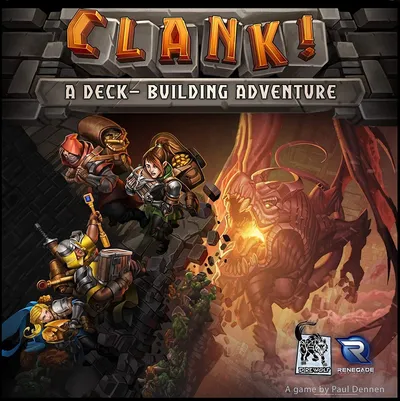
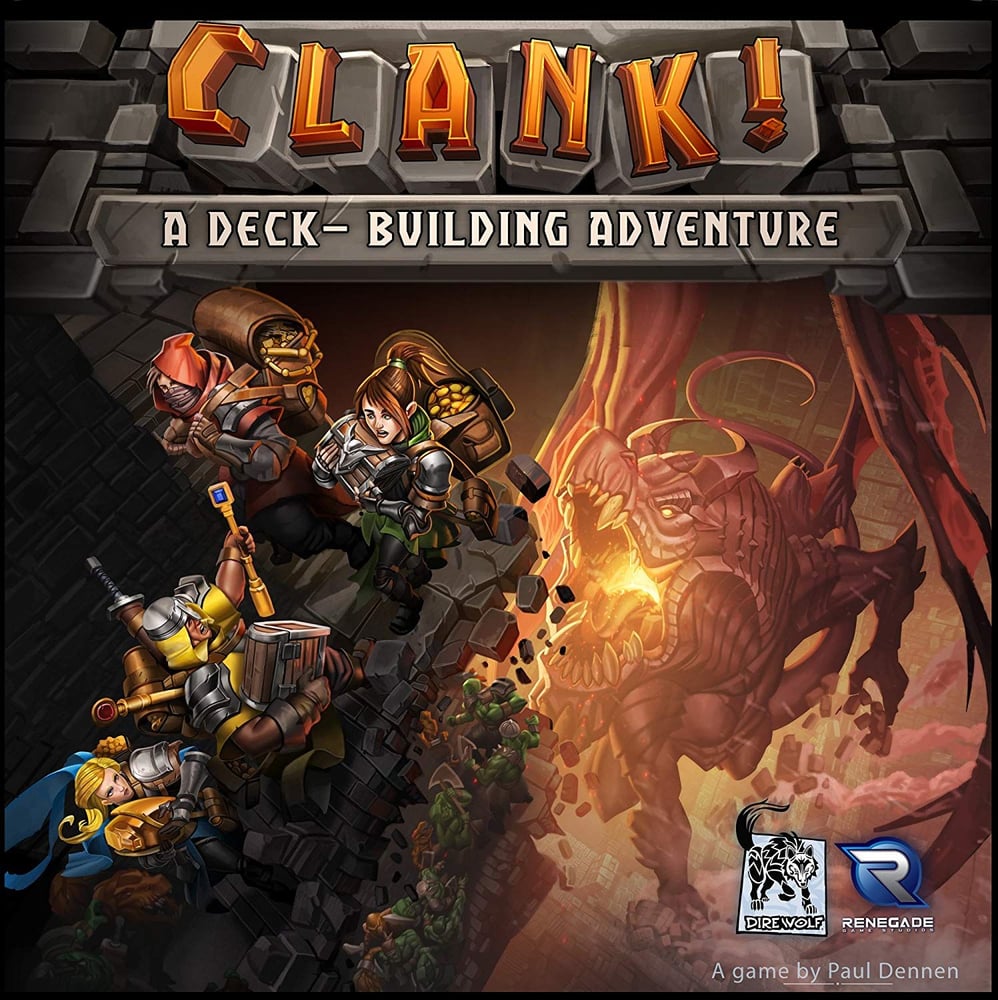
Clank!: A Deck-Building Adventure is covered on BoardGameVideo.com by 42 reviews, 13 how-to-play guides, 15 recorded sessions, and 15 other videos.
2 - 4 players30 - 60 minMedium weight: Teach it in one sittingView on BoardGameGeek ›About Clank!: A Deck-Building Adventure, from BoardGameGeek:
Burgle your way to adventure in the deck-building board game Clank! Sneak into an angry dragon's mountain lair to steal precious artifacts. Delve deeper to find more valuable loot. Acquire cards for your deck and watch your thievish abilities grow. Be quick and be quiet. One false step and CLANK! Each careless sound draws the attention of the dragon, and each artifact stolen increases its rage. You can enjoy your plunder only if you make it out of the depths alive! Clank! is a deck-building game. Each player has their own deck, and building yours up is part of playing the game. You start each of your turns with five cards in your hand, and you'll play them all in any order you choose. Most cards will generate resources, of which there are three different kinds: Skill, which is used to acquire new cards for your deck. Swords, which are used to fight the monsters that infest the dungeon. Boots, which are used to move around the board. Every time you acquire a new card, you put it face up in your discard pile. Whenever you need to draw a card and find your deck empty, you shuffle your discard pile and turn it face down to form a new deck. With each shuffle, your newest cards become part of a bigger and better deck! Each player starts with the same cards in their deck, but they'll acquire different cards during their turns. Because cards can do many different things, each player's deck (and strategy) will become more and more different as the game unfolds. During the game, you have two goals: Retrieve an Artifact token and escape the dragon by returning to the place you started, outside of the dungeon. Accumulate enough points with your Artifact and other loot to beat out your opponents and earn the title of Greatest Thief in the Realm!

2016· 71 videos·Alexander PfisterMainly reviews
- Videos
- 71
- Creators
- 54
Great Western Trail is covered on BoardGameVideo.com by 36 reviews, 18 how-to-play guides, 9 recorded sessions, 2 unboxings, and 6 other videos.
2 - 4 players75 - 150 minHeavy weight: Expect a long teachView on BoardGameGeek ›About Great Western Trail, from BoardGameGeek:
America in the 19th century: You are a rancher and repeatedly herd your cattle from Texas to Kansas City, where you send them off by train. This earns you money and victory points. Needless to say, each time you arrive in Kansas City, you want to have your most valuable cattle in tow. However, the "Great Western Trail" not only requires that you keep your herd in good shape, but also that you wisely use the various buildings along the trail. Also, it might be a good idea to hire capable staff: cowboys to improve your herd, craftsmen to build your very own buildings, or engineers for the important railroad line. If you cleverly manage your herd and navigate the opportunities and pitfalls of Great Western Trail, you surely will gain the most victory points and win the game. -description from the publisher



2016· 68 videos·Chris Cantrell, Rick Ernst, Stone Librande, Prashant Saraswat, Nathan TirasMainly reviews
- Videos
- 68
- Creators
- 54
Mechs vs. Minions is covered on BoardGameVideo.com by 28 reviews, 10 how-to-play guides, 9 recorded sessions, 6 unboxings, and 15 other videos.
2 - 4 players60 - 120 minMedium weight: Teach it in one sittingView on BoardGameGeek ›About Mechs vs. Minions, from BoardGameGeek:
Mechs vs. Minions is a cooperative tabletop campaign for 2-4 players. Set in the world of Runeterra, players take on the roles of four intrepid Yordles: Corki, Tristana, Heimerdinger, and Ziggs, who must join forces and pilot their newly-crafted mechs against an army of marauding minions. With modular boards, programmatic command lines, and a story-driven campaign, each mission will be unique, putting your teamwork, programming, and piloting skills to the test. There are ten missions in total, and each individual mission will take about 60-90 minutes.


2016· 65 videos·Hisashi HayashiMainly reviews
- Videos
- 65
- Creators
- 54
Yokohama is covered on BoardGameVideo.com by 39 reviews, 6 how-to-play guides, 2 recorded sessions, 3 unboxings, and 15 other videos.
2 - 4 players90 minHeavy weight: Expect a long teachView on BoardGameGeek ›About Yokohama, from BoardGameGeek:
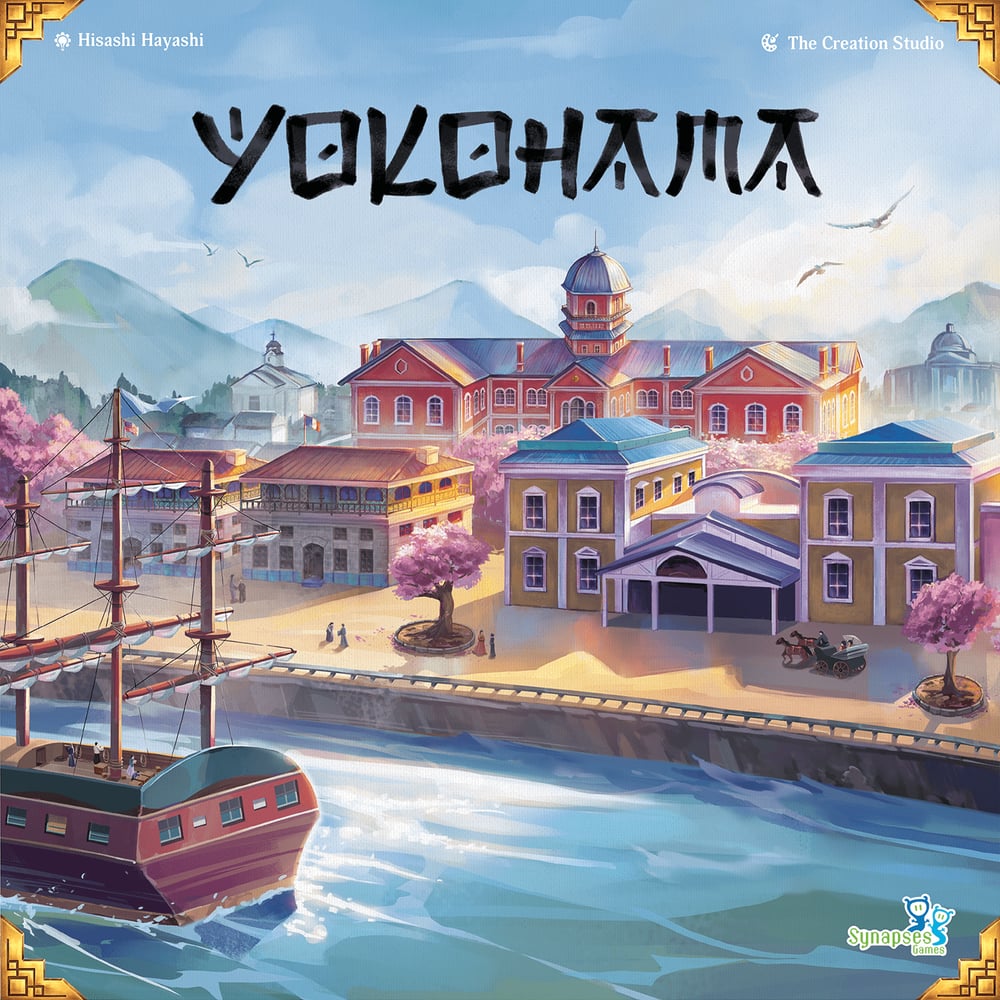
Once Yokohama was just a fishing village, but now at the beginning of the Meiji era it's becoming a harbor open to foreign countries and one of the leading trade cities of Japan. As a result, many Japanese products such as copper and raw silk are collected in Yokohama for export to other countries. At the same time, the city is starting to incorporate foreign technology and culture, with even the streets becoming more modernized. In the shadow of this development was the presence of many Yokohama merchants. In YOKOHAMA, each player is a merchant in the Meiji period, trying to gain fame from a successful business, and to do so they need to build a store, broaden their sales channels, learn a variety of techniques, and (of course) respond to trade orders from abroad.

2016· 15 videos·Gil HovaMainly reviews
- Videos
- 15
- Creators
- 11
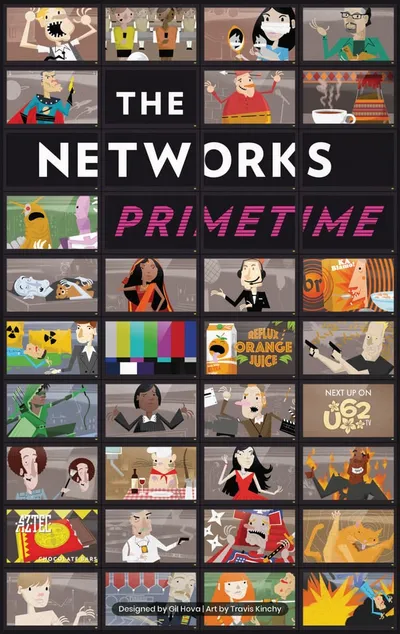
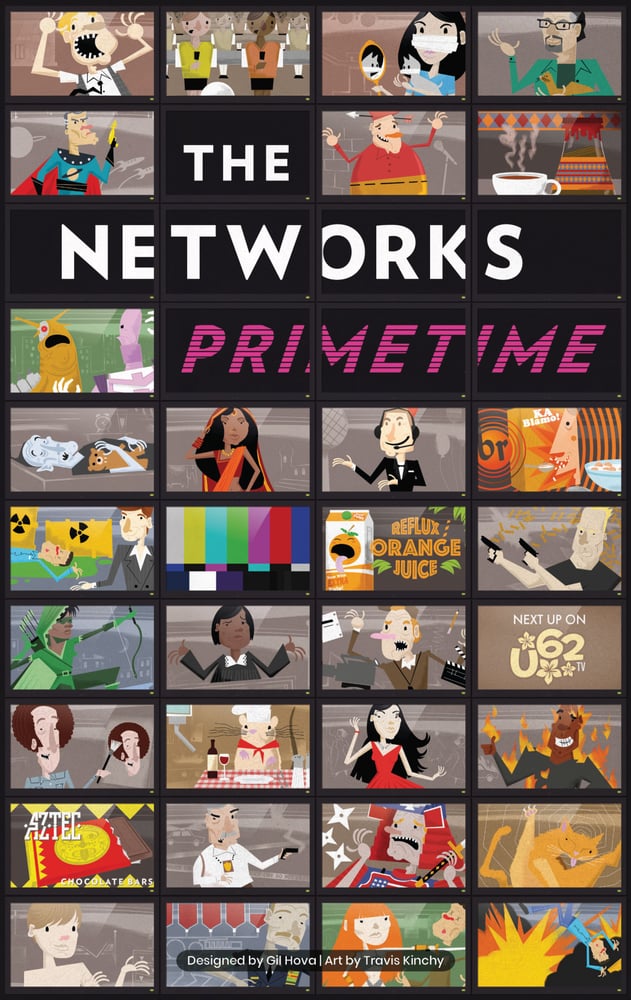
The Networks: Primetime is covered on BoardGameVideo.com by 8 reviews, 2 recorded sessions, 2 unboxings, and 3 other videos.
1 - 5 players60 - 90 minMedium weight: Teach it in one sittingView on BoardGameGeek ›About The Networks: Primetime, from BoardGameGeek:
In The Networks, you and your opponents are new television networks, and you need new programming. For this, you'll need Shows, Stars, and Ads. Shows need Stars and Ads. Stars give you bonus viewers (points), and Ads give you extra money. You'll need everything you can get; you'll have a small amount of resources and time, and you must grab the latest hot show before your opponents. And some Stars will give their best effort only if you put them on in the proper conditions. For example, some Stars only want to be put on dramas. Other Stars want to be the only Star on the show. And your Ads will give you the most money only if you put them on in the correct time slot. Finally, Shows age and viewers lose interest, so you have to keep your line-up fresh by canceling shows and sending them into reruns. Fortunately, you can get viewers from your reruns, and you'll get bonuses if you get a lot of shows of the same genre throughout the game. If you need a special push, Network Cards can give you special powers - but will a Network Card be better than another action? You'll have to make that call. The player with the most viewers after five seasons wins!


2016· 4 videos·J. Alex Kevern
2 - 4 players35 - 45 minMedium weight: Teach it in one sittingView on BoardGameGeek ›About World's Fair 1893, from BoardGameGeek:
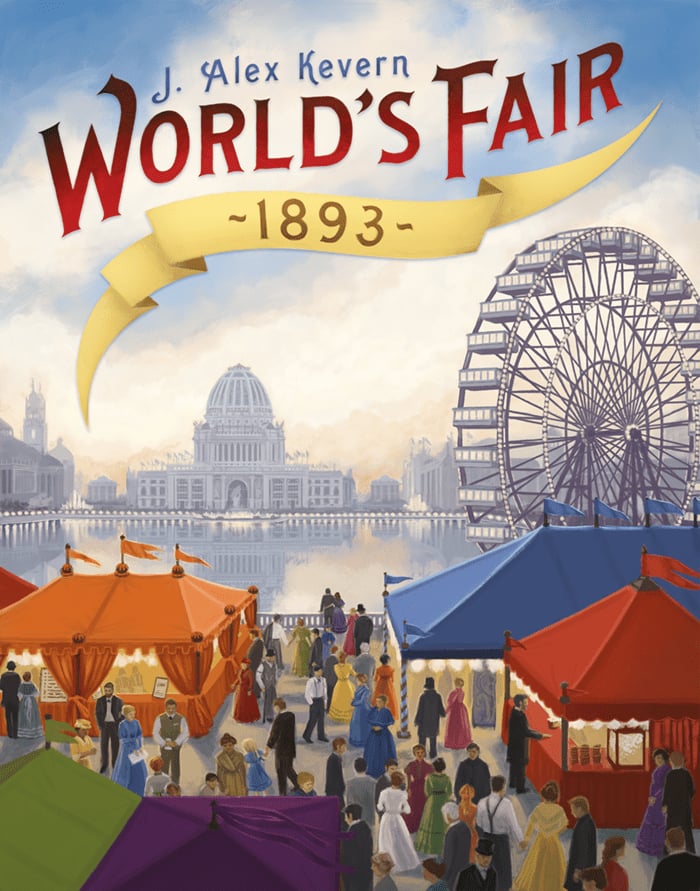
The World's Fair of 1893 in Chicago was a spectacular international exhibition that showcased many great achievements in science, technology, culture, and entertainment. Acting as organizers of the fair, players work diligently to increase their influence throughout the fair and obtain the grand exhibits that will be put on display. The organizer who has earned the best reputation when the fair begins will emerge the victor. On each turn of World's Fair 1893, the active player sends a supporter to one of the five areas and gathers all of the cards in it. New cards are then added to some of the areas, and the next player takes a turn. The five areas represent sections of exhibits, like Fine Arts and Electricity. Cards may represent exhibit proposals in one of those five areas, influential people who provide bonus supporters, or tickets for attractions and concessions along the Midway. The game consists of three scoring rounds, each triggered when players collectively gather a certain number of Midway tickets. Players gain reputation points for leading in number of supporters in an area and for gathering the most tickets in each round. The leaders in an area also receive approval for exhibit proposals they have gathered that match the area. Players gain reputation points at the end of the game based on the breadth and diversity of their approved exhibits.

2016· 3 videos·François Gandon
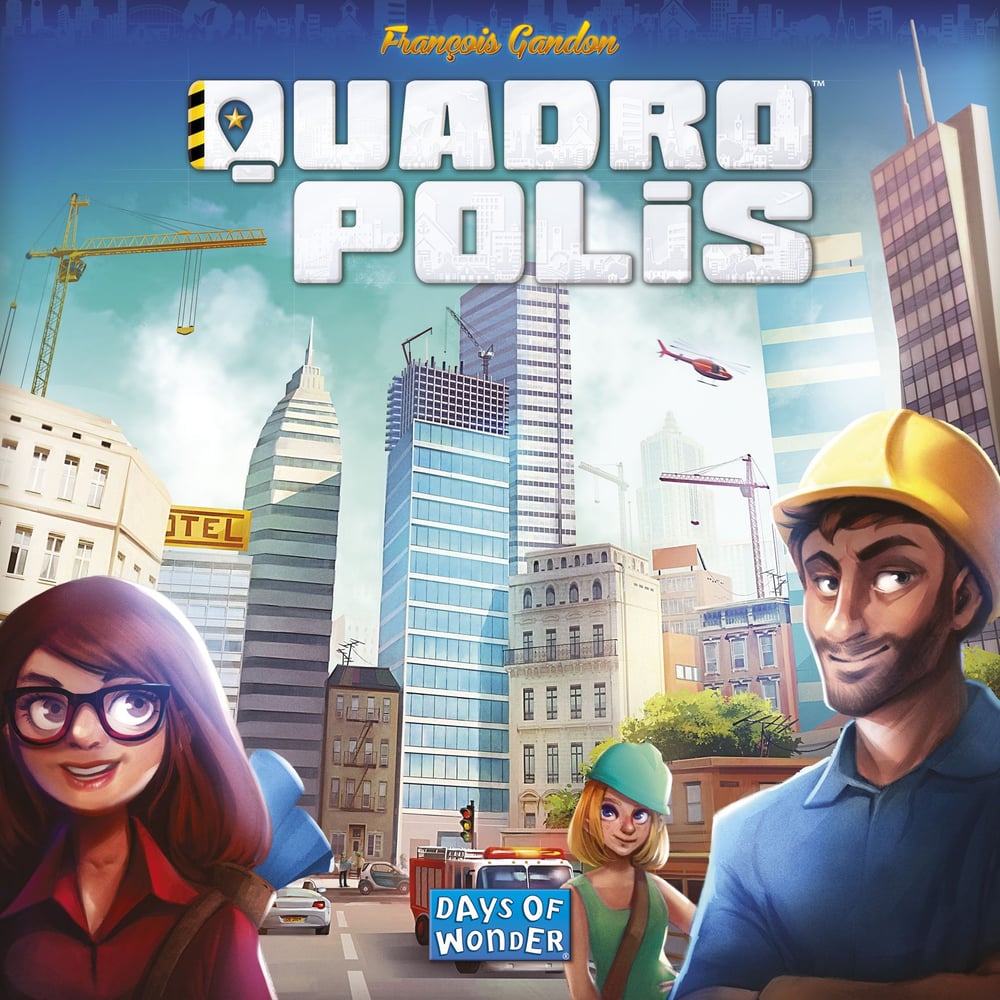
2 - 4 players30 - 60 minMedium weight: Teach it in one sittingView on BoardGameGeek ›About Quadropolis, from BoardGameGeek:
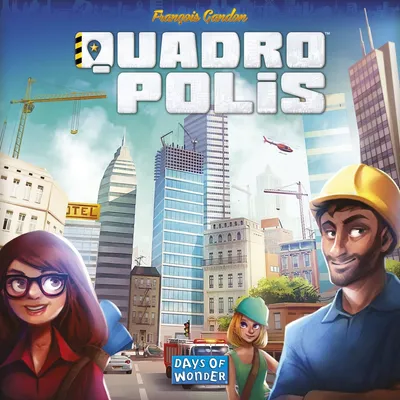
Each player builds their own metropolis in Quadropolis (first announced as City Mania), but they're competing with one another for the shops, parks, public services and other structures to be placed in them. The game lasts four rounds, and in each round players first lay out tiles for the appropriate round at random on a 5x5 grid. Each player has four architects numbered 1-4 and on a turn, a player places an architect next to a row or column in the grid, claims the tile that's as far in as the number of the architect placed (e.g., the fourth tile in for architect #4), places that tile in the appropriately numbered row or column on the player's 4x4 city board, then claims any resources associated with the tile (inhabitants or energy). When a player takes a tile, a figure is placed in this now-empty space and the next player cannot place an architect in the same row or column where this tile was located. In addition, you can't place one architect on top of another, so each placement cuts off play options for you and everyone else later in the round. After all players have placed all four architects, the round ends, all remaining tiles are removed, and the tiles for the next round laid out. After four rounds, the game ends. Players can move the inhabitants and energy among their tiles at any point during the game to see how to maximize their score. At game end, they then score for each of the six types of buildings depending on how well they build their city - as long as they have activated the buildings with inhabitants or energy as required: Residential buildings score depending on their height Shops score depending on how many customers they have Public services score depending on the number of districts in your city that have them Parks score depending on the number of residential buildings next to them Harbors score based on the longest row or column of activated harbors in the city Factories score based on the number of adjacent shops and harbors Some buildings are worth victory points (VPs) on their own, and once players sum these values with what they've scored for each type of building in their city, whoever has the highest score wins.

Explore more videos




















Description provided by BoardGameGeek on YouTube:
Time to look back 10 years for the top 10 games of 2016. 00:00 Intro 01:11 #10 Quadropolis – 2016 – Francois Gandon – Days of Wonder https://boardgamegeek.com/boardgame/176396/quadropolis 03:11 #9 Star Wars: Rebellion – 2016 – Corey Konieczka – Fantasy Flight Games – https://boardgamegeek.com/boardgame/187645/star-wars-rebellion 05:26 #8 Yokohama – 2016 – Hisashi Hayashi – OKAZU Brand https://boardgamegeek.com/boardgame/196340/yokohama 07:30 #7 Mechs vs. Minions – 2016 – Chris Cantrell, Rick Ernst, Stone Librande, Prashant Saraswat, Nathan Tiras – Riot Games https://boardgamegeek.com/boardgame/209010/mechs-vs-minions 10:06 #6 World’s Fair 1893 - 2016 – J. Alex Kevern – Renegade Game Studios https://boardgamegeek.com/boardgame/178336/worlds-fair-1893 12:31 #5 The Networks: Primetime – 2016 – Gil Hova – Formal Ferret Games https://boardgamegeek.com/boardgame/72321/the-networks-primetime 14:43 #4 Terraforming Mars – 2016 – Jacob Fryxelius – FryxGames https://boardgamegeek.com/boardgame/167791/terraforming-mars 17:32 #3 Clank! – 2016 – Paul Dennen – Dire Wolf – https://boardgamegeek.com/boardgame/201808/clank-a-deck-building-adventure 20:09 #2 Great Western Trail – 2016 – Alexander Pfister – eggertspiele https://boardgamegeek.com/boardgame/193738/great-western-trail 22:35 #1 A Feast for Odin – 2016 – Uwe Rosenberg – Feuerland Spiele https://boardgamegeek.com/boardgame/177736/a-feast-for-odin 24:42 Outro
Related Content
game
More Terraforming Mars videos
game
More Star Wars: Rebellion videos
game
More A Feast for Odin videos
game
More Clank!: A Deck-Building Adventure videos
game
More Great Western Trail videos
game
More Mechs vs. Minions videos
game
More Yokohama videos
game
More The Networks: Primetime videos
game
More World's Fair 1893 videos
game
More Quadropolis videos
channel
More videos from this channel