
Top 10 Deduction Games - BGG Top 10 w/ The Brothers Murph

Watch “Top 10 Deduction Games - BGG Top 10 w/ The Brothers Murph,” a board game video for 10 games from BoardGameGeek on BoardGameVideo.
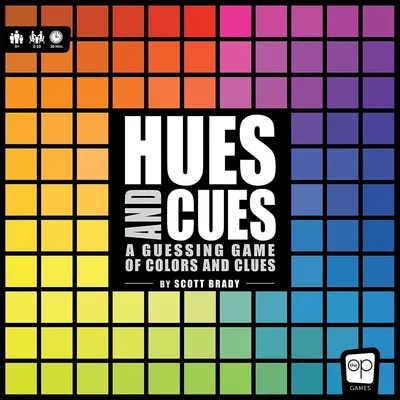
2020· 74 videos·Scott BradyMainly reviews and how-to-play
- Videos
- 74
- Creators
- 60
Hues and Cues is covered on BoardGameVideo.com by 28 reviews, 16 how-to-play guides, 9 recorded sessions, 9 unboxings, and 12 other videos.
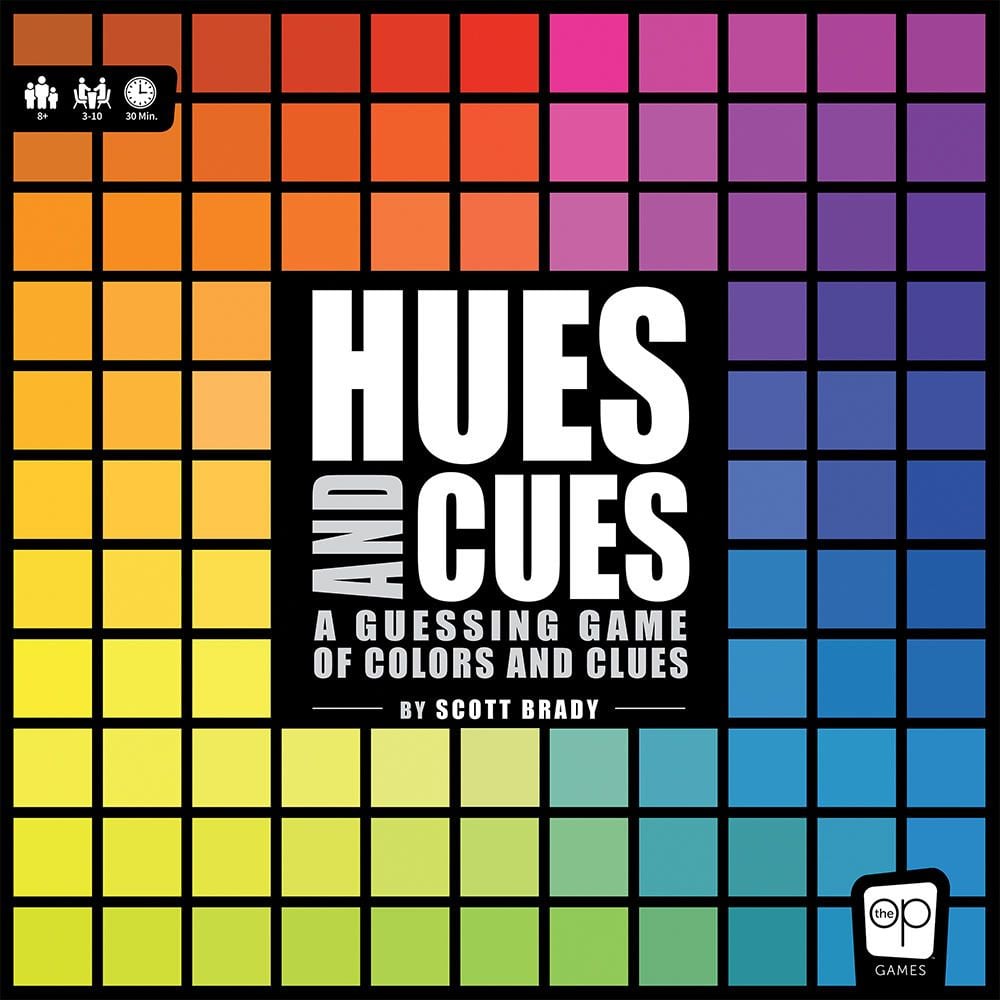
3 - 10 players30 minLight weight: Learn it in minutesView on BoardGameGeek ›About Hues and Cues, from BoardGameGeek:
What hue do you think of when we say "apple"? Hues and Cues is a vibrant game of colorful communication where players are challenged to make connections to colors with words. Using only one and two-word cues, players try to get others to guess a specific hue from the 480 colors on the game board. The closer the guesses are to the target, the more points you earn. Since everyone imagines colors differently, connecting colors and clues has never been this much fun! Gather around with three to ten people to play a quick and simple game with a prism of possibilities! First, a "cue giver" hides a specific color they've chosen out of a deck of cards. There are 480 shades on the board in front of you! After getting one- and two-word cues, everyone places their marker on which color they think is being described. "Coffee." Is it dark brown, as in freshly brewed? "Au lait." With milk. That means I should pick a lighter shade! Use examples from everyday life, from nature to pop culture, or materials and moods. Everyone around the table gets a turn to give cues and guess. The better your hints or guesses, the more points you earn. Play off others' experiences to narrow down what they have in mind! -description from the publisher
2022· 64 videos·Charlie Mackin, Harry Mackin, Drew TenenbaumMostly reviews and playthroughs
- Videos
- 64
- Creators
- 40
Décorum is covered on BoardGameVideo.com by 26 reviews, 6 how-to-play guides, 20 recorded sessions, 4 unboxings, and 8 other videos.
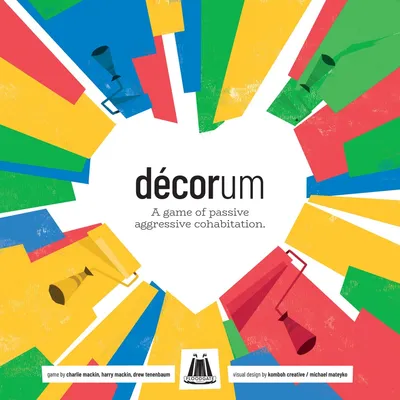
2 - 4 players30 - 45 minMedium weight: Teach it in one sittingView on BoardGameGeek ›About Décorum, from BoardGameGeek:
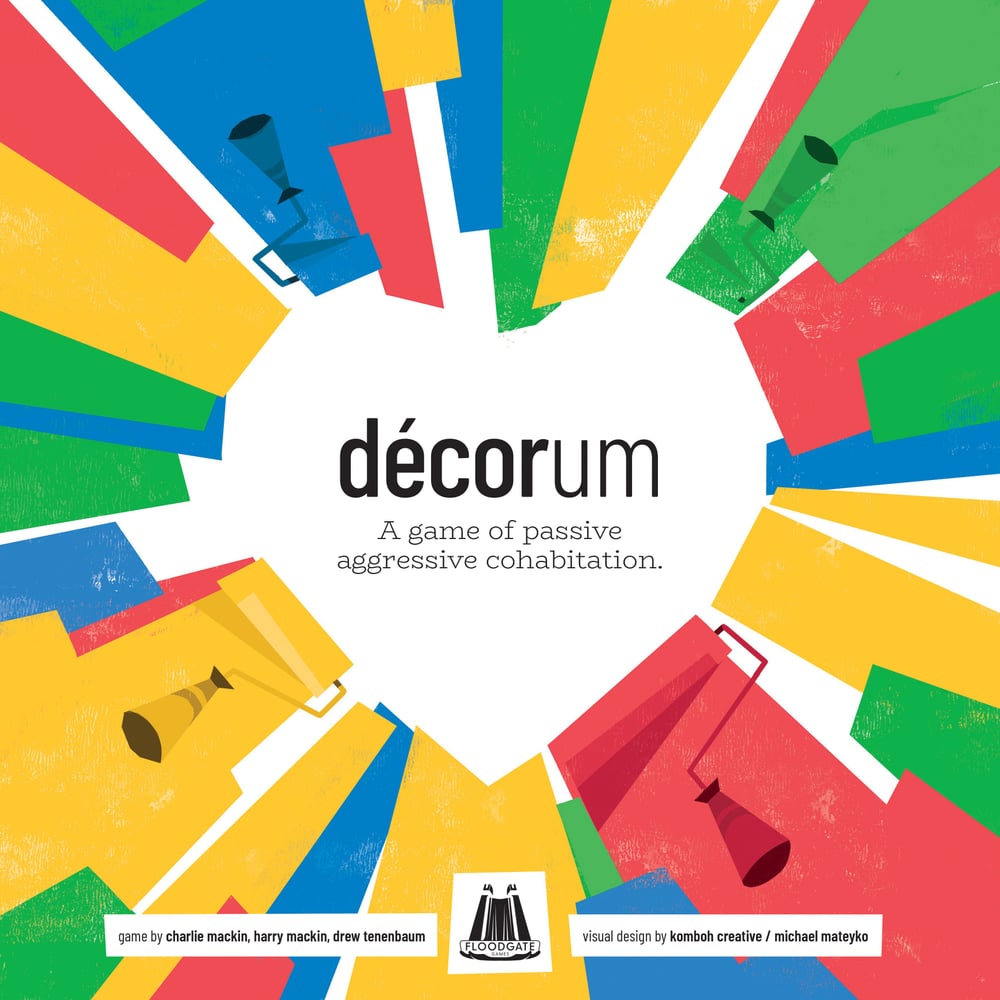
Decorum is a cooperative, hidden information game where you and your partner share the same objective: decorate your home in a way that makes you both happy. The problem is, different things make each of you happy and nobody says exactly what they need. Can you find a happy compromise, or is it time to move out?! -Play through 30 unique scenarios, each introducing new twists and challenges. -Keep your conditions a secret, they say how you want the house decorated. -Add, remove, and swap objects or repaint rooms to make the house look just right… for you. -Respond with “Love it”, “Hate it”, or “Fine with it” to work together toward a perfectly decorated home. -There is a solution for each scenario, the trick is figuring it out in time. At its heart, Décorum is a pretty straightforward logic puzzle. There are a small number of ways to arrange the internal pieces that meet all the requirements listed on the player's rule sheets simultaneously. The twist of Décorum is that it's also a hidden information game. No player has all of the rules. While playing, the players will have to watch their partner's moves just as carefully as they're planning their own. Even more crucially, they'll have to communicate why they're making the moves they're making–using the very limited means we've provided them. Décorum might be about solving a puzzle, but it's really a game about communication and compromise. The real challenge isn't just solving the problem with the limited information you and your players have; it's dealing with the frustrations that will inevitably occur when your partner does something that messes up your plan. In order to be successful in Décorum, there will come a point where both players will have to let go of their initial strategy for how they were going to finish the board and start paying attention to what their partner is doing instead. By introducing and providing an incentive to resolve conflict, Décorum mechanically encourages (or even requires) a positive form of compromise. Each player draws a "Scenario" card that lists a set of criteria of what types of décor a room must have or cannot have. For example "No room may contain a lamp" or "Every room must contain a wall hanging". Players keep their criteria secret. The play surface is a board displaying various rooms in a house. Each room has multiple items that can potentially be placed in the room. Players take turns placing, moving, or removing colored tokens on the board, where each token represents an item of home décor. Each token placed may conform with, or violate, the other players' criteria. After each token is placed, other players may state they like the item of décor, as placed, or they do not like the item of décor, as placed. Further discussion or explanation is not allowed. The game ends when all players' criteria are satisfied.

2018· 64 videos·Thomas Dagenais-LespéranceMainly reviews
- Videos
- 64
- Creators
- 54
Decrypto is covered on BoardGameVideo.com by 31 reviews, 12 how-to-play guides, 6 recorded sessions, 4 unboxings, and 11 other videos.
3 - 8 players15 - 45 minLight weight: Learn it in minutesView on BoardGameGeek ›About Decrypto, from BoardGameGeek:
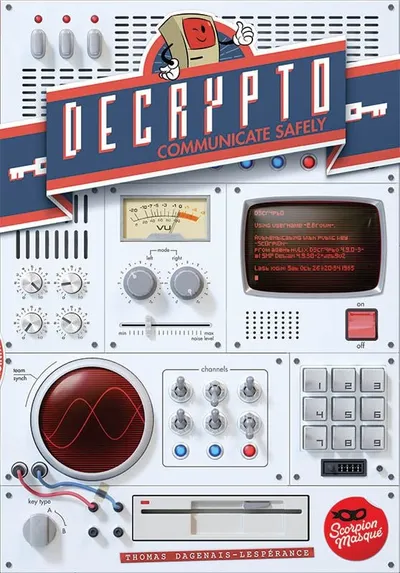
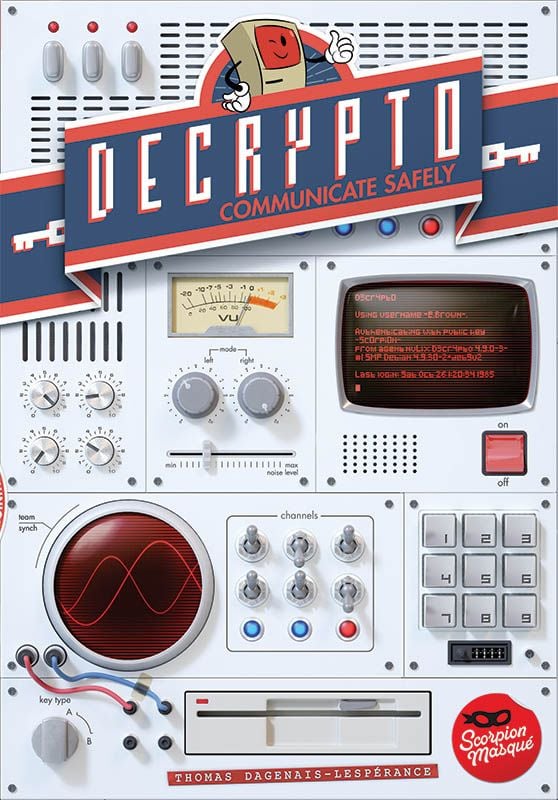
Players compete in two teams in Decrypto, with each trying to correctly interpret the coded messages presented to them by their teammates while cracking the codes they intercept from the opposing team. In more detail, each team has their own screen, and in this screen they tuck four cards in pockets numbered 1-4, letting everyone on the same team see the words on these cards while hiding the words from the opposing team. In the first round, each team does the following: One team member takes a code card that shows three of the digits 1-4 in some order, e.g., 4-2-1. They then give a coded message that their teammates must use to guess this code. For example, if the team's four words are "pig", "candy", "tent", and "son", then I might say "Sam-striped-pink" and hope that my teammates can correctly map those words to 4-2-1. If they guess correctly, great; if not, we receive a black mark of failure. Starting in the second round, a member of each team must again give a clue about their words to match a numbered code. If I get 2-4-3, I might now say, "sucker-prince-stake". The other team then attempts to guess our numbered code. If they're correct, they receive a white mark of success; if not, then my team must guess the number correctly or take a black mark of failure. (Guessing correctly does nothing except avoid failure and give the opposing team information about what our hidden words might be.) The rounds continue until a team collects either its second white mark (winning the game) or its second black mark (losing the game). Games typically last between 4-7 rounds. If neither team has won after eight rounds, then each team must attempt to guess the other team's words; whichever team guesses more words correctly wins.

2022· 64 videos·Fabien Gridel, Yoann LevetMostly reviews and playthroughs
- Videos
- 64
- Creators
- 53
Turing Machine is covered on BoardGameVideo.com by 26 reviews, 11 how-to-play guides, 17 recorded sessions, 6 unboxings, and 4 other videos.
1 - 4 players20 minMedium weight: Teach it in one sittingView on BoardGameGeek ›About Turing Machine, from BoardGameGeek:
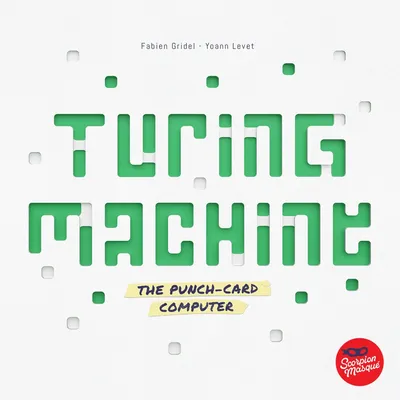
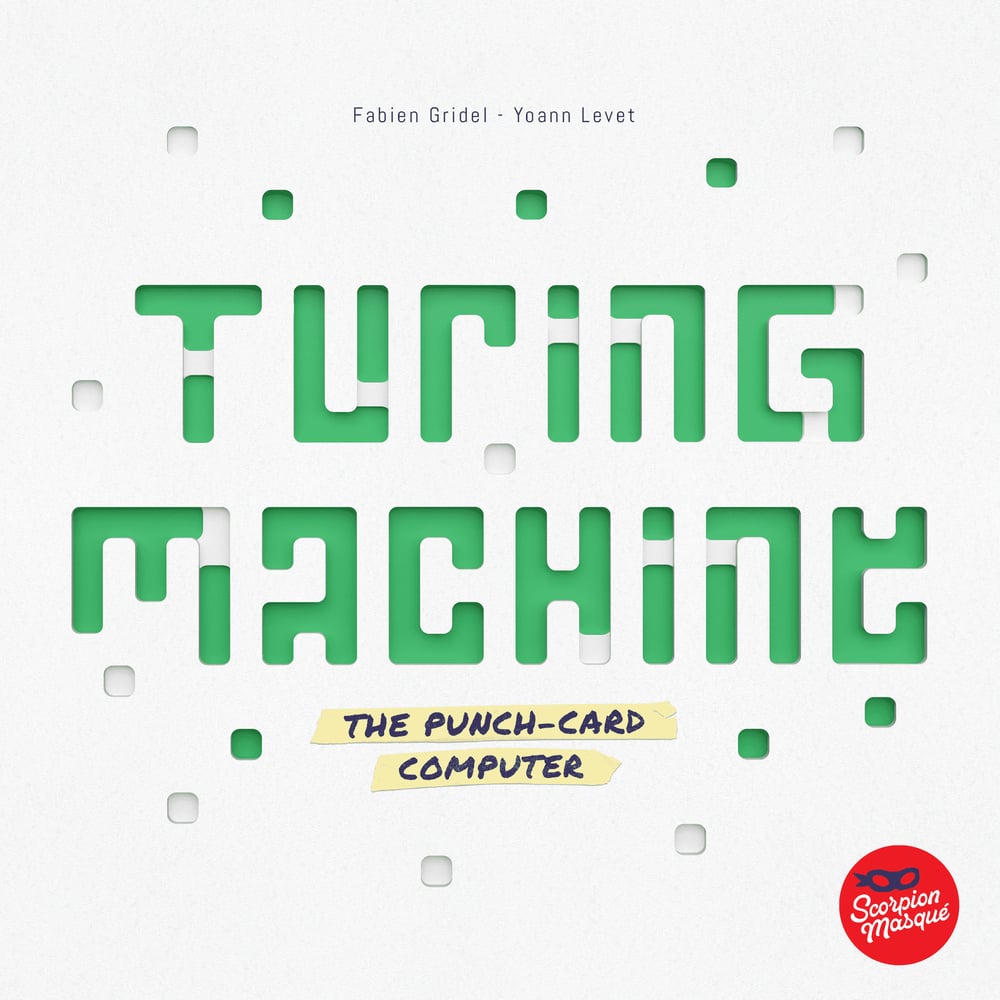
"Codes are a puzzle. A game, just like any other game." - Alan Turing in The Imitation Game. Turing Machine is a fascinating and competitive deduction game. It offers a unique experience of questioning a proto-computer that works without electricity or any sort of technology, paving the way for a new generation of deduction games. The Goal? Find the secret code before the other players, by cleverly questioning the machine. With Turing Machine, you'll use an analog computer with unique components made of never-before-seen perforated cards. The game offers more than seven million problems from simple to mind-staggeringly complex combinations, making the gameplay practically endless! Including the original competitive mode, you can combine your brain power as a team or try to beat the game itself while playing solo. Are you ready for an intense cerebral gaming experience?
2022· 61 videos·Ben GoldmanMainly reviews
- Videos
- 61
- Creators
- 45
Paint the Roses is covered on BoardGameVideo.com by 26 reviews, 9 how-to-play guides, 11 recorded sessions, 9 unboxings, and 6 other videos.
2 - 5 players50 - 70 minMedium weight: Teach it in one sittingView on BoardGameGeek ›About Paint the Roses, from BoardGameGeek:
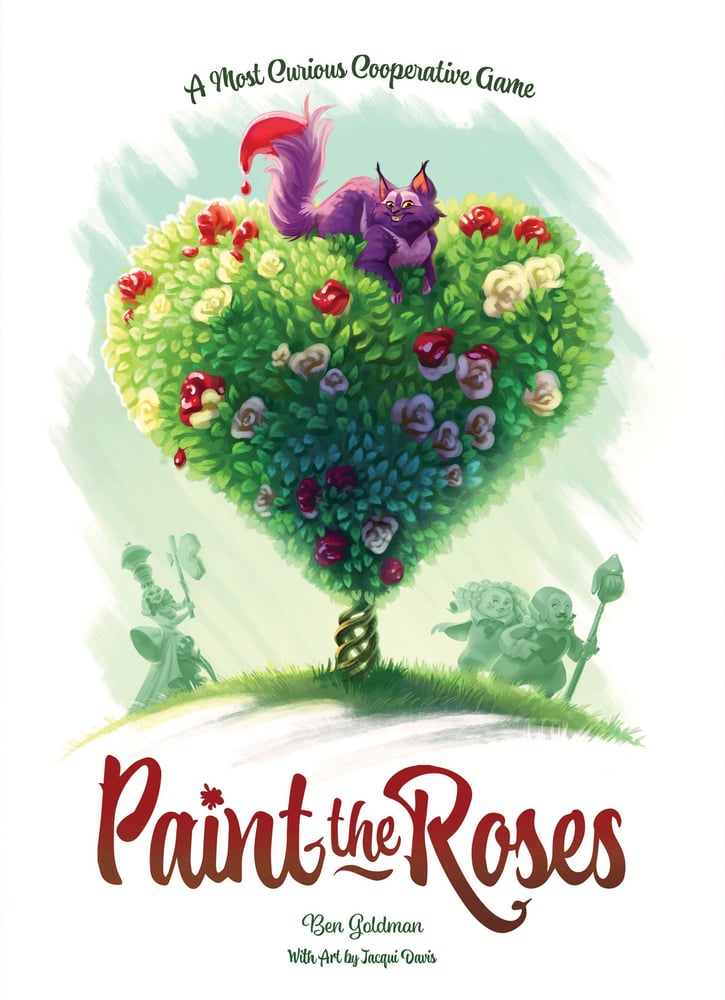
Paint the Roses is a 2-5 player cooperative logic deduction game that automatically adapts to your skill during play. Set in the puzzling world of Alice in Wonderland, you and your friends are the newly appointed Royal Gardeners. You are working together to finish the palace grounds according to the whims of the Queen of Hearts. Use strategy, logic, and teamwork to finish the garden whilst staying one step ahead of the Queen, otherwise, the last thing you hear will be, "Off With Their Heads!". The Queen's whims are shared via cards, secret instructions each player is given into how the garden should be arranged. Her whims are always changing, so as soon as you solve one, a new one is in your hand. Every turn, together as a team you must guess at least one of these secret whim cards. You can't say what your card shows, but by carefully placing a new shrub tile into the garden (taken from those available in the Greenhouse) you are able to reveal clues, tokens that will show any matches between the arrangement in the garden and the secret whims each player holds in their hands. Although you can't discuss your own secret whim card, you can openly discuss other players'. Share your theories at the table and then make a guess. Correctly guessing a whim will move you forward on the score track, but the Queen is always following and her speed automatically adjusts based on your current score. Guess incorrectly and the Queen moves twice as fast, her axe ever closer to your neck. -description from the publisher

2023· 28 videos·Matthew O'Malley, Ben RossetMainly reviews
- Videos
- 28
- Creators
- 22
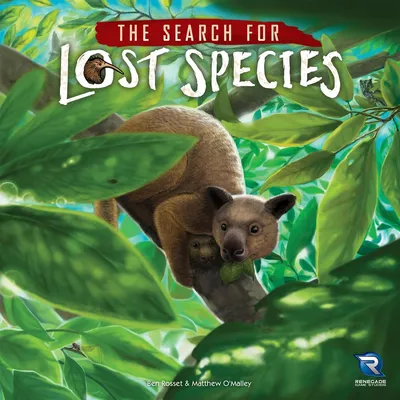
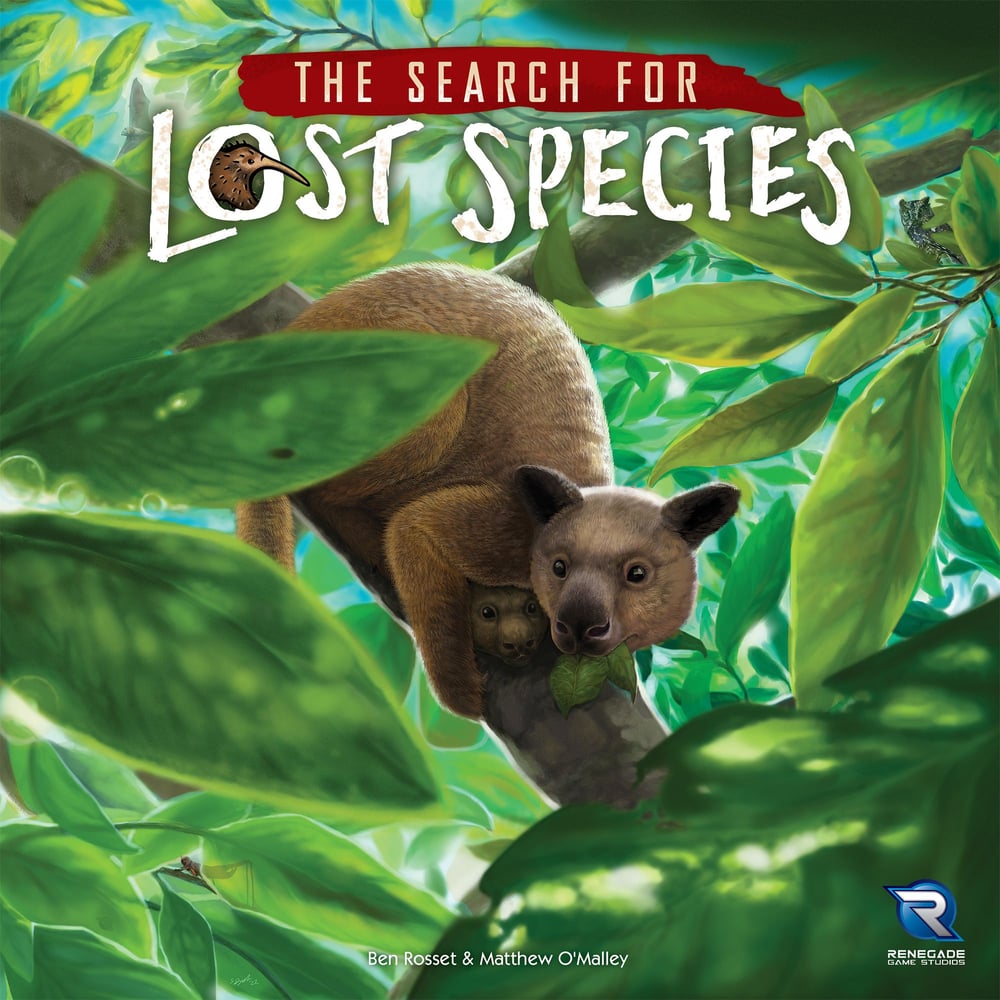
The Search for Lost Species is covered on BoardGameVideo.com by 14 reviews, 1 how-to-play guides, 6 recorded sessions, 5 unboxings, and 2 other videos.
1 - 4 players60 - 75 minHeavy weight: Expect a long teachView on BoardGameGeek ›About The Search for Lost Species, from BoardGameGeek:
Thousands of plants and animals have been discovered but haven't been seen for decades and could be on the brink of extinction. In order to save these species, we must first find them again. The Search for Lost Species is a game about this real-world search. You are scientists on an expedition to find one of those lost species, focusing on those in Indonesia and Papua New Guinea. The organization Re:wild has compiled a list of lost species around the world. They engage in expeditions with numerous partners to find these Lost Species, and encourage others to conduct their own expeditions to rediscover these amazing Lost Species. In this deduction game, you'll work to locate these lost species and put them back on the map! The game play changes from The Search for Planet X include: Players use a combination of deduction and movement to narrow down the possible habitats of the lost species. Players can use a special expedition action to search a specific habitat for a lost species. Incorporates cards that make the game asymmetric and provide more variability. Features: Report your sightings through the free app to determine if they are confirmed. Double-sided board provides two different island maps to explore. 6 different Lost Species to find! -description from the publisher

2015· 18 videos·Oleksandr Nevskiy, Oleg SidorenkoMainly reviews and unboxings
- Videos
- 18
- Creators
- 12
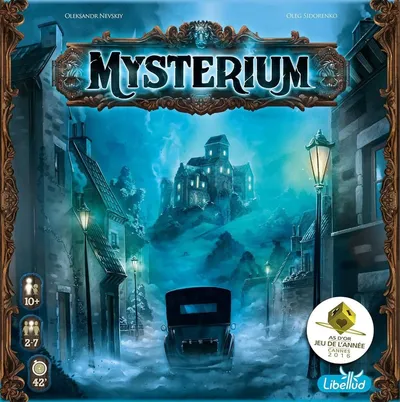
Mysterium is covered on BoardGameVideo.com by 4 reviews, 1 how-to-play guides, 2 recorded sessions, 4 unboxings, and 7 other videos.
2 - 7 players42 minLight weight: Learn it in minutesView on BoardGameGeek ›About Mysterium, from BoardGameGeek:
In the 1920s, Mr. MacDowell, a gifted astrologer, immediately detected a supernatural being upon entering his new house in Scotland. He gathered eminent mediums of his time for an extraordinary séance, and they have seven hours to make contact with the ghost and investigate any clues that it can provide to unlock an old mystery. Unable to talk, the amnesiac ghost communicates with the mediums through visions, which are represented in the game by illustrated cards. The mediums must decipher the images to help the ghost remember how he was murdered: Who did the crime? Where did it take place? Which weapon caused the death? The more the mediums cooperate and guess well, the easier it is to catch the right culprit. In Mysterium, a reworking of the game system present in Tajemnicze Domostwo, one player takes the role of ghost while everyone else represents a medium. To solve the crime, the ghost must first recall (with the aid of the mediums) all of the suspects present on the night of the murder. A number of suspect, location and murder weapon cards are placed on the table, and the ghost randomly assigns one of each of these in secret to a medium. Each hour (i.e., game turn), the ghost hands one or more vision cards face up to each medium, refilling their hand to seven each time they share vision cards. These vision cards present dreamlike images to the mediums. Once the ghost has handed cards to the final medium, players have two minutes to place their token on a suspect. They may also place clairvoyancy tokens on the guesses made by other mediums to show whether they agree or disagree with those guesses. Once a medium has correctly guessed the suspect, location and weapon, they move their token to the epilogue board. If one or more mediums fail to identify their proper suspect, location and weapon before the end of the seventh hour, then the ghost has failed and dissipates, leaving the mystery unsolved. If, however, they have all succeeded, then the ghost has recovered enough of its memory to identify the culprit.


2017· 17 videos·John KeanMostly playthroughs and reviews
- Videos
- 17
- Creators
- 15
Black Sonata is covered on BoardGameVideo.com by 5 reviews, 3 how-to-play guides, 7 recorded sessions, 1 unboxings, and 1 other video.
1 players30 minMedium weight: Teach it in one sittingView on BoardGameGeek ›About Black Sonata, from BoardGameGeek:
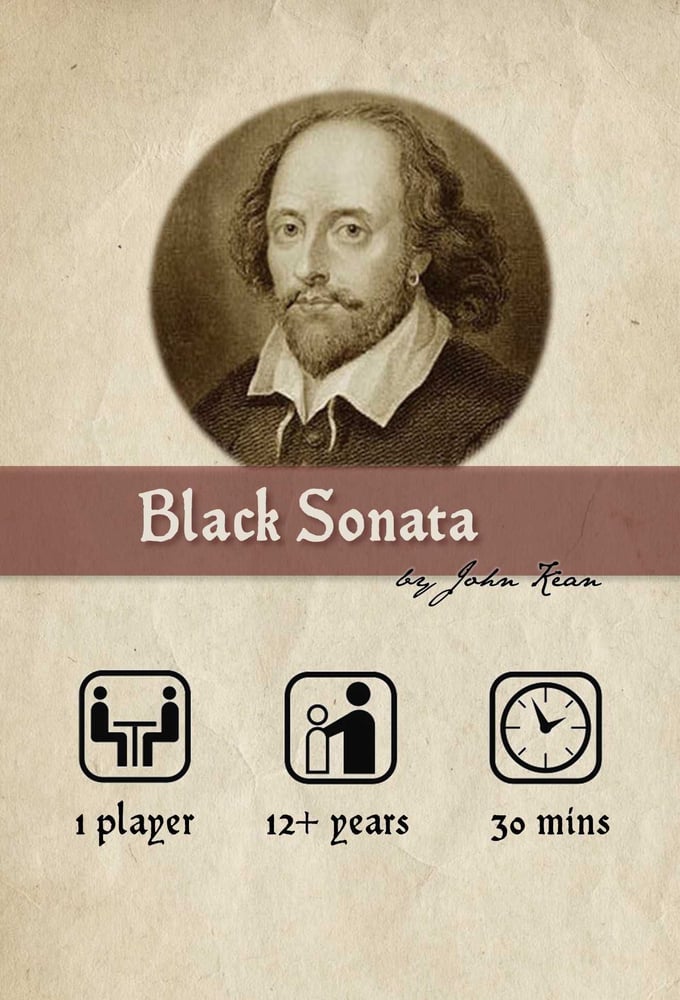
For more than four centuries scholars have argued over the identity of the mysterious Dark Lady of William Shakespeare's sonnets. According to the sonnets, the Dark Lady seduced the poet and held him in an agonised thrall while also conducting an affair with the Fair Youth whom Shakespeare also loved. In Black Sonata you will find yourself in Shakespeare's London, circa 1600, in pursuit of the shadowy Lady. A specially ordered deck of cards determines her hidden movements from place to place. You must deduce her location and then intercept her to catch a glimpse and gain a clue to her identity. You will need several clues to deduce her identity, but with each clue gained the Lady becomes harder to track. Black Sonata combines hidden movement and logical deduction into a unique solitaire steeped in literary history. Can you finally solve English literature's greatest mystery? Or will the Dark Lady elude you, melting from your grasp like a curl of smoke and promises?

2023· 9 videos·Friends of Aseema, James Miller (I)Mainly reviews and unboxings
- Videos
- 9
- Creators
- 8
Hooky is covered on BoardGameVideo.com by 3 reviews, 1 how-to-play guides, 1 recorded sessions, 2 unboxings, and 2 other videos.
3 - 5 players45 - 60 minMedium weight: Teach it in one sittingView on BoardGameGeek ›About Hooky, from BoardGameGeek:
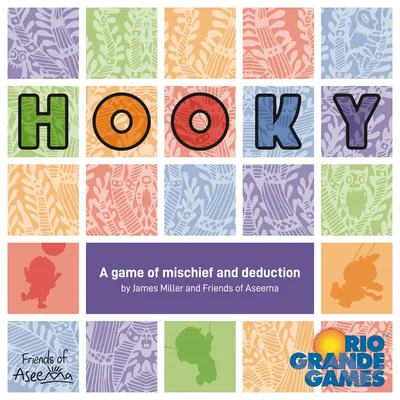
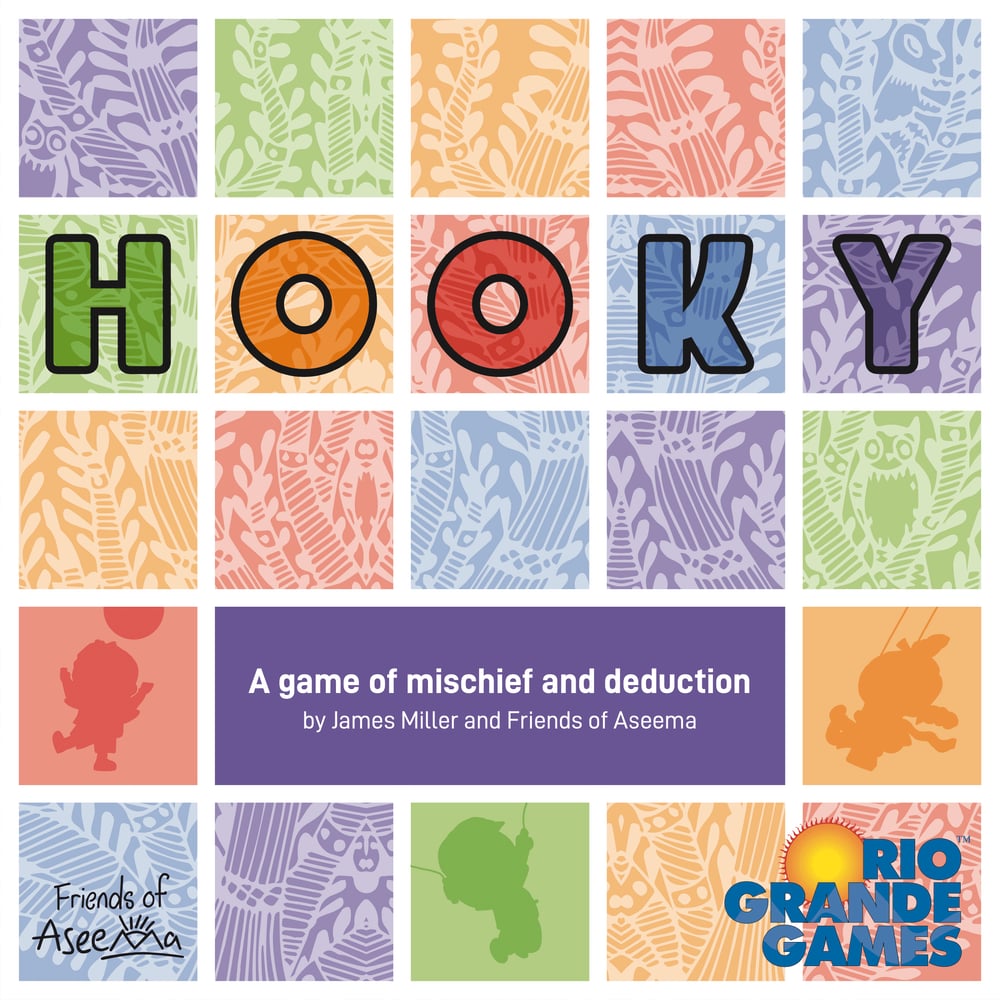
Welcome to the wonderful world of Hooky. Of the 26 children who should be in classes today, three are off playing hooky. It is morning before school starts, and in the chaos, your job as a homeroom teacher is to figure out which three are missing. There are some children off in the playground who are late getting to their homerooms, and you will learn their identities as they straggle in. The three missing students are represented by three hooky cards. You earn points by correctly deducing the identity of the three hooky cards and thereby finding the three missing students. You can also earn points by learning which students are in the other players' classrooms (i.e., hands of cards). The player with the highest score wins. Let the search begin! More on the mechanics: Hooky is a deduction game with a little sprinkle of push-your-luck if you want. Each student is represented by a letter of the alphabet. All players are dealt a few cards and therefore have some knowledge of which students are definitely not missing. To solve the mystery, you will ask for and give clues using five-letter words of your choice. The person asked gives a number as an answer, communicating how many of the letters in the words they have in hand, but not which. By learning which players have which letters (students), you will begin to suspect which students are off playing Hooky and which players have what information.


2015· 2 videos·Darrell Louder, Mike Mullins
1 - 2 players5 - 20 minLight weight: Learn it in minutesView on BoardGameGeek ›About Bottom of the 9th, from BoardGameGeek:
It's the bottom of the ninth inning. The game is tied. It's down to the home team to score one run to win it all. Unfortunately, the home team is staring down the league's best closer. A dice and card game for two players, Bottom of the 9th brings all the excitement of the final three outs of a baseball game into a compact 5-20 minute game session. With variable player strengths, bluffing/deduction, and die-rolling, only the pitcher knows what's coming and the batter needs to keep his eyes peeled. Bottom of the 9th is played over the course of three outs, or four hits (for one run scored) - whichever occurs first. Bottom of the 9th includes tons of variable player powers, myriad customizable line-ups, the possibility of two added expansion packs, and rules for advanced league and solo play to keep gamers wanting to play ball time and time again.


Explore more videos
















Description provided by BoardGameGeek on YouTube:
What are Mike & Nick deducing? Check out the latest BGG Top 10 with the Brothers Murph and find out! In this episode Mike & Nick share their Top 10 Deduction Games! 0:00 Intro 0:57 #10 - Hues and Cues - Scott Brady - The Op BGG: https://boardgamegeek.com/boardgame/302520/hues-and-cues 3:06 #9 - Bottom of the 9th - Darrell Louder, Mike Mullins - Dice Hate Me Games BGG: https://boardgamegeek.com/boardgame/166286/bottom-of-the-9th 5:28 #8 - Mysterium - Oleksandr Nevskiy, Oleg Sidorenko - Libellud BGG: https://boardgamegeek.com/boardgame/181304/mysterium 7:19 #7 - Décorum - Charlie Mackin, Harry Mackin, Drew Tenenbaum - Floodgate Games BGG: https://boardgamegeek.com/boardgame/344554/decorum 9:39 #6 - Decrypto - Thomas Dagenais-Lespérance - Scorpion Masqué BGG: https://boardgamegeek.com/boardgame/225694/decrypto 12:11 #5 - Hooky - James Miller, Friends of Aseema - Rio Grande Games BGG: https://boardgamegeek.com/boardgame/377480/hooky 14:50 #4 - The Search for Lost Species - Ben Rosset, Matthew O'Malley - Renegade Game Studios BGG: https://boardgamegeek.com/boardgame/358557/the-search-for-lost-species 17:20 #3 - Turing Machine - Fabien Gridel, Yoann Levet - Scorpion Masqué BGG: https://boardgamegeek.com/boardgame/356123/turing-machine 19:48 #2 - Black Sonata - John Kean - Side Room Games BGG: https://boardgamegeek.com/boardgame/231218/black-sonata 22:25 #1 - Paint the Roses - Ben Goldman - NorthStar Game Studio BGG: https://boardgamegeek.com/boardgame/253759/paint-the-roses 25:22 Wrap-up
Related Content
game
More Hues and Cues videos
game
More Décorum videos
game
More Decrypto videos
game
More Turing Machine videos
game
More Paint the Roses videos
game
More The Search for Lost Species videos
game
More Mysterium videos
game
More Black Sonata videos
game
More Hooky videos
game
More Bottom of the 9th videos
channel
More videos from this channel