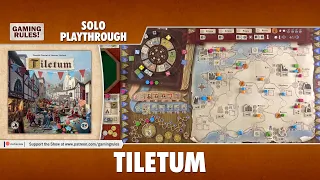
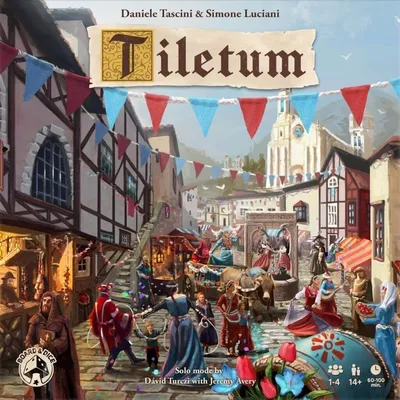
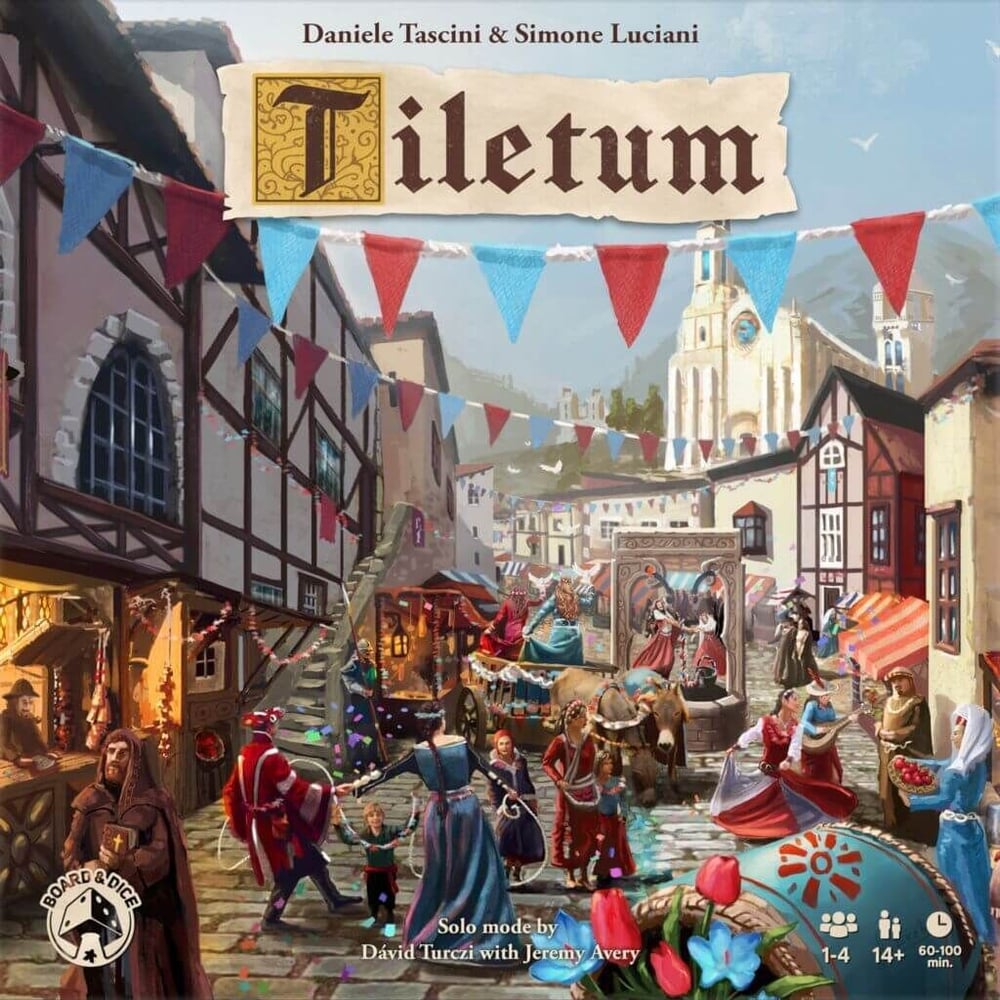
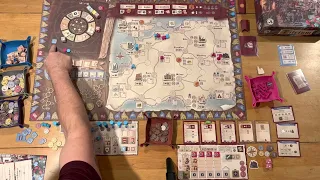
Watch “Tiletum - Solo Playthrough,” a board game review for Tiletum from Gaming Rules! on BoardGameVideo.
Description provided by Gaming Rules! on YouTube:
Gaming Rules! is a channel providing you with How-to-Play videos, Playthroughs, and other content.
Support the channel on Patreon: https://www.patreon.com/gamingrules
Find out more about the game here: https://boardgamegeek.com/boardgame/351913/tiletum
If you are on boardgamegeek, please join and subscribe to the Gaming Rules! guild: https://boardgamegeek.com/guild/2258
This is not a sponsored video. A copy of the game was provided by the publisher.
All advertising revenue from this video is donated to charity.
Timestamps
00:00:00 Countdown and opening credits
00:02:37 Introduction
00:04:20 Overview
00:09:54 Playthrough Round 1
00:54:33 Round 2
01:32:21 Round 3
02:00:27 Round 4
02:18:10 Final Scoring
02:20:08 End game discussion
02:29:01 End Credits
Mainly reviews. Tiletum is covered on BoardGameVideo.com by 41 reviews, 15 how-to-play guides, 10 recorded sessions, 17 unboxings, and 7 other videos.
1 - 4 players
60 - 100 min
Heavy weight: Expect a long teach
About Tiletum, from BoardGameGeek:
In Tiletum, you and fellow players take on the roles of rich merchants traveling throughout Europe, from Flanders to Venice, during the Golden Age of the Renaissance.
You will travel to various cities to acquire trade contracts for wool and iron, as well as a collection of their coats of arms. You must collect the required resources to fulfill contracts, invest in the construction of monumental cathedrals, gain the favor of noble families, and participate in important fairs where your main business occurs. You will also use the services of notable people who will be welcomed into your houses. You will thus gain prestige that will make you the most famous merchant of the Renaissance.
Tiletum is a dice management game in which dice have a dual function: gaining resources and performing actions. A certain number of dice will be rolled each round. On your turn, choose a die to gain the number of corresponding resources equal to the value of the die, then perform the associated action. The power of the action is inversely proportional to the value of the die, so the fewer resources you gain, the more powerful the actions you take and vice versa.