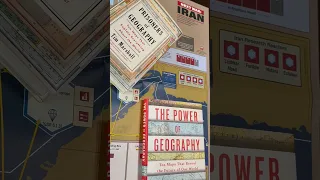
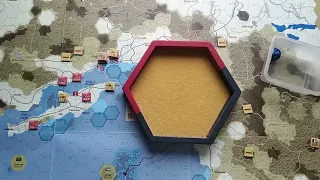
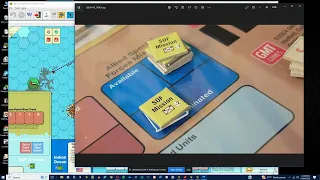
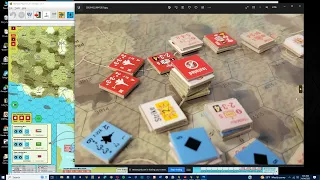
Watch “Strait of Hormuz - "It’s Geography, stupid!",” a board game video for Next War: Iran from KilroyWasHere on BoardGameVideo.
Description provided by KilroyWasHere on YouTube:
This is the Strait of Hormuz: the narrow entrance to the Persian Gulf and one of the most important maritime chokepoints on Earth. And right now, Iran is demonstrating exactly why it matters.
Iran says the Strait is under its control and management, while commercial shipping has been severely disrupted and the United States is contesting that claim. The result is a struggle not simply over territory—but over who can actually guarantee passage through these waters.
And if you’ve read Tim Marshall, this should sound very familiar. In The Power of Geography, Marshall specifically identifies Iran’s position on the Strait of Hormuz as one of the geographic realities that makes the country a major geopolitical power.
Iran doesn’t have to defeat the United States Navy in a conventional naval battle.
It just has to make this narrow stretch of water dangerous enough. Mines, missiles, drones, submarines, fast attack boats—or simply the credible threat of attack—can increase insurance costs, discourage shipping, and potentially disrupt energy supplies around the world. That is geography acting as a force multiplier.
And unremarkably, wargames have been modeling essentially this exact problem for years.
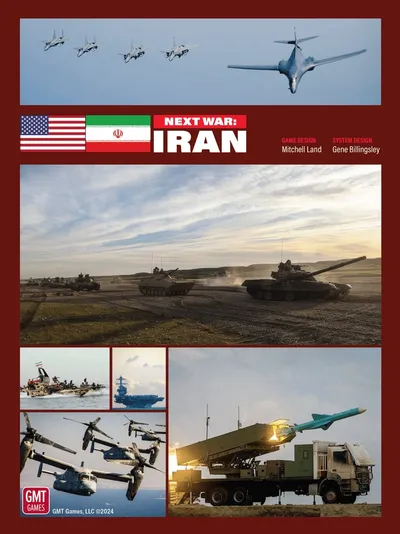
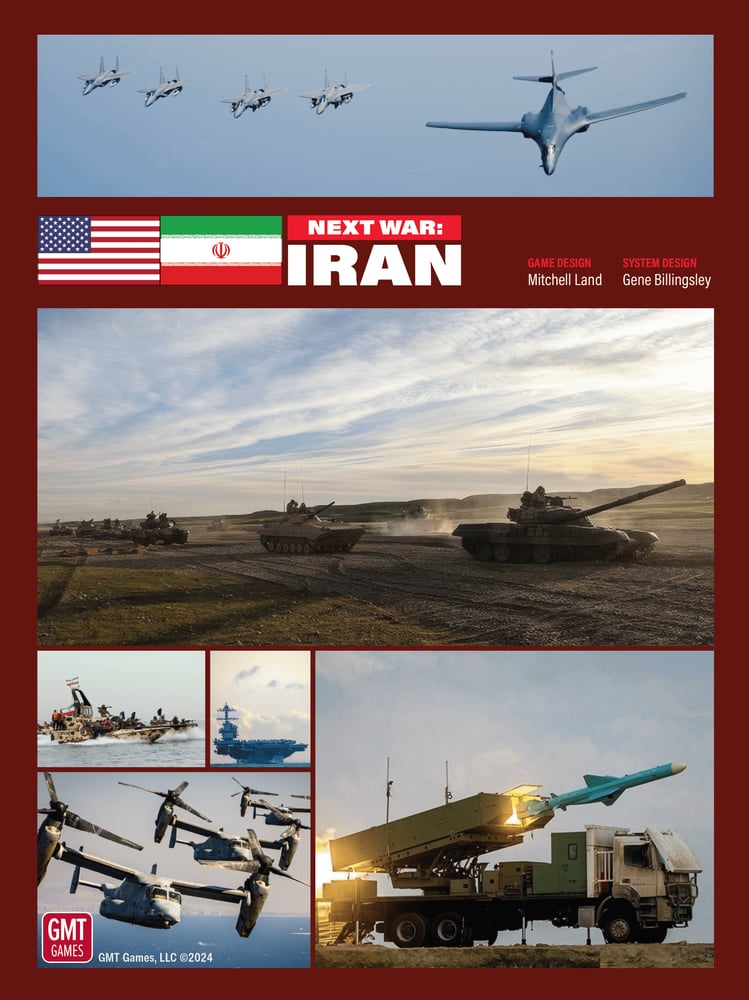
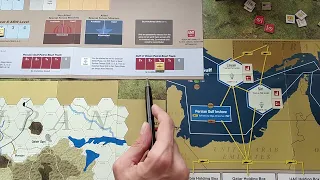
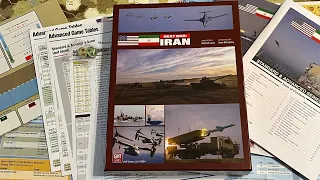
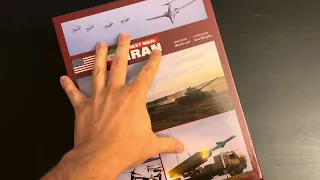
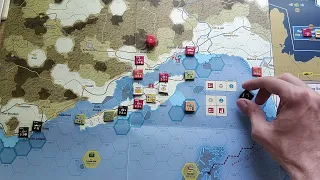
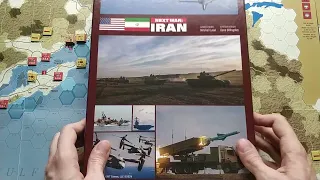
GMT’s Next War: Iran begins with Iran mining and closing the Strait of Hormuz, forcing a U.S.-led coalition to try to reopen it:
Scenario 17.1.3 — “Persian Incursion”
This is the 16-turn Standard Campaign Game.
Its scenario introduction explicitly says that Iran has been harassing Western shipping and seizing tankers transiting Hormuz. Iran then decides to blackmail the West and closes the Strait to traffic. That's not merely background flavor for the game. The campaign literally begins from an Iranian closure of Hormuz.
There's an even more focused scenario:
Scenario 17.1.1 — “Qeshm If You Can”
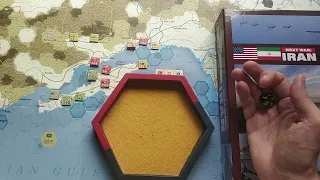
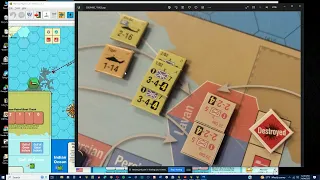
Its premise begins after Iran closes the Strait of Hormuz. Allied planners attempt to seize Qeshm Island, immediately adjacent to the Strait, as a foothold for subsequent operations. Iran starts with two mine-density markers in the Strait of Hormuz, plus submarine and patrol-boat capabilities.
And Scenario 17.1.2, “Any Old Port in a Storm,” follows the same operational logic: the Allies realize that an attempt to secure the Strait requires a functioning Iranian port to support operations, so the scenario centers on capturing one.
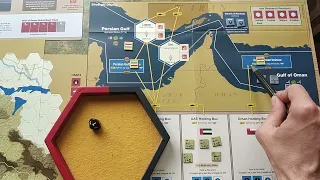
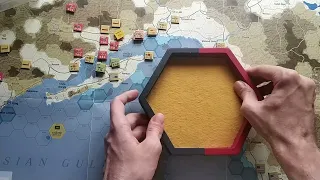
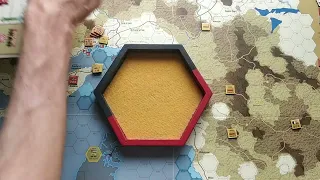
The rules reinforce this further. The designer specifically tells players that the rules for “mining and clearing the Strait of Hormuz” are among the game's important mechanics. There is even an optional Advanced Game rule, 16.16 “Strait of Hormuz Movement,” forcing naval movement physically through the appropriate all-sea hexes rather than allowing the Allied player to bypass the chokepoint by moving abstractly between the Persian Gulf and Gulf of Oman boxes. The designer explicitly says this prevents Allied ships from avoiding Iranian patrol-boat interference.
It is one thing to possess overwhelming military power. It is another thing entirely to project that power into geography that favors your opponent. That’s the central lesson of Tim Marshall’s Prisoners of Geography and The Power of Geography:
Technology changes.
Armies change.
Governments change.
But mountains, coastlines, deserts—and narrow stretches of water—keep shaping what nations can and cannot do.
Hegseth's Hormuz Problem - https://youtu.be/eozyWhSbt_A?si=Xb2mGdmUG5cvVAqs
Prisoner' of Geography - https://youtu.be/vcrpEkHgSvs?si=kCTBFS3sn-rvmRte
Next War: Iran - https://youtu.be/uRFVWEvnsKI?si=35wujFq2wxOvdj73