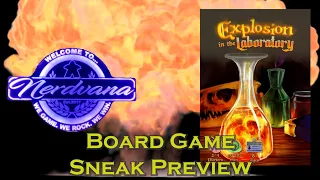
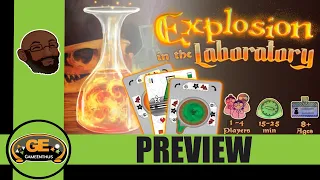
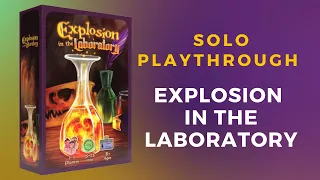
Watch “Officer Brush Plays Explosion in the Laboratory,” a gameplay video for Explosion in the Laboratory on BoardGameVideo.
Description provided by Officer Brush Talks About Stuff on YouTube:
Welcome to Officer Brush Talks About Stuff
In the episode we talk with Corey, the game designer behind the micro game Explosion in the Laboratory.
Check it out on Backerkit!
https://www.backerkit.com/c/weird-giraffe-games/explosion-in-the-laboratory
This is a channel where I can explore all of the things I like:
From Gaming to Painting to talks about Board Games.
Feel free to check out my Patreon and support videos like this:
https://www.patreon.com/officerbrushtalksaboutstuff
Visit my website:
https://officerbrush.com/
Mainly reviews and playthroughs. Explosion in the Laboratory is covered on BoardGameVideo.com by 3 reviews, 1 how-to-play guides, 3 recorded sessions, 1 unboxings, and 2 other videos.
1 - 4 players
20 min
Light weight: Learn it in minutes
About Explosion in the Laboratory, from BoardGameGeek:
Explosion in the Laboratory is a push-your-luck 27 card game where you mix chemicals to create valuable compounds and try not to cause a major explosion! Set in the Fire in the Library universe, it has the same press your luck and strategy from the base game, but in a small portable science-y version!
In Explosion in the Laboratory, you are all chemists mixing compounds in an experimental laboratory. Caution! Being careless could cause disaster. A fire would be unfortunate, as there is a library not too far away.
During the game players will take turns trying to score points by following a set order of phases: Planning, Mixing Compounds, Scoring Beakers, and triggering Unstable Mixtures.
The planning phase allows players to play 1 time use special ability cards (process cards) that can effect scoring for your turn. Mixing compounds has players laying out chemical cards from the deck to find out what chemicals they must mix based on the fire level in the laboratory (the higher the fire level grows the more volatile the mixtures become). The chemicals mixed can be placed in your available flasks for the turn and the process is repeated until you decide to stop to score or an explosion is triggered by an unstable mixture with certain combos of chemicals in your flasks. The more chemicals you can safely mix the more points you are able to score, but your luck may run short when the wrong chemicals get mixed causing an explosion (and ending your turn without scoring).
Beaker cards sitting in the middle of the table act as a game timer and indicate the fire level and scoring potential of mixtures. As players score beakers and at the end of each round beaker cards rotate changing the point values of the chemicals you've mixed while also moving it closer to the end of the game as once a beaker reaches it's boiling point it will bring an explosive and abrupt end to the game. Whichever player earned the most points throughout the game wins.
-description from the publisher