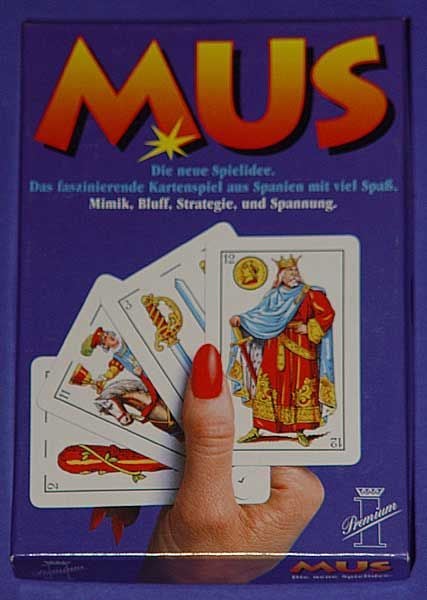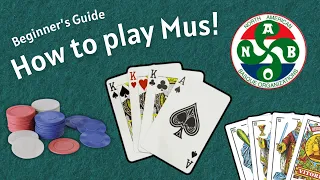
How to Play Mus: The Basque Card Game!

Watch “How to Play Mus: The Basque Card Game!,” a how-to-play guide for Mus from CarnageFGC on BoardGameVideo.
Description provided by CarnageFGC on YouTube:
00:00 Introduction 00:19 Needed items + Objective 01:12 Mus or Mintza 02:28 Highs 03:48 Lows 04:17 Pairs 05:06 Game/Jokua 05:56 Point/Puntuak 06:35 Counting Points + Tiebreakers 09:29 Counting: Casually vs carefully 09:53 NABO Tournaments 10:08 Signals 11:11 Royal 31 11:30 Seaik Mus (6 players) 12:03 Basque Language Index 12:55 Simulated Example Hand 14:55 Ending There will be more specific timestamps added later in the pinned comments. Please contact me if you are interested in assisting with, Spanish, French, or Basque translations. RESOURCES: Beginner’s Mus Guide (to print): https://nabasque.eus/mus/How_to_Play_Mus.pdf Detailed Mus Guide: https://ontariobasqueclub.org/learn_mus.html Official NABO Tournament Rules: https://nabasque.eus/mus/NABO_mus_rules.pdf 2025 NABO Mus Tournament Calendar: https://gyazo.com/549729b4890369de661fd32ad4e8b22e Songs (in order): *Agur Chiberua (marche)* https://youtu.be/XvCN4ipcH_A?si=CHUUe5P5eU5XKsfU *Canpanatarak (fandango avec choeurs)* https://youtu.be/wydefDQVMrE?si=ArV-FzRxfu1fGBv2 *Mutchikoak (saut basque)* https://youtu.be/MrCyf3keee8?si=tEqdoKyBDLK8CiRq *Ramuntcho (pasa calle)* https://youtu.be/bnSGbkWHFrg?si=x4TFQY2PDjSD2e1g *Jake Bar - Reborn* https://youtu.be/4tdlPtpvQ-s?si=34oxh36oeU16gdtr ACTORS: Mus Players: ↗️ Carlos Ruiz ↖️ Benjamin Manley ↙️ Patrick Seymour ↘️ Jean Pierre "Pampi" Etchechury Signals: Steven San Sebastian (Illegal Signals) Gavin Jean Baptiste Iribarren (Legal Signals) Seiak Mus Players: Santa Fe Basque: ↖️ Louise Indart ⬅️ Petan "Bert" Ossinalde ↙️ Jane Etchebehere ↗️ Martin Irigoyen ➡️ Janet Etchbehere ↘️ Jean Chooch Rocklin Basque Picnic: ↖️ Javier Alzugaray ⬅️ Juan Vizcay ↙️ Manuel Gamio ↗️ Tony Espinal ➡️ Nick Vizcay ↘️ Jean Goni The biggest thank you to the Etchechury family for helping me initially learn the game and allowing me to film the majority of the footage at their business: The Santa Fe Basque Restaurant & Bar in Fresno, CA! All footage was recorded on iPhone 15 Pro Max. The NABO logo on the thumbnail can be taken out upon request. Mus is played slightly different internationally, but this video displays North American style Mus! Corrections: - It's Enbido, not Embido
4 players
10 min
Medium weight: Teach it in one sitting
About Mus, from BoardGameGeek:
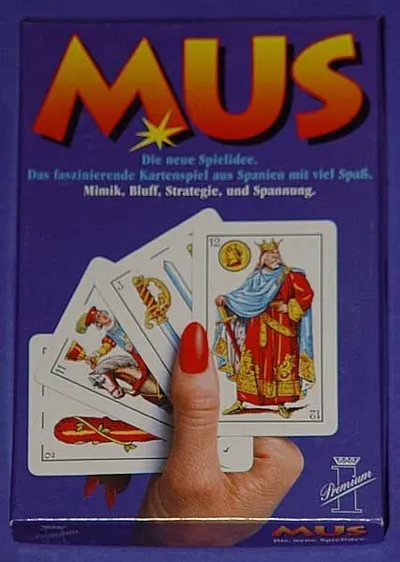
This is a Spanish card game born in Basque Country. The first reference about this game goes back to 1745, when Don Manuel de Larramendi, philologist and Jesuit basque, quoted it in the trilingual dictionary (Basque-Spanish-Latin). It is played by two opposing pairs of players with the Spanish deck, which is a deck of 40 cards without eights or nines and no jokers. Usually all 4 "3" cards count as kings and all four "2" cards count as aces. It has a variety of different rules in the different regions of Spain. In every round of the game Mus (discard) is either agreed or stopped. Then, four bets are made on the same hand of cards: * Grande (Biggest): playing for the highest combination of cards; handiak (big ones) in Basque. * Pequeña or Chica (Smallest): playing for the lowest combination of cards. * Pares (Pairs): playing for the best matching card combination; pareak in Basque. * Juego (Game): playing for cards total values of 31 or more. Sometimes replaced by a Punto (Point) special round; jokua in Basque. At last, accepted bets and passes are counted until one of the pairs of players reaches the previously agreed amount (different standards in different regions of Spain, but most commonly 30). The pair of players winning most out of three games wins a vaca (which means cow in spanish), and the pair winning most out of three vacas win the match. One other special feature of Mus is that it is a mostly verbal game, with little card-involving action, limited to deal and discard (if any). After cards are dealt and Mus (discard) is stopped, all rounds are played verbally, bets are called, passed, accepted or rejected but cards are not shown, dealt or touched in any further way, and the player only is obliged to show them in the end of the round if needed in order to resolve any accepted bet. This makes it a poor card game to watch other people play, and learning to play it through only watching is rather difficult in comparison with other card games.
Categories
Card Game
Mechanics
Betting & BluffingTeam-Based Game