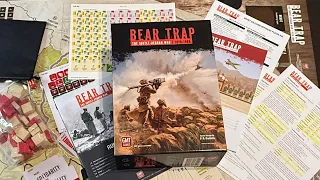
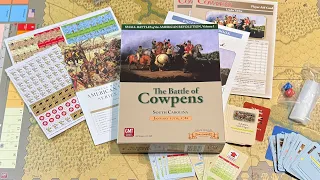
Description provided by KilroyWasHere on YouTube:
Buy from Noble Knight and Support the Channel! https://www.nobleknight.com/?awid=1521
Berg - https://www.youtube.com/playlist?list=PLmY-JH-M5G3BwyFB6VdZqVloUeGydaJ_t
GBACW - https://www.youtube.com/playlist?list=PLmY-JH-M5G3DJn2h98gTUtRpLhy-9G2HN
Origins at SPI (1976–1981)
• Launch (1976): Terrible Swift Sword: Three Days at Gettysburg (SPI), designed by Richard H. Berg, set the regimental-scale template and became a monster-game bestseller.
• Follow-ups that expanded the system:
• Stonewall (Kernstown, 1978, S&T magazine game)
• Bloody April (Shiloh, 1979)
• Then SPI streamlined the rules into a standardized “series” format for multiple boxed titles—effectively a “Blue & Gray for adults”—issued as GBACW volumes across 1980–81, including Pea Ridge (1980), Drive on Washington (Monocacy, 1980), Wilson’s Creek (1980), Cedar Mountain (1981), Jackson at the Crossroads (Cross Keys/Port Republic, 1981), and Corinth (1981). Contemporary commentary in Moves explicitly describes this shift to standardized series rules.
After SPI: TSR and other publishers (1983–1990)
• TSR era: After acquiring SPI’s assets, TSR continued the line with A Gleam of Bayonets (Antietam, 1983), Rebel Sabers (1986), Pleasant Hill (1986), and repackaged TSS (1986).
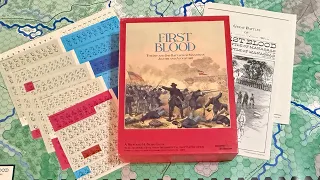
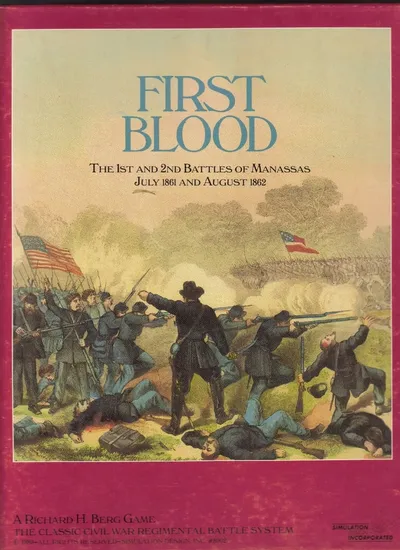
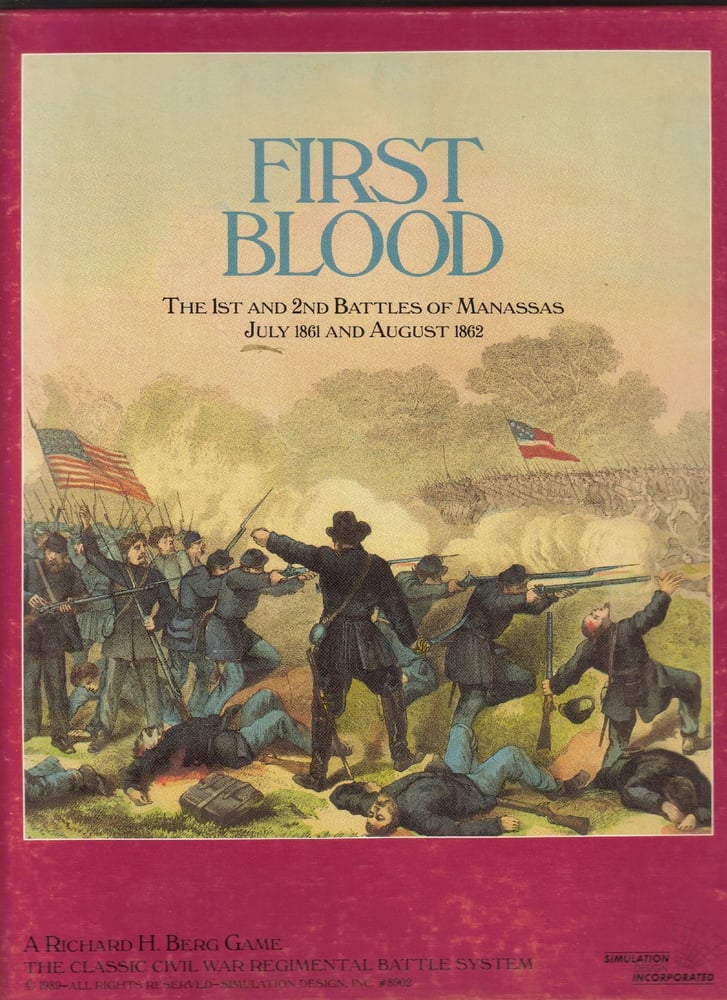
• Third-party custodians: Several publishers kept the system alive in the late ’80s/early ’90s—e.g., 3W (Horse Soldiers, 1988; Baton Rouge, 1990), SDC (Guns of Cedar Creek, 1989), and Simulation Design, Inc. (First Blood and the first Dead of Winter, 1989).
GMT revival and modernization (1995–present)
• System reboot at GMT (mid-1990s): Berg returned with a streamlined Gettysburg redesign, Three Days of Gettysburg (1995), re-establishing GBACW at GMT; subsequent early GMT entries included River of Death (Chickamauga, 1999) and Red Badge of Courage (Manassas, 2001).
• Expansion beyond the Civil War (same engine): GMT also published Gringo! (Mexican–American War, 2004) and related mini/expansions, showing the system’s portability.
• 2010s–2020s series growth and “living rules”:
• Twin Peaks (Cedar Mountain & South Mountain, 2014)
• Death Valley: Battles for the Shenandoah (2019; multi-battle package) and its Battles for the Shenandoah expansion (2022)
• Into the Woods (Shiloh, 2022)
• Ongoing support via Series Living Rules (latest 2024), which keep a common core set consistent while each title adds exclusive rules for its battle. 
• Developer/designer bench has broadened beyond Berg, with figures like John Alsen (series development), Bill Byrne (developer on Death Valley and its expansion), Greg Laubach (designer for expansion battles), and Richard “Dick” Whitaker (designer for Into the Woods and the upcoming Gettysburg Deluxe).
• Current/upcoming GMT items (as of Nov 20, 2025): GMT’s GBACW page lists in-print titles and P500 projects, including By Swords and Bayonets (a four-battle pack) and Three Days of Gettysburg Deluxe Edition (status: “In Art and Final Development”), both using the latest series framework and components.
What changed over time (at a glance)
• From one-off monsters to a “series”: SPI evolved TSS’s mechanisms into a standardized rulebook + exclusive rules model so players could move between battles without relearning the system.
• Custodial hand-offs: After SPI’s demise, TSR and smaller publishers kept issuing GBACW titles through the late ’80s, preserving the system until GMT consolidated and modernized it.
• Modernization under GMT: A stable core with Living Rules and (today) an interactive chit-pull activation approach that captures command friction at regimental scale, while each game layers battle-specific chrome. (GMT’s current Gettysburg Deluxe page summarizes these series characteristics.)