
Santiago
2003Claudia Hely, Roman Pelek
2 - 5 players
75 min
Medium weight: Teach it in one sitting
From BoardGameGeek
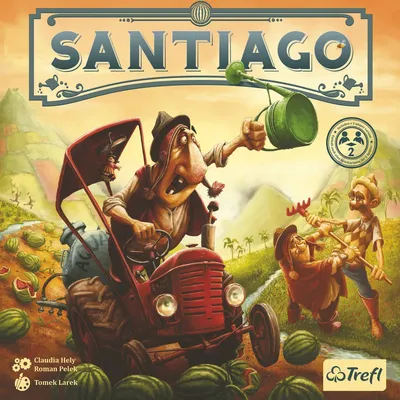
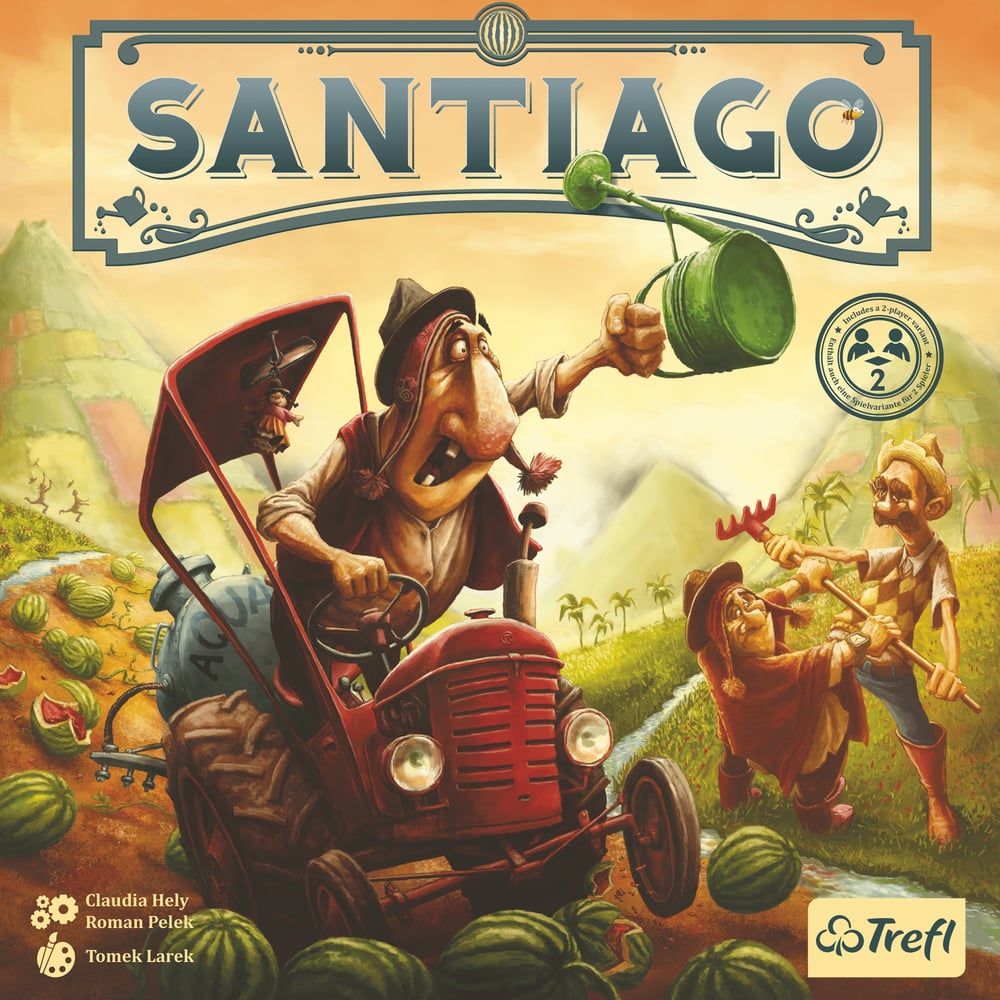
Santiago is about cultivating and watering fields. To accomplish this, a number of tiles denoting various plantation types come into the game each round. The tiles are auctioned off such that each player gets one, and the tiles are then placed onto the game board along with an ownership marker that also indicates how plentiful the tile's yield will be. Whoever bid the lowest in each round gets to be the canal overseer and decides where a canal will be built that round. The other players may make suggestions to help the canal overseer decide, and back up their suggestions with money. The final decision is always wholly up to the overseer, though. At the end of each round, players determine what the water supply situation looks like. Should a plantation not be sufficiently watered, its production drops dramatically; should it happen more than once, then that plantation may revert to fallow ground. At game's end, naturally only the cultivated land counts. Each plantation is counted according to type - the bigger the better. But since the ownership markers play a role as well, the same plantation can give drastically different points for different players.
Watch first
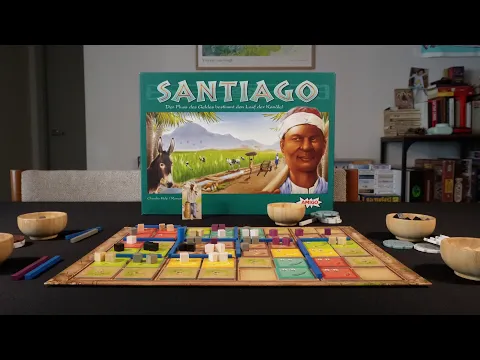

Which Santiago video should I watch?
Santiago has 2 videos from 2 creators: 1 review and 1 playthrough. They date from June to October 2026.
For an opinion before you buy, start with "Board Games Peaked in 2003: A Review of Santiago" by Goodluck Boardgames. To see it played, watch "Santiago (revisited) - 5p Teaching, Play-through, & Round table by Heavy Cardboard" by Heavy Cardboard.
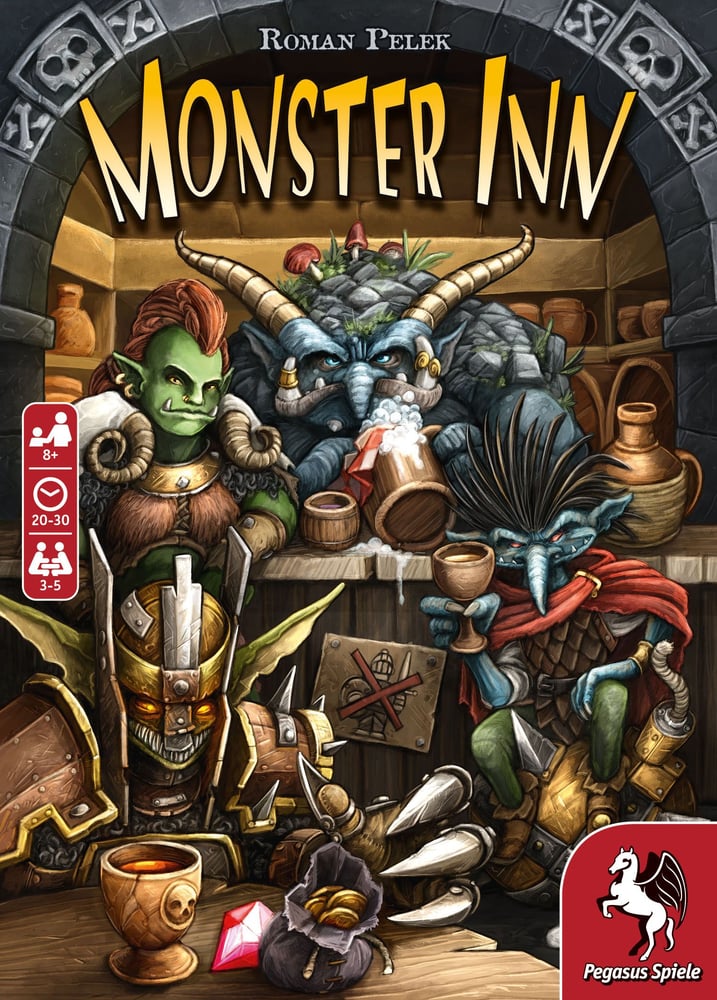
If you like it, try Monster Inn, also by Roman Pelek, or Umbra Via, Tribes: Dawn of Humanity and Archipelago, which share several of its mechanics.
All videos
Creators who cover this

Goodluck Boardgames
1 video of this game

Heavy Cardboard
1 video of this game
Games like this


2018Rustan Håkansson
- Videos
- 38
- Creators
- 34
Mainly reviews
2 - 4 players45 minMedium weight

2012Christophe Boelinger
- Videos
- 46
- Creators
- 29
Mostly playthroughs and reviews
2 - 5 players30 - 240 minHeavy weight
About Santiago
From BoardGameGeek:
Santiago is about cultivating and watering fields. To accomplish this, a number of tiles denoting various plantation types come into the game each round. The tiles are auctioned off such that each player gets one, and the tiles are then placed onto the game board along with an ownership marker that also indicates how plentiful the tile's yield will be. Whoever bid the lowest in each round gets to be the canal overseer and decides where a canal will be built that round. The other players may make suggestions to help the canal overseer decide, and back up their suggestions with money. The final decision is always wholly up to the overseer, though. At the end of each round, players determine what the water supply situation looks like. Should a plantation not be sufficiently watered, its production drops dramatically; should it happen more than once, then that plantation may revert to fallow ground. At game's end, naturally only the cultivated land counts. Each plantation is counted according to type - the bigger the better. But since the ownership markers play a role as well, the same plantation can give drastically different points for different players.
Designers
Claudia Hely, Roman Pelek
Artists
Oliver Freudenreich, Tomasz Larek
Publisher
AMIGO
Categories
Farming
Mechanics