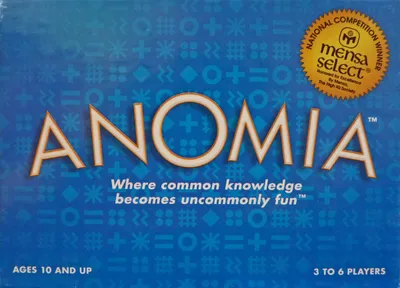
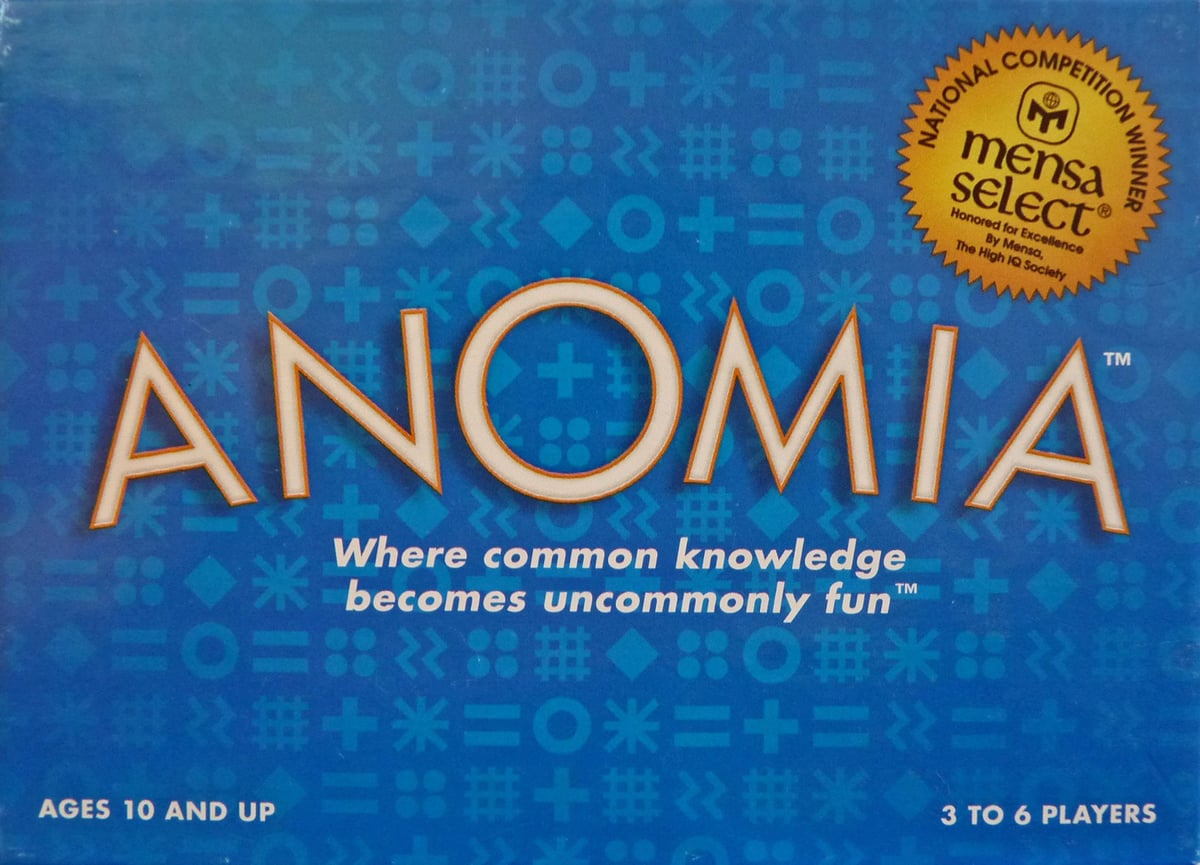
Anomia
2010Andrew Innes
- Videos
- 27
- Creators
- 11
Mostly reviews and how-to-play. Anomia is covered on BoardGameVideo.com by 10 reviews, 10 how-to-play guides, 4 recorded sessions, and 3 other videos.
3 - 6 players
30 min
Light weight: Learn it in minutes
From BoardGameGeek
Anomia plays off the fact that our minds are positively brimming with all sorts of random information: things to eat, pop songs, websites, etc... Sure, under normal circumstances, it's easy to give an example of a frozen food or a dog breed, but you'll find that your brain works a little differently under pressure! To play, draw and reveal a card from the center pile. Does the symbol on your card match one on another player's card? If so, you must quickly face-off with the other player by giving an example of the person, place, or thing on their card before they can do the same for yours. If you blurt out a correct answer first, you win their card and the drawing continues. Sounds simple, right? Wrong! Wild cards allow non-matching symbols to match, increasing the number of things to which you must pay attention. Cascading face-offs can occur when you hand over a lost card, thereby revealing a new top card on your play pile.
Watch first
Learn to play
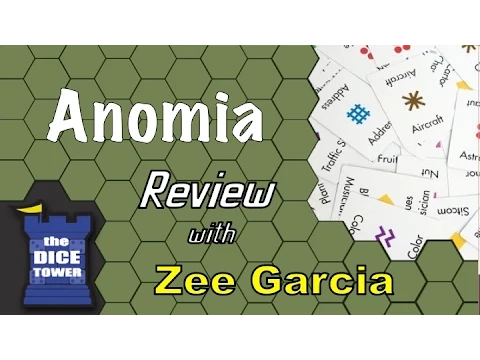
Watch it played
Which Anomia video should I watch?
Anomia has 27 videos from 11 creators: 10 reviews, 10 how-to-play guides, 4 playthroughs and 3 other videos. They date from 2011 to September 2026.
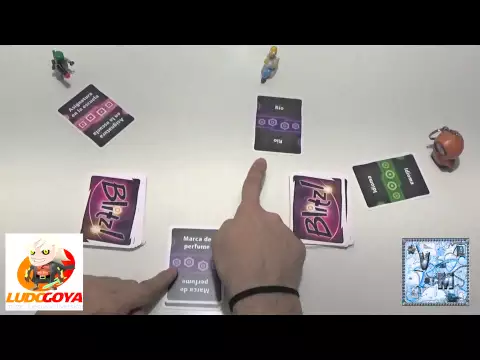
To learn the rules, start with "Blitz! - Juego de mesa - Reseña/aprende a jugar", which runs 4 min.
For an opinion before you buy, start with "The Dice Tower reviews Anomia". 5 creators have reviewed it. To see it played, watch "ANOMIA Playthrough", one of 4 playthroughs.
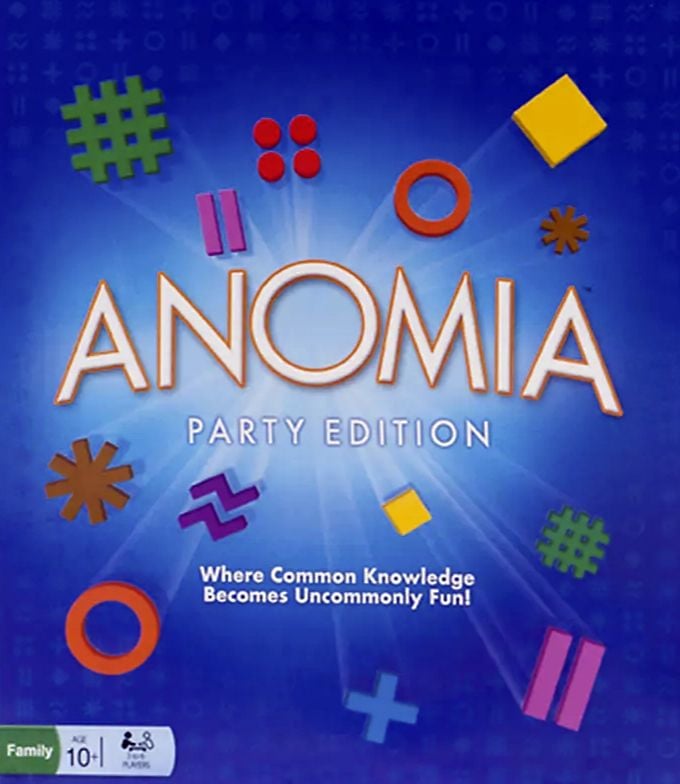
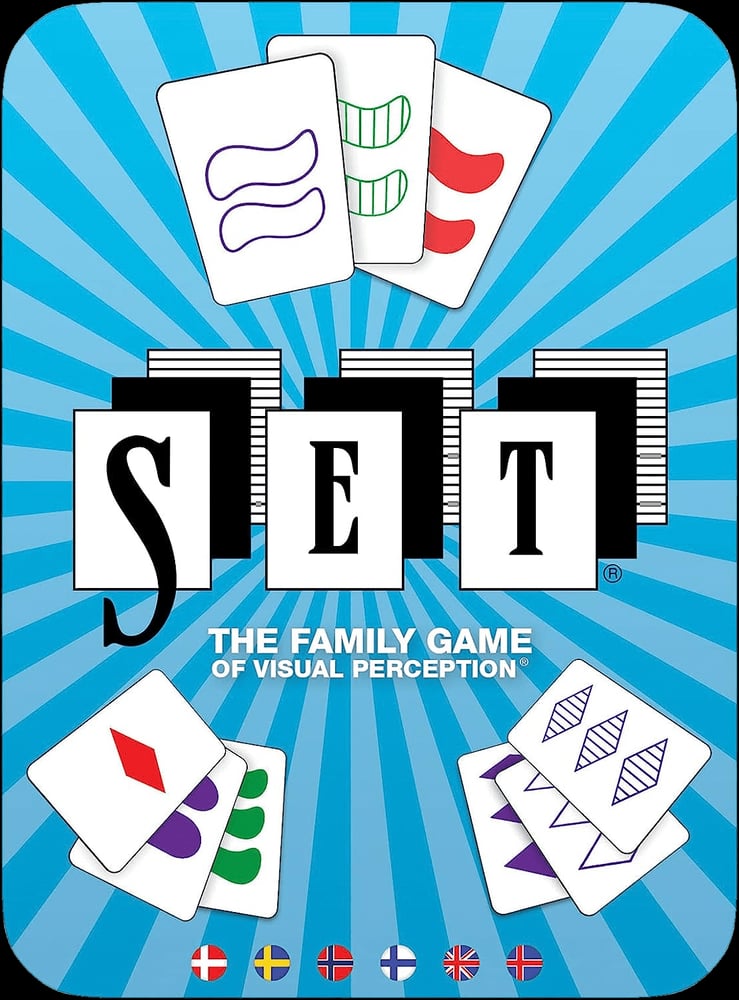
If you like it, try Anomia Kids, Anomia: Promotional Edition and Anomia: Party Edition, also by Andrew Innes, or SET, which shares several of its mechanics.
All videos
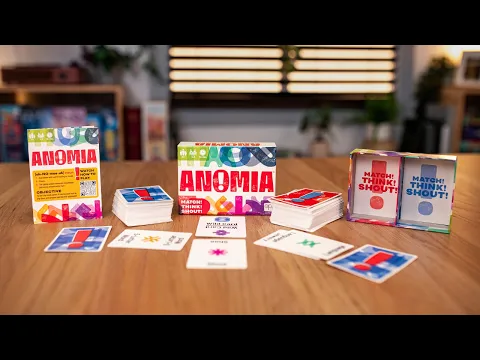

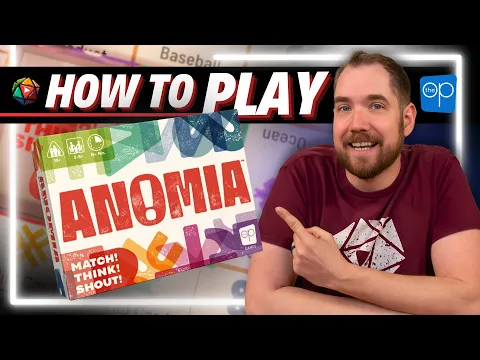

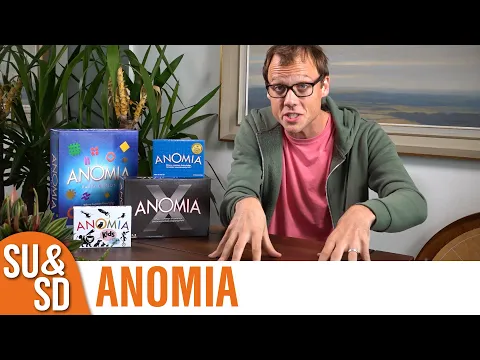
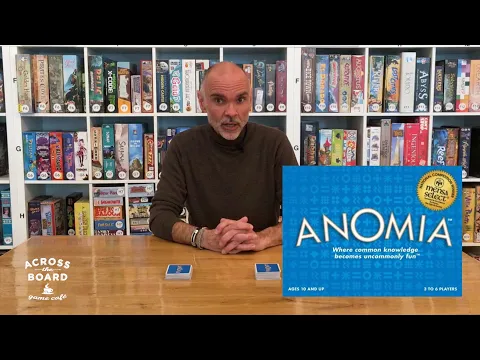
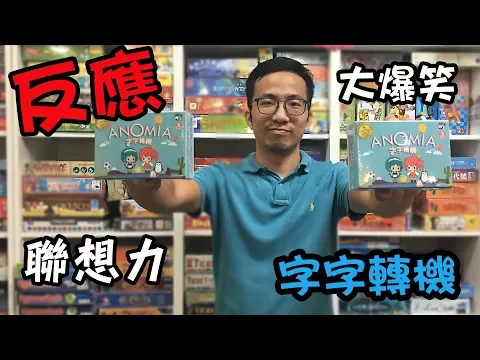




8 of 11
Creators who cover this

Across the Board Game Café
1 video of this game

Anomia Press
1 video of this game

Boardgaimz
1 video of this game

GameEnthus
1 video of this game

Hogwa5h Gaming
1 video of this game

Mel's Board Game Room
1 video of this game

Play The Game HQ
1 video of this game

The Dice Tower
1 video of this game
Games like this
1988Marsha J. Falco
- Videos
- 42
- Creators
- 39
Mostly how-to-play and reviews
1 - 20 players30 minLight weight
About Anomia
From BoardGameGeek:
Anomia plays off the fact that our minds are positively brimming with all sorts of random information: things to eat, pop songs, websites, etc... Sure, under normal circumstances, it's easy to give an example of a frozen food or a dog breed, but you'll find that your brain works a little differently under pressure! To play, draw and reveal a card from the center pile. Does the symbol on your card match one on another player's card? If so, you must quickly face-off with the other player by giving an example of the person, place, or thing on their card before they can do the same for yours. If you blurt out a correct answer first, you win their card and the drawing continues. Sounds simple, right? Wrong! Wild cards allow non-matching symbols to match, increasing the number of things to which you must pay attention. Cascading face-offs can occur when you hand over a lost card, thereby revealing a new top card on your play pile.
Designer
Andrew Innes
Artists
Kinetic, Paul Laane, Cezary Szulc, Peter Wocken
Publisher
Anomia Press
Categories
Mechanics
Pattern RecognitionReal-Time