
2024Jim Cartwright, Tyler Parrott, Daniel Schaefer, Jeremy Zwirn
- Videos
- 203
- Creators
- 82
Mainly unboxings and playthroughs
2 - 4 players20 minMedium weight
2027Jim Cartwright, James Cartwright
From BoardGameGeek
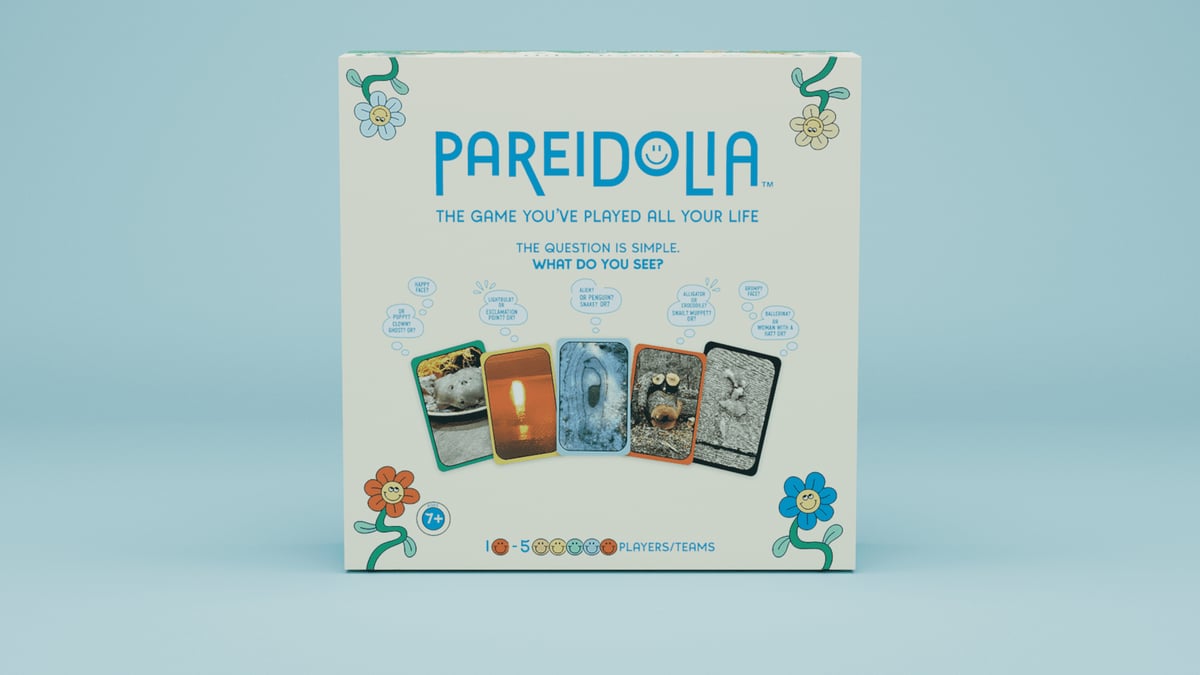
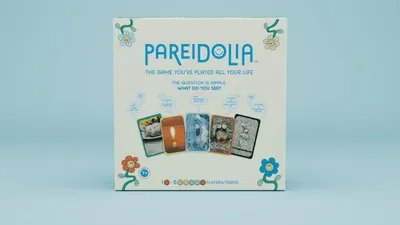
Pareidolia is a family party game built around the brain's tendency to see faces and figures in ordinary objects, like a face in a cloud, an animal in tree bark, a figure in a sidewalk crack. Players move along a board divided into five zones by spinning a spinner or rolling a die. On landing in a zone, a player draws a photo card from that zone's deck. Each card shows an unaltered photograph of a real object or scene, and the player answers one question: what do you see? If the answer matches one of the common surveyed responses printed on the card's reverse, the player advances. If the player sees something not listed, they may appeal to the table; if the other players agree they see it too, the answer counts. The game ends when a player reaches the end of the track. Because any perception the table accepts is valid, younger and older players compete on roughly equal footing. The photographs were collected by the designer over several years of daily walks. -description from the designer

2024Jim Cartwright, Tyler Parrott, Daniel Schaefer, Jeremy Zwirn
2 - 4 players20 minMedium weight
2024Jim Cartwright, Tyler Parrott, Daniel Schaefer, Jeremy Zwirn
2 - 4 players20 min
2024Jim Cartwright, Tyler Parrott, Daniel Schaefer, Jeremy Zwirn
2 - 4 players20 minMedium weight
2024Scott Almes
1 - 4 players30 - 45 minMedium weight
From BoardGameGeek:
Pareidolia is a family party game built around the brain's tendency to see faces and figures in ordinary objects, like a face in a cloud, an animal in tree bark, a figure in a sidewalk crack. Players move along a board divided into five zones by spinning a spinner or rolling a die. On landing in a zone, a player draws a photo card from that zone's deck. Each card shows an unaltered photograph of a real object or scene, and the player answers one question: what do you see? If the answer matches one of the common surveyed responses printed on the card's reverse, the player advances. If the player sees something not listed, they may appeal to the table; if the other players agree they see it too, the answer counts. The game ends when a player reaches the end of the track. Because any perception the table accepts is valid, younger and older players compete on roughly equal footing. The photographs were collected by the designer over several years of daily walks. -description from the designer
Designers
Jim Cartwright, James Cartwright
Publisher
MMagine Enterprises
Categories
Mechanics