Tiddledy Winks
1888Joseph Assheton Fincher
1 - 6 players
10 min
Light weight: Learn it in minutes
From BoardGameGeek
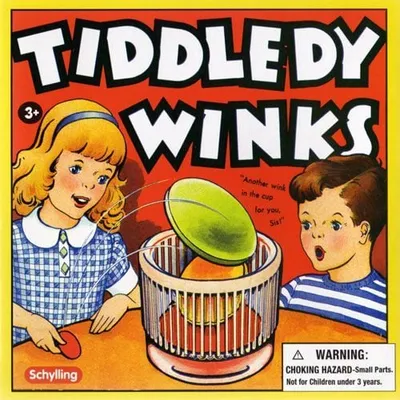
Tiddledy Winks varies based on publisher, but they all generally have a cup or other target. The object of the game is to flip small smooth disks (the "winks") into the cup or onto a target. This is accomplished by placing a wink on a piece of felt and then pressing down on the edge of the wink with a larger disk (the "tiddledy", or in modern terms, "squidger") so that the wink pops up into the air, and hopefully lands in the cup or other target. The highest points are awarded for winks that land in the cup, with winks landing in the target area scoring less. Players decide ahead of time to play a set number of rounds (in which case the winner is the person with the highest score at the end of the last round), or to play until someone reaches a certain score (in which case the winner is the first person to reach or exceed that score). Wikipedia notes that Joseph Assheton Fincher filed the original patent application for the game in 1888, applied for the trademark Tiddledy-Winks in 1889, and licensed John Jaques and Son as the exclusive distributors of the game. However, the intense popularity of the game prompted other publishers to churn out competitors under names like Spoof, Flipperty Flop, Jumpkins, Golfette, Maro, Flutter. As early as 1890, Jaques boxes included a label warning of "worthless imitations... issued by unscrupulous and jealous persons", and its rules threatened that "proceedings will be taken against any one infringing the Proprietors' Rights in this Game".
Watch first
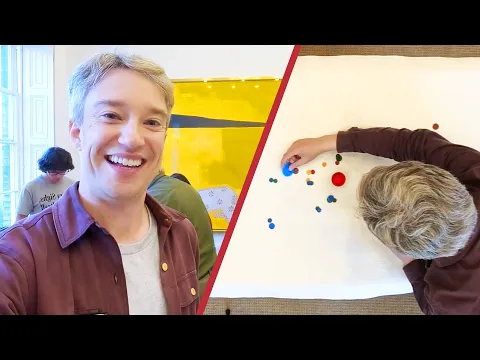
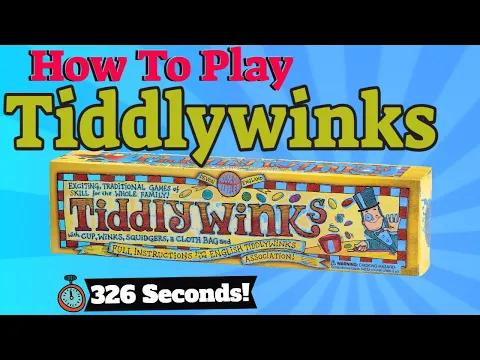
Which Tiddledy Winks video should I watch?
Tiddledy Winks has 3 videos from 2 creators: 2 how-to-play guides and 1 playthrough. They date from 2022 to September 2026.
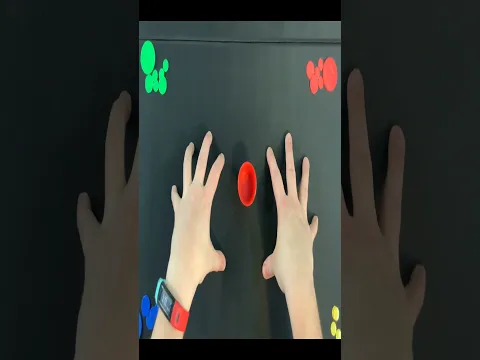
To learn the rules, start with "How To Play Tiddlywinks" by Bower's Game Corner, which runs 3 min.
To see it played, watch "Can I get into the Top 100 of tiddlywinks in one day?" by Tom Scott.
All videos
Creators who cover this

Bower's Game Corner
2 videos of this game

Tom Scott
1 video of this game
About Tiddledy Winks
From BoardGameGeek:
Tiddledy Winks varies based on publisher, but they all generally have a cup or other target. The object of the game is to flip small smooth disks (the "winks") into the cup or onto a target. This is accomplished by placing a wink on a piece of felt and then pressing down on the edge of the wink with a larger disk (the "tiddledy", or in modern terms, "squidger") so that the wink pops up into the air, and hopefully lands in the cup or other target. The highest points are awarded for winks that land in the cup, with winks landing in the target area scoring less. Players decide ahead of time to play a set number of rounds (in which case the winner is the person with the highest score at the end of the last round), or to play until someone reaches a certain score (in which case the winner is the first person to reach or exceed that score). Wikipedia notes that Joseph Assheton Fincher filed the original patent application for the game in 1888, applied for the trademark Tiddledy-Winks in 1889, and licensed John Jaques and Son as the exclusive distributors of the game. However, the intense popularity of the game prompted other publishers to churn out competitors under names like Spoof, Flipperty Flop, Jumpkins, Golfette, Maro, Flutter. As early as 1890, Jaques boxes included a label warning of "worthless imitations... issued by unscrupulous and jealous persons", and its rules threatened that "proceedings will be taken against any one infringing the Proprietors' Rights in this Game".
Designer
Joseph Assheton Fincher
Artists
Roger Hargreaves, Hank Ketcham, Charles M. Schulz, Eelco Martinus ten Harmsen van der Beek
Categories
Children's Game
Mechanics
Dexterity