
2024Khanat Sadomwattana, Mitsuo Yamamoto
- Videos
- 7
- Creators
- 7
Mostly reviews
2 players5 - 30 minLight weight
2025Mitsuo Yamamoto
Mainly playthroughs. Yonmoque Hex is covered on BoardGameVideo.com by 1 reviews, 1 how-to-play guides, 2 recorded sessions, and 1 unboxings.
From BoardGameGeek
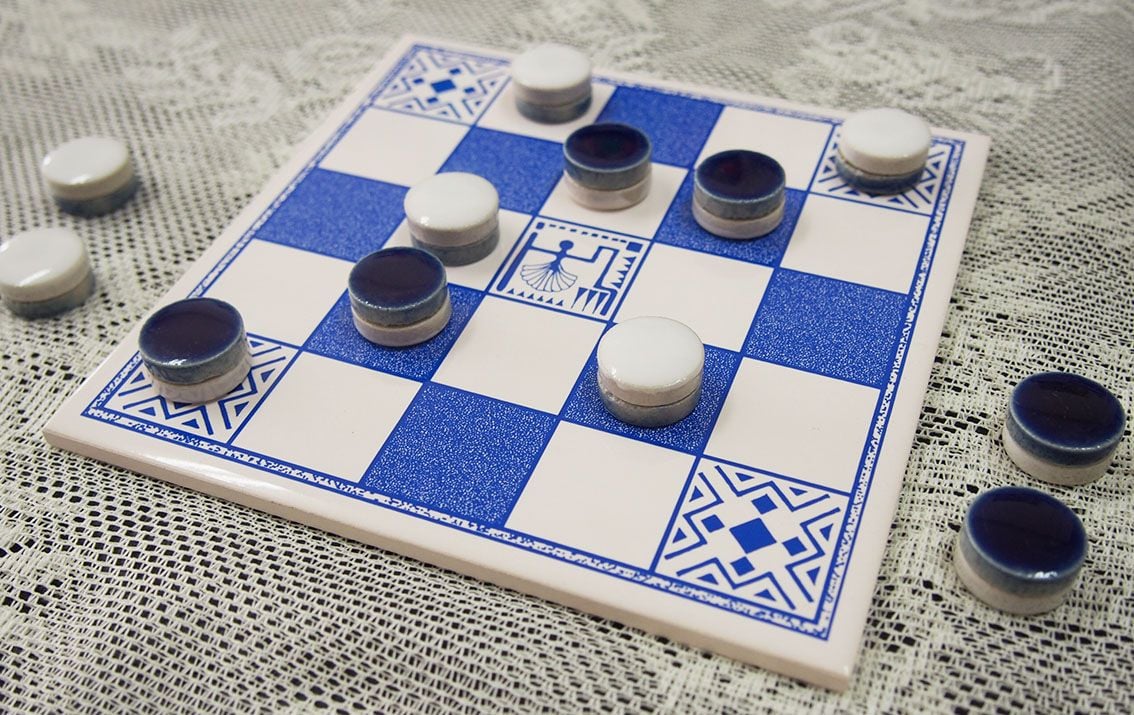
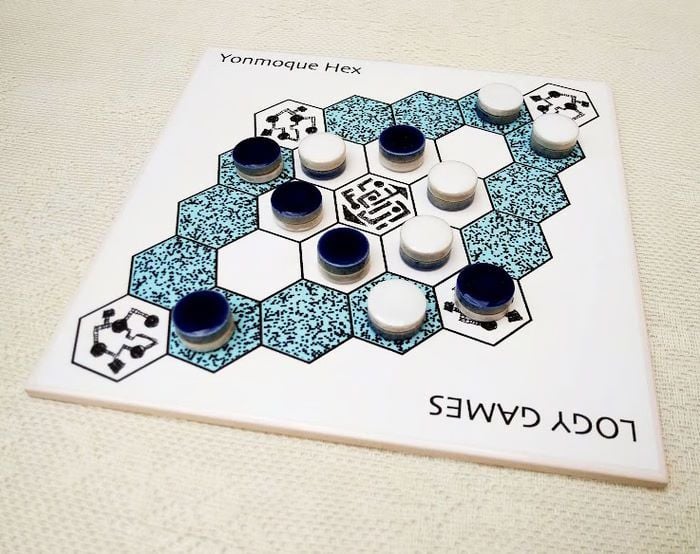
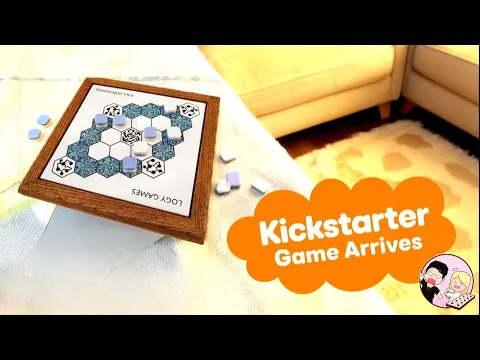
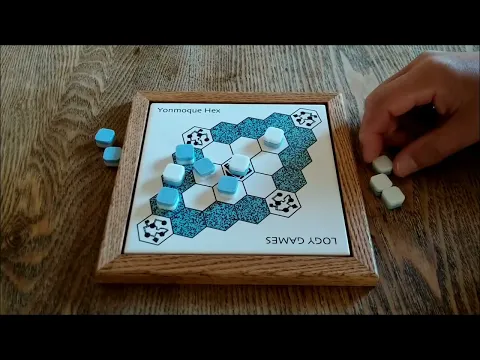
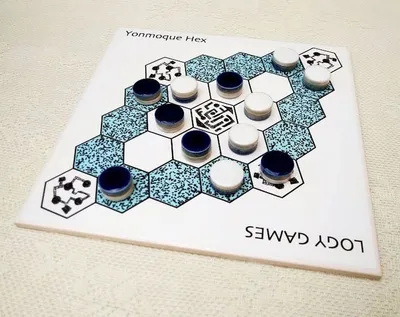
In Yonmoque Hex players try to be the first to get exactly 4 of their pieces in a row. And no more than that... Get 5 in a row and you immediately lose the game! Yonmoque Hex applies the 'swapping mechanism' from Othello; opponent pieces that are trapped in between two of your own pieces are turned over so that they become your own. The differences with Othello are that you don't just place tiles on the board, you also move them around. Furthermore, placement and movement is determined by the colour of the fields of the board. There are fields in the colors of each of the players (white and blue), as well as 5 neutral fields. Given that there are less squares for the white player (8 versus blue's 12), the white player always gets to play the first move.
Yonmoque Hex has 5 videos from 3 creators: 1 review, 1 how-to-play guide, 2 playthroughs and 1 unboxing. They date from 2025 to August 2026.
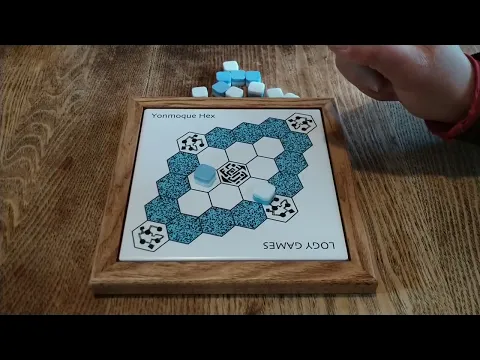
To learn the rules, start with "Yonmoque Hex twist moving" by Mitsuo Yamamoto, which runs 2 min.
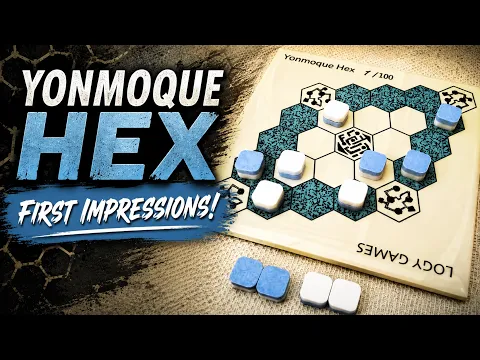
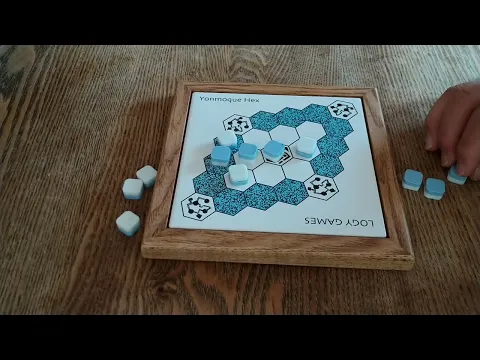
For an opinion before you buy, start with "My First Encounter with Yonmoque Hex: Thoughts and Impressions". To see it played, watch "Yonmoque Hex short play" by Mitsuo Yamamoto, one of 2 playthroughs.
If you like it, try Wild Duo, Yonmoque, GoRoGo and Fuer, also by Mitsuo Yamamoto.
2 of 3


2024Khanat Sadomwattana, Mitsuo Yamamoto
2 players5 - 30 minLight weight
From BoardGameGeek:
In Yonmoque Hex players try to be the first to get exactly 4 of their pieces in a row. And no more than that... Get 5 in a row and you immediately lose the game! Yonmoque Hex applies the 'swapping mechanism' from Othello; opponent pieces that are trapped in between two of your own pieces are turned over so that they become your own. The differences with Othello are that you don't just place tiles on the board, you also move them around. Furthermore, placement and movement is determined by the colour of the fields of the board. There are fields in the colors of each of the players (white and blue), as well as 5 neutral fields. Given that there are less squares for the white player (8 versus blue's 12), the white player always gets to play the first move.
Designer
Mitsuo Yamamoto
Artist
Mitsuo Yamamoto
Publisher
Logy Games
Categories
Mechanics