2012Matt Hyra, Ben Stoll
- Videos
- 61
- Creators
- 44
Mainly reviews
2 - 5 players45 minMedium weight
2024Matt Hird
From BoardGameGeek
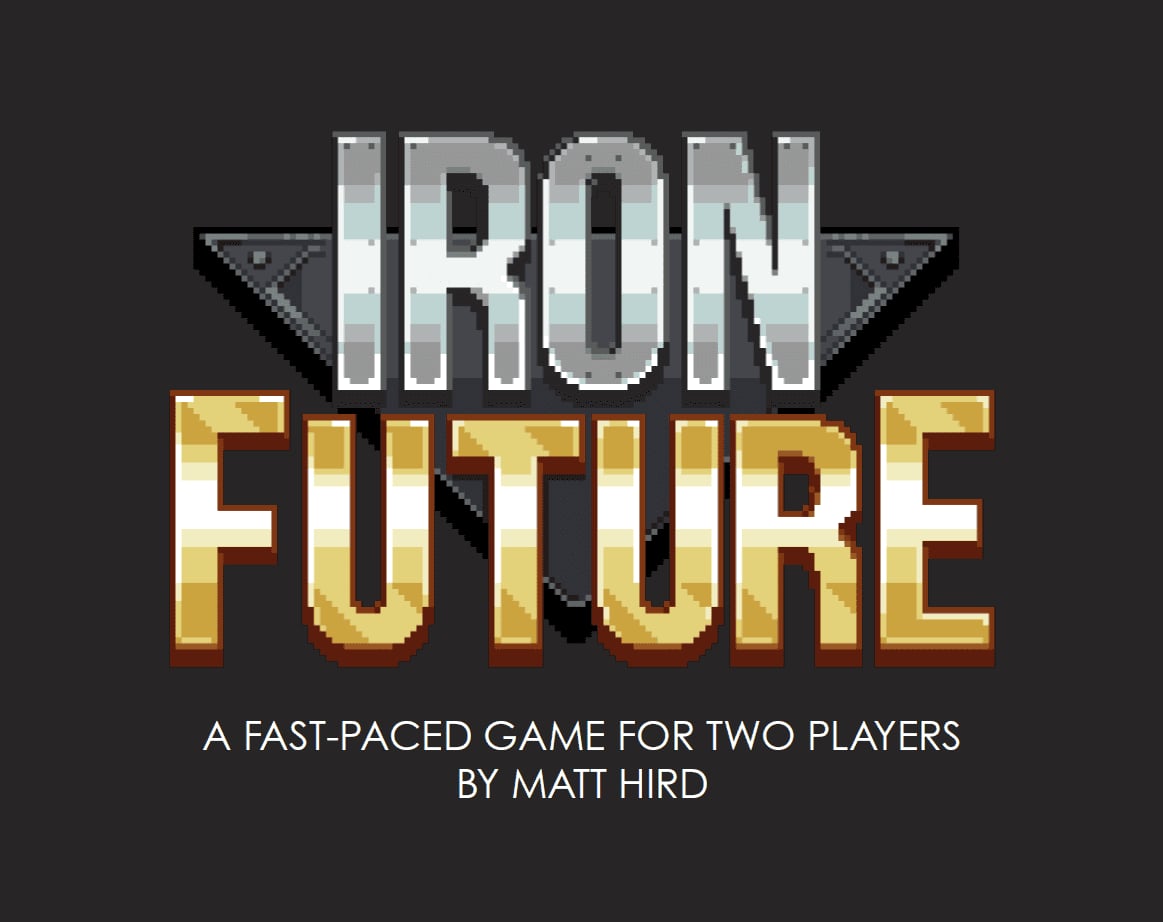
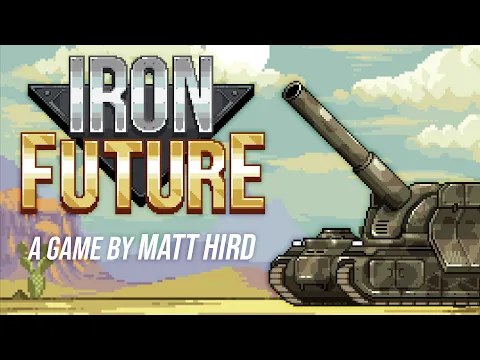
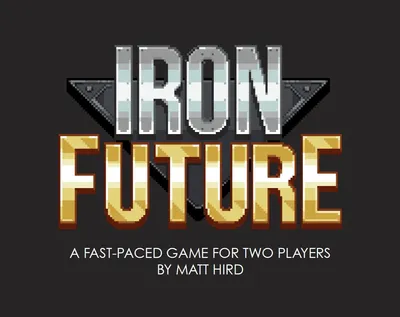
Iron Future is a two-player game with deckbuilding and dice elements. It takes place in a dystopian near-future where the financial incentives for the military-industrial complex have collapsed, and factions have arisen to seize what resources they can using hardware sold to the highest bidders. The art style evokes 16-bit video games of the 1990s. The overall goal of the game is to win three Conquest rounds, done by controlling more locations in a given round than their opponent (which usually means controlling two of the three available locations). During the conquest round players draw a hand of five cards from their personal deck and alternate deploying units from their hands to one of the three locations. Units have between zero and three weapons, and when deployed, may make attacks against deployed enemy units that are in range of those weapons. Enemy units at the same location are considered to be in short range, units in adjacent locations are at medium range, and two locations away is long range. Attacks are made with die rolls, and each roll of 3 or better reduces the armor of the enemy unit. Units with no armor remaining are destroyed and placed in their players discard pile. Units ONLY attack when they are deployed, but continue to hold the location using their Capture value until they themselves are destroyed. When each player has played five cards, the remaining capture value at each location in tallied, and the player with the highest wins that location. Winning locations is beneficial for two reasons - winning more locations than your opponent wins you the round, and locations provide resources that can be exchanged for better cards. Between each Conquest round players have an opportunity to purchase units to add to their deck, which are placed in the discard pile and shuffled into the deck when it runs out. In addition to weapon loadouts, units have abilities that impact what effect they have on the game, and support cards can be acquired to provide a small but consistent benefit each round. Infantry units tend to be weak, but provide higher capture values than vehicles. Vehicles have heavy weapons and armor but low capture values, and mechs are strong overall, but tend to cost more to acquire than the other unit types. -description from the designer

2012Matt Hyra, Ben Stoll
2 - 5 players45 minMedium weight
2023Alessandro Veracchi
1 - 2 players20 - 40 minMedium weight
2018Paul LaPorte
1 - 4 players60 - 90 minMedium weight
2010Robert Dougherty, John Fiorillo, Justin Gary, Brian M. Kibler
1 - 4 players30 minMedium weight
From BoardGameGeek:
Iron Future is a two-player game with deckbuilding and dice elements. It takes place in a dystopian near-future where the financial incentives for the military-industrial complex have collapsed, and factions have arisen to seize what resources they can using hardware sold to the highest bidders. The art style evokes 16-bit video games of the 1990s. The overall goal of the game is to win three Conquest rounds, done by controlling more locations in a given round than their opponent (which usually means controlling two of the three available locations). During the conquest round players draw a hand of five cards from their personal deck and alternate deploying units from their hands to one of the three locations. Units have between zero and three weapons, and when deployed, may make attacks against deployed enemy units that are in range of those weapons. Enemy units at the same location are considered to be in short range, units in adjacent locations are at medium range, and two locations away is long range. Attacks are made with die rolls, and each roll of 3 or better reduces the armor of the enemy unit. Units with no armor remaining are destroyed and placed in their players discard pile. Units ONLY attack when they are deployed, but continue to hold the location using their Capture value until they themselves are destroyed. When each player has played five cards, the remaining capture value at each location in tallied, and the player with the highest wins that location. Winning locations is beneficial for two reasons - winning more locations than your opponent wins you the round, and locations provide resources that can be exchanged for better cards. Between each Conquest round players have an opportunity to purchase units to add to their deck, which are placed in the discard pile and shuffled into the deck when it runs out. In addition to weapon loadouts, units have abilities that impact what effect they have on the game, and support cards can be acquired to provide a small but consistent benefit each round. Infantry units tend to be weak, but provide higher capture values than vehicles. Vehicles have heavy weapons and armor but low capture values, and mechs are strong overall, but tend to cost more to acquire than the other unit types. -description from the designer
Designer
Matt Hird
Publisher
Self-published
Categories
Mechanics