




2018Naotaka Shimamoto, Yoshiaki Tomioka
- Videos
- 20
- Creators
- 18
Mainly unboxings and playthroughs
2 - 4 players30 minLight weight
2023Naotaka Shimamoto, Yoshiaki Tomioka
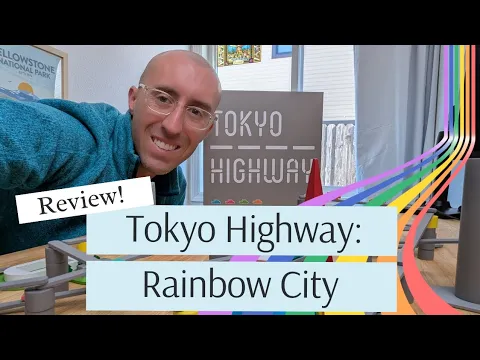
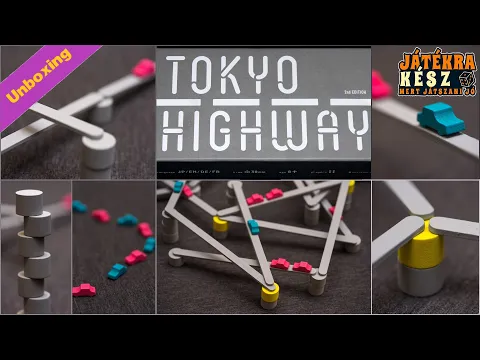
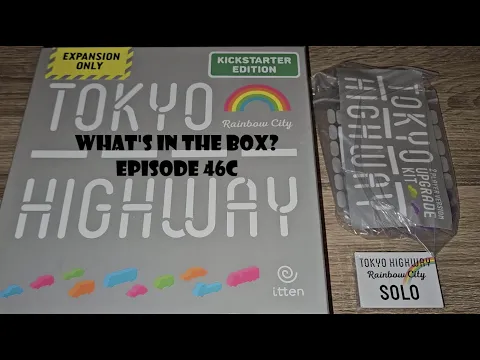
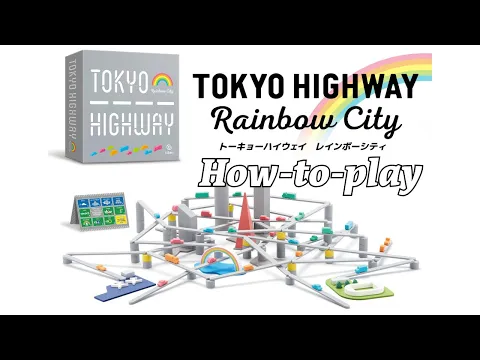
Mainly reviews. Tokyo Highway: Rainbow City is covered on BoardGameVideo.com by 8 reviews, 2 how-to-play guides, 1 recorded sessions, 4 unboxings, and 1 other video.
From BoardGameGeek
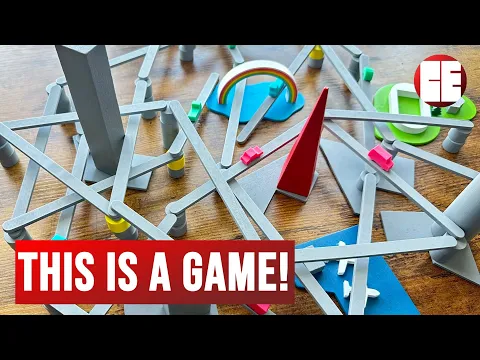
Tokyo Highway: Rainbow City / トーキョーハイウェイ レインボーシティ is a new edition of Tokyo Highway with new gameplay elements and updated components that make the game easier to play...which can be good or bad depending on your taste for collapsing roads. At the start of play, each player has cars in their color, along with roadways (sticks), gray column pieces, and yellow column pieces. Players set up the city by placing one of their roadways with one end on the table and the other end on a column, then topping it with one of their cars. Next, they take turns placing city objects - buildings, an airport, a tower, a green area - around the playing area. On a turn, expand your highway by adding a new stick to the end of it. When you do so, one end of the stick is placed on the column supporting your most recently played stick and the other end goes on a new column that you add to the table; this new column must contain one more or one fewer column pieces than the column on the other end of the stick. (If you create a column with a yellow piece on top and at least one piece under it, you can break this height restriction rule.) If you've built this piece of the roadway so that your stick is the first to cross over or go under an opponent's stick, then you score by placing one of your cars on this roadway. If you cross over or go under multiple sticks on the same placement, you place one car per stick you top or bottom! You can branch once from a column of yours topped with a yellow piece. Also, you can place a stick as an exit ramp if one end is placed on a single column piece and the other end on the table. This piece is automatically topped with a car - but it's also the final placement for this branch of your highway, so don't get stuck in a dead end. If you run out of construction materials, you're out of the game. If you're the only one still in the game or you've placed all of your cars, you win. Tokyo Highway: Rainbow City includes a "mission" variant in which all of the basic placement rules apply, but your goal is now to score the most points. Every car placed is worth 1 point, three roadways in a row with cars on them is 2 points, a loop around a building is 1 point, an exit ramp at the airport or green area is worth 2 points, placing the same type of car on a roadway as the opponent's car on the road above/below you is worth 1 point, etc. In this edition of the game, the roadways have small tacky pads on each end, which makes the sticks more stable than in earlier editions when you placed wood sticks on wood columns.
Tokyo Highway: Rainbow City has 16 videos from 13 creators: 8 reviews, 2 how-to-play guides, 1 playthrough, 4 unboxings and 1 other video. They date from 2024 to July 2025.
To learn the rules, start with "TOKYO HIGHWAY Rainbow City - a New Expansion" by Miss Merc007, which runs 11 min.
For an opinion before you buy, start with "Tokyo Highway Rainbow City Overview | Unboxing, How to Play & Impressions" by Cardboard East. 8 creators have reviewed it. To see it played, watch "Tokyo Highway Play through and Review" by Pecktec Games.
If you like it, try Tokyo Highway, Crash Octopus, Tokyo Highway: 2 Players Version and Tribe, also by Naotaka Shimamoto.
8 of 13


2018Naotaka Shimamoto, Yoshiaki Tomioka
2 - 4 players30 minLight weight
2021Naotaka Shimamoto
1 - 5 players20 - 30 minLight weight
2016Naotaka Shimamoto, Yoshiaki Tomioka
2 players30 - 50 minLight weight
2017Naotaka Shimamoto
2 - 5 players30 - 60 minLight weight
From BoardGameGeek:
Tokyo Highway: Rainbow City / トーキョーハイウェイ レインボーシティ is a new edition of Tokyo Highway with new gameplay elements and updated components that make the game easier to play...which can be good or bad depending on your taste for collapsing roads. At the start of play, each player has cars in their color, along with roadways (sticks), gray column pieces, and yellow column pieces. Players set up the city by placing one of their roadways with one end on the table and the other end on a column, then topping it with one of their cars. Next, they take turns placing city objects - buildings, an airport, a tower, a green area - around the playing area. On a turn, expand your highway by adding a new stick to the end of it. When you do so, one end of the stick is placed on the column supporting your most recently played stick and the other end goes on a new column that you add to the table; this new column must contain one more or one fewer column pieces than the column on the other end of the stick. (If you create a column with a yellow piece on top and at least one piece under it, you can break this height restriction rule.) If you've built this piece of the roadway so that your stick is the first to cross over or go under an opponent's stick, then you score by placing one of your cars on this roadway. If you cross over or go under multiple sticks on the same placement, you place one car per stick you top or bottom! You can branch once from a column of yours topped with a yellow piece. Also, you can place a stick as an exit ramp if one end is placed on a single column piece and the other end on the table. This piece is automatically topped with a car - but it's also the final placement for this branch of your highway, so don't get stuck in a dead end. If you run out of construction materials, you're out of the game. If you're the only one still in the game or you've placed all of your cars, you win. Tokyo Highway: Rainbow City includes a "mission" variant in which all of the basic placement rules apply, but your goal is now to score the most points. Every car placed is worth 1 point, three roadways in a row with cars on them is 2 points, a loop around a building is 1 point, an exit ramp at the airport or green area is worth 2 points, placing the same type of car on a roadway as the opponent's car on the road above/below you is worth 1 point, etc. In this edition of the game, the roadways have small tacky pads on each end, which makes the sticks more stable than in earlier editions when you placed wood sticks on wood columns.
Designers
Naotaka Shimamoto, Yoshiaki Tomioka
Artist
Yoshiaki Tomioka
Publisher
itten
Mechanics