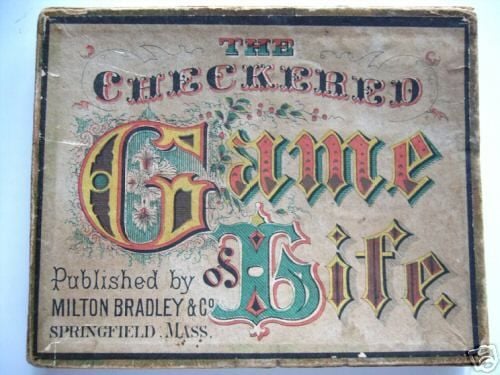
The Checkered Game of Life
1860Milton Bradley
From BoardGameGeek
Around 1860, Abraham Lincoln grew a beard. A young printer, Milton Bradley, who had been making a living selling pictures of a beardless Lincoln now found himself without a salable product. He turned to making board games, and invented The Checkered Game of Life. Similar to Snakes and Ladders, The Checkered Game of Life has players moving on the board depicting virtues and vices. Unlike "Snakes & Ladders," players have (limited) movement choices during the game. Each turn, players spin a top to generate a random number, then consult a chart which gives them 2-4 movement options. If a player stops in a space which gives them points, they record these points on their chart. The winner of the game is the first to accumulate 100 points. This is the long predecessor to The Game of Life which is produced by the company that bears his name.
There are no videos for this game yet.
Creators who cover this

About The Checkered Game of Life
From BoardGameGeek:
Designer
Milton Bradley
Mechanics