2018Mark Tuck
- Videos
- 57
- Creators
- 48
Mainly reviews and how-to-play
1 players5 - 10 minLight weight

2023Mark Tuck
From BoardGameGeek
Rewild is a light solitaire tile-laying game in which you (nature) are shaping and restoring a once intensively farmed land to a wilder state, creating habitats for rare and diverse wildlife. Each tile has 4 areas featuring 3 types of habitat: woodland, scrubland and wetland. The tokens represent wildlife of different habitats and values. Tiles are laid (offset to one another by 1 area) to create spaces that are surrounded by habitats on all 4 sides. Once such a space is made, a wildlife token is placed in it. There are rules around the order in which tokens are placed and how the player can manipulate it. At the end of the game the wildlife score points based on their value and how much of their preferred habitat surrounds them, and also for the largest area of each habitat. -description from the designer
Rewild has 2 videos from 2 creators: 1 review and 1 how-to-play guide. They date from 2024 to January 2026.
To learn the rules, start with "Rewild: How to play" by mark tuck, which runs 3 min.
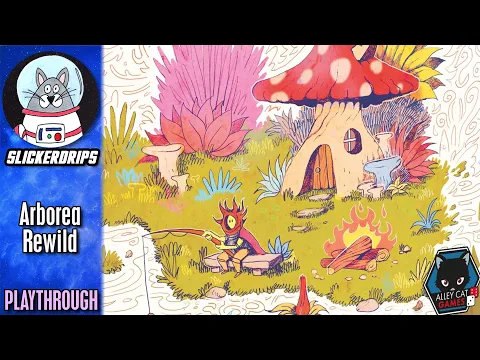
For an opinion before you buy, start with "Arborea Rewild | Playthrough" by slickerdrips.
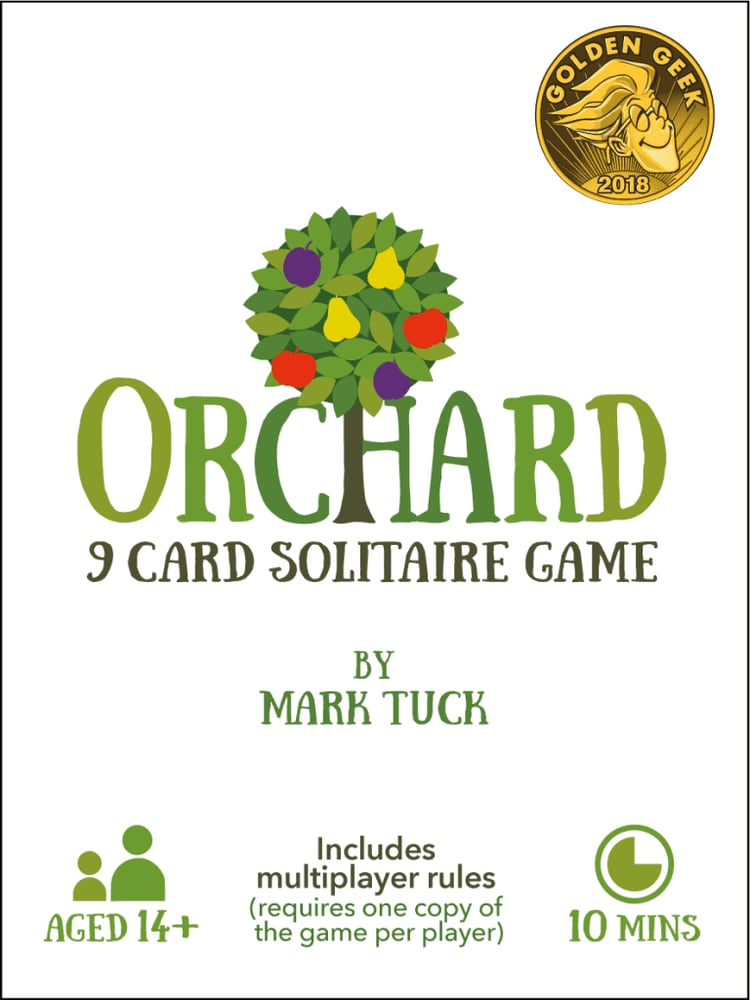
If you like it, try Orchard: 9 card solitaire game, Grove: 9 card solitaire game, Forage: A 9 card solitaire game and One Card Wonders, also by Mark Tuck.


2018Mark Tuck
1 players5 - 10 minLight weight
2021Mark Tuck
1 players5 - 10 minLight weight
2024Mark Tuck
1 players5 - 10 minLight weight
2026Nick Ackroyd, Sébastien Bernier-Wong, Jonathan Carnehl, Christopher M. Carter, Julián Galizio, Maisy Hatchard, Dustin Hendrickson, Jackson Lin, Noe Escobar @Noescobar, Darren Reckner, Jeremy Rozenhart, Rob Sparks, Mark Tuck, Julián Tunni
1 - 11 players2 - 30 min
From BoardGameGeek:
Rewild is a light solitaire tile-laying game in which you (nature) are shaping and restoring a once intensively farmed land to a wilder state, creating habitats for rare and diverse wildlife. Each tile has 4 areas featuring 3 types of habitat: woodland, scrubland and wetland. The tokens represent wildlife of different habitats and values. Tiles are laid (offset to one another by 1 area) to create spaces that are surrounded by habitats on all 4 sides. Once such a space is made, a wildlife token is placed in it. There are rules around the order in which tokens are placed and how the player can manipulate it. At the end of the game the wildlife score points based on their value and how much of their preferred habitat surrounds them, and also for the largest area of each habitat. -description from the designer
Designer
Mark Tuck
Artist
Mark Tuck
Categories
Mechanics