
2023Jeffrey D. Allers, Matthew Dunstan
- Videos
- 32
- Creators
- 23
Mainly reviews
1 - 80 players30 - 45 minLight weight
2012Jeffrey D. Allers
From BoardGameGeek
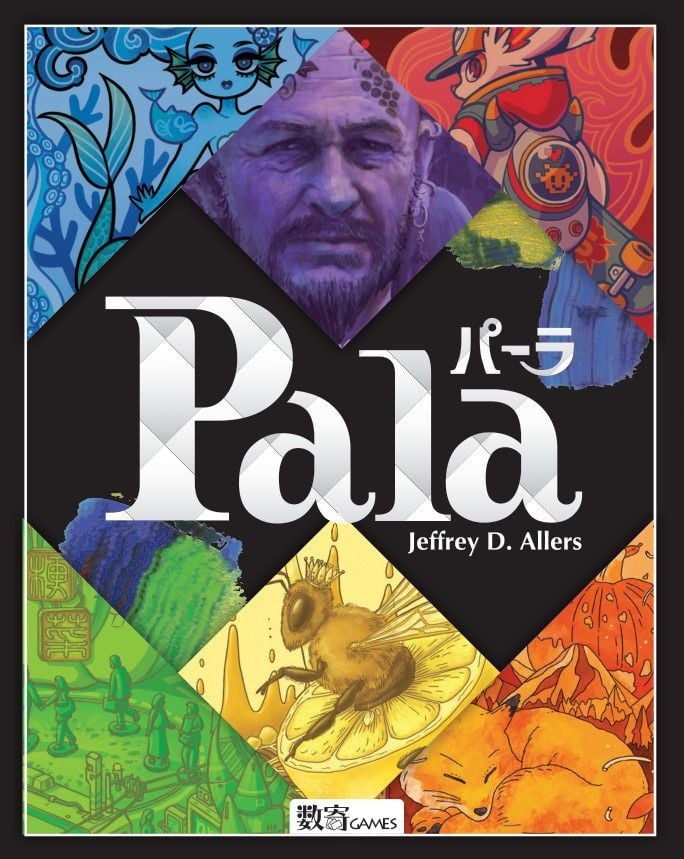
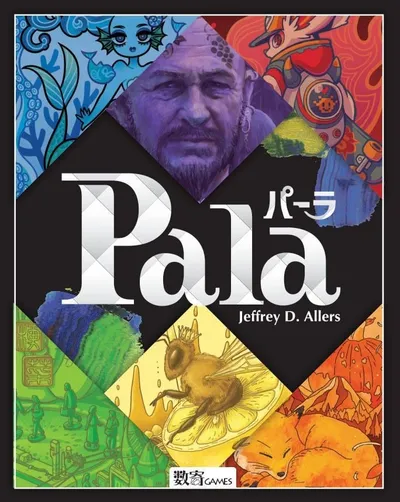
In the trick-taking card game Pala, players are art students who are learning to mix their pigments on the palette to get the right color for their canvases. The cards are the paint colors, and the palette is the table. By playing cards together (that is, mixing colors), you can effectively change the color of your cards as well as the trick itself. The published version of Pala includes two ways to play. Both variants use the same mechanisms for playing tricks, but have different bidding and score rules. Thus, once you wrap your head around the basics of the game, you can play two wildly different games with those core rules. In Impressionism, players collectively determine the value of different colors (suits) by discarding cards from their hands before the round begins. Points are bad, analogous to Hearts. In Pointillism, players bid with colored chips to indicate the colors they expect to win, but over-bidding risks losing all your points for the round. Points are good, analogous to Spades.
Pala has 2 videos from 2 creators: 1 review and 1 how-to-play guide. They date from September 2026.
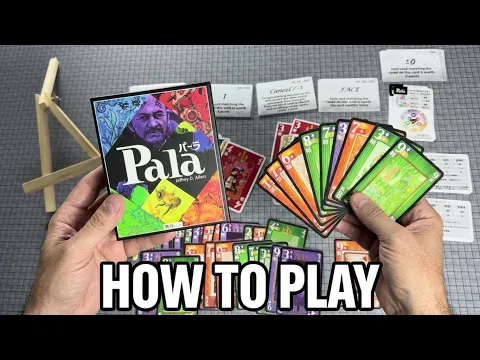
To learn the rules, start with "Pala | How to Play" by One Rule Wrong, which runs 22 min.
For an opinion before you buy, start with "Pala & Less Than Three ~ Taylor's Trick-Taking Table" by Taylor's Trick-Taking Table.
If you like it, try Pioneer Rails, Donut Shop, Pandoria and Twisty Tracks, also by Jeffrey D. Allers.


2023Jeffrey D. Allers, Matthew Dunstan
1 - 80 players30 - 45 minLight weight
2018Jeffrey D. Allers, Bernd Eisenstein
2 - 4 players90 - 120 minMedium weight
2023Jeffrey D. Allers
1 - 4 players15 - 30 minLight weight
From BoardGameGeek:
In the trick-taking card game Pala, players are art students who are learning to mix their pigments on the palette to get the right color for their canvases. The cards are the paint colors, and the palette is the table. By playing cards together (that is, mixing colors), you can effectively change the color of your cards as well as the trick itself. The published version of Pala includes two ways to play. Both variants use the same mechanisms for playing tricks, but have different bidding and score rules. Thus, once you wrap your head around the basics of the game, you can play two wildly different games with those core rules. In Impressionism, players collectively determine the value of different colors (suits) by discarding cards from their hands before the round begins. Points are bad, analogous to Hearts. In Pointillism, players bid with colored chips to indicate the colors they expect to win, but over-bidding risks losing all your points for the round. Points are good, analogous to Spades.
Designer
Jeffrey D. Allers
Artists
Anja Heidenreich, Makiko Kodama, Yusuke Mamada, 別府さい (Sai Beppu), Natsuki Sakamoto (坂本奈津希), たかみまこと (Makoto Takami)
Publisher
Cambridge Games Factory
Categories
Mechanics