












Tether

Tether

2024Mark McGee

Videos
10
Creators
10

Mainly reviews. Tether is covered on BoardGameVideo.com by 5 reviews, 1 how-to-play guides, 1 recorded sessions, and 1 unboxings.

2 - 4 players
15 min
1.6/5 weight

From BoardGameGeek

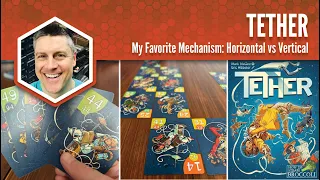
Astronauts love floating in space, but not all by themselves. Tether them together so they don't drift through the galaxy alone. Each card in Tether has a two-digit number in the top corner, and when you rotate the card 180 degrees, the number in the opposite corner has the same two digits, but the positions are swapped. For instance the card with a 68 in one corner has 86 in the opposite corner. Opponents sit across the table from each other, which means that when you play a card each player sees a different number. You can connect astronauts together if they have consecutive numbers. One player (or team) connects astronauts together horizontally on the table and the other connects them vertically. Since each side sees a different number and connects in a different direction, but is playing with the same astronauts, you have an asymmetric puzzle with a lot of interaction between players. -description from the designer

Watch first

8 of 10

Creators who cover this

Before You Play
Before You Play
1 video of this game
Board Game Museum
Board Game Museum
1 video of this game
Jamie, Tabletoptiktok
1 video of this game
Nicholas Trager
Nicholas Trager
1 video of this game
Our Family Plays Games
1 video of this game
Rahdo Runs Through
Rahdo Runs Through
1 video of this game
ShelfClutter
ShelfClutter
1 video of this game

Games like this

2023Mark McGee, Joshua J Mills

Videos
2
Creators
1
Playthroughs and unboxings

2 - 5 players30 - 45 min2.0 weight

About Tether

From BoardGameGeek:

Astronauts love floating in space, but not all by themselves. Tether them together so they don't drift through the galaxy alone. Each card in Tether has a two-digit number in the top corner, and when you rotate the card 180 degrees, the number in the opposite corner has the same two digits, but the positions are swapped. For instance the card with a 68 in one corner has 86 in the opposite corner. Opponents sit across the table from each other, which means that when you play a card each player sees a different number. You can connect astronauts together if they have consecutive numbers. One player (or team) connects astronauts together horizontally on the table and the other connects them vertically. Since each side sees a different number and connects in a different direction, but is playing with the same astronauts, you have an asymmetric puzzle with a lot of interaction between players. -description from the designer

Designer

Mark McGee

Artist

Eric Hibbeler

Categories

Card GameNumber

Mechanics

Hand Management
View on BoardGameGeek ›