2017Dane Beltrami, Corey Konieczka, Christian T. Petersen
- Videos
- 363
- Creators
- 124
Mainly how-to-play and playthroughs
3 - 6 players240 - 480 min4.4 weight
2015Simon Igrunoff
From BoardGameGeek
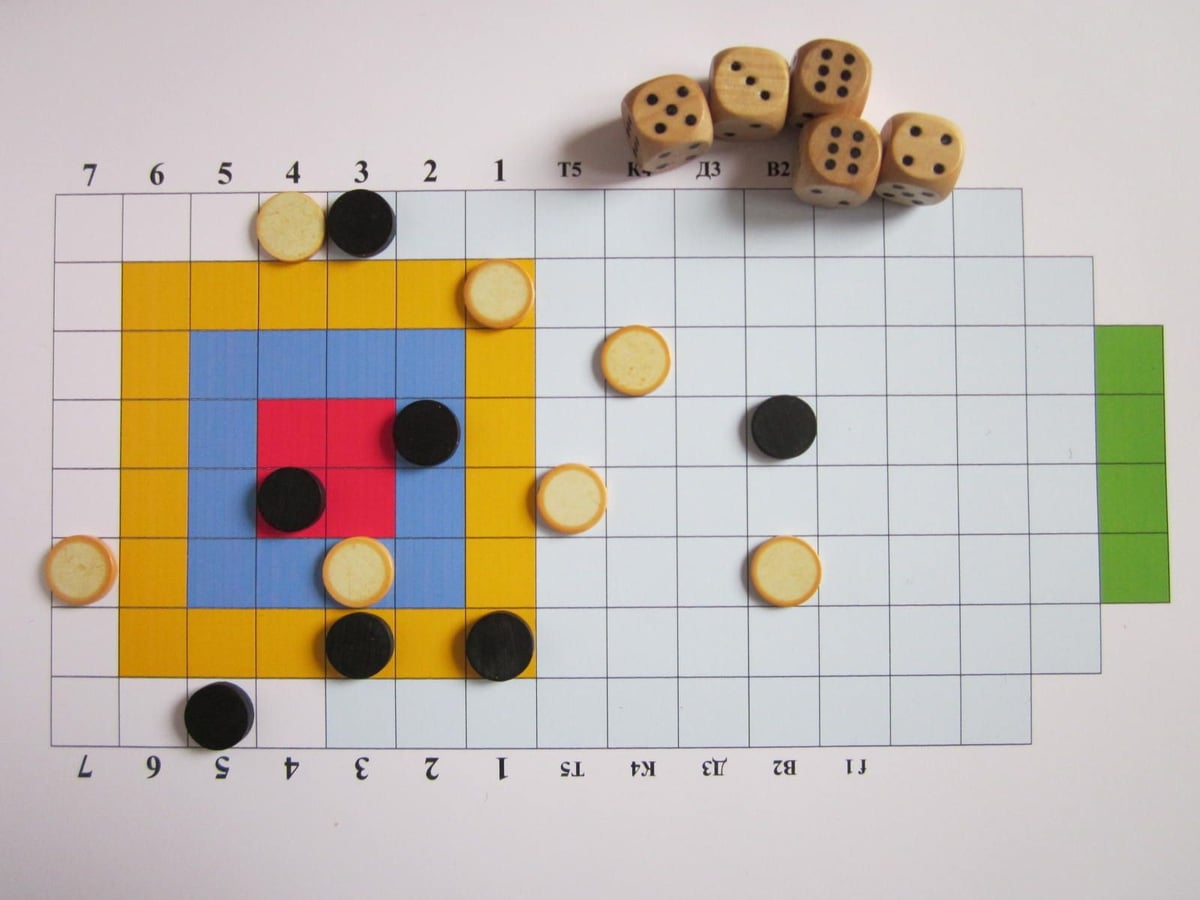
Logical Curling is an abstract game that simulates the game of Curling. Players roll and reroll dice, to try and obtain specific patterns, similar to poker hands, which determine the movement of stones. The higher scoring patterns give players access to more powerful and flexible trajectories - but there are rules that prevent the game from becoming a luck fest. The stones have to enter the board and slide according to specific, somewhat limited curved trajectories, and they can bump and dislodge other stones already on the board. So, when deciding which dice to reroll, players have to take into consideration not only the numbers they already have, but also the current board state, and what trajectories might become available with those numbers. The player or team that manages to get their stones closest to the target, and bump the opponent's stones away, scores for the round. The player or team with the highest score after 6, 8 or 10 rounds is the winner! The game can also be played with a standard deck of cards instead of dice. According to the designer, this variant is more difficult, but also more subtle and interesting. -description from the designer

2017Dane Beltrami, Corey Konieczka, Christian T. Petersen
3 - 6 players240 - 480 min4.4 weight
2022John H. Butterfield
1 - 2 players15 - 300 min4.0 weight
1985Don Greenwood
2 players120 - 480 min4.7 weight
From BoardGameGeek:
Designer
Simon Igrunoff
Categories
Mechanics