








2023Jamie Gray, Dann May, Lewis Shaw, Robb Smigielski
- Videos
- 11
- Creators
- 5
Mainly how-to-play and reviews
1 - 4 players20 - 30 minMedium weight
2017Dann May, Stéphane Vachon
Mainly reviews and how-to-play. Planetarium is covered on BoardGameVideo.com by 7 reviews, 6 how-to-play guides, 5 recorded sessions, 2 unboxings, and 5 other videos.
From BoardGameGeek
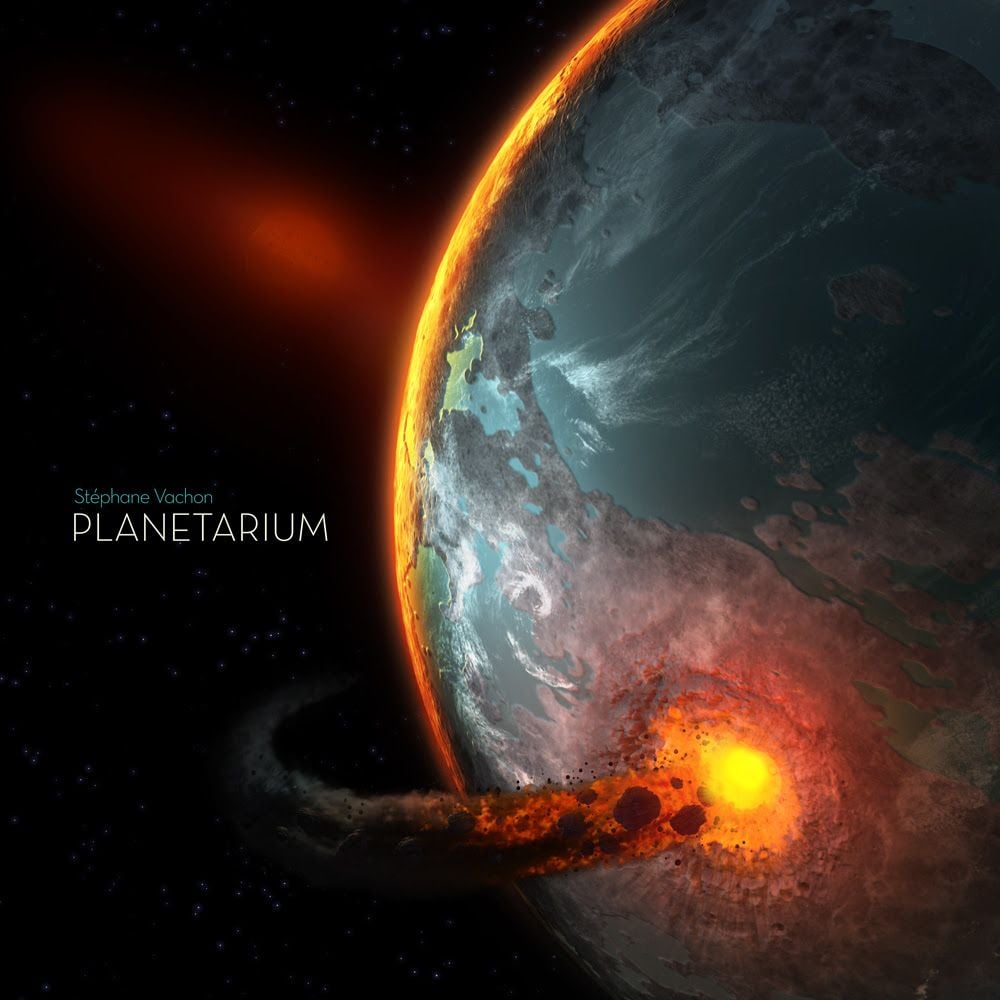
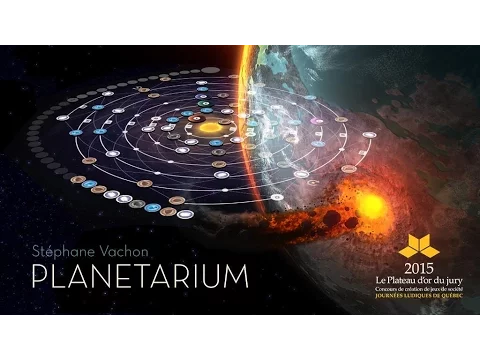
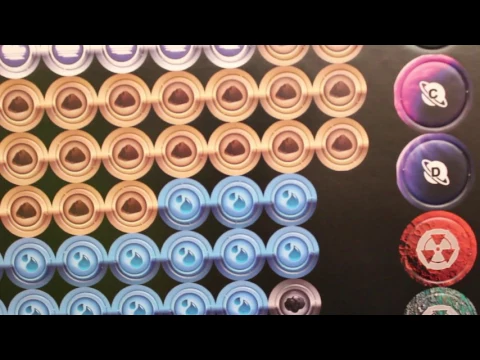
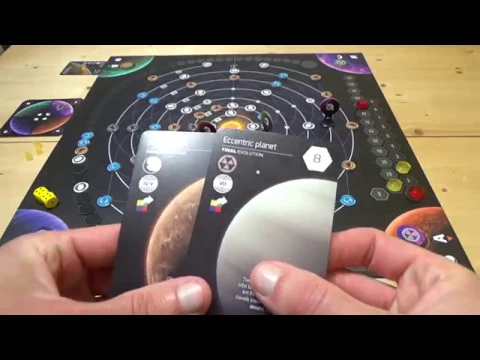
Matter swirls around a new born star, coalescing on the planetoids that orbit it. Planets evolve, grow and migrate in their orbits, forming a unique solar system by the end of every game. Planetarium is a game of creation, chaos and terraforming on the grandest scale. Players are competing to crash combinations of elements onto planets that then allow them to play cards to evolve the planets in a variety of ways, with each player looking to evolve planets in the system to suit their own secret endgame goals. On a turn a player will firstly move a matter or planet token in a clockwise direction around the star. The board is mapped with a series of lines, tracing orbits around the star, and it is along these lines that the tokens are moved. If a matter token moves onto a space occupied by planet token then the matter token is placed on the player's mat (on the respective planet). In the same way, planets can also be moved onto matter tokens, placing the matter tokens on the player's mat. In the second part of a turn a player can play Evolution cards from their hand at the cost of the matter tokens they have collected on their player mat (some cards have other special requirements to play). If a player plays a card, they score the cards points and check to see if their card has changed the state of the planet from hostile to habitable by checking the total habitable and hostile points played to the planet (some end game goals require planets to be hostile or habitable). The player may then draw a card from one of three decks, Low Evolution (cards that score less points but require less matter to play), High Evolution (cards that score more and are harder to play), and Final Evolution (cards that can only be played on a player's final turn). The thematics of the game have been developed with an eye on the science, led by a scientist working on NASA's search for life on Mars. Evolution cards thematically include all kinds of planetary phenomenon, from asteroid impacts, atmospheric effects, to geological events. Final Evolution cards mark the relatively stable state a planet is in at the end of the solar system's development and include classifications for the final planets such as Hot Jupiter or an uninhabitable frozen dwarf planet. The game consists of a beautiful game board with handfuls of matter tokens, approximately 36 Evolution cards and 16 Final Evolution cards (all with unique space art and flavor), player mats, and player and score markers.
Planetarium has 25 videos from 18 creators: 7 reviews, 6 how-to-play guides, 5 playthroughs, 2 unboxings and 5 other videos. They date from 2016 to April 2026.
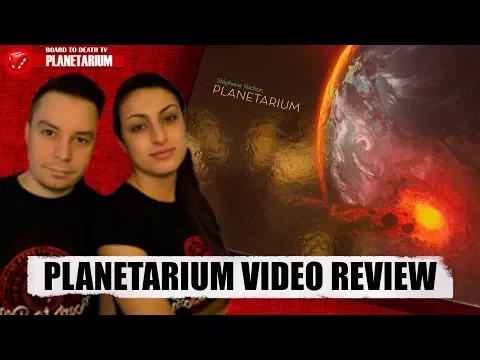
To learn the rules, start with "Planetarium Board Game Video Review" by Board to Death TV - Board Game Reviews, which runs 6 min.
For an opinion before you buy, start with "Planetarium - Preview with Indiana John" by Game On! Video Reviews. 6 creators have reviewed it. To see it played, watch "Planetarium Play Through" by AnnexedDinnerTable, one of 5 playthroughs.
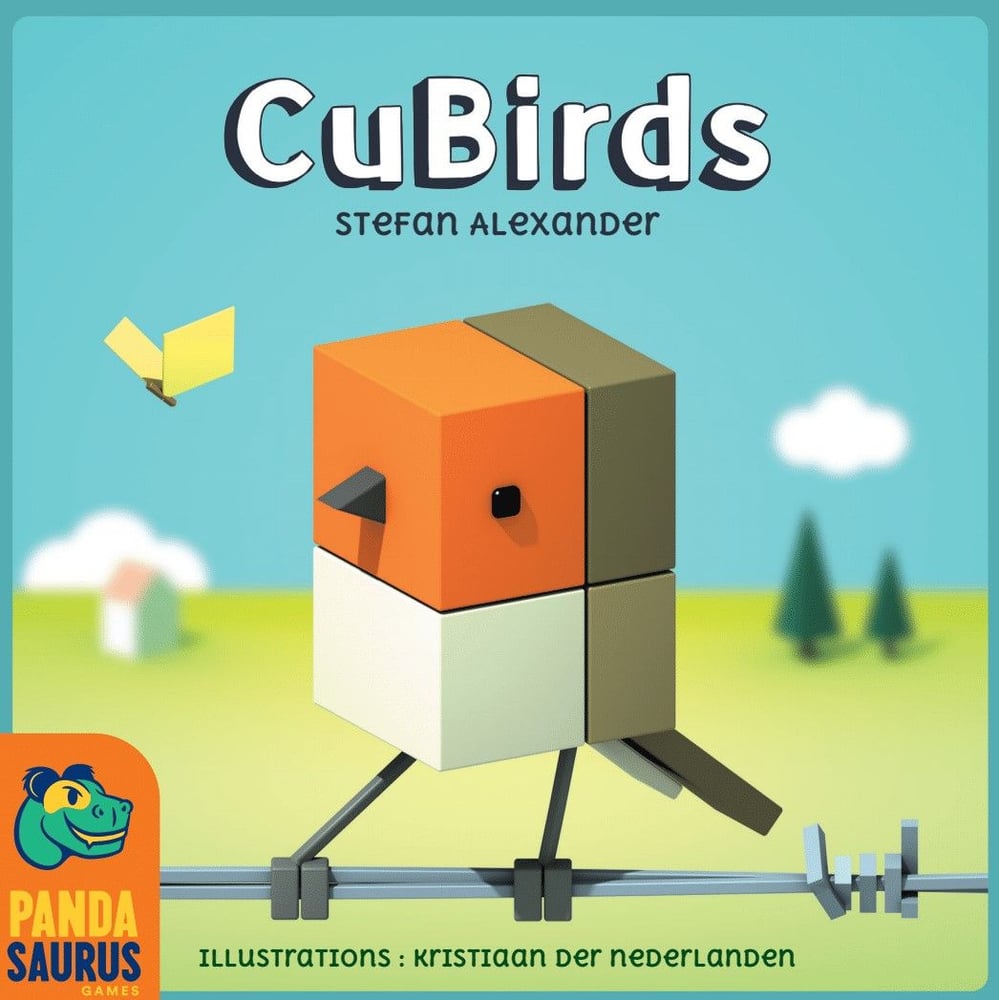
If you like it, try The Gig, also by Dann May, or Hacktivity, also by Stéphane Vachon, or Apocalypse Road and CuBirds, which share several of its mechanics.
8 of 18


2023Jamie Gray, Dann May, Lewis Shaw, Robb Smigielski
1 - 4 players20 - 30 minMedium weight
2020Jeff Horger, Carla Horger
2 - 10 players60 - 90 minMedium weight
2018Stefan Alexander
2 - 5 players20 minLight weight
From BoardGameGeek:
Matter swirls around a new born star, coalescing on the planetoids that orbit it. Planets evolve, grow and migrate in their orbits, forming a unique solar system by the end of every game. Planetarium is a game of creation, chaos and terraforming on the grandest scale. Players are competing to crash combinations of elements onto planets that then allow them to play cards to evolve the planets in a variety of ways, with each player looking to evolve planets in the system to suit their own secret endgame goals. On a turn a player will firstly move a matter or planet token in a clockwise direction around the star. The board is mapped with a series of lines, tracing orbits around the star, and it is along these lines that the tokens are moved. If a matter token moves onto a space occupied by planet token then the matter token is placed on the player's mat (on the respective planet). In the same way, planets can also be moved onto matter tokens, placing the matter tokens on the player's mat. In the second part of a turn a player can play Evolution cards from their hand at the cost of the matter tokens they have collected on their player mat (some cards have other special requirements to play). If a player plays a card, they score the cards points and check to see if their card has changed the state of the planet from hostile to habitable by checking the total habitable and hostile points played to the planet (some end game goals require planets to be hostile or habitable). The player may then draw a card from one of three decks, Low Evolution (cards that score less points but require less matter to play), High Evolution (cards that score more and are harder to play), and Final Evolution (cards that can only be played on a player's final turn). The thematics of the game have been developed with an eye on the science, led by a scientist working on NASA's search for life on Mars. Evolution cards thematically include all kinds of planetary phenomenon, from asteroid impacts, atmospheric effects, to geological events. Final Evolution cards mark the relatively stable state a planet is in at the end of the solar system's development and include classifications for the final planets such as Hot Jupiter or an uninhabitable frozen dwarf planet. The game consists of a beautiful game board with handfuls of matter tokens, approximately 36 Evolution cards and 16 Final Evolution cards (all with unique space art and flavor), player mats, and player and score markers.
Designers
Dann May, Stéphane Vachon
Artists
Dann May, Greg May
Publisher
Game Salute
Categories
Mechanics