1985Don Greenwood
- Videos
- 264
- Creators
- 23
Mainly how-to-play
2 players120 - 480 min4.7 weight
1975Don Greenwood, Loren K. Wiseman
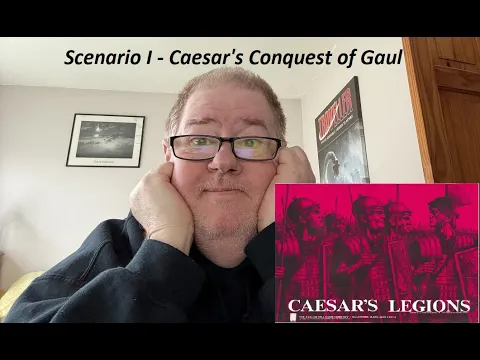
Mainly playthroughs. Caesar's Legions is covered on BoardGameVideo.com by 2 how-to-play guides, 4 recorded sessions, and 1 unboxings.
From BoardGameGeek
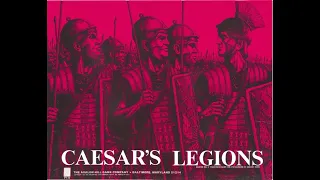
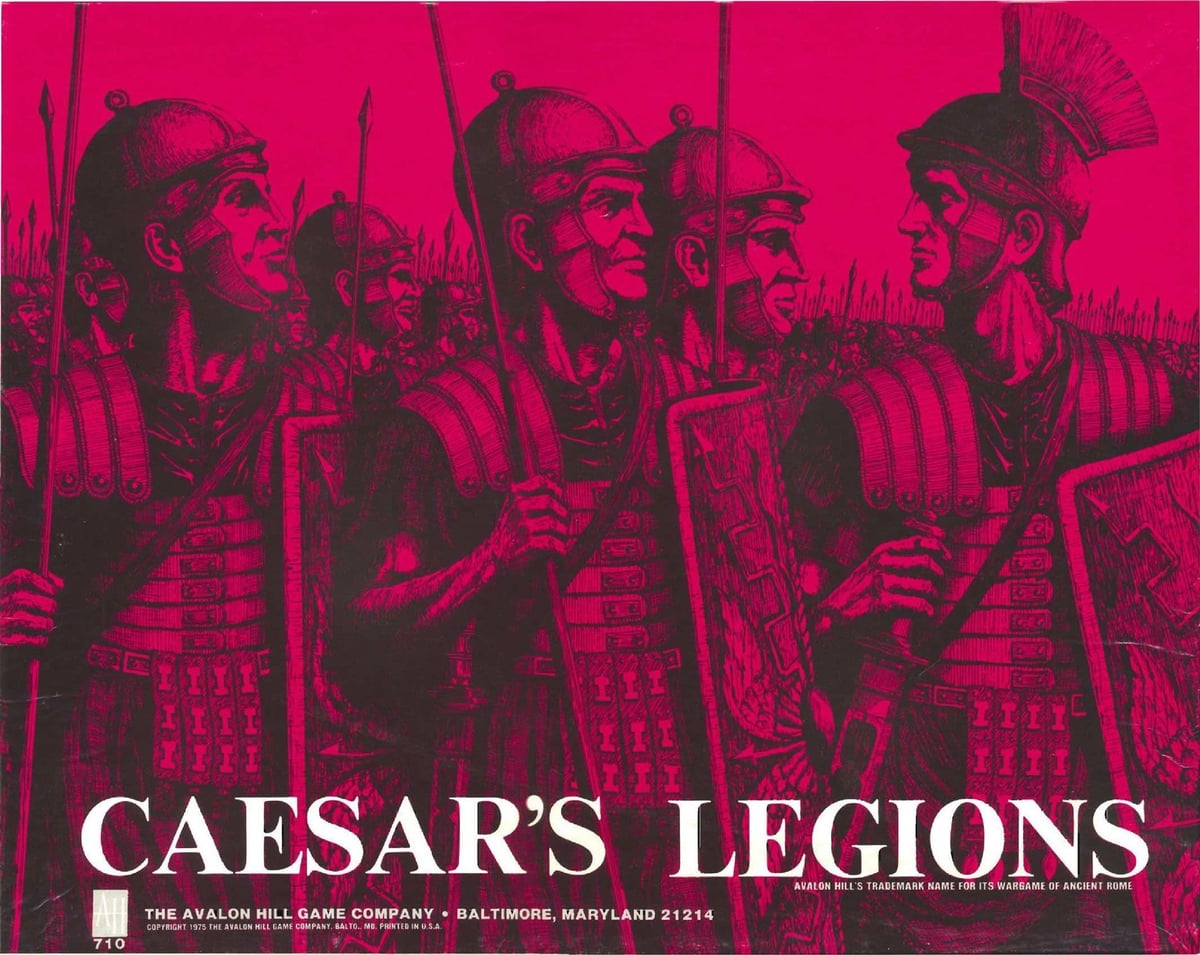
Caesar's Legions is a medium complexity wargame simulating the Roman campaigns in Germany at the operational level. Players choose from 5 scenarios ranging from Caesar's own Germanic campaigns to the Batavian revolt of 70 AD. Movement is hex based. Tactical cards effect combat resolution which is dice based and cross-referenced on a probability table. Roman units are divided into cohorts. German units are divided into tribes and enjoy hidden movement when in forest terrain. The game consists of a 22" x 28" map board, over 400 counters (448 counters), playing aids, 16 tactical cards (2 sets of 1 - 8) and a 16-page rulebook.

1985Don Greenwood
2 players120 - 480 min4.7 weight
1990Richard Berthold, Don Greenwood, Robert Haines
1 - 6 players300 min4.4 weight
2008Michael Bennighof, Richard H. Berg, Frank Chadwick, John Goodenough, Jack Greene, Don Greenwood, John Hill (I), Bill Jaffe, Chad Jensen, Corey Konieczka, Robert A. Kouba, Dana Lombardy, Jason Matthews, Joseph Miranda, John Prados, Jack Radey, Ted Raicer, Mark Simonitch, Vance von Borries, Rick Young
2 - 4 players120 min2.9 weight
From BoardGameGeek:
Designers
Don Greenwood, Loren K. Wiseman
Categories
Mechanics