
2004Michael Bennighof
- Videos
- 8
- Creators
- 2
Mostly playthroughs
1 - 2 players30 - 150 minMedium weight
2013Michael Bennighof, James Stear
From BoardGameGeek
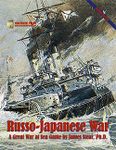
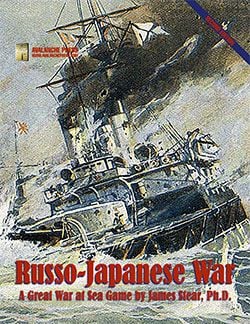
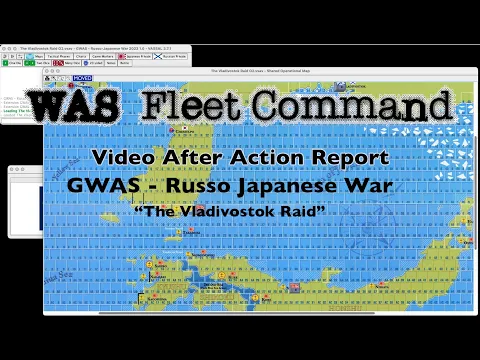
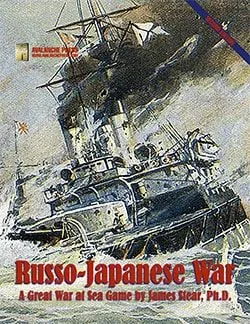
From the Avalanche Press website: Japan entered the modern age in 1868, with a new young emperor determined to make his island nation a world power. After decades of steady progress, Japan began its own practice of colonialism, defeating China in 1894. As the Japanese began to infiltrate the semi-independent Kingdom of Korea, they ran into Russian agents doing the same. Despite Japanese offers to negotiate, elements within the Russian Empire were set on war. Great War at Sea: Russo-Japanese War covers the naval aspects of the resulting conflict, which opened with a Japanese surprise attack on the Russian Pacific Fleet's base at Port Arthur in northern China. There are 50 scenarios, including the climactic Battle of Tsushima, as well as hypothetical actions ranging from an early dispute resulting from the 1895 "Triple Intervention" to a showdown in 1906 with greatly reinforced Russian and Japanese fleets. The Russian fleet is a mixed bag of modern battleships and ancient ironclads better suited for a museum. The Pacific Fleet that begins the game in the Far East has modern ships stationed at Port Arthur and a cruiser squadron in Vladivostok. Between them lies Korea, occupied by Japan. The Russian strategic situation is difficult. The Japanese have a better fleet; though not as large, their armored cruisers outclass their Russian counterparts and their torpedo boats are more numerous and more effective. They are also better-led after the death of the Russian Admiral Makarov. The map covers the Japanese home islands and the seas around them. As with other games in the series, it's divided into zones 32 miles across. Fleets attempt to locate one another on this map. When contact is made, play moves to a tactical map where ships maneuver and fight. The previous edition of this game (Great War at Sea: 1904-1905) won the Origins Award for Best Historical Game due to play balance and simplicity. Without aircraft, play is even faster than in other games in the series. The strategic situation is challenging to both players, and competitive balance is keen without sacrificing the historical accuracy of the game as a simulation. Unlike most wars, the Russo-Japanese naval war took place between opponents reasonably matched in terms of vessels and numbers (albeit not in training), and that makes for a tense and exciting game. Russo-Japanese War includes: • One 34 x 22-inch operational map • One 22 x 22-inch tactical map • 210 playing pieces • A game booklet including 50 scenarios

2004Michael Bennighof
1 - 2 players30 - 150 minMedium weight
2023Michael Bennighof
1 - 2 players30 - 180 minMedium weight
2008Michael Bennighof, Richard H. Berg, Frank Chadwick, John Goodenough, Jack Greene, Don Greenwood, John Hill (I), Bill Jaffe, Chad Jensen, Corey Konieczka, Robert A. Kouba, Dana Lombardy, Jason Matthews, Joseph Miranda, John Prados, Jack Radey, Ted Raicer, Mark Simonitch, Vance von Borries, Rick Young
2 - 4 players120 minMedium weight
2009Michael Bennighof, David Murray (II)
2 players120 minHeavy weight
From BoardGameGeek:
From the Avalanche Press website: Japan entered the modern age in 1868, with a new young emperor determined to make his island nation a world power. After decades of steady progress, Japan began its own practice of colonialism, defeating China in 1894. As the Japanese began to infiltrate the semi-independent Kingdom of Korea, they ran into Russian agents doing the same. Despite Japanese offers to negotiate, elements within the Russian Empire were set on war. Great War at Sea: Russo-Japanese War covers the naval aspects of the resulting conflict, which opened with a Japanese surprise attack on the Russian Pacific Fleet's base at Port Arthur in northern China. There are 50 scenarios, including the climactic Battle of Tsushima, as well as hypothetical actions ranging from an early dispute resulting from the 1895 "Triple Intervention" to a showdown in 1906 with greatly reinforced Russian and Japanese fleets. The Russian fleet is a mixed bag of modern battleships and ancient ironclads better suited for a museum. The Pacific Fleet that begins the game in the Far East has modern ships stationed at Port Arthur and a cruiser squadron in Vladivostok. Between them lies Korea, occupied by Japan. The Russian strategic situation is difficult. The Japanese have a better fleet; though not as large, their armored cruisers outclass their Russian counterparts and their torpedo boats are more numerous and more effective. They are also better-led after the death of the Russian Admiral Makarov. The map covers the Japanese home islands and the seas around them. As with other games in the series, it's divided into zones 32 miles across. Fleets attempt to locate one another on this map. When contact is made, play moves to a tactical map where ships maneuver and fight. The previous edition of this game (Great War at Sea: 1904-1905) won the Origins Award for Best Historical Game due to play balance and simplicity. Without aircraft, play is even faster than in other games in the series. The strategic situation is challenging to both players, and competitive balance is keen without sacrificing the historical accuracy of the game as a simulation. Unlike most wars, the Russo-Japanese naval war took place between opponents reasonably matched in terms of vessels and numbers (albeit not in training), and that makes for a tense and exciting game. Russo-Japanese War includes: • One 34 x 22-inch operational map • One 22 x 22-inch tactical map • 210 playing pieces • A game booklet including 50 scenarios
Designers
Michael Bennighof, James Stear
Artist
Susan Robinson
Publisher
Avalanche Press Ltd.
Categories
Mechanics