

2011Cephas Howard, Reiner Knizia, Jesper C. Nielsen
- Videos
- 2
- Creators
- 2
Reviews and how-to-play
2 - 4 players10 minLight weight
2012Cephas Howard
From BoardGameGeek
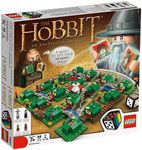
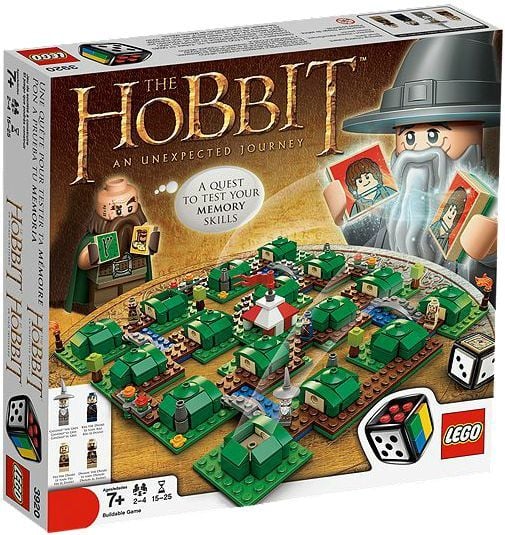
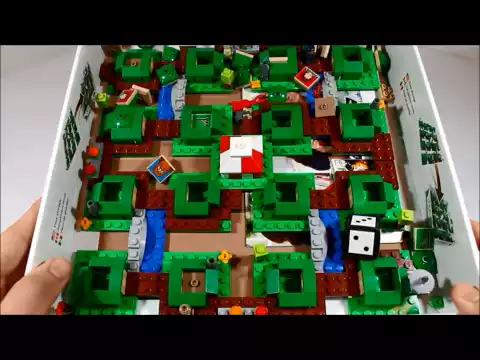
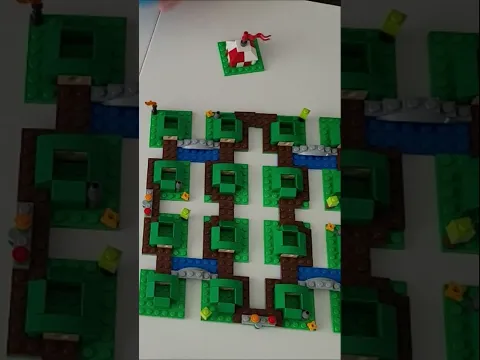
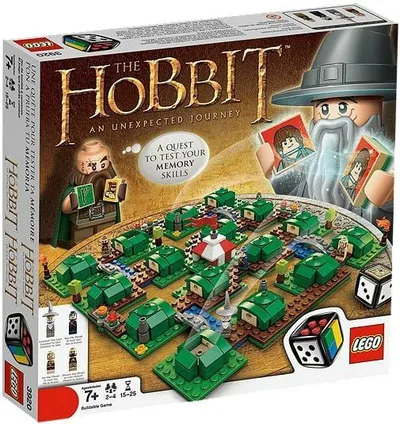
Bilbo Baggins lives in the quaint village of Hobbiton, but today his comfort has been shattered by the arrival of 13 Dwarves. They have convinced Bilbo to embark on a most unexpected journey – but first Gandalf, along with the Dwarves Dwalin, Kili and Fili, must find the other ten Dwarves who are lost in the Hobbit holes of Hobbiton. In The Hobbit: An Unexpected Journey, the players first build the game out of LEGO bricks, then they take turns rolling a special six-sided die. If a player rolls 1-3, he moves his figure the number of spaces rolled and uses a torch to lift a piece out of the Hobbit hole on which he landed. Hopefully the bottom of the piece shows a Dwarf. If so, the player keeps the Dwarf and play passes to the left. If a player finds a Hobbit instead, he lifts a piece out of any other Hobbit hole on the board in an attempt to locate another Hobbit; if the player finds a match, he keeps the pair of Hobbits and is rewarded with the opportunity to peek at the bottom of a piece from any other Hobbit hole. Instead of a Hobbit or Dwarf, some pieces feature a picture of breakfast. Matching two breakfasts allows a player to take a Dwarf piece already obtained by an opponent and return it to the Hobbit hole of his choice. The last possibility when revealing a piece is to find a picture of a rune. Matching two runes allows a player to select another Hobbit hole of his choice; if he finds a Dwarf in this location, he keeps it and play passes to the left. The custom die also features a picture of a map on one side. Rolling the map allows a player to move to any Hobbit hole on the board. After all ten Dwarves have been found, the player with the most Dwarves wins. The game comes with variant rules, including one that shifts the location of Hobbit holes by swinging portions of the board into different configurations. Another variant requires players to find Thorin, the leader of the Dwarves, last. Another places Bilbo in one of the Hobbit holes.
The Hobbit: An Unexpected Journey has 4 videos from 4 creators: 3 reviews and 1 other video. They date from 2012 to June 2024.
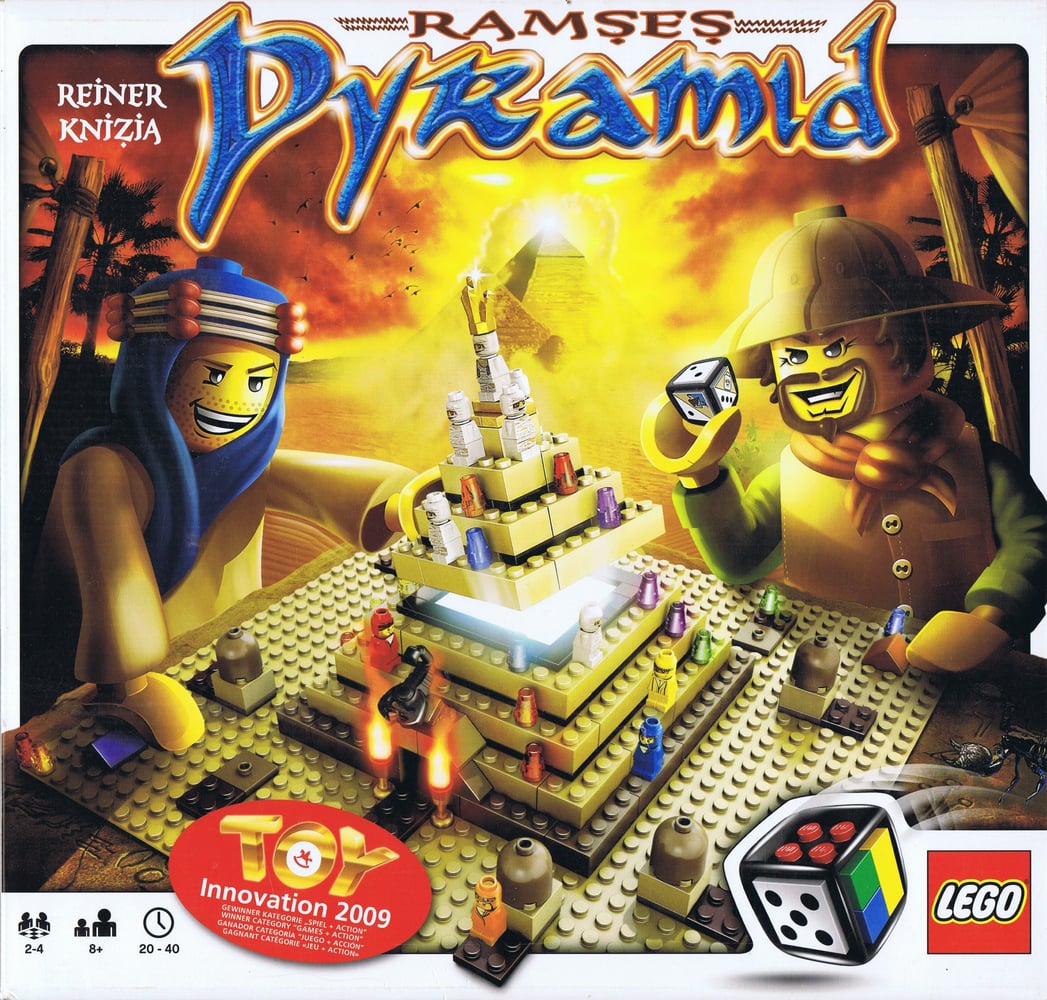
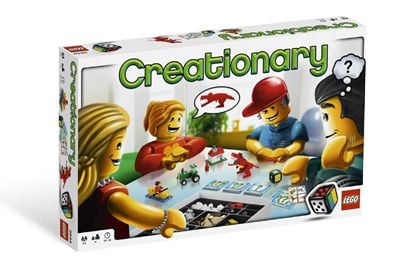
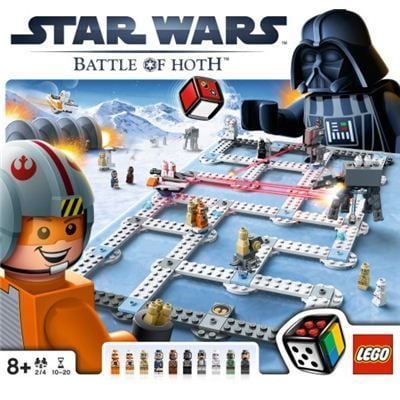
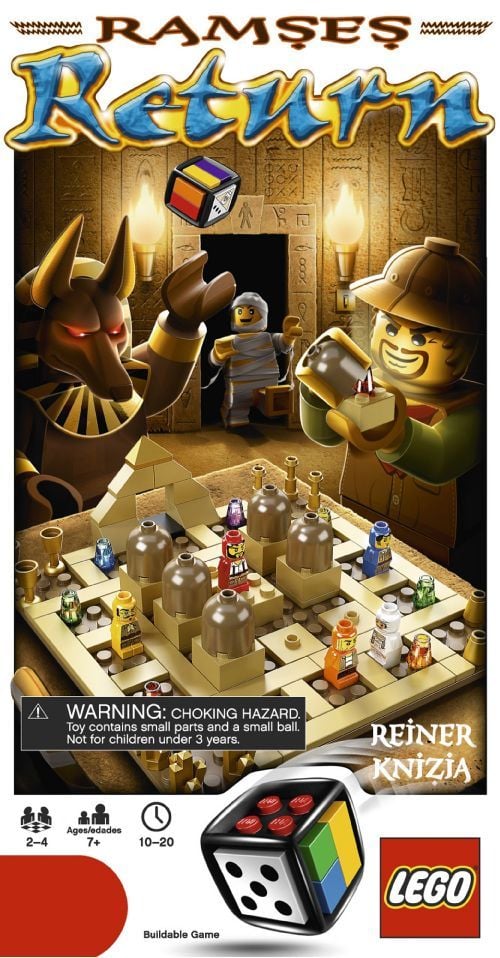
If you like it, try Ramses Return, Ramses Pyramid, Creationary and Star Wars: Battle of Hoth, also by Cephas Howard.


2011Cephas Howard, Reiner Knizia, Jesper C. Nielsen
2 - 4 players10 minLight weight
2009Cephas Howard, Reiner Knizia
2 - 4 players20 minLight weight
2009Cynthia Bodin, Bastiaan Brederode, Cephas Howard
3 - 8 players30 - 60 minLight weight
2012Bastiaan Brederode, Cephas Howard
2 - 4 players15 minLight weight
From BoardGameGeek:
Bilbo Baggins lives in the quaint village of Hobbiton, but today his comfort has been shattered by the arrival of 13 Dwarves. They have convinced Bilbo to embark on a most unexpected journey – but first Gandalf, along with the Dwarves Dwalin, Kili and Fili, must find the other ten Dwarves who are lost in the Hobbit holes of Hobbiton. In The Hobbit: An Unexpected Journey, the players first build the game out of LEGO bricks, then they take turns rolling a special six-sided die. If a player rolls 1-3, he moves his figure the number of spaces rolled and uses a torch to lift a piece out of the Hobbit hole on which he landed. Hopefully the bottom of the piece shows a Dwarf. If so, the player keeps the Dwarf and play passes to the left. If a player finds a Hobbit instead, he lifts a piece out of any other Hobbit hole on the board in an attempt to locate another Hobbit; if the player finds a match, he keeps the pair of Hobbits and is rewarded with the opportunity to peek at the bottom of a piece from any other Hobbit hole. Instead of a Hobbit or Dwarf, some pieces feature a picture of breakfast. Matching two breakfasts allows a player to take a Dwarf piece already obtained by an opponent and return it to the Hobbit hole of his choice. The last possibility when revealing a piece is to find a picture of a rune. Matching two runes allows a player to select another Hobbit hole of his choice; if he finds a Dwarf in this location, he keeps it and play passes to the left. The custom die also features a picture of a map on one side. Rolling the map allows a player to move to any Hobbit hole on the board. After all ten Dwarves have been found, the player with the most Dwarves wins. The game comes with variant rules, including one that shifts the location of Hobbit holes by swinging portions of the board into different configurations. Another variant requires players to find Thorin, the leader of the Dwarves, last. Another places Bilbo in one of the Hobbit holes.
Designer
Cephas Howard
Artist
Max Valembois
Publisher
LEGO
Categories
Mechanics