1903Edgar Cayce, Harry Gavitt, George S. Parker
- Videos
- 4
- Creators
- 4
Mainly how-to-play
3 - 8 players30 - 90 min1.2 weight
1887George S. Parker
From BoardGameGeek
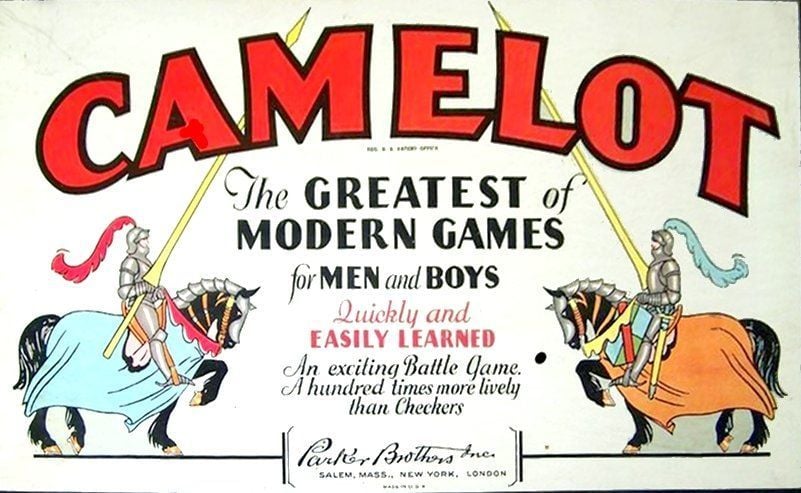
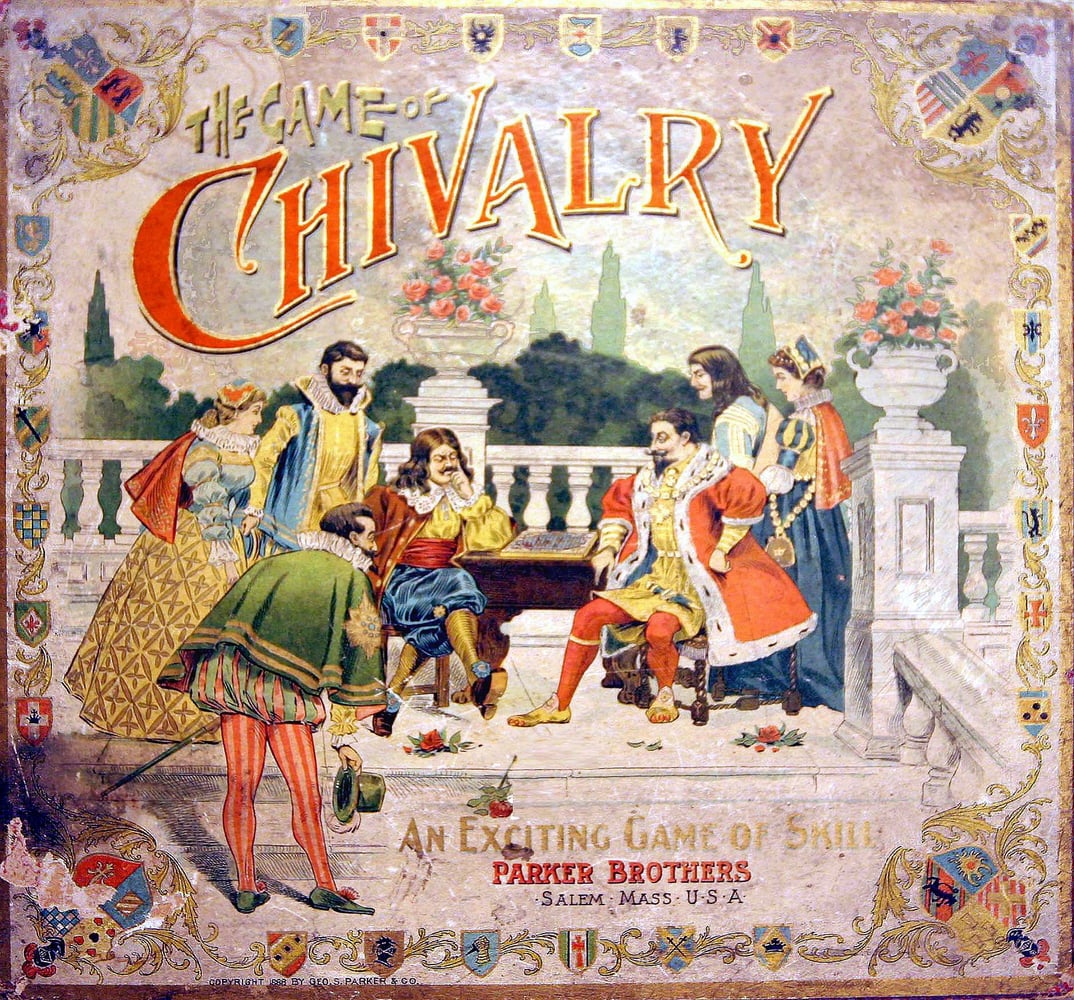
Chivalry is the forerunner of Camelot. Under development by George S. Parker in 1882, Chivalry was released by Geo. S. Parker & Co. in 1887, and by Parker Brothers in 1888. Parker called Chivalry "the best game in 2,000 years," and looked upon it as his personal favorite. Chivalry is played on a larger board with more pieces than Camelot. Chivalry, like Camelot, is tactically complex, yet easily learned and quickly played. It is a clever mixture of American Checkers (British Draughts) and Halma (Chinese Checkers). The goals of the game is to move two pieces into the two goal spaces on the opposite side of the board. Of course, one has to get past the opponent's piece to do so. Movement of pieces in many ways resembles Checkers except that jumping and moving is omnidirectional. This game tends to be dominated by key sacrifices and charges for the goal. Since a player has to get two pieces into the goal, the dynamic shifts from just trying to get a single piece into a goal. In other words, players won't make one sudden leap to victory; at least a 1-2 punch is required. For those familiar with Camelot: Chivalry is different than Camelot in the following ways: The Chivalry board has 176 squares. The Camelot board has 160 squares. Each side in Chivalry has eight Knights and twelve Men. Each side in Camelot has four Knights and ten Men.

1903Edgar Cayce, Harry Gavitt, George S. Parker
3 - 8 players30 - 90 min1.2 weight
1906George S. Parker, Grace Parker
2 - 6 players45 min1.9 weight
From BoardGameGeek:
Designer
George S. Parker
Categories
Mechanics